4/7InkzHVUEQeEdU9vpc1tikzEhChrKmPfvXI-FSDBrBQ

Ambassadors Report

Ambassadors Visit Redeemer, Jamison

JamisonAnother Lively Redeemer

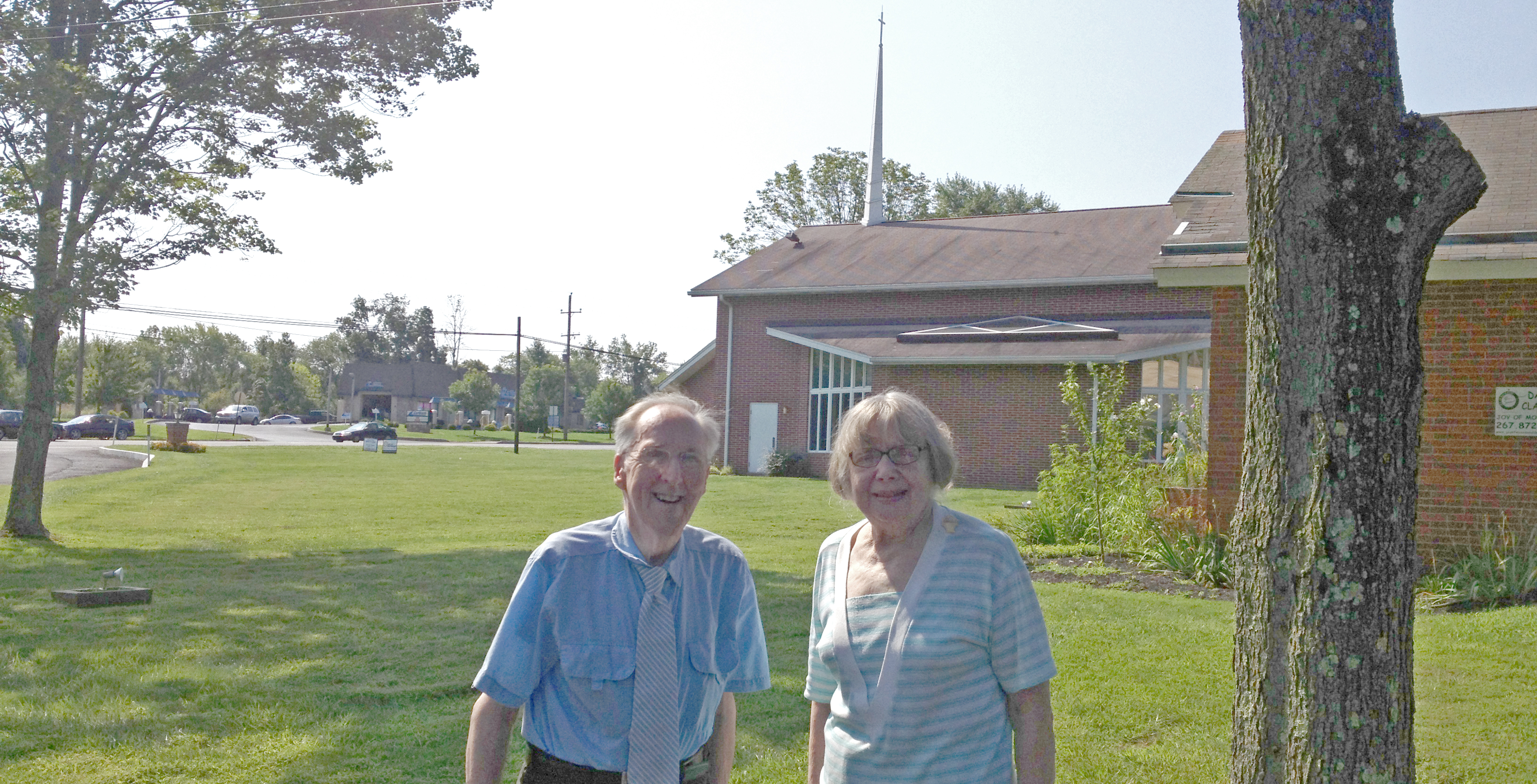
Today our Ambassadors set out early to visit a namesake church, Redeemer, in Bucks County.

One of our Ambassadors passes this church often to visit family and noticed over the years that they recently improved their property by building a new sanctuary.

The small sanctuary appeared to be reasonably full with at least 70 worshipers, although we didn’t really count. We were sitting toward the front.

They are a congregation that has just come through a transitional period. Not much was said but we sensed that they are emerging from a difficult time. They seem to be happy with the pastor they are calling. From all appearances it seems to be a good match. The Rev. Nathan Krause is probably the youngest pastor we have encountered in our 69 visits. It is rare to encounter a pastor under 50. I can recall only one or two others. We hope that his years of service are a breath of fresh air for the whole church and not just at Redeemer, Jamison! He will be installed in September.

Post VBS Sunday

Today’s service was feeding off a very successful Vacation Bible School week. The talk reminded me of the atmosphere of Bible School from my childhood. There were about ten children under 12 in worship this morning. There were about 50 involved in their five-day Bible School. Most impressive, though, was that nearly as many adults had been involved in the event as was evident in singing the VBS songs at various points in worship. It was a joint congregational effort. The oldsters were helping lead the youngsters in the songs with hand gestures. There were also a good number of youth and most (about five) were involved in leadership roles as ushers, acolytes or communion assistants.

In general, the atmosphere was friendly and happy, similar to the experience we had in Secane a few weeks ago. It’s worth mentioning because it is not that common that people seem to be engaged and open with everyone present, including visitors.

They have two music directors who jointly led some of the singing. One specializes in a bell choir which provides music about once a month. The other is organist/pianist. This morning they pumped the congregation up with upbeat Bible School songs. One man called out during announcements that a men’s chorus was going to rehearse after church. We haven’t run into that before!

Redeemer was close to the Keystone State Boychoir which had our young men singing through high school. It’s a good concept! Sounds sexist to modern ears, but the fact is men like to sing together and they are more likely to participate in mixed choruses throughout their lives if they have a tradition of male group singing. Good luck!

This church has an excellent chance at thriving through the next generation.

Pastor Krause led a very good children’s sermon which was not limited to tots but included all elementary and younger. That’s good and we’ve seen that only a couple of times before. The tots learn from the older children. He did not use an object (Yea!) but engaged the children in talking about the message which reinforced the Bible School theme.

Wise Words Require Action

This is where the service became difficult for Redeemer. It was all about “being strong” and five things that are to help us be strong—including the support of family and friends. Unfortunately, we at Redeemer have been encouraged to be weak by all our sister congregations. We have been attacked rather brutally for trying to be strong in our mission. Every weakness—real and many imagined—has been stressed. Our many strengths continue to be squelched. When Bishop Burkat announced the end of the conflict in February we noted that her report was not accurate. We waited a few weeks and then commented that we doubt it is over. Even the judge didn’t think it was over.

Guess who was right!

More court actions took place this week and more are expected. It isn’t enough that the Synod claimed our property and all our congregation’s assets — now they want punitive damages for our members who led the congregation in a successful attempt at “being strong.” We grew our ministry while we were locked out of our house of worship while we were shunned by almost ALL the other churches in SEPA Synod. We did this with no budget and no property. (SEPA thinks we are dead.)

We were supposed to die by edict. We are still alive and stronger in mission than ever! We took our ministry on-line and reach 1000 readers from all over the world every week! We come up first in the search engines for several topics! Still we go unrecognized by SEPA leaders who talk about innovative ministries but don’t know one when they see one—because Redeemer doesn’t look like the church THEY think we should be—and we had this endowment while they have (still) a significant shortfall in funding.

So the message of the day was difficult for us to sit through — although we know it was well-intended. I fought walking out to tell the truth. We are just looking for a little practicing of what we preach from our sister congregations.

We know it’s not easy. We’ve lived under synodical aggression for the past SIX years.

I must confess that the children’s sermon was so upsetting to me that I didn’t hear much of the adult sermon. The other Ambassadors discussed it over brunch. All I remember is the reference to Hebrews.

Now faith is the assurance of things hoped for, the conviction of things not seen.

Nehemiah Remembered

On the way out of church we passed many of the posters from Bible School. The first featured Nehemiah. The story of Nehemiah resonates with Redeemer, East Falls. Nehemiah’s worst enemies were church leaders who didn’t want to see Nehemiah, on his own, with no organizational sponsorship (except that of a foreign king), succeed in rebuilding the temple walls. After all, church leaders had failed to lift a stone in decades. Nehemiah’s story, with all its conniving and intrigue is Redeemer’s story. Read it!

We love the part where leaders exhort Nehemiah to come out. (Chapter 6) “We just want to talk.” (They really want to kill him.) Although not quite so dramatic, the same thing happened at Redeemer, East Falls. “We just want to talk,” the bishop and her colleagues said. There was a locksmith waiting behind the church, ready to lock us out and seize our land.

A good portion of the book is a list of names of all the people who had anything to do with rebuilding the walls. Skip over the names if it helps you get to the meat of the story, but when you do, think about how nice it is that someone recorded their ministries! Thousands of years later, they are remembered — long after anyone knows how to pronounce their names! And long after the walls they carefully built were plundered again.

Ministry is an ongoing struggle! How well we know!


Ambassadors Visit Holy Spirit, Secane

HolySpiritSecane

Holy Spirit is Breathing New Life in Secane

Redeemer’s Ambassadors are used to seeing decline in our visits. Sometimes despair is in the air. Sometimes it is veiled behind ceremony.

This morning’s visit to Holy Spirit, Secane, promised to be the same from our quick look at statistics, which showed fairly steady attendance, a drop in membership but a significant rise in worship attendance.

We’ve seen good statistics in the Trend reports that weren’t evidenced in our visits before —most notably one congregation that reported an average of 400 at worship but had fewer than 30 in attendance at an 11 am service.

The statistics show a gain of about 90 new members since 2005 and appear to be continuing. Diversity begins to show in the statistics five years ago.

This morning our expectations were refreshed.

We encountered a special Sunday at Holy Spirit. Every time there are five Sundays in a month, the fifth Sunday is celebrated with worship at the breakfast table. We saw people entering the church through the social hall, so we followed.

We entered a crowded fellowship hall with a table set up and very few empty seats. We managed to find four seats together. As we made our way to them, one of the kitchen crew shouted for the congregation to save the seats for us. There were probably about 90 present.

The people sitting across the table immediately introduced themselves. We had just a few minutes to chat before the service started but we immediately sensed that these older members were proud and excited to share their story. After the service, a few others approached us and introduced themselves. They have mastered the art of hospitality. It is amazing how many congregations we enter and leave without making eye contact!

A glance around the hall showed a group of diverse age. A good number of older folks but a healthy and growing number of younger adults and younger children. Youth attendance was weak, but that could change in just a few years. One boy led the reading of the psalm and couldn’t have done a better job.

A young man joined the church during the service and two children were baptized. We remembered our diverse congregation when one African or African American member began to accompany hymns with a tambourine. Our own East African members often got intricate rhythms going to the old gospel hymns. These members seemed to be very much part of the congregation. We will not soon forget how SEPA determined that our African members didn’t count, falsely reporting our statistics to the Synod Assembly, excluding our African membership, many of whom had been members for years. 

Our breakfast friends told us that their numbers had doubled since their current pastor, Rev. Cheryl Hensil, came to them eight years before. This was her first call as a second career pastor.

One of the women near us shared proudly that she had joined just two months earlier and three joined today—so things are still improving in 2013.

One of our new friends shared that things had been really down. The pain of those days could still be heard in her voice. I asked, “What do you think has made the difference?”

“The pastor,” she said. “She is one of us, she has a caring way about her and she works beside us. It isn’t ‘I’m the pastor, you do the work.’ She rolls up her sleeves.” She went on to share some examples.

The service was loud. Social halls are not designed for acoustics. But the energy was undeniable. Two warhorse hymns opened the service. After the confession, greeting and prayer of the day, breakfast was served. A team quickly served homemade muffins and fruit salad. After about 15 minutes, worship continued.

Immediately following the baptism, a celebratory cake was served.

One of our Ambassadors commented, “This is a happy church.”

“Yes,” a member commented. “We don’t have much money, but we have fun.”

I looked again at their Trend statistics when we returned. Eight years ago they looked to be in poorer shape than Redeemer. We had fewer members but were growing quickly. Our assets were greater. (Which is probably why we were targeted.)

We had already experienced significant growth with 49 new members in one year. Visitors were common and our African members were excited to belong to our congregation and were very invitational.

The difference is that SEPA took the “time to die” approach in East Falls. The pastors sent to us were not serving in a way that would build a church community. They were so blinded by their “time to die” prejudice that all our new members counted for nothing. “White Redeemer (mostly older people) must be allowed to die. Black Redeemer . . . we can put them anywhere.” (Why aren’t SEPA congregations outraged by this?)

Holy Spirit is proof of the folly of that thinking. The older people sitting with us were energized by the new life created by the work of their pastor and leaders. They were the best cheerleaders. They are proud of their faith community.

The elderly in a congregation have a right to see all their years of dedication rewarded with professional help that will build on their legacy. If they no longer have the ability to minister, it is imperative that their resources be used to provide the necessary skills — not allocated for do-nothing, caretaker ministers who are there to accept a paycheck until the resources run out.

Fortunately, for the Lutherans in Secane, they found the help they needed.

We are so glad they were not treated the way we were.

The Reach of A Neighborhood Church

A beautiful thing happened in East Falls yesterday that meant so much to us at Redeemer.

I told the Ambassadors about this on our way to visit our 65th church this morning. They, too, were moved. (I’ll write about our very interesting Ambassador’s visit later.)

What happened yesterday points to the impact of a neighborhood church that reaches beyond church statistics.

For several years, about ten years ago, Redeemer held two-week music camps in the summer. Most of the children who attended were not Redeemer members. We usually worked on a cantata for the holiday season or just taught choral music.

This week one of the girls who attended our music camp graduated from high school. Her family is very active in another East Falls church but they crossed Midvale to take part in events at Redeemer. This led to the whole family attending Lutheran Church Camp, which led to music from Lutheran Church Camp being introduced in Roman Catholic Schools. There is a cross-cultural nature to religious life in East Falls.

Anyway, I hadn’t seen much of the family for years, while we fought this shameful church battle.

Nevertheless, the family remembered the role Redeemer had played in their child’s upbringing. I was invited to attend the graduation party.

Redeemer had many such programs going on. We hosted the East Falls Children’s choir, had six-week summer day camp and had an ongoing legacy and reputation for quality child care. Many adults in East Falls can remember attending Redeemer’s programs, which have established significant good will in the community.

Much of this has been squandered by SEPA’s greedy interference. As they coveted our assets, they needed to paint a picture of a failing and desperate church. The Bible calls it “bearing false witness.”

It was heart-warming that years after SEPA locked our doors, some people in the neighborhood remember their roots in Redeemer.

Bishop Burkat’s forecast was that the memory of Redeemer would be gone in six months.

That’s not all she has been wrong about!

The reach of a neighborhood church is well beyond statistics. For that reach to begin to show statistically, there must be consistency and follow-up—impossible when you take a caretaker approach to ministry and/or bring conflict to a congregation every few years.

Open the church doors in East Falls. Return the land to East Falls Lutherans and let ministry happen in this neighborhood again—the Lutheran way.

Worship in the Modern World

Serving a New and Talented World

I’ve had the opportunity to attend many youth concerts in the last few years. I’ve noticed a remarkable difference from my school experiences.

Today’s young people have the ability to excel in skills beyond what was possible for all but the most motivated among those of us who were schooled 40-50 years ago.

They have constant exposure to the professional talent. We had the Mickey Mouse Club and the Ed Sullivan Show.

They have teaching tools that were unavailable to us as we learned to play our instruments. Online teachers are plentiful. There is a device that can play recorded music slowly without changing the pitch. How I remember replacing the needle on the high-fi, guessing that it was falling at the phrase I wanted to learn and trying to keep up with the pros as I practiced!

Suffice to say . . . the coming generations are better at many skills at an earlier age than we dreamed of being. The contestant age requirement on some TV singing competitions has dropped to 12. Twelve! The 12-year-olds are holding their own. The quality is there. Sometimes their lack of maturity causes them to falter, but several have made it through to the final rounds. The recent winner of The Voice is just 16.

Most of our talented young community members are not in church.

Could our style of worship be influencing apathy?

As much as we like to think of the worship experience as corporate and engaging, it really isn’t — not when measured against the potential.

Those who grew up in the church and have an understanding of what is going on in a worship service may take comfort in knowing the rationale behind the various sections of the liturgy and understand how it intends to engage them.

But these are fewer and fewer. As a result, worship becomes more and more passive. We exist in a world where our ability to express ourselves is exploding with potential.  Yet in worship we are asked to behave as spectators. Today’s spectators have higher expectations!

For the last three years, Redeemer worshipers have been forced into a spectator role, denied access to our own sanctuary. In our own worship, we would all be involved. But that happens only on the first Sundays of the month now. Nevertheless, we take seriously our role as spectators, participating in the limited ways allowed as guests in worship.

We notice that the worshiping body is more and more passive. The larger the congregation, the more passive. Some even pay select choir members!

Congregations often seem to be content to be overpowered by an organ. The roles of worshipers are orchestrated. One will read scripture. Another will take the offering. Tradition.

Spontaneous expression is almost non-existent with the occasional exception of prayer— notably in the churches with more of an African or African-American membership.

In 65 visits, we have seen no dance (common in Redeemer worship). Choirs are fairly rare.

There was always something interesting and spontaneous happening in Redeemer’s worship. A nod from a worship leader was enough to let a worshiper know that they would be leading the next part of worship.

It was not unusual for a member to climb the sanctuary stairs on Sunday morning and say, “I’d like to sing a solo this morning.”

Sometimes it was embarrassing, but human. One week, (has to be six years ago) someone stepped forward to sing a solo as prelude. Her choice ended up to be the opening hymn. What are the odds of that! So she sang. And then we sang. It was memorable. The hymn was “We Have Come Into His House.” Do you remember what the opening hymn was in your worship last week?

As an observer, I wonder if the structure of the worship service might need an overhaul to allow for the growing talents and expectations of our community members. We inherited our worship from a time when one or two educated members of the community led mostly illiterate worshipers. The abilities and skill levels of the modern worshiper make us much less likely to be content as spectators. The modern worshiper may not understand that when they are asked to stand, sit or read the words that are printed in the bulletin in boldface — well, that’s involvement!

We have a tendency to substitute ritual and call it engagement. Are we really engaged when we all file to front of the church and hold hands out for communion?

There is a huge challenge in wondering about all this. We are not expected to ask such questions.

Church Shoppers: What Are They Looking For?

Why Would Someone Join Your Church?

It might help to actually ask ourselves this question. If people are seeking a faith community (and fewer people are) why would they choose your church?

Most churches are remarkably the same—at least at first glance. I write this with some authority, having visited 65 in the last two years. Congregational culture doesn’t seem to vary much.

  • Most churches think they are friendly.  
  • Most pastors think their message is worth listening to.  
  • Many pastors assume they are approachable.
  • Most churches aspire to excellent music. Some have capable and flamboyant organists. Others have just as capable lay ensembles leading worship.
  • Fewer churches offer educational offerings.
  • Fewer churches have youth or children. (This should be alarming to regional bodies!)
  • Service offerings are generally cookie cutter. A few embrace a cause.
    One congregation we visited had several service opportunities all centering on cancer. Will prospective members feel this must be their cause, too?
    Some have embraced sexual orientation causes. Will visitors feel that joining these congregations is making a statement on these issues?
    Many participate in Habitat for Humanity or popular Walkathons.
  • There seems to be less association with denominational service organizations. This was unintentionally encouraged when Lutheran social service agencies started currying favor for public dollars.
  • Many Lutheran churches we visited are just getting by with little sense that there is a future. 

What do visitors see when they walk through your doors? Is there a reason for them to return?

How we see ourselves matters. How others see us may matter more. Most people visiting a church are asking questions like these.

  • Will I feel welcome?
  • Will my whole family feel welcome?
  • Will my membership make a difference in my life?
  • Will I be able to participate with all my heart and soul and mind?

Our assumptions about why people choose to join a church can be very wrong.

Back in 1998, a Tanzanian family began attending Redeemer and asked to join. Bishop Almquist was interested in closing Redeemer. They had already seized a good bit of our money. We were discouraged from accepting new members. A synod representative actually visited this family and asked a rather presumptuous question. “Why would you want to join that church? Wouldn’t you be happier in a church with more people like you?”

That family made their own choice to join Redeemer and became the backbone of a new ministry. A decade later SEPA Synod, stuck in their prejudicial past, decided that the nearly 60 members with East African roots who had joined Redeemer since 1998 didn’t count. They claimed this mission outreach had been done without their oversight—although there is no requirement to check with SEPA before accepting new members. Why was a racial distinction made in a Church that claims to be EVANGELICAL?

In this scenario church leaders made an assumption. They assumed what might be best for Redeemer. Their vision for us was not our vision. We were judged on their assumptions.

Assumptions in today’s church beg to be challenged. Assumptions lead to status quo. The status quo in today’s church is decline.

Question everything. Explore.

If you want your congregation to stand out in some way, it would be helpful to know what other congregations in your region are doing.

Here’s a reality—

  • Few pastors ever hear other pastors preach.
  • Few choirs hear other choirs.
  • Most active church members have no time to visit other churches.
  • Most churches buy into the same curricula and purchase the same hymnals.

And so most muddle along, assuming they are doing a great job—living in their own bubble. They wonder why more people don’t become involved. They don’t really have a way to measure. The statistics they are able t0 gather reflect failure.

Here’s a suggestion.

Visit other churches. Send two or three members once a month to visit and report on what they learn. Visit churches in your own denomination. Cross denominations.

  • You may discover a need you can fill.
  • You may learn about a new resource or mission opportunity.
  • You might become allies in local projects.
  • You might begin to see yourselves through a visitor’s eyes.

If you want to learn about the world, travel. If you want to learn about the Church, visit.

So, What Do We Do With NEW LIFE!

I’m just back from a week’s vacation in the rolling hills of Upstate New York where my family has been vacationing for more than 100 years—since a group of pastors and seminary professors built a colony on the shore of a beautiful lake and began passing the legacy on to six generations.

It is always refreshing to revisit the past amid God’s beauty. Reinvigorating! New life!

“New life” is a concept dear to Christians of many denominations. We celebrate it. We preach it. We say we value it.

But what do we do with it?

The new life which was gifted to us in the Resurrection is supposed to free us. We are free to worship and free to serve, free to think and free to interpret, free to tell.

What do we do with all this freedom?

Sometimes all we do is create new boxes, new restraints. We see it as creating order or tradition. Not bad, by any means.

But “order” can become confining. Soon the order we create defines our lives. We begin to serve the order.

The Resurrection freed us.

And so we worship on Sunday mornings, in much the same way our grandparents worshiped. We spend our offerings the same way. We maintain. We repair. We hold one potluck supper after another.

We pray for the whole people of God and hope that does the trick. Suffering will end. Disease will be cured. The poor will be fed, clothed and housed. What has been ravaged by man or nature will be rebuilt. Justice will prevail without a struggle. Our leaders will be wise.

How will this will get done? Who knows! We did our part. We prayed.

Time, perhaps, for the Church to take a vacation and rediscover “new life.”

Why Adult Object Lessons? Aren’t They for Kids?

We’ve explained this before but not for about a year. We’ve gained a lot of experience since then. Last year, search engines brought a lot of people looking for object lessons to 2×2 (about 16,000!)

Other websites present ideas for children’s object lessons. Redeemer contributed regularly to one site, posting our weekly children’s sermon. We didn’t have our own site at the time. We learned something in that process. The object lessons were enjoyed more by the adults present.

Adults have the ability to think abstractly. Children are developing this ability. Most won’t be ready to understand an object lesson until after they stop running to the front of the church and stay behind with the adults.

There are probably no studies on whether or not it works. We doubt it.

2×2 witnessed a children’s sermon last Pentecost. For once there were children in church! 

A lay person was delivering this message. Often that is a good move. Many pastors lack training in teaching children and it shows.

The children were eager listeners.

The teacher had a few balloons. She blew one up and fwwooff. She let the air out and the balloon flew across the chancel and will probably be retrieved from behind a decorative screen 20 years from now.

Did the children understand the Pentecost message about being filled with the Holy Spirit? One child begged for a balloon the whole time the teacher was talking. Concrete thinking! The other children listened pleasantly and eagerly as the teacher filled a second balloon with air.

The concept she was teaching makes sense to adults. The adults present were observing and pondering the Holy Spirit and how we cannot control it.

The children were somewhere else. Interestingly, one girl was still thinking about the previous week’s children sermon. We weren’t present for that but it was clear that the teacher had directed the children’s attention to a stained glass window depicting the Ascension.

This girl had probably been thinking about this all week. She still had questions.

“Last week you said we were going to say good-bye to Jesus and we never did.”

A week has passed and it’s still on her mind! Can you remember last week’s sermon?

This exchange went unanswered—a teaching moment lost. In this case there was no object with a special meaning—just a story and a picture.

Children understand stories and pictures.  Adults understand object lessons.

2×2 provides object lessons geared to an analysis of scripture for adult learners because object lessons work best with adults.

We are preparing to publish our first book of Adult Object Lessons which will follow the Standard Lectionary. We hope you will enjoy it.

Ambassadors Visit Living Word, Roslyn

rosyln
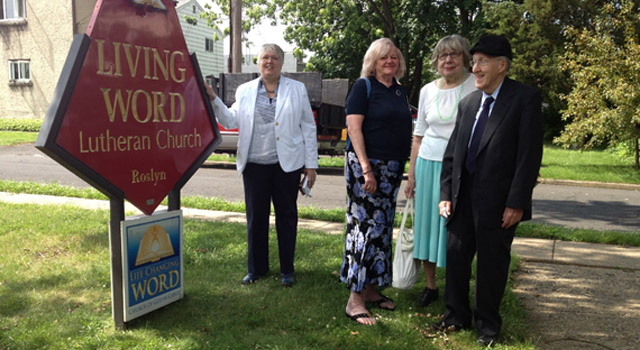
Redeemer’s Ambassadors visited this congregation in Roslyn, Pa, on the morning they were hearing a sample sermon from a pastoral candidate. We expected a large crowd but there were only about 60 at worship.

They were considering the call to Rev. Ellen Anderson who was present with her family. One of the Ambassadors used to work with her recently deceased father, Arvid.

The opening announcements revealed the usual hodgepodge of good works. Their crocheters had contributed 243 squares to a blanket project and supporting an American Cancer Society event. Cancer causes are a focus of the congregation’s ministry.

The sample sermon was introspective of her own faith journey. After a brief recognition of the Gospel Story of the Widow of Nain, she witnessed to God’s influence in her personal life, calling it her Pentecost story. She invited the congregation to tell their “Pentecost” stories. Seems to the common theme this Pentecost. We heard a similar slant on Pentecost Sunday.

The bulletin was mostly “reminders.” Their web site says they use an overhead projector to eliminate the use of paper. Still, Redeemer managed to print the entire service and reminders on less paper than they used.

Overhead screens have some limitations. They shift the focal point from the altar to technology and there is really no guarantee that everyone can read them.

Their approach to offerings was innovative. They do not pass the plate at all but invite people to place their offerings in a box at the back of the church. Passing the plate has become awkward in many churches, because they really don’t pass the plate. They reach into the pew, never letting go of the plate. This is an interesting solution. Hope it works!

The service itself was simple, using a couple of standard hymns and a few newer ones.This is the first we’ve heard the Peruvian Gloria in our visits. We used it almost every week.

We did not stay for the vote.

The call process is seriously flawed. Basing so much of your congregation’s future on a sample sermon and limited knowledge is calling a pig in a poke, so to speak. Congregations need to know so much more before making a major commitment affecting their future. Today’s congregations need so many skills that the call process doesn’t tend to showcase. Making a course correction after the call is issued is problematic and often divisive. Yet we keep following the same process!

We wish them well, all the same.

Churches Exercise POWER in Philadelphia

The Church Knows How to Run an Airline

I happened to be in Philadelphia City Hall yesterday. I was there on business for once. No synod chasing me this time, although for a moment I wondered!

As I waited for my appointment on the fourth floor near City Council Chambers, I watched the security screening process. It was a slow day until about 3 pm when the line to pass through security started to grow.

Many of the people in line were clergy. A man with a camera labeled Channel 6 set up his equipment next to me. I thought I recognized one or two of the clergy from our Ambassador visits. They were carrying signs that said POWER. One in particular seemed to be taking charge to some degree.

So, I thought, the clergy do know their way to City Hall. So few showed up for all the hearings on the Synod’s lawsuit against Redeemer (something for which they were directly responsible).

I looked up POWER when I returned home.

POWER stands for Philadelphians Organized to Witness, Empower and Rebuild. 

They were in City Hall to influence the vote on airline leases with an interest for better pay for airport workers. The airlines are wealthy enough to pay their workers better, they feel.

Sounds like a good cause. And they may be right about the airlines. Everyone deserves good pay. I’m sure they know best.

The website has a list of 40 churches. Most participating POWER churches are Roman Catholic. Three are Jewish. There are some Baptist, Methodist and Episcopal congregations represented and a few others, too.

Only two of them are Lutheran (or at least have “Lutheran” in their name) and one of the two is closed. Our Ambassadors had visited both of them. My memory served me well. The two pastors were who I thought they were!

POWER’s mission in part (from their website):

POWER uses our belief in God’s goodness and compassion for the suffering to organize and empower the people of Philadelphia to live and work together so that God’s presence is known on every block, that people work together to transform the conditions of their neighborhood, and that life flourishes for all.

Shining a light on broken systems:

POWER has come together to lift up a new prophetic voice and bear witness to the fact that these systems no longer work for too many families in too many Philadelphia neighborhoods.

We at Redeemer know that we can count on clergy for one thing. They will always stand ready to hold other people accountable for decisions and policies. Shining a light on their own systems rarely happens.

If they could just hold up their protest signs at their own Synod Assemblies and address how their leaders, systems and policies are shaping our city.

One of the pastors I recognized is on Synod Council, a key policy-making body.

It looks to us like grabbing the property of city churches to benefit hierarchical salaries and suburban missions is their city-shaping policy. Part of that policy is neglecting urban congregations and allowing the laity to work hard with little help and no hope of recognition—even when their work is successful. Attacking lay members who raise an objection to this system is their idea of justice here and now.

However valid the objectives, let’s look at who is talking. The Church doesn’t pay minimum wage to its most loyal workers. They pay them NOTHING. In fact, in the Church, the workers are expected to give. The best ones aim for 10%. Entitlement? Tradition? Whatever, it’s free labor with no earthly benefits. (I’m not complaining about the decades of work I gave for nothing. I wasn’t serving them.)

Only a couple of Lutheran churches are represented in POWER—both from the city and one of them recently closed. One of the things our Ambassadors have noticed is just how powerless the Lutheran clergy are in running their own affairs.

POWER believes that people should have a say in the policy decisions that shape their lives and therefore should not shy away from the exercise of power to promote justice and advance the common good.

What is that old saying? Practice what you preach?

Ambassadors Visit St. Andrew’s, Audubon

Beautiful Pentecost Service

We weren’t the usual Ambassadors but three Ambassadors from Redeemer spent this Pentecost at St. Andrew’s, Audubon.

St. Andrew’s pastor, the Rev. William Mueller, writes a blog. He is the first pastor of now more than sixty we have encountered to make any attempt to reach out regularly on the internet. Kudos. Here’s a link.

This is the first church website (excepting Redeemer, East Falls) to use blogging as the focal point of a web presence. It looks like they have tried both Twitter and Facebook with less frequency, but at least they are trying. Both Twitter and Facebook are harder to maintain and require a lot of babysitting. That’s why we favor blogging as a starting point for churches wanting to use social media.

It looks like St. Andrew’s started blogging in March and kept at it pretty regularly through April with activity dropping a bit in May. We hope they keep it up! We’ve been at it for more than two years. Our experience is that it takes at least six months to begin to see results. Things move remarkably quickly when you start blogging more than three times per week. (We now, after some 750 posts, have as many as 4000 readers each month.)

Pastor Mueller’s sign-off is reminiscent of one of Redeemer’s former pastors. He often ended his pre-internet sermons with “See you at the Acme.” Pastor Mueller signs off with “See you at church.”

A friendly man greeted us as we came through the door and told us about their ministry to the homeless in Pottstown. He was the only member to speak to us. He told us about their group of guitar enthusiasts who center a ministry around music.

Music and the arts are key elements in worship at St. Andrew’s. They recently produced The Wizard of Oz. They are justly proud of their modern stained glass windows and their altar cross.

Musical offerings were varied and rich from a solo (“Day by Day”) to a bell choir prelude of a hymn which had been running through my head all week, prior to today’s worship, (“Oh, How I Love Jesus”) to still another prelude or introit (“This Little Light of Mine”). The choir anthem brought a smile, the tune was borrowed from Les Miserables. Much of the music was modern but the final hymn was by Hildegard of Bingen, dating back a thousand years. Great breadth of church tradition. This was the first church we’ve encountered in a long time that sang the psalm. (Redeemer always sang the psalm.)

The opening hymn was one Redeemer often sang in Swahili. I was surprised that four years after all of us were locked out of our multicultural church that I still remember the Swahili words. I sang them. The organ was so loud no one could notice and it felt good. Besides, it’s Pentecost, a day for many languages.

St. Andrew’s confirmed ten young people today in a nice ceremony. Even though our visits are totally random, we’ve encountered several confirmations and this was the largest group of youth. 

The church was well-attended with families of the young people filling several pews.

The ceremony featured family members participating in the laying on of hands. Two of our Ambassadors, both pastors, compared that to how they conducted confirmation. They liked the custom, although one commented that he considered confirmation to be the young people standing on tbeir own in their faith—as they may have to some day.

How well we know!

The sanctuary is wide with two rows of long pews. For the first time in many visits, the ushers actually passed the plate. It seems like many churches are afraid to let go of the plate, requiring worshipers to reach across several people. This is always a bit awkward and kind of insulting. It felt good to be trusted to pass the plate. (We didn’t take anything of yours!)

There were about a dozen children present for a children’s sermon delivered by the Christian Education director. This is the first we’ve seen children at worship in a while! I doubt the children understood that the balloon represented the Holy Spirit. Object lessons appeal more to adults. They seemed to still be interested in last Sunday’s sermon which apparently focused on their Ascension stained glass window. One child commented, “We were going to say goodbye but we never did.” That seemed to stick with them!

Pastor Mueller gave a sermon that was interesting to us. He spoke about church persecution and mentioned this also in the prayers.

Once again, we see a disconnect. Why is it that SEPA clergy do not see what is happening at the hands of their leaders in East Falls as bullying and persecution?

82 men, women and children are locked out of their church home—built and paid for with their offerings and the sacrifices of their families. Allegations are made but never documented or discussed with the congregation. Although court accusations reference  “church discipline,” no matters of church discipline were ever raised with our congregation. We were paying our own way and had a very active and innovative ministry, with which no fault was ever found. SEPA claimed every available asset with no discussion whatsoever. They used our assets to pursue us in court. They are still looking for more. They stripped Redeemer members of all rights within the Lutheran Church, also with no discussion and no constitutional basis. They vilified our people when we dared to stand up for our faith — as our church taught us to do when we studied for confirmation. Our clergy were intimidated and left. This was designed to leave the laity lost and vulnerable. Instead, Redeemer’s lay leaders (which included two retired clergy) picked up the pieces and successfully grew our church community with no expectation of pay. SEPA personally attacked individual church members in court for five years, putting us in a position where we couldn’t just submit; we had to stand up for what we thought was right. Court accusations of fraud never held up. The latest judge repeated with exasperation, “Where’s the fraud? They were doing what they thought was right. Where’s the fraud?”

The Church persecutes its own.

Well, at least St. Andrew’s prayed for the persecuted, even if they don’t recognize us in their midst.

The Holy Spirit at Work in East Falls this Week?

In other Redeemer news, two leaders of Redeemer’s community music programs chanced to meet three times this week.

SEPA is not the only religious authority raping East Falls Christians of the use of their sacred property! Hierarchical need and greed are running rampant. St. James the Less was locked to members about eight years ago. SEPA locked Redeemer in 2009. St. Bridget’s Roman Catholic School just down the street was locked in 2012. Their leaders thought this fairly healthy school should bolster a struggling church a couple miles away. Both ended up closing.

We discussed how to restore Christian music education for the children of East Falls. Hard to do without property, but we hope not impossible. Redeemer had hosted a community children’s choir and summer music camp and St. Bridget’s School had a strong musical tradition. Our worship leaders had worked together before.

Three chance meetings in three days! Perhaps the Holy Spirit is at work this Pentecost!