On the first of the month, Redeemer always looks forward to holding our own worship service at the Old Academy Theater. The Ambassadors arrived still enthusiastic about our visit to St. John’s, Mayfair, last week. One of our Ambassadors enjoys the history and architecture of the churches we visit. She asked about the two cornerstones—one pre-Civil War and one from the mid-20th century. We discovered a connection we didn’t know we had. Our pastor, one of only a couple of SEPA/ELCA pastors not afraid to be seen in public with us, once served St. John’s back in the 1960s. (Yes, we have a pastor, in fact we have two who worship with us regularly!) He told us a bit of its history, how it used to be downtown and how the new church had been designed to showcase its beautiful German windows. He talked about how the educational wing was once filled with Sunday School students and how it had a friendly competition with St. Paul’s in Olney. Its membership then was more than 2000. Latest Trend reports have them holding their own in the 600s, with a little fluctuation, most recently reported at 695, a third of them worshiping members.
The beauty of this church is unsurpassed. Modest brick and marble or granite (low maintenance) walls and columns frame exquisite stained glass windows depicting the life of Christ.
Attendance at the 11 o’clock service was upwards of 80 but shy of 100. It was difficult to count as there was movement among worshipers, playing different roles in the church service.
The service itself was similar to a Redeemer service, mixing modern praise songs with various elements of the liturgy. We noticed that they haven’t bothered purchasing rack editions of the ELCA’s new worship book, and we don’t blame them. They had a 20-page bulletin and 12 additional pages of announcements. One of our Ambassadors was grateful for the help of a member in finding the hymns which were reprinted from various sources in the back of the bulletin. You would have had to read through the whole bulletin to discover this, though. Singing was strong. They skipped the epistle reading.
A four-member children’s choir sang a Thanksgiving hymn. A larger adult choir sang an Offertory. This followed an extended “passing of the peace” which continued through much of the anthem. The people sitting near us were heavily involved in loud conversations throughout the anthem.
Liturgically, there always seems to be a problem transitioning from the passing of the peace to refocusing on worship. At Redeemer, we solved the problem by having a musical call to prayer ending the passing of the peace free-for-all. This works very well.
There were about a dozen children, far fewer youth and a couple of infants. There were about ten people sitting in the chancel.
This is a program-sized church and suitably the bulletin listed many programs. We noted that the pastor encouraged creating some respite time during Advent. Not a bad idea.
On this Sunday morning we found St. John’s in “transition.” Their pastor of ten years left at the end of October.
We were aware that this was the church of The Rev. Lee Miller III, the lead “trustee” who came to Redeemer in the summer of 2007 and told us he was there as a “fact finder” who “wanted to help.” He then did very little fact-finding nor did he ever offer any help. He did not reveal to us at his first encounter with our leaders that he actually was a “trustee.” We learned of his deception five months later. He explained, without apology, that he lied because he didn’t want trouble.
Well, there has been nothing but trouble ever since. Oh, what a tangled web we weave. . .
His involvement in our community was confusing. He seemed to be in favor of supporting our ministry, but changed his tune (never in discussion with us) sometime during months of silence. We suspect that his position as head of the trustees was an exercise in brown-nosing and personal career advancement.
Having received just 15 votes at the last Synod Assembly election for bishop, he has abandoned the Southeastern Pennsylvania Synod of the Evangelical Lutheran Church in America for fairer pastures, leaving us to deal with the substantial mess he created.
The Rev. Lee Miller III was the person who first suggested that Redeemer “wanted to have the bishop arrested”—an impression we corrected immediately, but which nevertheless found its way into the trustees “report” and all subsequent court documents — even after we asked that this and many other false statements be corrected as long ago as May 2008—four and one half years ago!
No one at Redeemer EVER tried to have anyone arrested.
Oh, well, the Rev. Lee Miller III is gone, if not forgotten. Philadelphia’s loss is Buffalo’s gain.
“Transition” is an odd term. This is not to be confused with “transformation.” Transformation, in Synod-speak, occurs only after transition and ideally under their watchful eye. It can easily go unrecognized if it happened when they weren’t watching.
Church communities are always in transition. When SEPA uses this term, it refers to a time between pastors. As a congregation that existed without a pastor for most of the decade before Lee Miller intruded and four years after he came with the bishop and a locksmith, we at Redeemer find this official designation to be curious.
SEPA thinks congregations fall apart when a pastor leaves. The seeds of this thinking were in all this morning’s talk about vulnerability. The congregation was told repeatedly, “We are vulnerable. You are vulnerable. I am vulnerable.” Maybe they are. Perhaps the synod was creating fear and need to make it easier to reach their version of “mutual discernment.”
There were no obvious signs that St. John’s was falling apart because Pastor Miller left. That’s a compliment to both pastor and congregation.
In clergy’s view, lay people need their oversight to do anything constructive. This view, which reflects clergy vulnerability more than lay, creates an uncomfortable period of limbo. Laity will live lives on eggshells as they are questioned, observed, rated, evaluated, defined, assessed . . .
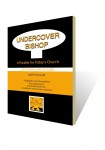
Our Ambassadors reveal just how confusing this process is for lay people. Our account, Undercover Bishop, is drawn from our observations of congregations in “transition.”
The associate pastor, the Rev. Patricia Neale, confessed as a Synod representative looked on that she is in a vulnerable position during this process. Church “rules” require that an associate pastor leave at the same time a “lead” pastor leaves. Rules are made to be broken and in SEPA they are rewritten for convenience. Wait and see!
Rev. Patricia Neale, was called to St. John’s upon graduation from Philadelphia Seminary in 2007. That means she has identical parish experience as Bishop Claire Burkat who served just five years as associate pastor of Holy Trinity, Abington, before joining SEPA Synod staff.
Pastor Neale’s sermon talked about Pilate and his need to control the situation festering among the Jews, Jesus and civil authorities. Doing the right thing in regard to the troublesome Jesus was less important than doing the thing that protected his power. Some things never change.
Control is similarly part of the “transition” process, although it is never presented this way.
Pastor Neale probably knows the congregation well. She gave both a good sermon and children’s sermon. Since SEPA has their interim person coming once a month and not every week, we suspect the decision has already been made about St. John’s future.
2×2 grew from a small church—Redeemer in East Falls. How small? Well, too small for the ELCA. But big enough for mission.
While we have been locked out of our sanctuary for more than three years, we took on a project of visiting the very people who locked us out for their own enrichment.
We’ve made more than 50 visits. Most congregations appear to be no stronger in numbers or wealth than Redeemer. Several would probably already have been targeted by SEPA Synod for takeover if Redeemer hadn’t been commanding their attention for the last five years. As church experts categorize churches by size, they are either in the family church (under 75 members) or pastoral church (around 150 active members) categories .
A few of the congregations we have visited fall into the next biggest category — the program church.
Program churches are big enough by definition to afford a full-time pastor or two and some additional paid staff. They can offer programs to various segments of the population led by the extra hands they can afford to pay.
There is a stark contrast between these churches and the smaller churches that struggle to compete for pastoral services and attention from the Evangelical Lutheran Church in America (ELCA).
The difference is initiative. It’s not that larger churches don’t have initiative; it’s just more “programmed.”
We can see it in little things.
In last Sunday’s visit, the pastor used five large objects in his sermon. He introduced them one by one and placed them across the front of the chancel as he talked. When his sermon ended, he walked back and forth across the chancel and removed the objects. He sang a hymn as he did so. But it seemed odd that the vicar sitting nearby didn’t offer to help—nor did the acolyte sitting nest to the vicar. I know that had this been Redeemer, one or two people would have jumped up and helped the pastor prepare for the next part of worship. There is nothing wrong with this, understand. The hymn the pastor was singing as he cleaned up was nice. It just seemed odd.
Where initiative is lacking, so is creativity. It shows in the bulletins of program churches. They invariably have long lists of credits. Who is the greeter, the reader, the usher, the offering counter, the communion assistant, the flower donator, or the nursery assistant for this week and the rest of the month? Just check the bulletin.
Presumably, if it’s not your Sunday to greet people, then there is no reason to greet anyone.
In small churches, every job belongs to every body.
Reading through church newsletters and bulletins of the program-sized churches, there are lists of activities. They are similar to every other program-sized church. Perhaps that’s where church leaders get the notion that closing/consolidating churches is good management.
The things Redeemer does aren’t on any of the lists. No Swahili outreach, no experimentation with the web and social media, very little experimenting in the worship and educational settings, no ambassadors.
Perhaps the promise that they will lose their uniqueness is why small churches resist the management “wisdom” of their leaders.
Perhaps it is why the ELCA and the Southeastern Pennsylvania Synod (SEPA) tend to undervalue their small congregations.
Redeemer is not closed. We are locked out of God’s house by SEPA Synod.
My Dad is not a city person. He is the child of missionaries and a career parish pastor who served in several Pennsylvania small towns and rural communities. Those towns are still too small to support a church according to ELCA experts, but they always supported us.
Retired for the last 20 years, Dad now divides his time between his children. He takes his frequent visits to Philadelphia in stride, despite some measure of culture shock. I was with him in the small towns until I was about 23. Since then, I have lived the rest and majority of my life in cities. I remember my previous “country” life and am aware of differing city ways, which I, too, had to learn. My city-born husband used to scold me for talking to strangers. Today I was reminded of where I got that terrible habit.
My Dad doesn’t know the rules of city life. If he did he wouldn’t care. He talks to everyone he passes. Sometimes people are receptive. Sometimes I catch a look of suspicion in their eyes. More often than not, he is ignored. I explain to him that city people protect their space. He pays no mind.
Today, he accompanied me to the grocery store. As I ordered some cold cuts he attempted to strike up a conversation with the person holding the customer number after mine. I noticed the woman looking at him suspiciously as if his kindness was an intrusion. Her face said, “Who is this old guy and what does he want from me?” Dad didn’t seem to notice, so I caught her eye and made light. “He’s harmless,” I said. “He’s my dad, an old preacher. He talks to everyone.”
She processed this for a second or two. She looked angry. My dad continued to talk to her as if I’d said nothing. Suddenly, she let down her guard and responded. They had a short conversation. I breathed a little easier as I waited for my pound of provolone. As I turned to leave, she commented to me, “This world needs more people like that. It needs them very bad.”
She may be right.
Our Ambassador visits reveal that many pastors lack my dad’s skill in striking up conversations. Some disappear after church. Some go off to a corner to talk to one person—probably a council member. Few show any inclination to circulate among either members or visitors. Have they adopted city ways? Are they living in their own worlds? Does the work of the church trump fellowship? Do they think someone else is going to do the work of evangelism? Are they afraid to tell the Story? Are they too good to talk to strangers? Are they unaware that the entire congregation follows their lead?
I don’t know the answers. But I suspect that talking to people is more likely to grow a church than not.
The Ambassadors resumed visiting after a month’s hiatus due to obligations of individual Ambassadors. Our busy Ambassadors had afternoon plans today, so we visited the early service of St. Paul’s, Glenside. Two of our ambassadors are familiar with their neighboring church, St. Luke’s, but this was our first visit to the St. Paul’s of the Southeastern Pennsylvania Synod of the Evangelical Lutheran Church in America.
This was our 51st visit and the fifth (at least) Stewardship Sunday we encountered.
We attended the 8 am service and sat in the lobby listening to the bell choir rehearse for about 15 minutes as we were early. The bell choir was impressive. The 11-member bell choir performed two challenging numbers. A vicar led the liturgy.
A children’s sermon was very short and made a good point for the children but the message seemed to be too short with little to reinforce the message (sharing blessings).
The stewardship sermon for adults talked about keeping balance in our faith lives and mentioned about five things that stand in the way of stewardship. When these five things are out of whack, Rev. Henrik Sonntag said, our stewardship lives suffer. Several of them seemed to define the problems Redeemer has with SEPA/ELCA. The Synod’s FINANCES ($275,000 deficit budget) led them to poor stewardship choices in their poor RELATIONSHIPS with our congregation. He then talked about embracing the cross of Christ as a remedy and as a restorer of balance. We agree. We’ve been reading scripture for five years that point to what is going on in East Falls at the hands of SEPA Synod with the approval of its clergy and member churches as wrong, wrong, wrong. But the hope of this synod embracing their message to reach a good resolution seems to be dim. It’s not the first good sermon we’ve heard that seemed to meet with a disconnect between theory and practice. But as Stewardship Semons go, it was one of the better ones.
The service followed a standard liturgy, the organ was well-played but too loud for the size of the congregation. We couldn’t hear the congregation to figure out which verse they were on. Attendance was about 50. Two children and one youth (the acolyte). The make-up of the congregation seemed to be homogenous as are most of the churches we visit. We returned to the 11 am service to retrieve a forgotten hat and the second service seemed to be better attended.
A woman spoke after church of the congregation’s participation in feeding the homeless. She acknowledged the volunteers who participated in the project.
Church was followed by an impressive fellowship spread. We stayed for a few minutes, but not a soul spoke to us.
We retired to the Moonlight Diner for our own Sunday fellowship.
Rabbi Herring suggests that there is a “club” aspect to religious life.
The rabbi and blogger discusses the way religious, civic and non-profits rotate leadership, sharing expertise. He recognizes that organizations benefit from working with a field of trusted leaders. But he points to a serious downside.
“In this model of involvement, there was a right way and a wrong way to get things done and one year’s program often served as the next year’s template. This pattern of involvement created predictability for organizations but, over time, unresponsiveness in addressing new community problems.…
“Yet, this informal rotation of leaders from one organization to the next created the appearance of a privileged club and also fostered a narrower sense of communal vision.”
This is often true within Christian leadership circles.
Just this week, I opened a newsletter from a local Lutheran Service Agency. I glanced at the Board of Directors. The names were familiar. Some of them had served on the same board off and on for decades. Other names I recognized from other Lutheran Agency and Synod boards, councils, and committees. Many of them, too, have been serving for decades.
A great pool of expertise . . . sure! But the same pool of leadership is likely to ensure that proposed initiatives will be cookie-cutter in nature. They aren’t settled in these leadership roles because they rocked the boat! They are appointed, elected, and re-elected because they are predictably safe in their leadership style.
Same people, similar thinking. At worst, the boards become rubber stamps for leadership. And all in all, there is an element of the “club.”
I recently read reports of the last Biennial Meeting of the ELCA. Wow! It was exciting. It was inspiring. It was moving. People had stories to tell. But I didn’t get a sense that anything happened, that problems were hashed out, that new directions were forged. It appears to have been a showcase for the leadership “club.”
Synod Assemblies, too, have a “feel good” (strike that) “feel great” ambiance. The voices of the Assembly are drowned out by the “show.” Participants must return to their churches pumped with stellar reports.
This was reflected in one of our Ambassador visits. One pastor introduced the lay representative to a Synod Assembly that had taken place just the week before. The young woman told of her thrill at being there, her awe in meeting the bishop, and the exciting worship expression. She added that she couldn’t remember much about the meeting part and didn’t understand a lot of it. But it was a great experience. She couldn’t wait to attend again.
If the Church is an organization charged with service in the world where service is most needed, you’d think there would be some sobering discussions leading to unsettling feelings, cries for solutions and service, and the introduction of new issues that might open a door for the interests of new leaders.
But church problems are pretty much glossed over in quickly read reports. Questions? You have 10 minutes. On to the next stirring worship service.
The Church can so easily become a club. If you are “in,” you work hard to stay “in.” If you venture to raise issues, you risk informal (or even formal) censure and you may never feel like a part of your church again.
Is it any wonder that people are not breaking down the door to get “in”?
One ambassador made a return trip to Lutheran Church of the Holy Communion in Center City, Philadelphia. She was looking for help with our very serious situation in East Falls and the prospect of 11 of our members losing their homes so the Southeastern Pennsylvania Synod can secure the clear title to our church property.
She had attended services in this church for many years and sang in their choir. She was happy to participate in a Baptism but was struck by the few in attendance over all—really not much higher than a service at Redeemer. She enjoyed the solo, “Deep River.”
She was recognized by one member who asked how she was. She responded that she is incredibly sad at the situation in East Falls. She received the answer we hear commonly. “I don’t know anything about that.”
A second typical answer we hear, usually from clergy, is “There is nothing I can do to help.”
This, of course, is nonsense. Clergy are in the best position to raise questions and demand answers. What they mean is “There is nothing I can do to help without it affecting my standing in SEPA Synod and perhaps endangering my congregation in a similar way.” This is sad. It is also enabling!
An article in Holy Communion’s bulletin addresses an upcoming discussion on Lutherans and their historic discomfort with “works righteousness.” There is not much to worry about, if Lutheran leaders are afraid of righteous works!
Our lone Ambassador put two notes in the offering plate—one to Bishop Burkat, who holds membership at Holy Communion, and one to the pastor.
Redeemer has long sought peace, writing a letter a month to Bishop Burkat in 2008, hoping to avert all the problems of the last almost five years. All were ignored while the bishop makes false public claims suggesting she tried to work with us to no avail.
Our hopes are not high that anything has changed, but we are still trying!
Today, the first Sunday of the month, is Redeemer’s week to worship in our own community. We have started to frequent local restaurants after worship so that our presence in the community is known. Today we brunched at Franklin’s on Bowman Street in East Falls. The chef came out to greet us and we chatted. We told him we are the Lutherans of East Falls. He said he is Lutheran, too.
Ends up our Ambassadors visited his church two Advents ago. St. John’s, Elkins Park. We talked with him about our visit, which remains fresh in our memories.
Two Redeemer members relaxed for a moment after a particularly rough day. One member came within a day of losing both her home and her income to court actions that have resulted from the conflict with SEPA Synod.
She learned of the problem by accident with only a weekend and a day to do anything about it. Every effort was being made by a half-dozen Redeemer friends to stop the travesty and by noon we heard that there had been some success.
And so we paused over coffee and a donut.
One might expect hate and despair and finger-pointing to reign in such an atmosphere, but the opposite has been true in our faith community.
One member commented that one blessing of the conflict has been that we’ve really gotten to know each other — and some of us have known one another for a decade or more.
We started talking about what we had learned about the character of our members, how their very differing personalities that we once enjoyed as passing acquaintances on Sunday morning had become endearing and appreciated.
Conflict defines character.
After this conflict, we know whom we can count on. We know which preachers mean what they preach. We know to whom we can turn for action, for prayer, for ideas, for legal knowledge, and the list goes on. We gather for Sunday worship and brunch as an eclectic mix of people brought together by faith and a common cause. We leave on Sunday, each with our individual spiritual gifts, ready to serve.
After such a close call, it would be no surprise if the endangered member had thrown up her hands in despair and vowed to have nothing to do with us or religion ever again.
Instead, by the end of the day, she had presented a few new ideas for our ministry as the holidays approached. Amazing!
We know each other well. Too bad SEPA doesn’t know us at all.
The Ambassadors split up today. A couple of us joined the Charity Walk to benefit Children’s Hospital. They’ve been good to one of our legacy families facing serious health challenges, so we rallied to support Jude.
Join Bishop Ruby Kinisa as she visits small churches "under cover" to learn what people would never share if they knew they were talking to their bishop.
Undercover Bishop will always be available in PDF form on 2x2virtualchurch.com for FREE.
Print or Kindle copies are available on Amazon.com.
For bulk copies, please contact 2x2: creation@dca.net.
MISSION INSPIRATION OFFER
A visual and biblical guide to help congregations define their missions.
Contact Info
You can reach
Judy Gotwald,
the moderator of 2x2,
at
creation@dca.net
or 215 605 8774
Redeemer’s Prayer
We were all once strangers, the weakest, the outcasts, until someone came to our defense, included us, empowered us, reconciled us (1 Cor. 2; Eph. 2).
Be calm. Wait. Wait. Commit your cause to God. He will make it succeed. Look for Him a little at a time. Wait. Wait. But since this waiting seems long to the flesh and appears like death, the flesh always wavers. But keep faith. Patience will overcome wickedness.
—Martin Luther