Most bloggers covet their subscribers and feed off the statistical attention. Why would any blogger encourage loyal readers to leave?
Well, this blogger took an inventory of just how many words he had been sending to his readers—many of them free, some of them for pay. He wondered if the heart of his message might be lost in the abundance of words.
He was moved by Paul’s closing words to the people of Philippi, with whom Paul had shared some trying times.
“Whatever you have learned or received or heard from me, or seen in me—put it into practice. And the God of peace will be with you.
It’s Lent, he concluded. Take a break from listening to me, search your hearts, and put what you might have learned into practice.
The pope has resigned—the first time in 600 years a pope has stepped down before being called on the carpet by his Boss.
Joseph Ratzinger’s legacy as pope has drawn many comments that are less than gracious. They reveal disillusion and anger at hierarchy for ignoring pain and wrongdoing in the parishes for decades.
Ignoring isn’t the right word. They didn’t ignore the problems. They protected themselves and their clergy brethren at the expense of the weak and powerless.
Every six comments or so a supporter will speak up for the pope or the church, but their reasoning is not getting much traction.
The response over all was “Who cares.”
We suspect a great many care. People are just tired of their care being used. They are being driven from the Church they love and want to keep loving.
A movie was made shortly after the death of Pope John Paul II. It is an Italian film, subtitled in English. It is a charming story of the naming of a papal successor. Fictitious to be sure, but fiction often serves a realistic purpose. It is called in English “We Have A Pope.” Now might be a good time to rent it and review it. The sequestered College of Cardinals might take two hours and watch it before they begin deliberating.
I saw it about six months ago in a local theater. I had never before been to a movie that brought such cross criticism from the audience as they left the theater — from some viewers anyway. They didn’t like the ending, which I won’t reveal here.
I thought the ending was hopeful and the movie leading up to the ending was delightful — and I’m not a fan of subtitled movies.
The church faces many serious questions. These questions don’t tend to be asked within the church for obvious reasons. But the questions are out there and the answers are buried in the discontent that is revealed in the reaction to the current news.
All these questions can be summed up in just one:
Do we need a pope?
Perhaps the job should remain open for a while to see what is actually needed from those who find themselves leading the faithful. The faithful who invest their time, offerings, passion and very salvation following the teachings of hierarchy deserve this reevaluation.
AT&T Commercials Reveal the Thinking of Young People
AT&T is currently airing a series of commercials that feature a small group of children. They appear to be carefully chosen, boy/girl/boy/girl, some diversity and all comfortable with a camera recording their answers.
A moderator asks a question. The children give a few obvious answers but with the creative twists of youth and the voiceover concludes, “It’s not complicated.”
Most of the answers are just cute. A couple are more revealing.
In one, the children are asked about the difference between fast and slow. One boy answers with great empathy for a child his age.
What is slow?
My grandmother is slow.
Would you like it if she were fast?
I bet SHE would like it if she were fast.
Very poignant. Grandma should be proud.
Another shows the situation many students deal with daily, especially girls. The attention goes to the show off. Everyone else is shoved aside.
Which is better? Doing one thing or two things at the same time?
The children agree. Two is better.
One boy demonstrates with silly movements. All sit and watch as the moderator turns all attention to his antics.
I’ve never seen anything like it! he exclaims.
The girl sitting between them tries to attract his attention and starts to say, “Look! I can do it too.”
The moderator cuts her off turning all attention back to the silly boy. Analytically, the boy is contributing nothing. But he continues to get the attention.
The girl shrinks into the background and accepts the passive role assigned to her.
This commercial always makes me sad.
How often do we turn our attention to the show offs, with nothing to say, and ignore the contributions of the quieter members of our church or congregations?
A newsletter from the Southeastern Pennsylvania Synod (SEPA) of the Evangelical Lutheran Church in America (ELCA) today begins with a quote from futuristic thinker, Seth Godin.
There is the mistake of overdoing the defense of the status quo, the error of investing too much time and energy in keeping things as they are.
And then there is the mistake made while inventing the future, the error of small experiments gone bad.
We are almost never hurt by the second kind of mistake and yet we persist in making the first kind, again and again.”
Words of wisdom. Except that SEPA has shown no inclination to follow them. Their decisions tend to be status quo-oriented at best—and remarkably retro overall.
Redeemer’s Ambassadors have visited 54 churches and we see the same ministry plan with few variations in most of them.
SEPA’s vision:
You will have a congregation led by a pastor which we will choose for you—but we will pretend it is your call —because that’s the church way.
You can worship any way you like, but if you aren’t celebrating communion weekly, you are just not with it.
Accepted worship innovations include drums and an audio-visual screen.
Your budget will maintain your building and pay for a pastor, organist, choir director, sexton and church secretary. If money allows, your next hires will be a youth or visitation pastor. That’s the church way. Employing clergy is your major missional purpose.
Your mission efforts will coordinate with our mission office (keeping us employed as well). Otherwise, any success will not count and your ministry will be judged as uncooperative
Your ministry will be supported by offerings from a dwindling number of supporters in a volatile economy. That’s the church way. Go ahead. Keep trying. We’ll wait a reasonable amount of time before we celebrate your failure. Pastoral help? Sorry, no one is available.
When at last our prediction of your poor ministry potential comes true, we will make sure any remaining assets benefit synod.
Redeemer’s members, most of whom are entrepreneurial in their private lives, determined that we had to have a different kind of ministry. We had worked with Synod’s plans for a decade. Some showed promise, but SEPA’s support for their own proposed ministry plans was self-serving and ephemeral. The interim pastor we agreed to call for 18 months was recalled by Bishop Almquist after three months. He was needed in Bucks County. The covenant we signed with Epiphany was broken with the support (and to the benefit) of SEPA.
Redeemer’s vision:
Relying on offerings will guarantee failure. Providing pastoral needs as a priority will deplete resources with no measurable benefit.
Serve the community with profit center ministries.
Use the educational building to operate a community day school (with religious instruction) which might also reach the neighboring public school. Projected revenue $6000 per month.
Invest the skills of members in ministry that would serve the immigrant community while generating income. Projected revenue $10,000 per month (anticipated to grow with experience).
Experiment with social media, sharing ideas and potentially creating an income stream. Projected revenue within two years ($1000 per month with much more potential).
So Redeemer set about reinventing its ministry. Redeemer presented a detailed plan to Bishop Burkat who never reviewed it with us before (or after) announcing her plans to close our church. No questions, no answers, no complaints, no discussion, no congregational vote — just a declaration of closure. SEPA had a six-figure deficit clouding its vision. Redeemer, on the other hand, was living within its means.
Redeemer was willing to take calculated risks with its own resources for the benefit of its own ministry. Redeemer asked nothing of SEPA except their approval of the pastor we hoped to work with and who was entirely qualified and agreeable to the plan. He disappeared after a private meeting with Bishop Burkat. He resurfaced with an interim call to good old Bucks County.
While reinventing our future, we were willing to make mistakes along the way and planned for careful monitoring to maximize success. We set about our new ministry by rallying the support of members, involving them in the planning and shaping of their own ministry.
Outsiders, with no interest in our assets, have commented that we were doing a pretty good job. (Some of them were Lutheran!)
But status quo SEPA, facing its own murky future, decided that they had better plans for Redeemer’s assets. And so there has been no SEPA-sponsored ministry in East Falls in four years—Redeemer’s assets serving no ministry purpose. A legacy of distrust growing daily.
Meanwhile, Redeemer continues as much of its ministry as we can, under hateful conditions, while SEPA uses our resources to sue us.
If only SEPA had come across Seth’s words of wisdom before they fouled the baptismal waters in East Falls.
Looking for Success in the Wrong Places
As it struggles, the Church tends to misidentify success. They look at the largest dozen or so churches that attract larger numbers. They can still afford a few pastors and a staff. Careful analysis will show that the larger churches are also struggling. It just isn’t as noticeable. So their “success” is emulated.
We are emulating failure.
The Small Churches and Laity Are Pivotal to Change
Small churches are keenly aware that complacency endangers ministry. Most small churches have strong lay leadership. Synod shows no interest in serving them. It’s a waiting game. A death watch.
If SEPA Synod is sincere in wanting to foster innovation, they must turn to their smallest congregations and work WITH them.
Here’s why the laity are key to innovation.
Lay people do not rely on the approval of hierarchy for their career trajectory. They are more likely to take innovative risks.
Lay people tend to circulate among other churches, religions and denominations — fodder for creative ideas.
Lay people are dedicated to the church and the neighborhoods where they live. They have no plans to move on to a bigger church in seven years.
Lay people provide the funds that support ministry. They care about how THEIR offerings are spent.
Lay people collectively bring the wisdom of many disciplines to the Church. Clergy get similar training in whatever seminary they choose.
Lay people serve with no expectations of reward or credit.
Our pastor is admittedly old school. (He isn’t official but we love him anyway.) He carries his Bible with him always. I’ve always admired that about him. It is well-worn (falling apart to be honest). He lovingly covers it in paper as we used to have to cover our school texts in grade school. Would that our Bibles were as in danger of wear and tear as our school primers!
The only Bible I carry with me is on my smart phone. The internet has made Bible-toting so unnecessary that I’ll never feel guilty. I read a lot more of Scripture since it is accessible with the size of type adjustable and with any number of translations available at the click of the mouse. Just Google a key word and the passage you are trying to remember pops up. How spoiled can we Christians get?
To think of the time I wasted memorizing the books of the Bible! At least I got a prize for my effort. While it still provides an understanding of the structure of the Bible, it is no longer necessary for easy reference. It’s almost like the Dewey Decimal System. Remember that?
How I remember the arguments among my elders when I was a child! Which was the real Bible, the true Word of God? King James or Revised Standard? My old Sunday School teachers would suffer apoplexy at the number of versions available today!
And so, I was reading some suggested passages this morning, when I noticed the requisite banner ads. Bibles were for sale.
How would monetizing Scripture fly with the people who shaped my faith? But then that’s nothing new. Each of those translations is copyrighted and you can be sure that new translations will pop up when the copyrights expire. Yes, someone on earth will always claim ownership of those wonderful words of love!
One ad caught my eye.
The Message Remix Solo New Testament Brown Imitation Leather Slightly Imperfect
Six dollars were knocked off the list price.
Does “imitation leather” cheapen the Word?
Slightly Imperfect. Are they referring to the cover—or the translation—or the Bible itself? Is that sacrilege?
Back to the adage(s). You can’t tell a book by its cover. The proof of the pudding is in the reading—and the living.
A retired pastor and former assistant to the bishop of the Metropolitan Washington DC Synod, Rev. Ronald Christian, wrote a short editorial view in the current issue of the ELCA’s denominational magazine, The Lutheran.
Why do they leave? he asks about the mass exodus of congregations in the last few years.
His question reveals just how clueless leaders in the ELCA are.
NOTE: Not all synods operate with a lack of conscience. We hope the horrific activities we recount are not as widespread as they seem.
Rev. Ronald Christian writes in the first hundred words or so (The Lutheran asks us to pay to read to the end, but I’ve given about all I can to the ELCA.):
The ELCA requires nothing of congregations. A congregation will not be removed from the roster for lack of giving, lack of diversity in membership, lack of a youth ministry, lack of mission activity, lack of social work in its community, lack of Bible studies, wrong vestments or secular music on Sundays.
It is possible to be removed if a congregation votes to disavow the constitution of the ELCA and the congregation’s own documents of affiliation with the ELCA. But then it has removed itself from the family.
He clearly has not heard about the cannibalism going on in SEPA, in Metro New York, in Slovak Zion and in New England Synods (the ones we know about). There is a plague of synod leadership moving in on congregations with stealth, deceit and all the power their awkwardly written constitutions steal from their Articles of Incorporation.
These synods haven’t read their founding documents as Rev. Christian seems to have. They rely on no one else reading them either. They also rely on their protected status under the Bill of Rights to continue their activities without legal challenge—even as they use the courts to force their will on member churches.
Constitutionally, the synods do not have the power to remove a congregation from the roster unilaterally. This doesn’t stop them! If a congregation does not vote to close when asked to do so, the synods simply replace the congregation’s authority with their own. That eliminates the work of serving the congregations—their stated mission.
We found out we were closed a year after the fact when we googled our name and the SEPA Synod Council minutes came up.
There was no conversation, no congregational vote and no notification—just a Synod Council blindly following orders.
The national church is useless. Congregations pay for the infrastructure in Chicago. But Bishop Hanson and the ELCA legal offices refuse to deal with congregations. Congregations are lucky to get form letters in response to complaints. We wrote monthly to Bishop Hanson for almost a year back in 2008. He responded benignly to only the first letter.
There is no impartial place within the ELCA to turn.
How did this come about?
Giving is down. Attendance is down. SEPA synod staff is bigger than some of their congregations’ Sunday morning attendance. Synods are looking for money. Small congregations with endowments are tempting.
It’s all about assets. If the people dare to protest, a synod can identify the most influential lay leaders and attack them personally, pitting the combined resources of a couple hundred churches (failing as they may be) against the household incomes and life savings of individual volunteer church members.
It’s open season on the laity. We have no place to turn.
Laity who served faithfully all their lives are suddenly considered enemies by church leaders. Why? We stood our ground (like a certain forefather). We deserve anything that happens to us as a result is the attitude. That includes being ostracized, losing our church home, losing our personal homes, spending more money than we have on legal bills. Anything! And never an attempt to work with the congregation.
Where are the clergy? They flee. We had two pastors whom we never saw again after private meetings with the bishop. One of them had just encouraged us to “stand firm.”
As part of the merger, ELCA agreed to call our presidents bishops with the promise that the title change meant no change in power. In fact, it has changed attitudes and perceptions. As Dr. Phil says, perceptions are reality.
As a result it is increasingly difficult to recognize or participate in the ELCA. Do as you are told or be closed.
The people do not have access to their governing bodies.
Synod councils act in a vacuum getting all their data for making decisions from the synod office. No contact information is listed on our synod’s website.
Synod Assemblies are dummied down by the maze of quota voters (many of whom have no knowledge of the issues).
The time constraints of a weekend Synod Assembly has turned them into “feel good” showcases for the administration.
The entire structure is designed on paper to be representative. In practice it has become top down.
Bishops view their power differently than presidents. People respond differently.
Presidents can be questioned. Presidents represent the people who elect them. Bishops—not so much.
Clergy increasingly stay arms length—content to stick to their parish worlds and protect their standing with the bishop. They “cannot question the wisdom of the bishop” they repeat as an excuse for hiding their eyes.
OF COURSE THEY CAN! The Church relies on them questioning the wisdom of the bishops.
This has created a mess!
The question is not Why do churches leave? Rather, it is Why in heaven’s name do they stay?
Lutherans used to have something to be proud of. A little piece of me still is.
PS: Redeemer was one of the only growing congregations in SEPA in 2007 when Bishop Burkat, facing a $275,000 annual deficit, decided she needed our assets. Redeemer was cross-cultural, multi-lingual, and entrepreneurial with youthful demographics—all the things churches are looking to achieve. We were self-supporting. We had more money than synod. SEPA’s treasurer had just reported they were within $75,000 of depleting every available resource when it was suddenly determined Redeemer should die. We voted to leave. SEPA refused to engage in the constitutional process for leaving. You can’t leave; we are terminating you. (That way they get the money.) Several churches were similarly challenged before us. We were the first to say NO!
Redeemer is not closed. We are locked out of God’s House by SEPA Synod.
We doubt that either the Pope or President Obama are pulling out their smartphones and drafting every tweet. But it is smart of them to use their available resources to harness the power of the Twitter platform.
TechCrunch reported that “it makes sense that some of the people with the most serious of occupations are finally starting to come around to the value of the platform.”
2×2’s Twitter Experiment
2×2 is running an experiment using Twitter. We began in December. We have learned that we barely have our feet wet in its potential and we are still learning how to use it within the church. We will continue our experiment indefinitely, so that we can advise other congregations.
Our end of December observations:
Using Twitter is a mental discipline more than anything else. We must always be thinking of short and meaningful ways to connect. There is a reward and focus in doing so.
It takes a while to develop a following. Just how long? Too soon to say. We have 17 followers on two Twitter accounts after our first month.
We don’t know if there is a correlation, but our web site traffic doubled in the first half of December, slowed over the holidays, but shows signs that the holiday dip was temporary.
Twitter is fun. There is value to being part of both sides of the Twitter conversation.
Twitter is a great way to grow insight and understanding as we meet thought leaders with interesting viewpoints. While we currently have 17 followers, we have found 40 or more people on Twitter who regularly add to our knowledge and interests—and make daily blogging a lot easier. We believe this feature of Twitter is the answer to a major challenge for churches who want to use social media.
When you believe your customers have no real choice, either because they’ve signed a long-term contract, or the technology locks them in, or they’re stranded in Fargo with no other options, you’re likely to drift away from delighting them.
When you believe that people are stuck in their seats, it’s not essential, it seems, to keep cajoling them to stay there.
And while you might be correct that this particular customer is locked in, it doesn’t mean she doesn’t have friends, colleagues or a blog.
Word of mouth and recommendations don’t come with a lock-in feature. Generations change, and if you’re here for the long haul, there is no lock in.
Seth’s words complement our posts on replication and mission by the book. The replication process, touted by regional bodies as innovative, is really just a last-ditch effort to recreate ministry models that are failing at a slower rate in other neighborhoods.
Of course, the failure is first assigned to the laity. There is something wrong with them that can’t be fixed.
Shutting churches down and reopening them in the same form with different people in the pews and pulpit is actually an admission that professional leadership has failed. “Let’s let the people who have failed to lead for decades take control. They must know what they are doing,” is flawed church-think.
Healing (reconciliation) is too much work.
The Church doesn’t understand how neighborhoods work.
Links to the past don’t disappear because the Church held a service proclaiming their demise.
Go ahead and change the name. You can bet the neighborhood will call it Old Trinity or Old St. John’s for decades.
The Church is creating terrible word-of-mouth ministry — the kind of ministry tactic that spread the Gospel to the farthest reaches of the known world within a century or two back when there was no other way to reach people.
The lasting impression the leaders of the ELCA (its greedy bishops and spineless clergy) create in the neighborhoods where they swoop in, lock doors, confiscate assets and punish their life-long supporters with lawsuits is not a billboard for the road to Christ.
Here’s what the neighborhoods think when they pass the locked doors every day.
The Lutheran Church—ahh, yes. They’re the ones who sue their members and threaten their livelihoods and exclude them from participation with other congregations.
The next thought is not going to be
“Let’s join.”
Listen to Seth. Just because we are locked in—or locked out as has become the new ELCA’s protocol—doesn’t mean we don’t have friends, colleagues, neighbors and a blog.
The ELCA way makes sense only to clergy who believe in their own isolated power. When you include the people of the church — the ones who put money in the offering plate each week, the ones who sacrificed a productive lot to build a building, the ones who show up every Sunday for decades, teaching and singing and serving — then it is wanton foolishness.
Remember, the WAY that is taught to us within the walls of the church includes standing up for what we believe.
It’s all about innovation. It’s all about transforming. It’s all about reaching people.
Examine the Church’s actions:
It’s all about keeping a tight rein on the way things have been for years and years.
The Church is sluggish in adopting the evangelism tools of our era. Its failure in this regard lies in its need to control. It enjoys hierarchy. They’ve worked hard at it for so long! Therefore, people will take part in dialogue upon invitation and with appropriate monitoring only.
It’s a risk for the people in the Church to insist upon a voice. Those that make it to the Regional and National Assemblies are pretty well vetted by tradition.
The pope tweets. It’s a newsworthy event.
The pope does not follow. Now, if he did, that would be news!
The few churches adopting social media tend to be independent “non-denominational” churches. Is it a surprise that independent non-denominational churches reach young people while the mainline church has dismal statistics with the under-50 population.
Mainline churches start Facebook pages, but don’t really use them. Pastors start blogging and quit after six posts. They use LinkedIn but keep their profiles private. They don’t really want to connect. They want people to come to them. Sunday morning works . . . or call the office for an appointment.
In order to grow, the Church has to let go.
Twitter has great potential for connecting. It doesn’t have to be time-consuming—although it can become an interesting place to spend some time! The connections possible in a few months of working in this medium could be AMAZING.
The results are predictable only in that they will change the Church’s outlook. They would start to connect with the people they dream of reaching.
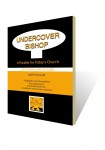
Join Bishop Ruby Kinisa as she visits small churches "under cover" to learn what people would never share if they knew they were talking to their bishop.
Undercover Bishop will always be available in PDF form on 2x2virtualchurch.com for FREE.
Print or Kindle copies are available on Amazon.com.
For bulk copies, please contact 2x2: creation@dca.net.
MISSION INSPIRATION OFFER
A visual and biblical guide to help congregations define their missions.
Contact Info
You can reach
Judy Gotwald,
the moderator of 2x2,
at
creation@dca.net
or 215 605 8774
Redeemer’s Prayer
We were all once strangers, the weakest, the outcasts, until someone came to our defense, included us, empowered us, reconciled us (1 Cor. 2; Eph. 2).
Be calm. Wait. Wait. Commit your cause to God. He will make it succeed. Look for Him a little at a time. Wait. Wait. But since this waiting seems long to the flesh and appears like death, the flesh always wavers. But keep faith. Patience will overcome wickedness.
—Martin Luther