Yesterday, our national leaders failed to pass a bill touted as “common sense” legislation that would extend the use of background checks in gun sales. It was hoped that the bill might help keep dangerous weapons out of the hands of people ill-equipped to use them for legal purposes.
In the land of the free, the only adults who do not have a right to carry guns are those with already detected serious mental impairment and those with criminal convictions.
Who knows if the bill would have made a difference or not? Many of the gun tragedies are committed by people with undetected mental impairment.
But at least, someone was trying. Someone was looking for answers outside the status quo.
If ever there was an opportunity to prevent the growing list of tragedies such as Sandy Hook, it is now—just four months after we buried 20 first-graders and the people who taught them.
Gun lobbyists stand in the way, promising to make election or reelection difficult for any candidate who attempts to tighten control on the rights of individuals to wield instruments of considerable destruction.
Military grade weaponry is impractical for personal defense. They just don’t fit in pocket or purse!
I can’t recall ever hearing that a home was protected by the fortunate owner of an AR-15 Bushmaster Semi-automatic Rifle, the weapon used at Sandy Hook. Perhaps just knowing it might be there by the nightstand is enough to keep the bad guys away. Just imagine the scene:
Honey, I think I hear a burglar.
Don’t worry, dear. I just loaded my rifle with a 100-cartridge clip last night.
There is an answer to the power of the lobbyists. It doesn’t require supporting a host of smooth-talking advocates to wine and dine your representatives in Washington.
The answer is to create an online lobby. There is nothing to join. No dues to pay.
Use the mightiest weapon in the world. The keyboard.
If you support tighter gun controls, write about it online. Don’t just write to your senators and congressional representatives. Write to the world.
Lobbyists are needed only when they represent a self-interest—most likely a minority self-interest.
Their voice is heard because . . . well, because THEY use it.
Now, as Senator Toomey said, on to other problems like the economy. We don’t seem to be able to solve that one either.
Organizations that thrive in the 21st Century will be distinguished by two attributes: entrepreneurship and organizational foresight.
He suggests that the word innovation be replaced with the word “entrepreneurship.”
He notes these subtle but significant differences (the bullets are quotes):
Innovation requires creativity but, unlike entrepreneurship, does not address issues like tolerance for risk, organizational agility, improvisational ability and speed.
Innovation often comes in bursts after focusing on discrete ideas and issues, while entrepreneurship requires cultivating a certain kind of culture, defined by a set of practices and attitudes that are infused throughout an organization.
Innovation implies the creation of something new, while entrepreneurship can mean dramatically improving what is already working with new vision and processes.
This sounds impossible. It is not. Even small churches can follow it.
The problem is that church hierarchies don’t recognize the potential. Armed with an impenetrable sense of entitlement and a tradition that supports it, they measure their congregations by ancient standards. These standards are failing almost everywhere!
The entrepreneurial church is not about making money for money’s sake, but is more about creating revenue streams with ministry projects. More lucrative ministries will provide funds for ministries that will never be self-supporting.
People today hesitate to give offerings, especially when they can’t see their offerings at work. More and more, congregations are begging for offerings just to help them survive — not to help them serve. It’s a losing proposition.
Less committed people of faith are not going to see this as a good investment of their time or tithe. They are more likely to contribute both money and energy to projects when they see them making a difference. They are not seeing this in churches that have budgets that are top-heavy in overhead.
There are many opportunities that are entirely in keeping with the mission of the Church.
One of Redeemer’s strengths is the ability to recognize opportunity.
There would be no conflict between Redeemer, East Falls, and the Southeastern Pennsylvania Synod of the Evangelical Lutheran Church in America, if Redeemer had been nurtured and granted the freedom their constitution gives them to shape and fund their ministry in less traditional ways. Are we not regularly implored to “transform”?
Our Christian Day School, which was ready to open as a Christian School for the first time in 25 years, would be providing upwards of $6000 per month for ministry—and creating a Christian witness in a neighborhood which is losing its Christian schools.
Our aid to immigrant families would be producing $100,000 per year. Redeemer had a plan in place that would help immigrant first-time home buyers. The expertise of our members would ease the path to home ownership and the congregation would gain some money in the real estate transaction, which would then go to help another immigrant family.
Our website would generate another few thousand per month for ministry. The website reaches out to small churches all over the world.
More than enough resources for a neighborhood ministry.
This is no different from religious publishing houses making their living publishing books or religious social service agencies tapping into government revenue streams. And it doesn’t camouflage mission to meet government requirements.
Unfortunately, our regional body has no vision for its small churches. They are waiting for them to die.
Congregations and clergy, including regional leaders, are often strangers to one another.
Regional leaders can know very little about the congregations they serve or the people who support them with their offerings.
It is not likely that they visit often with lay leaders. Even if they did, lay leadership shifts every couple of years or so.
Regional leaders have only two sources of information.
Annual parish reports (completed and submitted by clergy)
Pastors’ firsthand accounts which can not help but be delivered with self-interest.
Regional leaders are likely to come into contact with congregations at pivotal times in a congregation’s history.
When they need to call a new pastor for any number of reasons.
When there is some form of conflict, which often involves a pastor.
Consequently, regional leaders are likely to have a very biased view of a congregation.
When they don’t know what’s going on they fall back on numbers — not seriously considering what the numbers represent.
They might send someone to visit a church and report their findings. That visitor reports there are only 14 in worship. They have no way of knowing that 50 usual attendees are really upset about something that might involve the pastor. They are not going to hear about this from the pastor! They come to the conclusion that the church cannot survive. They never deal with the problems. When the regional body is hungry for assets, it is easy to reach this lazy conclusion.
The congregation then has a reputation among clergy. The memory for this reputation is quite long. Clergy might comment: “Wasn’t there trouble in 1960?” The congregation has no idea what they are talking about!
Lay people are often unaware of the power of the clergy gossip mill. They are unlikely to be part of the conversation that can spin out of control with no way to correct misunderstandings.
Clergy are sometimes so self-absorbed that they even come up with trendy slang. Years ago, pastors talked among themselves about alligators. “Who is the alligator in your church?” they might ask one another. An alligator in clergyspeak is a lay person who lurks in the congregational water ready (in this clergy person’s mind) to snap its jaws on a pastor’s throat. Paranoia? Perhaps! It reflects neither love nor respect for their flock. It does untold damage to a congregation within the Church—all the less fortunate when it voids the congregation’s reputation outside of ecclesiastic circles.
Every congregation has a reputation in its community. Clergy can influence it or they can exist totally unaware of it.
This reputation spans longer periods of time—generations—and takes in the community’s knowledge of the congregation’s participation and response to community needs and the lives they have touched that may not be part of the congregation’s membership or collected statistics.
The community measures churches with a different yardstick.
They work together on community projects.
Their children attend schools and programs sponsored by the church.
The community can count on the congregation to share their facilities generously.
The community remembers a congregation’s response to a local disaster.
They may have acquaintances and family members whose lives were touched in some small but significant way.
The community knows nothing and cares less about denominational involvement or reputation. They only know what they see and that’s the local congregation and its members.
A regional body has no way of measuring this, except as filtered through the clergy. Too bad. This reputation is an asset to the entire denomination. It is far more powerful than slogans or logos or even press releases.
The challenge to the Church is to know a congregation’s reputation and protect and nurture it. It must learn to separate the truth from the gossip. This becomes difficult when the regional body’s interests are limited to placing pastors and accumulating assets.
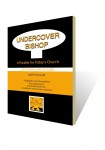
2×2 published a parable about this division between clergy and lay leaders and how it impacts the small church and the mission of the church. It is based on our 60 visits to local congregations—most of them quite small. It is meant to spark discussion on how clergy and laity can work together and advance mission with the limited resources (both human and financial) which define today’s church.
Read Undercover Bishop. Share its short chapters weekly with your congregation. Ask if they see themselves anywhere in the story. Study questions are included at the end of the book.
The hurdle of getting a musical instrument out of the closet and out of its case every day is an obstacle to the much-needed practice.
This applies to other skills, too. If you put away the brushes, the next painting may never happen.
Our attics and basements tend to filled with things we carefully stored, never to be used again.
The temptation in church work is to put aside small church communities, while we wait for things to improve on their own.
Leaders neglect them. They tell us there is a plan. They are waiting for more people to show up—for donors to appear (or die) — for the right pastor with the right chemistry.
This is the ministry philosophy of many denominational leaders. They wait for ideal conditions for ministry—conditions they think they can control.
They want to avoid conflict, so they avoid ministry altogether.
They want pastors to be happy and fulfilled. They don’t want them to experience the angst that is best friends with creativity.
Creativity is necessary for transformational change. Transformational change will make everyone unhappy at least a little and for a little while. So let’s keep the small church on ice.
It will take a while for the Church to recognize that they can no longer control the voice of the faithful. The reason for this delay is that congregations and individual Christians do not yet realize that we have more power than ever before in history.
We are accustomed to abiding in silence, accepting what we are told and assuming that the powerful within the church have godly interests.
This is not always true.
Martin Luther took a huge risk when he hammered his list of 95 complaints onto the cathedral door. The response was predictable. Luther was forced into hiding for fear of his life. Fortunately, he made a few well-positioned friends who helped him over this rough spot. He emerged to become a respected preacher and teacher of the Word.
Martin Luther wasn’t the first to raise many of the issues he cited. He was the first to survive. He was the first with the power of a printing press to amplify his voice.
The old tools of intimidation still work. Clergy who are beholding to hierarchy are easily silenced.
During the extended conflict between Redeemer Lutheran Church and the Southeastern Pennsylvania Synod has anyone wondered why it is the lay people who have been dragged through courts? The clergy who were working with the congregation, voted with the congregation, and encouraged the congregation headed for the hills after private meetings in the synod office.
Today, each individual within the Church has far more power than Martin Luther.
We have a voice that will be more difficult to control.
Eventually, our voices will have influence.
Redeemer, excluded from participation within the church, started a blog. We are one of very few churches who have taken this step and use this tool for weekly outreach. It has both changed and shaped our ministry in ways we never expected.
Blogging builds community. We have encountered dozens of individual bloggers who write from a spiritual point of view. They are poets, photographers, parents, writers, artists, and adventurers. They are all over the world—Thailand, Armenia, Scandinavia, Africa, the Mideast. Some of them have church connections. Others do not. They tend to represent the age demographic that is missing in the church on Sunday morning—20-40.
They have discovered that within the Church, they have little voice, but outside the Church, they can grow.
The ability to grow as individuals is a key factor that is missing in many church communities.
Modern youth have been reared in a world where they must constantly reeducate themselves. They are involved in an ongoing process of self-discovery. In the past this discovery period ended at about age 30, when we settled down. This will no longer be true for any of us, regardless of age.
Self-rediscovery tends to be discouraged within the Church. We are likely to be assigned a task that Church needs to have accomplished. We will be told how to do it—how to teach, how to sing, how to fix the altar, and how to distribute the offering plates. Once we accept one of these jobs, it may be ours for life!
It is no wonder that people turn away from the Church. They seek community where their voices can be heard—their ideas and talents recognized.
If the Church does not find a way to welcome the voice of the people and adapt to modern expectations, they will find their churches to be empty on Sunday mornings.
Church leaders who face this change in society with tenacious resistance will enjoy fleeting successes.
A storm is coming. A wise church would nurture voice if they want transforming change.
Today’s Alban Institute blog post addresses church resilience. It includes the thoughts of Judith Jordan who describes resilience as not so much an “intrinsic toughness” but more as an ongoing process of nurturing and fostering of relationships.
All churches can be resilient. We notice resilience more when the stakes are higher—but both large and small churches can rebound. They can redefine their missions. They can survive.
Resilience grows from love.
That’s what the Church is supposed to be good at. Wealth gets in the way.
The Church at every level is challenged today. Almost all church activity is funded by the contributions of individuals. That quarter that clinks in the offering tray must fund the local church, a regional body, the national church and all church agencies.
It is getting harder for church entities more distant from the members’ pockets to survive. Power is their only tool.
In the Lutheran Church with its interdependent structure, there is very little power assigned to church hierarchy. They are supposed to exist as servants of the congregations. But the economy has hit them hard. They crave more direct access to the wealth of congregations.
They start to stretch their powers, tweaking their constitutions a little here, a little there, until they are wielding powers that were never bestowed upon them in their founding documents.
The sense of mission begins to fade. It becomes replaced with pageantry. Pageantry makes things look better—for a while.
The mission of most churches today is funding their budget.
In this atmosphere it is harder to see resilience. The message of love is lost.
Love breaks down barriers. It opens hearts.
Resilience is hindered in a culture of criticism and judgment. That’s what many congregations experience within the structured church. The list of judgments against small congregations can be long and fabricated. The claims are difficult to prove, but few care as long as they are not personally affected.
Lay leaders are too strong.
People are resistant to change.
People are living in the past.
People are unwelcoming.
People can’t support clergy.
People can’t accept new ideas.
Says who? The people who want to claim church assets.
Funny, the faulty lay people who are “destroying their churches” with their backward thinking are thriving in the secular world which changes more frequently and at a faster rate.
Much of the criticism of congregations reflects denominational needs.
Running a denomination is expensive. Offices are expensive. Staffing an office is expensive. Keeping up illusions is expensive. The ONLY source of income for denominations is congregational members.
The poor, the needy, the sick, the young and old dependents, the infirm or visionaries need not apply.
Constitutionally, in the ELCA, no congregation is required to give to the denomination. Withholding support for a denomination may be the only voice a congregation has.
But denominations can ignore the voice and interpret the lack of support as the congregation’s failure—never its own.
It should be a huge red flag within a denomination when criticism focuses on lay people to the point of naming them and suing them. Any denomination that puts limitations on the laity’s ability to serve denies the example of Christ, who nurtured a ragtag group of peasants and spent most of his time with the needy.
You don’t hear limiting words from lips of Christ. All that comes later. It echoes through the centuries and may be the undoing of the mainline church.
Both clergy and lay leaders are all capable of leading congregations in renewal. But if their view of a congregation is only a measure of dollar signs for the denomination, then there is real trouble.
Any denomination that seeks to limit any individual’s talents is doing a disservice to their message.
Thrivent, once known as Lutheran Brotherhood, is a financial fraternal association serving the members of all Lutheran denominations.
Redeemer’s Thrivent members recently received a ballot to vote on a proposal to expand their service offerings to other Christian groups. (They must not have heard that we’ve been kicked out of the Lutheran Church.)
It was inevitable as the Lutheran population dwindles that the financial fraternity would have to expand its economic base and welcome more people into the brotherhood.
This raises some questions about church voting. If an insurance company can open a vote to every member, why do we still rely on representative assemblies voting for us at the Synod level? Might the Digital Age afford us a better way?
Representative voting relies on voters having the knowledge and experience to do a conscientious job. In this regard, the voting procedure within the ELCA is seriously flawed.
The Evangelical Lutheran Church in America adopted a quota system at the time it was formed 25 years ago—before the power of the internet was unsheathed. The original system (faulty as it was) has been tinkered with ever since. Votes are assigned by size of church, gender, language, and age. There is no good way to prove some of these characteristics. Redeemer was a church with a majority membership of color, a strong youth population and multi-lingual. Not only were we never allotted extra representation for any of these demographics, as the bylaws allow, but the bishop (at the last minute) declared us ineligible to send any voting representatives to the 2009 Synod Assembly—which the bylaws do not allow.
None of the voters at that Assembly raised any questions. We’ve been excluded ever since.
Under the quota system, credentials for representatives create a false demographic—an illusion of inclusion. A scan of the floor of a Synod Assembly might make it seem like SEPA Synod is highly diverse. We’ve visited 57 congregations. Diversity is the exception.
Twenty years of liturgical gerrymandering may have resulted in a voting pool that meets inclusion criteria but fails to be representative—or effective.
For example, many congregations have a majority female membership. They must come up with a male if they are to have the proper number of votes at Assembly. The males in the congregation may have no interest and are borderline involved in church government but genitalia is valued above knowledge and commitment.
An inexperienced voting assembly is putty in the hands of church leaders. How else can our Synod explain adopting six-figure deficits at a time when giving was down across the board and never stopping to think how those deficits would be overcome and at whose expense?
Voters who don’t understand the issues or consequences of their decisions follow the pack.
There are important documents and procedures which control the powers of the Assemblies and provide safeguards to the congregatons. It’s not just the constitution, with which some people have at least vague familiarity. It includes the Articles of Incorporation, which define the powers of the Assembly and control the extent to which the constitution can be changed. Practically no one is familiar with this document. For one thing it forbids the seizure of congregational property without the consent of the congregation and puts this matter outside the authority of the Synod Assembly.
Without knowledge of church government, Synod Assembly has become a venue to present a synod’s wish list for rubberstamp approval—not a venue for dialog or debate.
All of this can be revamped for greater participation in an age where this is expected.
It is now entirely possible to allow all members a vote, but failing that they can at least be afforded a voice. It would take some thinking to make it work but it could bring benefits, fresh air, and true representation into the world of Church.
Regional offices will be forced to really engage with their constituency.
Congregations will have to be realistic about their memberships.
They, too, would have reason to engage members on issues that matter.
Members would have a sense that their involvement can make a difference.
Vested members may increase participation and giving.
Today issues can be presented to all church members online well in advance of the Assembly date.
During this time, the regional office is free to communicate with all members of the church. Congregations have equal freedom to debate issues. Even individuals can take discussions online. People might actually become involved.
If it is too unwieldy to count each person, a congregation’s representatives can gather after the issues for debate have been aired for a few weeks. A one-day assembly is all that would be needed.
It’s something to think about.
It could be truly transforming!
If insurance companies can count every vote, so can churches.
Palm Sunday was always a big day for Redeemer. In some ways, we looked forward to it more than Easter. Our congregation had many young families who traveled on holidays to visit the grandparents.
Palm Sunday was always a joyous celebration complete with a congregational ham dinner. We collected food to deliver to needy families for Easter at this event.
We celebrated Palm Sunday—purely Palm Sunday. We were joyful as were the people gathered in the streets of Jerusalem. Our new East African members added to our tradition, teaching us Swahili chants.
We could concentrate on Palm Sunday readings and sing several Palm Sunday hymns—not just one. We entered Holy Week the way Christians are supposed to enter Holy Week.
In recent years, the Church revisited Palm Sunday. Theologians despaired that Holy Week services were not attended as they once were. So they decided to combine all of Holy Week into Palm Sunday. “Captive audience” was the thinking. Consequently, there is now 10-minute nod to the celebration of Christ’s entry into Jerusalem before the Old Testament, Psalm and Epistle lessons are glossed over or skipped so we can read 114 verses of Luke. It’s long no matter how you try to break it up—way past the modern attention span.
The faithful, who observe Holy Week, are cheated out of their observance.
The Ambassadors are looking for a church where we can celebrate—truly celebrate—Palm Sunday. We may end up staying home tomorrow.
Part of the challenge facing today’s Church is that the role of clergy and how they relate to congregations must change. Changes have already occurred in the numerous short-term and part-time pastorates. This is likely to continue while our expectations remain in the past.
The monetary demands on congregations have grown while the source of funding has been steadily dwindling.
Clergy spent decades griping about being highly educated but poorly paid. They had a point, but the resolution of their complaints has put their services out of reach for many congregations.
Fewer recent college graduates are entering the ministry. Today, candidates for ministry are often mature adults. Some are nearing the end of their careers—drifting from a professional calling. As older servants of God, with established families, lifestyles, and debts, they are looking for economic security and as little disruption to their settled lives as possible. Since clergy often view themselves as CEOs, the pay expectations are the pay expectations of older professionals.
The talent pool in which all congregations fish for leaders is crowded with candidates who can make only part-time commitments within tight geographic parameters. The pool of available talent may not fit congregational needs. Yet it is the role of regional bodies to place their rostered leaders in their rostered churches. Lots of square pegs in fewer round holes. That translates to unhappy clergy and congregations. Conflict often results.
That’s one side of the equation.
On the other side of the equation—the congregational side—an ongoing revolution has been underway. People have stopped attending church. The Sunday morning worship demographic is upwards of 50+.
The younger demographic—the demographic absent from church—represents well-educated career people, whose varied expertise is hard for professional church leaders to recognize if it competes with their own.
This is only part of the picture.
The needs of congregations change so dramatically that they are difficult to define and fill when the need is greatest. Community demographics, once stable for generations, now shift every few years. Congregations using the “settled pastor” model can easily be left with beloved leadership that is unable to serve the changing neighborhood. Decline sets in and everyone is afraid to make changes. We are church people. Nobody likes to complain—even those charged with the welfare of the congregation.
It is fairly clear that most congregations can no longer afford a full-time theologian in residence. Even if they could, it might not be to their mission advantage. The skills of theologians are no longer a congregation’s most urgent imperative.
Theologians are trained in the art of preaching — pulpit to pew communication. Modern church leadership must concentrate on communication beyond pulpit to pew. The pews are nearly empty.
Communication in today’s world is person to person. Very pastoral.
Money spent on making sure a good sermon is provided to a dwindling number of listeners is money that cannot be spent on reaching the people who are not in church—a key mission.
Yet the pastor’s salary is the foundation of every church budget.
The power in the world has shifted to the individual. This changes the way individuals think. We are no longer wired to understand the need to gather on Sunday morning—especially if our presence in Church does not recognize our abilities.
This trend is not likely to reverse. The Church is going to have to adapt.
In the Church, we see a structure that cannot budge. It continues to make unrealistic demands on the few people who remain loyal.
It is disheartening to be a lay person in today’s Church.
The typical congregation of the future, large or small, needs communications experts, education experts and service providers. We need business and entrepreneurial skills. It will be the rare pastor who can fill every need. It is unlikely that the growing pool of second career clergy perceive these skills as part of the role they are adopting late in life. (It may very well be the demands for change in their first careers that inspired them to turn to the Church.)
The day is coming when clergy will not be called to one congregation long-term but to multiple calls defined by skill sets which they will provide to congregations only for as long as they are needed.. They may join teams of clergy with complementary skills. Congregational budgets will detail mission tasks and will no longer allocate a large sum to one pastor.
This is an economic necessity and it will further empower the laity.
The Church is coming kicking and screaming into the Digital Age.
It carries historical baggage that is making the journey very difficult—and is causing the Church to miss out on tremendous opportunity.
The Church is entering the Social Media Age with a long tradition of one-way dialog.
Most of us know that by definition “dialog” is two-way.
But the Church does not know this. That’s why it seems perfectly natural for a pope to Tweet to his followers but announce before clicking “Enter” on his first message that he has no intention of following.
Church leaders tend to think that when they are standing in the pulpit they are engaging their listeners. That’s their idea of dialog.
Church leaders tend to extend the pulpit to all other interaction with congregations. Meetings and Assemblies are carefully managed.
Ridiculously short time restrictions prevent dialog.
There is a vetting process for who will engage in church dialog. Clergy get first access. Lay people with a proven track record of support for clergy get second place. There is no third place.
In our region and denomination, it was the custom of our present and last bishop to bypass the elected leaders of a congregation and request to speak to the whole congregation. Request is not the right word—demand is more accurate.
The strategy sounds so open and democratic. It is in fact manipulative.
It is disrespectful to the elected leaders who know the congregation’s issues the best and are elected to represent the interests of the congregation—the whole congregation.
It engages congregational members with less knowledge of issues and various levels of commitment to the total mission of a congregation. As they view the disrespect shown for the congregation’s leaders, they are appropriately fearful of speaking out.
Dialog is shut down.
Church leaders are fooled into thinking they have led people. They have intimidated people.
What might happen if the church leaders came to congregational leaders with one simple question—How can we help?
What might happen if they then sat back and listened?
It may be the single most important step in achieving transformation.
This has never been easier or more possible—however unlikely.
The Church needs to buy a pair of listening ears. They are rare but not expensive.
Join Bishop Ruby Kinisa as she visits small churches "under cover" to learn what people would never share if they knew they were talking to their bishop.
Undercover Bishop will always be available in PDF form on 2x2virtualchurch.com for FREE.
Print or Kindle copies are available on Amazon.com.
For bulk copies, please contact 2x2: creation@dca.net.
MISSION INSPIRATION OFFER
A visual and biblical guide to help congregations define their missions.
Contact Info
You can reach
Judy Gotwald,
the moderator of 2x2,
at
creation@dca.net
or 215 605 8774
Redeemer’s Prayer
We were all once strangers, the weakest, the outcasts, until someone came to our defense, included us, empowered us, reconciled us (1 Cor. 2; Eph. 2).
Be calm. Wait. Wait. Commit your cause to God. He will make it succeed. Look for Him a little at a time. Wait. Wait. But since this waiting seems long to the flesh and appears like death, the flesh always wavers. But keep faith. Patience will overcome wickedness.
—Martin Luther