On one hand, you can’t blame them. Blogging has only been popular for a short decade. Pastors aren’t trained that way and neither are most teachers of pastors.
On the other hand, blogging embraces new tools that could revive an ancient and failing medium. It deserves attention.
Sermons have a built-in schedule. The deadline is Sunday. Some pastors plan ahead. Others ponder until Saturday night. This weekly discipline belongs to a bygone era. Fewer people attend church. Many aren’t listening. They are taking time from modern lives in which many communicators are vying for their attention. Consequently, the once-a-week sermon is failing to communicate.
Nevertheless, it eats up a healthy chunk of every congregation’s budget.
Why aren’t more preachers excited by the new possibilities to reach the world with the Good News?
Great preachers of the past would have jumped at using technology!
Consider Martin Luther. He wrote prolifically. He was effective because his writing coincided with the invention of the printing press.
The discipline of daily writing combined with today’s marvelous ability to reach individuals, if practiced religiously, could reach vast new audiences.
It is likely to breathe new life into old scripture.
Blogging makes you think.
Thinking leads to questions and the pursuit of answers.
Writers tend to be careful with their words.
Blogging every day makes you think of things from different viewpoints.
Some of those viewpoints will consider the lives of the people you hope to reach.
This will happen because preachers will run out of material if they don’t think outside their sanctuary.
I’ve been writing here for nearly three years. It was a challenge at first. I didn’t start blogging daily until I’d posted once or twice a week for four or five months.
When I started posting daily, things started happening. The audience started to grow and so did my discipline. Blogging on behalf of my church became the cornerstone of Redeemer’s new ministry. We are still stretching and experimenting and we are doing it with NO budget.
Blogging differs from preaching in one big way. It is two-way. People can engage. They can contribute. They share links. Sometimes they comment online. More often they call or email. Dialogue is good!
But dialogue in the church tends to be one-sided.
The ability to reach people who can respond makes you think about how the words you say or write will resonate with readers. Blogging preachers will start looking for new ways to communicate.
Example from 2×2’s experience:
The highest traffic post on 2×2 is an old post about mission statements. It never fails to have a few reads every day! This is a “hot” topic.
Last week, 2×2 re-purposed this post with a Powerpoint presentation to provide a tool for churches discussing mission statements. It was posted late last week and has been downloaded 100 times so far and has been embedded in 59 other websites! That’s hardly viral. But consider the size of Redeemer and our mission. Our blog reaches more people each week than attend the services of any other church in SEPA Synod.
Blogging is a powerful tool for preachers who care about the impact of their words.
So why are church websites so dry? Why do preachers do little more than post their Sunday sermons (if that)? Do they follow the traffic statistics to see if this is effective or do they just keep doing it?
Few people go to the internet to read 20-minute sermons.
They DO go to the internet for inspiration, however.
Most attend the internet every day—not just on Sunday.
When they are inspired, it is so easy for them to hit a button and share with dozens more.
The ELCA has a unique structure. The foundation (with Christ as cornerstone) is the local congregation. The local congregation is somewhat autonomous as long as it remains faithful to doctrine.
Then there is the regional body. It exists to serve the local congregations.
Lutheran structure is not supposed to be hierarchical. That’s one reason (up until the ELCA) Lutheran leaders were called presidents and not bishops — and clergy are addressed as Pastor (shepherd) more often than Reverend and never as Father.
The entire structure is funded by congregations.
Bottom up — not top down!
Bottom to top funding has created a dependence manifested in a sense of entitlement. The synods and national church want their allowance—even though no congregation is required to support them! This is reinforced by popular awareness of more hierarchical structures of the Roman Catholic and Episcopal Churches.
Maintaining the strength of congregations was once so important that synods were constitutionally forbidden to own property. Their role was to facilitate and serve, not to accumulate wealth and influence or to manage neighborhood ministry. These were temptations that early church leaders wisely guarded against.
The model constitution presented to ELCA congregations in 1987 and 1988 preserved this relationship. Individual congregational property could not be touched by regional offices or national offices without the consent of the congregation. Bylaws have tweaked away at this, but it is preserved in the founding Articles of Incorporation, which no one bothers to read, but which are legally the dominant documents.
The road to self-destruction
Constitutional changes made for convenience have put us on a road to self-destruction. The hierarchy, meant to serve, is using pooled resources for its own benefit above that of the congregations.
The regional and national church and their agencies have used offerings sent from the local churches to hire professional development staff. Most church agencies have someone paid to ask for money. They wine and dine wealthier Lutherans with promises to maximize their estate gifts for the betterment of mission. The reward: publicity and recognition. Perhaps a room in a seminary will bear their names for a few hundred years.
So much more enticing than a pew or window!
The national expression looks for estate gifts. So does the regional church. So do the seminaries, camps and social service agencies. With our pooled offerings, they can afford the websites, printed resources and personnel to pull this off.
Few congregations can compete individually with the offices they jointly fund.
Congregations can no longer expect estate giving.
It doesn’t help when regional synods exercise their own form of eminent domain and seize congregational assets when money runs low. They bet that local members don’t have the resources or the will to fight them and their pooled resources. They also correctly assume that a sufficient number of Lutherans are unaware of the polity of their faith. Any congregation that protests goes up against a national and regional legal team—funded by the offerings of the congregations but acting almost exclusively on behalf of the national and regional expressions. Volunteers vs professionals paid with the offerings of the volunteers!
In other words, they can get away with it.
Secular courts want no part of sorting this out.
Consequently, congregations are not likely to get estate gifts from members when donors can’t be sure their gifts are going where they wish. The weekly offering plate suffers. This hurts the whole church. Lutheran structure relies on the strength of local congregations.
All those gifts raised by professional fund-raisers won’t be worth much at the current rate of congregational failure. This is starting to become evident. Seminaries are struggling to find students. Career pastors are becoming rare as second-career and part-timers grow in numbers. Lutheran social service agencies abandon their mission message to court government funding. Everyone wants a piece of a smaller pie!
Redeemer received an estate gift of more than $300,000 in 1988 just as the ELCA was forming. It had benefited from many membership estate gifts over the years but this major gift gave us new security and mission promise. Unfortunately, it was eyed by other Lutherans from the get-go—first by a Lutheran retirement home. Paul’s Run claimed our member’s money even though our member never moved in. Ten years later Bishop Almquist took $90,000 from our bank account without our knowledge or consent. Redeemer had to defend its rights repeatedly—which was never fair.
This strained relationship gave Bishop Burkat the notion that she should try again. She couldn’t move fast enough. SEPA was within $75,000 of depleting every available resource. Little Redeemer had more money than SEPA.
Redeemer’s experience is mirrored in other synods with mixed results.
One congregation attempted to talk with their synod. They were told that the synod could not engage in conversation when there was a possibility that things might end up in court.
So much for mutual discernment!
Every hierarchical win is a Lutheran loss. The structure that is supposed to be our strength has everyone looking out for themselves.
Take a look at your congregational memorial giving. How has it changed in the last 25 years of ELCA governance? What can you do about it?
Redeemer is working at creating a ministry platform that will rely on mission success and not on offerings.
Below you see a recent pope. Last you see the man they all emulate.
We at Redeemer were once so cutting edge with our pastor who shaved a cross on the back of his head!
But we are not so far behind the times. One of our own, a tattoo expert, could still provide a valuable service to rising clergy who want to spend less on frocks but keep with modern fashion trends.
As this tattooed pastor shown above said, “You know you want it!”
The question goes back to brothers James and John as they fought for status by Jesus’ side in heaven.
It’s still a pretty good question.
We may find the answer by asking another question. What are we trying to accomplish?
The standard answer for churches is to spend a few weeks debating the wording of a mission statement (all of which are pretty much the same). Then what?
Mission statements rarely provide a road map. The statement validates us as a community. Often, we don’t have a clue how to achieve our mission. Often, we do little to try. We expect to keep doing things the same way, hoping the age-old mission strategies will miraculously reconnect with new generations and our churches will return to the 1950s with sanctuaries filled with happy offering-givers.
Things are done a bit differently in business. Business cannot afford to live on delusions.
When companies roll out a new product or service they look at every step required to achieve their goal. Usually the goal is to sell widgets or to create a demand for specialized services.
The path towards that goal may be complex. It starts with a concept. The concept must be designed and tested. Patents or licenses may be required. An interest must be created. Public Relations and Marketing go to work. As the plans and ideas take shape the product needs to be manufactured. Distributing channels must be opened. Warehousing must be arranged. Customer service must be available from day one. And then comes the wider advertising blitz (all of which was planned long before).
Some of these processes can happen concurrently. Others are more linear—process B cannot happen until process A is completed. Some very important tasks must be accomplished by people who are fairly low on the corporate ladder. But when their skills are needed, they become the focus of the project.
What is the mission goal? Not the lofty pie-in-the-sky goal but the practical, measurable goal—the goal upon which the congregation’s survival depends.
What must happen before that goal can be met? When do we hope to reach our goal?
Who is going to monitor the various entities? Who plays the most critical roles at which times?
This is where the Church may be failing.
Church has an established hierarchy. The more important—the fancier the robe!
Lutherans went against this thinking 500 years ago. Lutherans believe that all church people, whether clergy or laity, play equally important roles.
Modern Lutherans are forgetting our roots.
Perhaps we should revisit this belief. It could make the difference the modern Church so craves.
Seth’s post makes an interesting point. Some people are more critical to the success of the journey on the critical path at different times. The most important people may not be the ones wearing the robes! Seth writes about his experience monitoring one company’s critical path.
I went out and got some buttons—green and red. The deal was simple: If you were on the critical path, you wore a green button. Everyone else wore red. When a red button meets a green button, the simple question is asked, “How can I help?” The president will get coffee for the illustrator if it saves the illustrator three minutes. In other words, the red button people never (ever) get to pull rank or interrupt a green button person. Not if you care about critical path . . . .
The problem with the general failure of church structure is that age-old structure is assumed to be the proper structure of importance. So even though Lutheranism left this thinking behind, we are tempted to return to the old ways.
A presiding bishop is most important. New World Lutherans had purposely called leaders Presidents—not Bishops. 27 years ago we returned to the old ways. It hasn’t helped.
The presiding bishop may play no practical role whatsoever in the critical path of an individual congregation’s mission. Many who are busy fulfilling a congregation’s mission may not even know the name of the current presiding bishop and are only vaguely aware that they exist. Presiding bishops have visibility, an office, staff and probably the highest salary—but they may not be the most important player in any congregation’s mission strategy.
Then come regional bishops. They, too, may have no role in congregational mission. They, too, used to be called Presidents. Their major constitutional role is overseeing professional leadership. Often this becomes the focus of all mission. Congregations are expected to support at least one minister—whether or not that minister can provide the necessary skills for that congregation’s mission. When they rarely meet with lay leaders they forget to ask, “How can I help?”
Then come clergy. Now we’re getting closer to the work of the church, but they, too, may have far less role in the success of a congregation’s mission than others. Some may! Others may be biding time.
Then come staff. Closer still to the critical path.
So far, everyone on the list is paid.
But none of these people can create successful mission without the next two groups of people—laity and seekers. These are the people who can effectively accomplish mission. Often they get no help—no training, no guidance, no resources, no status, and no consideration of compensation. (Think “disciples.”) This is where James and John found themselves the day they came to Jesus with their question.
Youth leaders may be the people who can reach the families. The communications team may be the ones who can coordinate outreach. The social ministry people may know the problems of the community better than anyone. The young people may be the best evangelists to young people. That church festival is not going to happen without the cooks! All need encouragement and help. But often they are seen as the funders or the foot soldiers who are there to do what the church leaders think needs to be done. If foot soldiers are successful, the paid staff may get a raise!
Frankly, the workers are taken for granted. No wonder the pews are empty!
What if every congregation tracked a plan to achieve its mission? What if it handed out green and red buttons? Note. The colors in no way depict rank. They indicate who, for the moment, is playing the role most critical to the success of the mission. The job of facilitating is equally important.
Lutherans should be good at this! We Lutherans were so modern in our thinking centuries ago!
The green buttons would be worn by the people who have to complete a certain task on the critical path before the next group of people can successfully start the next task. The red button people must facilitate their work if the mission is to be successful. (Think “shepherd.”) The red and green buttons can be swapped as we move down the critical path’s checklist.
Red button church leaders must serve the green button church leaders regardless of either one’s rank or pay grade. It’s all in the interest of expediting Church mission.
Unfortunately, it’s not the way we think.
Instead, we seem to have accepted failure to achieve mission as the norm. This changes the Church’s mission to funding and perpetuating a structure that is ineffective. We keep doling out dollars to support structure until the money runs out.
Most churches work very hard at this. Generally, they are on the fast track to failure.
The laity will pay the fare.
Who will be rewarded in the after life? Next week’s Gospel reports that Jesus didn’t have much tie for such questions! Luke 20:28-37.
What is the one statistic that churches traditionally strive to improve.
You might think it is membership. It’s not. Everyone knows that less than a third of any church’s membership roster is actually involved with the church in a manner that counts toward viability. A church with 1200 members is likely to engage less than 300 at weekly worship.
The single statistic that drives congregations is worship attendance.
This number represents a number of things. Church attendance is the old-fashioned “social proof.”
It measures the relationship with church leadership. People don’t attend worship when they dislike leadership.
It measures purpose. Worshiping God in communion with other Christians is a prime reason for holding a worship service.
Most important: Church attendance is a snapshot of your offering plate. Look across your sanctuary. Do you see a large number of children and youth? Probably not. They are not valued in worship because they can contribute little to the offering plate. Do you see large diversity in ethnicity or color? Probably not. They may have little expendable income. As one pastor points out. It takes ten of ‘them’ to equal the giving of the people who do attend worship. This brings us to the typical Sunday morning population—seniors and soon-to-be seniors. They are low maintenance members and they represent stability to the offering plate and potential endowments.
A great deal of worship revolves around keeping prime givers happy. When prime givers are happy, church leadership is happy.
When this becomes the focus of church life, we are neglecting the mission of the Church and the development of church leaders who will sustain the church twenty years from now.
There is one more church statistic that is so important we often ask for physical proof. Church attendees are asked to sign cards to prove they joined others at the Eucharist Table.
Once a year attendance at communion is required for voting eligibility. Why do we record more than that? Habit. In the old days church secretaries even wrote to the home churches of visitors to validate this useless statistic!
Old habits die hard. We like to see people in the pews because it validates our traditions.
Worship attendance is easier to measure than mission, vision, passion, potential, creativity, and sweat.
Should worship attendance be the prime statistic in the church? If it is, the Church is in big trouble.
This Sunday, many Protestants will celebrate the influence of Martin Luther and the 500-year-old movement that forced religious reform on a major power structure of their world—the Church.
The medieval world of Martin Luther was controlled by the Roman Catholic hierarchy. They reached into every aspect of medieval life—home, work and government.
There were very few upwardly mobile career tracks. It helped to be born to wealth. If not, you could use your youthful good looks to marry well. If you were strong, you could fight your way to gaining land and social status. If you were wealthy you could get some schooling. But most people farmed or entered a trade.
But there was one more way. The easy track. You could give your life to the church. Prestige and influence were for sale there. Your chances of a good life were pretty good!
Then came Martin. He had bought into the system. But it didn’t sit well with him.
He laid it on the line.
“Here I stand. I cannot do otherwise.”
The modern Lutheran church fails to emulate its namesake.
Today’s church faces similar challenges. We may not be selling indulgences but we are always tempted to look at congregations—their property and their memberships—with a keen eye for how the hierarchy can benefit. We fall for the same temptation faced by all offenders. “We need what you have more than you do.”
Not surprisingly, the world has changed a great deal since the 16th century. The hierarchies of yesteryear have been crumbling in business and public sectors. The connected age doesn’t need them anymore.
The church, too, is in danger of seeing its tallest spires crumble. Those who reach the most influential stations find themselves in charge of fewer people with less money. Power wasn’t what they dreamt it would be.
This Reformation Sunday let’s return to the foundational teaching of Martin Luther.
Let’s work to make the family the center of religious education.
Let’s make sure that access to the scripture is universal.
Let’s empower God’s people by strengthening them rather than shaming them, bullying them, or creating dependency.
Let’s demand that our leaders model their ministries on Christ’s sacrifice.
2x2virtualchurch doesn’t get a lot of online engagement. But people do contact us. We get direct emails and sometimes even phone calls about our posts. When I encourage readers to comment on site, they say it’s too hard from their mobile phones—which tells us something about how the world gets their information today! Easier to use that phone to autodial us!
Friday’s post drew a phone call that raised an interesting question. It is a question that no one has probably thought about, because there was little need.
The sermon, always central to Lutheran worship, is very ineffective for the purpose of spreading the Good News. Yet it is a focus of our expectations and budgets.
Most churches say something in their mission statements about reaching beyond that limited audience. Yet finding a way to do that has been a challenge, despite the tools in our modern hands.
Sermons—even great sermons—aren’t going to do it! Our post began exploring ways to maximize a congregation’s investment in providing a weekly sermon to a shrinking, limited and static audience of people who are predisposed toward the message. Our reader raises this question:
Who owns the rights to the sermon?
The caller is well-versed in both the corporate and church publishing worlds, especially the higher end of the Protestant Church. She commented that in the corporate world, if the corporation subsidizes the creation of content, the corporation owns the content. We are guessing the church world will argue that the pastor is self-employed and therefore owns his or her words.
I am self-employed but I know from experience that my clients consider my work to be their property. I often know that I have legal rights to the work product, but usually decide to not argue with clients. I value the relationship and the next job above the value of past work and insistence on accepted professional rights.
All this thinking may belong to the past—when publishing was the business of publishers. Today every evangelist or entrepreneur must publish if they hope to succeed. Hair dressers, chefs, dog trainers, roofers, lawyers, doctors—everyone will publish.
What roadblocks will congregations encounter when they try to get more mileage from their considerable investment in spreading the Good News? They will have to get content for their evangelism efforts. Can they rely on the cooperation of clergy? Will everyone be stepping on toes? Will congregations seeking to call pastors insist their candidates understand modern publishing? They should.
The question probably enters no one’s mind now. As it is, very few pastors publish. Those that do are likely claiming all royalties without anyone questioning who subsidized the time they took in writing the book.
Will pastors value relationship over work product? Will they argue that Jonathan Edwards published his sermons for his own benefit and therefore they have the same rights? I don’t know the answer, but it is something to think about as congregations — like everyone in the modern world — realize that they have the power and need to publish. Publish or perish, for real!
These will be refreshing legal battles after the church has wasted so much of its resources in arguing about physical property, land, and monetary assets. Maybe church leaders will at last realize that their message is a major asset!
This is a game changer. It can be the salvation of the small church. If we make it a contest, all will lose. Congregations should think about this now before their regional bodies start to tweak their constitutions to favor them and the clergy. Clergy are a pretty big voting bloc in that regard.
Congregations must become involved in any upcoming debate. They may have to spark the debate or watch decisions made for them — and not in their favor!
This has happened before. The Lutheran Church in America (the predecessor body of the Evangelical Lutheran Church in America) forbade congregations from publishing. It was seen as competition with the national church publishing houses. Now there is no way to stop congregations from publishing.
Denominational leaders will be shooting their mission in the foot if they start to legislate these rights in their favor, but they’ve been doing this in their lust for land for years.
Congregations, think about this now! If your next pastor is uncomfortable with publishing and uncomfortable with others in the church becoming involved in publishing, they will be unprepared to bring your congregation into the future.
Think about what goes into the staging and delivery of the weekly sermon.
Divide your pastoral salaries by 52 and then divide by five. That’s what you paid your professional leaders for the week’s sermon.
Then add the costs of maintaining a building.
Add heat and air conditioning costs.
Now add the costs of the other professionals who help set the stage for delivery of the service—the sexton, organist, and choir director.
Add the cost of the church secretary and the cost of printing the bulletin.
We won’t add the costs of the many volunteers, but they added to the experience, too.
These costs and efforts are repeated every week. The beneficiaries—the people in the pew—are likely to be the same people every week. They number between 15 at the low end and 700 or so at the high end. The median congregation is probably less than 75 per church.
Advertisers call this calculation the cost per impression. Church costs per impression are very high indeed.
Oddly, this is never seen as squandering resources. Why not?
Because it defines Church. This is what churches have done for 2000 years.
We are well into the 21st century. The internet has been around for about a quarter century. It gets more powerful every day. It also gets easier to use. We are capable of so much more than monks with their parchment and pen.
The same message delivered in your church on Sunday can and should be preached beyond the back pew. This does not mean printing the sermon on the web site. This will attract practically no readers—except perhaps other preachers looking for ideas!
Put the Same Information Into Different Formats
Reach Far More People
There are ways that a sermon delivered to very few (even in well-attended churches) can reach into the neighborhood. Done consistently it is likely to attract people to your ministry.
We could take any sermon as an illustration. We’ll take for example the sermon that our Ambassadors heard last week at Trinity, Norristown. It’s fresh in our experience. Like most people, we don’t remember sermons very long.
The source scripture for the day was the story of the Apostle Philip’s encounter with the Ethiopian eunuch. The eunuch was sitting in his chariot, minding his own business, trying to make sense of the book of Isaiah. Along comes Philip, who might have passed up the opportunity to share, except that he was following orders from God. Soon the two were chatting about Jesus.
The sermon was delivered by one of Trinity’s three pastors, the Rev. Dr. Asha George-Guiser.
The gist of the sermon was the “blasting of barriers.” She pointed out that Philip and the eunuch could not have been more different, yet both were able to come together and talk about scripture.
Dr. George-Guiser focused her entire sermon on just one illustration—her marriage. She is of Indian descent, tracing her Christian roots to the evangelistic efforts of the Apostle Thomas, father of the church in India. Her husband of many years is also a pastor of Trinity. He comes from a non-religious Pennsylvania farm family and is racially White.
Dr. George-Guiser talked about how difficult it was for her family to accept her marriage. Their many differences were barriers that took years to blast away. Blasting away at the barriers led to a long and happy union.
Great illustration. It probably resonated with the congregation of about 70, many of whom probably know both pastors very well.
The service was at 11 am. By noon, the sanctuary was empty. The message and sermon were already on their way to oblivion to await the message of next Sunday. The shelf life of a sermon is very short.
How could the same sermon be repurposed to reach many who were not present in church last Sunday?
What if earlier in the week, the congregation had been invited on a church blog or Facebook to identify barriers in their lives? Anyone taking part in that conversation would be more invested in the worship service.
What if illustrations of barriers in the community had been identified and addressed on the blog? People who might never set foot in a sanctuary but who discovered the blog because of their community interest would see a church in action. The church web site would find more and more readers.
What if photos of barriers in the neighborhood had been posted on Pinterest with a link back to a discussion on the church blog? The congregation would have even more exposure in the community.
What if a few memorable snippets from the sermon were recorded as a podcast? Commuters might listen during the week as they drove to work.
What if a Powerpont with key sermon ideas had been posted on SlideShare? Other churches might share it.
What if the same Powerpoint were used in worship to illustrate the sermon? They were using projection for every other part of the service. It might extend the short life of the average sermon.
What if a children’s version had been posted on a kid’s corner on the web site?
The possibilities are many.
It’s more work to be sure, but suddenly that $1000 investment in a weekly sermon is going much farther.
Your church can go from talking about “blasting barriers” to actually lighting a fuse!
Do you see why having a communications expert is just as important to today’s church as an organist or a choir director? They can help maximize your investment spreading the Good News. It changes everyone’s job description a bit, but if transformation is to occur, something’s got to give!
Warning! The effectiveness of a church communications plan fashioned to reach beyond the pew is a marathon. If you want to give it a try, plan to dedicate a year minimum to begin to see results. By year three it should be reaping benefits you’d never imagine going without!
Redeemer adopted a project that is surely unique in Christianity. It is unique because we are unique.
We are denied access to our church home, so we go visiting. We visit a different church about three times a month. We call ourselves the Redeemer Ambassadors.
We made our first visit in August of 2010 — about a year after we were first locked out of our church building by the Southeastern Pennsylvania Synod of the Evangelical Lutheran Church in America.
The idea was sparked after one of our home church worship services. One of our members commented, “I don’t understand why they want a church without us in it.”
The group response was “Good question. Let’s find out.”
Here we are in 2013. We have visited 75 of our neighboring churches—all of whom, it is safe to say—like the idea of taking one church’s property to pay for their debt. At least that’s how they voted. And they voted without bothering to visit us!
We didn’t know quite what we were getting into. We laid some basic ground rules.
Our mission: “to worship, learn, and share.” We would share during our visits only if we were invited. Few do.
At first we wrote letters to congregations. Now we just write about our visits online.
We have a unique vantage point in the ELCA. We’ve seen common problems. We see occasional attempts to solve problems. We can see what is working and what is not. Our view has its limitations to be sure, but it is broader by far than other congregations’ views.
Waiting for Visitors vs Outreach
The typical approach to evangelism is to entice people to visit us. That’s not really working very well.
Redeemer was a church with a high rate of visitation and we were doing a pretty good job of following up as well, relying (like most churches) on our pastor to do the legwork. We experienced moderate success. But our pulpit was somewhat of a revolving door. (SEPA was waiting for us to die and was not helping to fill our pulpit). Often people joined for relationship with the pastor more than with the congregation. They disappeared when the pastor disappeared.
We began to grow in a more solid way when our members started visiting within their network of friends. We had no pastor at the time, although two pastors were helping us and were interested in a call to our congregation. This was remarkably effective. 52 members in about 18 months. Enough to alarm synod that they were losing the “waiting for them to die” game. Better act fast!
Add this to our three years of church visits and we know something about the power of visitation.
We can place our experiences side by side and see trends. Sometimes we see opportunities that remain untapped staring congregations in the face. Sometimes we can see why.
There is great potential for sharing and ministry in visitation.
This is probably true on the parish level, too. Yet neighborhood visiting is almost a lost art. We don’t even bother. We cite demographics as a code word for “why bother trying.”
People who are not just like us are not worth the effort? Really! Have we so little faith in our message!
Finding a way to visit with people is key to church growth. It may no longer be a simple matter of knocking on doors, but it does involve putting ourselves out into our communities so that we can interact. Waiting for people to visit us is death row. (click to tweet)
Visiting Is Powerful
So powerful it can be seen as a threat!
For our third visit, we chose one of the churches closest to our own. If any of us had been inclined to transfer membership, it might have been to this church—at least that was the chatter among our ambassadors at the time.
The pastor of this church reported our visit to the bishop. The bishop became alarmed and issued a letter of warning to all pastors. It advised congregations to greet us with Christian love—as if they needed instruction! It included a contact phone number in case we caused trouble. How inviting! How paranoid!
Ironically, this is the only Lutheran Church in a 4×1-mile stretch of Philadelphia. Our members live within about a mile and a half of this church. One of our members has lived for 25 years just a few blocks away. None has ever been visited by this church. Yet our visit to them was seen as a threat.
It is not likely that this church will survive to call another pastor when their current pastor retires. Another lost mission opportunity.
There is just one question a church visitor should ask. We’ll cover that in our next post.
(By the way, we haven’t visited a single church that we would vote to close and relieve of their property—even though many of them seem to be no stronger in numbers than Redeemer.)
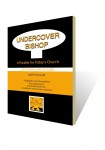
Join Bishop Ruby Kinisa as she visits small churches "under cover" to learn what people would never share if they knew they were talking to their bishop.
Undercover Bishop will always be available in PDF form on 2x2virtualchurch.com for FREE.
Print or Kindle copies are available on Amazon.com.
For bulk copies, please contact 2x2: creation@dca.net.
MISSION INSPIRATION OFFER
A visual and biblical guide to help congregations define their missions.
Contact Info
You can reach
Judy Gotwald,
the moderator of 2x2,
at
creation@dca.net
or 215 605 8774
Redeemer’s Prayer
We were all once strangers, the weakest, the outcasts, until someone came to our defense, included us, empowered us, reconciled us (1 Cor. 2; Eph. 2).
Be calm. Wait. Wait. Commit your cause to God. He will make it succeed. Look for Him a little at a time. Wait. Wait. But since this waiting seems long to the flesh and appears like death, the flesh always wavers. But keep faith. Patience will overcome wickedness.
—Martin Luther



 Great preachers of the past would have jumped at using technology!