Redeemer’s Ambassadors took a Sunday off. We each had personal plans for the day.
Today I was entertaining one of my oldest friends.
She is visiting Philadelphia for only the third time in her life. It was her first visit outside of center city. She came to attend a four-day meeting being held in East Falls.
Having her as a house guest was a little intimidating. Her mother had been my home economics teacher in high school. But my fears that my house-keeping and hospitality would not be up to snuff were groundless.
We met when we were twelve, when my father, a Lutheran pastor, changed parishes. We sang together in church and in school—girl’s trio and choir. We were friends through college. We hadn’t seen each other in more than a couple of passing encounters in nearly 40 years.
We lived in a small town—farming, coal and steel country. We were friends in both church and school. Many of our school teachers were church members, so the lines were always blurry.
We walked a lot of East Falls together during her four-day visit. We walked through the parks, along the Schuylkill River and Wissahickon Creek, the various campuses (college and high school) and I showed her the churches. Her meetings were being held at Good Shepherd Episcopal Church, the church Bishop Burkat helped in ministry at the same time she was trying to take our property. I showed her our locked building. The lights were left on, so it was easy.
As we talked with people we met during her visit, she still identified me as their preacher’s daughter. Some things in life I’ll never be able to shake.
We attended a performance at the playhouse where Redeemer began its ministry in 1891 and where we now hold Sunday morning worship. My friend worked in summer stock theater, so she was interested to see the local theater club. We talked with fellow playgoers. Whenever we encounter anyone from East Falls, the topic of Redeemer comes up. Some things SEPA will never be able to shake!
My friend commented at the sense of community she experienced in East Falls.
We are that. Our people and our history mean something to us. That’s something the Southeastern Pennsylvania Synod of the Evangelical Lutheran Church in America cannot understand.
For them, East Falls is all about how much money they can get from us. Our people—our history—our passion for ministry—are obstacles to them. We are just in the way.
Pity!
Here’s an idea. We can take SEPA representatives on a similar tour. We’ll walk you around our town. We’ll show SEPA where our members live and where we got our start. We’ll share our history and our personal faith journeys and what has happened to our members since we were locked out of the Lutheran Church. We’ll introduce you to the people SEPA has taken advantage of. We’ll share our mission plan—yes, we still have one!
Maybe then, you’ll know something about us. Maybe you’ll see us as people, fellow children of God. Maybe that will prompt some right actions and justice in the Lutheran Church.
The foundation of interdependence is the local congregation. From this foundation comes the talent and resources that support the second interdependent entity (the regional body or synod) and the third interdependent agency (the national church). Entities 2 and 3 cannot exist without Entity 1. Entity 1 can exist without the others, but relationship with 2 and 3 is expected to make the local church stronger and more effective.
Regional clergy often feel a loyalty to the third expression, the National Church. Are they part of the regional expression? Are they a branch of the national expression? Are they beholding to their regional leader? Are they most loyal to the leaders and congregation who issue their call?
There is spillover in the role of the regional leadership—especially the office of bishop. They are elected by and serve the regional churches, but they are close to the national expression. A sort of old boys’ and girls’ club. They know each other and regard each other, but have no clue what they as individuals are doing in their 65 little corners of the United States. Since the highest authority in the ELCA is the regional Synod Assembly, they never find out. At some point the ELCA should review this. It is proving to be a bad idea. Leaders are taking advantage of this weaknesses for their own enrichment.
Lay leaders don’t fit into this structure except on paper. Our constitutions provide the laity considerable control over local ministry—the first of the three expressions and the one that funds the other two!
In practice, regional bodies are taking on powers to unilaterally strip local authority at whim. There is no effective way to check this. Synod Assemblies get their information from the synod office. They don’t have any way of investigating issues independently. In our Region, they haven’t even tried. Their decision in our case was based primarily on gossip—generated by SEPA leaders.
But still, the management of the local congregation is in the hands of the lay people. That’s the way it’s supposed to be in Lutheranland. Lay leaders stand between the people in the pew and the long arms of the clergy which branch from the national expression.
The work of the middleman is to inspect and recover. If your restaurant gets lousy fish from the boat, you don’t get to serve it and proclaim garbage in garbage out. No, your job is to inspect what you get, and if necessary, change it.
That’s a big responsibilty. When we get lousy guidance from the regional or national office, we have an obligation to say “Wait a minute.”
Lay people must constantly inspect the information passed down to them—double check it, so to speak. We cannot trust that clergy have our interests in mind. It’s been clear in far too many cases that they have their own interests or the regional body’s interests in mind.
Many lay people individually are more than qualified to ask the right questions. Some lay people need to learn these skills. A responsibility of lay people is to make sure their congregations foster these skills among future generations.
Fostering an environment where questions are expected and encouraged is a challenge. Management is always tempted to believe that things run most smoothly when there are no challenges. They are wrong. Challenges, ably and readily met, make a wonderfully creative environment. We have a way to go before we achieve this.
It doesn’t take much for wrong teaching to take hold and change the character of the whole church.
Our Ambassadors occasionally come across such wrong teaching. One pastor preached to the people that they shouldn’t turn to God in prayer for little things that they can do themselves. Save God for the big things, she preached.
That began to resonate but it isn’t scriptural. It sure sounds good. But it is wrong. God is God. He wants us to come to Him in prayer. Our biggest problems are a hangnail to Him. It is somewhat presumptuous to believe that we have ANY power that is not gifted to us through Him. We need to stay in touch with God so that we remember that!
Wrong thinking can spread to wrong acting. We are seeing this today in the mis-interpretation of powers.
Bishops, aided by their synod councils, who together face economically trying times, look for answers. The answers they are finding are often outside their governance. If there is no one to point this out, they can help themselves at severe harm to others and their own mission. Get away with it once, the second, third and fourth times are so much easier—even acceptable for the lack of challenge.
What do we, as part of an interdependent church, do when one interdependent expression becomes predatory against another interdependent expression?
The only thing that can stop this is knowledgeable and independent thinking among both clergy and lay people.
That’s the challenge of today’s church.
We’ve been to Synod Assembly. We’ve seen pastors walk in, register as required, and walk out, leaving the decisions to others to make — right or wrong.
We’ve been to Synod Assembly where no one asks questions. No reason to. The answers have been laid out for the Assembly to rubber stamp.
We’ve been to Synod Assembly where serious and costly mistakes have been made because delegates follow when they should be leading.
The work of the middleman (lay leadership) is to inspect and recover. It’s a big job but somebody’s got to do it.
It’s actually the laity’s constitutional role. It’s supposed to be shared with clergy, but that hasn’t been effective. They need their jobs!
Let’s start doing a better job. It may be tough at first. It certainly hasn’t been easy here in East Falls, where the dangers and pitfalls are on display for all churches to see. (You’re welcome!)
If we don’t do our job under the grand scheme of Lutheran interdependence, it will all fall apart. Laity are Lutheran inspectors—the best safeguard to—
Leadership in the
Evangelical Lutheran Church in America (ELCA)
I remember an encyclical of sorts published about 14 years ago by our synod, the Southeastern Pennsylvania Synod (SEPA) of the Evangelical Lutheran Church in America (ELCA). The message was circulated by Bishop Almquist, who had just been reelected in a very close race. The message quoted a letter from a pastor congratulating him on his reelection.
It read something like this: “We elected you to lead, so lead.”
I considered this at the time to be a kind statement in support of the bishop. But still, it raised lingering questions. Surely, he had many congratulatory notes. What was the bishop trying to tell us in sharing this one?
Was it on the order of “See here! I’m the bishop and you will listen—and at least one person agrees with me on this!”
Was it an invitation to the faithful to become engaged? If so, how?
Why was this personal note of congratulations being distributed to everyone?
Actually, there was something a little unsettling in the sharing. That’s why I remember it 12 years later!
We (the Lutherans of East Falls) didn’t see any leadership during Bishop Almquist’s second term. He had told us on the eve of his reelection that if we didn’t accept the pastor he had chosen for us there would be no pastor for us for a very long time. We had no called pastor for the six years of his second term. We were never sure how to follow a leader who had written us off!
This didn’t help us with the successor bishop who had served under him and who adopted his prejudices.
SEPA refused to provide leadership. They were waiting for us to fail.
We followed our local leaders. That seemed to be threatening to the bishop’s office. They wanted to put their own leaders in charge—leaders they could control, leaders who would replace local leadership, leaders who would accept the philosophy “don’t waste time or resources on congregations that will fail in ten years.”
What does it mean under Lutheran “interdependence” to lead? What does it mean to follow? Are local leaders subservient puppets to the regional office?
The polity of the Lutheran Church gives significant power to the local church—powers that are being tweaked away by constitutional revisions that are in conflict with the founding concepts of the ELCA.
Local leaders, too, have the support of the people who vote for us. As it is now, local leaders can be replaced at the whim of the bishop. All congregational rights can be stripped by edict. There is no place to turn for independent redress of grievances.
Aren’t we all supposed to be following the Good Shepherd?
Doesn’t that guide our leaders and our followers more than selective notes from supporters?
If local leaders are following our regional leaders and we think they are wrong, do we not have an obligation under the Good Shepherd’s leadership to try to set things right? Is this concept not central to all Lutheran thinking and history?
Bishop Almquist served for 12 years. The current bishop, Claire Burkat, is in her second 6-year term. That’s about four fifths of the entire history of the synod and the ELCA. They have pretty much led without challenge—excepting that of the good Lutherans of East Falls and a handful of churches who successfully left the ELCA.
The biggest fault found with us was that we dared to challenge. One mark of good leadership is the ability to deal with opposition with respect and love. We have seen neither.
Social Media Is a Game Changer for Churches …and that’s a good thing.
It’s not easy to understand the Social Media Revolution. Everyone is trying to figure out how it applies to them.
Let’s look first at the business world — something everyone interacts with.
Every business covering every life need from cradle to grave is exploring social media. One of the leading speakers on the topics gained his expertise promoting his swimming pool business.
Most businesses know they must have an interactive online presence if they want to stand out.
Most churches are making no effort whatsoever to enter the lives of the people who populate the modern world.
Let’s look at what businesses are learning and apply it to church mission.
At first businesses tried to lure customers by “hanging out” like buddies.
The hoped for benefit was to create loyalty, buzz and awareness of their expertise which would translate to success and dollars.
The reality is that no one is really going to spend a ton of time hanging out with every business they interact with.
If they visit a social media site they probably fit into certain categories.
Churches, look closely at this list and consider how each might apply to church life. It will help you develop a content strategy (mission strategy).
People who engage in Social Media are seekers. They find your website for a personal reason:
They have a specific question. Something made them think you might have the answer.
They are curious. Some experience sparked their interest and they want to know more.
They have a problem that needs to be solved.
They have a passionate cause and are looking for like-minded people.
They have had an experience with your product or service (good or bad) and feel a need to share with others.
Something is missing in their lives. They may not know what it is.
They stumbled upon your site serendipitously and an interest was sparked.
They found something entertaining.
If you want readers to make visiting your site a habit you must engage them by meeting one of these needs, especially if you want to engage readers to a point that they take action. That’s what evangelism is all about.
Yes, it is likely to cost some money to find the talent to devote to this. Done correctly it is guaranteed they will work as hard as any pastor, organist or sexton. Online communicators are pivotal to the emerging church.
Relating Social Media to Ministry
Let’s explore each item on the above list.
They have a specific question—something made them think you might have the answer.
Seekers have questions. If your church regularly provides answers, your site will attract an audience. You could create a one-time Frequently Asked Questions page and let it sit there OR you could regularly engage your audience in finding answers themselves (the better educational technique).
They are curious. Some experience sparked their interest and they want to know more.
You can provide a service to readers by building links to information in your field. Often this translates into providing a link to the regional body or national church entity. That’s probably not what curious web surfers are looking for.
2×2 regularly provides a collection of art that might supplement a congregation’s understanding of scripture. We provide links to sites that will help them learn more about religious art. This feature is starting to draw some traffic from search engines.
They have a problem that needs to be solved.
Churches serve individuals. Individuals come with needs and problems. How can your website address this need? It may be a daily spiritual reading. It may be a directory of your members with their skills and experts attached (your own little LinkedIn). Your congregation will become known as more than Sunday morning church-goers. They will be recognized for their skills, talents and willingness to become involved in their communities.
Churches serve communities. Communities have problems. Identify your community’s challenges and address them regularly. Members of your community with an interest in the same problems will find your site.
2×2 found that people are looking for object lessons. We were familiar with a site that catalogs object lessons for children. We found our own niche: object lessons for adult learners. About 600 people per week find our site when they are searching for object lessons for either adults or kids. We fill a need and are opening a relatively unexplored teaching tool for whole congregations. We target the adults but keep the whole congregation in mind with our tips.
Another church found that families with an autistic member felt shut out by society, including the church. They developed a church curriculum to embrace this need.
They have a passionate cause and are looking for like-minded people.
2×2 has a passion for small church (neighborhood) ministry which is being gulped up by corporate church economics. We write about this topic regularly.
They have had an experience with your product or service (good or bad) and feel a need to share with others.
Churches love to talk about the good. No problem understanding this need. But dealing with the bad (they like to call it “baggage”) is not their strength. The Church tends to pigeonhole all but the most exuberant emotions.
The standard solution for disgruntled Christians is facilitate their becoming unchurched. The Church is happy that way. They’ve avoided unpleasantness by sacrificing their mission. Forgiveness, reconciliation, etc. are easier to talk about than to engage in.
The Church that is emerging in the Social Media Revolution will have to start handling the whole person. They will no longer be able to avoid the baggage or assign it to short-term scapegoats to deal with. The disgruntled now have a place to go.
Business is learning that it is a big mistake to not work with their critics. Will the Church learn from their experience?
Something is missing in their lives. They may not know what it is.
People love to share when they are happy and when they are angry. Webmasters love happy people. We figure out how to handle angry people. But there are a lot of lost emotions. People are less willing to share when they are sad and lonely and hurting. But this is when they need other people (the Church) the most.
Here’s an emotional niche the church must fill. Online is a good place to start.
They stumbled upon your site serendipitously and an interest was sparked.
People talk. Talk leads to questions. Answers to questions these days are frequently found by googling. If you can anticipate questions and provide the answers, curious people will find you.
People looking to expand their experience or interest will find you if you let them know that you have people who share the same interests. Churches already do this when seeking musical talent. What if they put the same interest into finding and nurturing other talents.
Example 1: One church our Ambassadors visited had a passion for serving people dealing with cancer. They developed resources for patients and caregivers and families affected by this decease. They haven’t done this, but if they put those resources online, people would begin to view them as partners on a difficult journey.
Example 2: Another church realized that economic development was important in their community. They offered classes and even small loans to help small businesses. They built a relationship with a nearby business school. The networking could help the church grow—if they are online.
In these examples someone googling “cancer” might find your site. Likewise, someone googling “business education” might find your site.
As Google localizes their algorithms, this will become even more valuable for churches! Local needs will be easier to identify and fill. You will come up online as the answer—if you addressed the need.
Get started! Start answering the first concerns on the list and watch people find your site serendipitously.
They want to be entertained.
Everyone likes to have fun. Everyone appreciates beauty. Address these basic human qualities online. Post cartoons. Take a poll. Share a video. Ask questions. Engage!
Social Media Is A Game Changer
The Church often views Social Media Ministry as something to be added to what they already do. In fact, the use of Social Media will change everything about how we “do” church as we move into the digital future. There will be less guessing about how to reach people. You will know your community better and you will be prepared to serve your community better.
Social Media will guide your ministry. But only if you are online!
Once upon a time there was a congregation that became separated from the other congregations in their denomination. They worshiped in their homes, wandered from church to church, and borrowed space from neighborhood friends when they wanted to hold events.
They weren’t hard to find. They took their ministry online.
Many people who weren’t looking for them found them. Christians all over the world began writing to them and sharing their ministries. Amazing stories of mission became commonplace.
But their closest Christian friends took control of their money and property. They locked their doors and sent them away. You are no longer welcome, they said. And they meant it. All the sheep were warned by the shepherd to keep their distance.
There was no shepherd interested in bringing the Lost Church back into the fold, to reconcile, to comfort them, heal with them, or recognize them as part of God’s family.
The Lost Church maintained its mission and became known for innovative ministry. They grew in influence and in favor with churches that belonged to other denominations.
Amazing stories of ministry were soon being told as faraway Christians interacted in prayer and fellowship. God’s love crisscrossed the oceans as friendships were made.
No matter how effective their ministry was, nothing the Lost Church did was good enough for their own shepherds. They were busy caring for all the congregations that were never any trouble and unfailingly did as they were told without question.
Two years after they became lost to their denomination, leaders decided to officially declare them lost for good. Their name was taken from the denomination’s roster, their signboard was torn down and destroyed. Their church home remained locked to all in the community where they lived. The members of the Lost Church passed their locked doors every day. Every day they were reminded that their own family would not welcome them.
On September 29, Redeemer will celebrate four years as the Lost Church of the ELCA. We are still active and respected in the community. We still worship weekly. We are more active in mission and ministry than ever. Our achievements literally fill books — nearly 1000 posts on this website, one published book and four more in the works. 40,000 have visited online and some visit with us every day. Other denominations come to us for advice.
But our own church leaders choke when they say our name.
Will we forever be the Lost Church of the ELCA?
This Sunday we will listen to the stories about how God feels about one sheep separated from the family of sheep. We will hear the about the joyous celebration of a recovered coin. We will weep with joy for the father and wayward son who embrace in reunion.
Will anyone in the ELCA understand what they hear?
We were surprised to learn that Presiding Bishop Mark Hanson lost his bid for re-election as the ELCA’s presiding bishop in August. We are accustomed to nothing changing in the world of church leadership.
The new presiding bishop, beginning in October, is Elizabeth Eaton, a bishop from Northeastern Ohio.
Her election on the fifth ballot defeated Hanson 445-287.
We hope her election brings our church into some serious course correction.
The ELCA lost about 10% of its churches under the leadership of Bishop Hanson, who seemed to be happy fiddling and globe-hopping while his Rome burned.
Our congregation has been very frustrated with the national church. We had written to Bishop Hanson every month for nearly a year in 2008 and received only one fluffy response that was knee-jerk support of clergy over laity. We also wrote the national legal offices. Several letters were ignored before at last someone wrote saying they feel no obligation to get involved. (Who exactly is paying for their existence?).
The governance of the ELCA is seriously flawed. It puts the full power for settlement of disputes on the Synod Assembly—an unwieldy group of people who have no real ability or time to wade through issues with individual congregations and no real credentials for making legal decisions. Delegates are not vetted for their knowledge issues or church law. A third of the delegates rely on their relationship with the bishop for their next call. Their fear is well-based. SEPA Synod Council, under Bishop Burkat’s leadership, asked for a pastor to be censored because he wrote about our issues. Heaven forbid anyone in the church speak up!
If the Synod Assembly is not doing its job or not following the rules there is no place for congregations to turn. This has resulted in a sort of Wild West here in the Northeast and in a few other synods as well. Bishops and synods can do pretty much as they please. There is no law or church power that can stop them.
A congregation in New Jersey was raided in the middle of night by its synod (Slovak Zion). They used their relationship with one member to gain entry.
The leaders of a church in Massachusetts were lured to the bishop’s office for a meeting while the bishop was having the locks changed on their church building. The bishop had the forethought to alert the sheriff’s office that they might get a complaint but shouldn’t be concerned.
Should a congregation and its pastor resist a synod’s attempts to take church property, you can expect the pastor to be lured to a new, cushier assignment with no replacement leadership offered. We can cite three instances of this tactic being employed.
The battlefield for Redeemer’s dispute was not the negotiation or the reconciliation table. It was the courtroom with individual church members as the target. The decision of the courts was that they have no jurisdiction in church matters. A strong dissenting opinion stated that if the law were applied, our congregation’s claims deserved to be heard. That, in itself, should alarm church leadership—including national leadership. Congregations cannot rely on their own governing rules being followed or upheld by secular courts. It’s up to them to make sure their own rules are followed!
As it is, the courts have no jurisdiction. The national church has no interest. There is no system of accountability. There is no incentive to honor the constitutions of the national church, regional church or even the local churches. The constitutions don’t matter anymore! If Synod Assemblies realize they made a mistake there is no place for them to turn. The Wild West of religion.
We hope and pray that Presiding Bishop Eaton will be more than a figurehead and actively work to protect the congregations under her shepherding care. We need a new sheriff in Dodge. A good shepherd will do.
Is the weekly Sunday sermon reaching anyone anymore?
When my son was little, he created a little ritual. He’d pick out a stack of storybooks for bedtime reading. Ten or so was the usual number and we usually went through all of them. But I did not dare start a story without saying certain words.
“Say it, Mom. You have to say the words.”
The first time he demanded this, I had no idea what he was expecting.
He patiently prompted me.
And so I took orders from my tot.
I opened the book to the title page and said. “And now it is time for our featured presentation.”
He was, obviously, influenced by his video and movie experience. A story just wasn’t a story without this little bit of fanfare.
Beyond “Once Upon A Time”
Modern culture does influence us. It affects our point of view, our attention span, and are ability to process information that we hear. When we set about listening, we have different expectations than our ancestors may have had. We recognized this when we moved from the two-hour sermon to the one-hour sermon to today’s 20-minute expectation. But today, things are still changing.
I have written many times about the futility of paying a pastor a salary with one of the primary objectives having a 20-minute sermon written for just fifty people once a week.
That’s a lot of resources invested in something that half of the listeners are likely day-dreaming through. At the end of the service, we never really know whether or not we have reached anyone with the Word. But we keep at it because that’s the way the Word was delivered for hundreds of years—since farmers and tradespeople took a break from the isolation of their fields and shops and gathered with the whole village to spend the day.
I know that I may be beating a dying horse with my arguments. Dying is probably the right word. Just look at the statistics. We are watching the steady decline in attendance in most mainline churches. If you think the 30 to 50% drop of the last 15 years is alarming, be prepared. The biggest decline is in people under 40. The next 20 years are going to be really bad for a lot of congregations. There is no one to fill the roles of today’s 50-, 60-, and 70-year olds. It is unlikely that the younger generations will ever adapt to the traditional delivery of a sermon.
Understand I’m not against preaching. It’s been our family business for generations. I’m questioning whether the ritual format of worship, including the sermon as the weekly featured presentation, is achieving its purpose—any purpose.
Consider the Lowly Podcast
Podcasts are voice only online presentations. They can be easily promoted on a blog or web site and delivered to listeners through itunes. One of their major benefits is longevity. They can be accessed long, long after they are posted and certainly long after the Sunday morning church service ends. They can be shared. Your audience can grow!
Podcasts are the fastest growing platform for social media.
Why?
People can listen to them when and where they want. It doesn’t have to be at 10:20 on Sunday morning in the sanctuary on Main Street in every zip code. They can listen while they ride the bus, do the dishes, or mow the yard. They can return to a section they liked or questioned. They can listen to their favorite podcaster (preacher) or follow any links he or she might give to other inspirational or insightful resources.
They fit into our modern way of life as Christians and seekers.
At Redeemer, without a sanctuary for our people to attend and since our pastors headed for the hills long ago, I connected our members to an online teacher. (We are determined to stay true to our mission despite our unjust expulsion from the ELCA.)
Every day our members receive a short email Bible lesson. Only recently have I started to get feedback. They like it. At our last Redeemer gathering they started talking about the week’s lesson, which happened to be the book of Philippians — the foundational scripture for 2×2’s publication, Undercover Bishop.
My next experiment may be to expand this feature and develop podcast commentaries. Or maybe we can record chapters of Undercover Bishop!
It may begin as early as this week. Watch for it!
Podcasts may be the wave of the future for preaching. Who knows? We don’t have to give up the Sunday morning sermon, but after a while, we may want to!
Dave’s post deserves a read by church leaders because gotcha leadership is a common tactic in the ELCA.
Approach a congregation with YOUR vision for THEIR future.
Stonewall anyone who disagrees. Gotcha.
Intimidate existing leaders. Gotcha.
Bring a posse, a lawyer and a locksmith to meetings. Gotcha.
Sue those who pursue their grievances. Gotcha.
Drag a simple, manageable dispute into court and rely on separation of church and state and immunity from the law (while using the law against church members). Gotcha. Gotcha. Gotcha.
Reluctantly allow a congregation to bring a grievance to Synod Assembly. Allow them no voice. Line up a host of witnesses who if they ever knew anything about the church have no current knowledge. Give them ALL the limited microphone time, supposedly available to everyone (thus doubling their side’s allotted debate time). Allow these additional witnesses to publicly ridicule the congregation, including individual members, none of whom are permitted to answer their accusers. Gotcha.
The only thing with which I would disagree is what Dave calls the tendency of peers to speak up for one another. This has happened in the Redeemer conflict only in private.
Otherwise, he is correct. Gotcha church leaders discourage risk-taking while imploring congregations to innovate. They manage by shuffling resources around, including resources that don’t necessarily belong to them! The activity makes it look like they are doing more than they actually are. Move failing Pastor A to Congregation B and then Congregation C and D to use up resources more quickly. Shut down the German heritage churches and give the resources to Korean/Latino/Homeless, etc. Lutherans. Close the older working class churches who are debt-free and build new churches in the suburbs with their assets. Forget the pain caused to the closed churches. Celebrate the new churches. All this shuffling of resources creates “us” against “them” scenarios.
Gotcha leaders can really do no better than keep and celebrate the status quo. They can do this with great fanfare! They control the media—at least until all churches discover the power of the internet.
In reality, they are more likely to start congregations down the road to failure and break the morale of their able and hard-working members.
This kind of leadership spreads fast, especially in desperate times.
The Church is facing desperate times.
Oh, and there is another word for “gotcha” leadership. Bullying.
September 8 is a big day all across the Evangelical Lutheran Church in America. On this one day of 365 Lutherans will unite in living their motto: God’s Work: Our Hands.
A scan of local church newsletters and bulletins reveals big plans. Congregations will volunteer at local parks, spruce up their own grounds, pack school kits and other charitable giveaways. Many churches will do some cleaning.
We predict not one of the 159 churches in the Southeastern Pennsylvania Synod will lift a finger to help clean up the mess they have created in East Falls. We are just a piece of litter everyone pretends none of them dropped. Besides, there are so many other people who need help that won’t test anyone’s conscience.
Roll up your sleeves. Put on your gloves. Do something safe.
Four. Five. Six Years. We are still here. We still worship weekly. We have our own service projects. We work on them every day. We are still locked out of the Church we supported all our lives. We are still waiting for our Church to practice what it preaches.
In East Falls, the ELCA motto is:
Here’s our service list:
Weekly Ambassador visits and reports.
Daily blog posts and ministry aides.
Analyzing the state of the church from our unique perspective.
Providing daily devotional materials — print and online.
Supporting our individual members in their faith journeys.
Occasionally hosting a neighborhood event with thanks to the Old Academy for the use of their valuable property.
Planning monthly worship in our neighborhood — again with thanks to the Old Academy.
Little acts of kindness—many which grow from our Ambassador visits.
Fostering spirituality—especially prayer.
Encouraging and uniting overseas mission workers in Pakistan, Kenya, Nigeria and Sweden.
Fighting to protect the constitutional rights of all Lutherans. You’re welcome!
It seems that the field of marketing is changing so fast that academia has not kept up. Tenured professors are teaching marketing the way it was ten and twenty years ago to students who no longer live in that world. Scratch that. They NEVER lived in that world.
Businesses are interviewing the top students and finding them wholly unprepared for real business challenges.
How did this happen?
The world of marketing began to change at a very fast pace within the last 15 years—too fast for the accrediting process to keep up.
It is quite possible that the Church faces the same problem. But it may take even longer to identify and fix it.
The Church is, after all, 2000 years old. We know what we are doing. Thank you very much.
But perhaps we face the same problems.
Keeping in Touch with the Neighborhood Church
Seminary faculties may be filled with professors who haven’t served a congregation during the most recent decades of change. The Church is ill-prepared to cope with the technological and economic challenges. They spend lots of time and resources analyzing but they use old measures. The outcomes predictably favor managerial thinking and not creative thinking.
Consequently, we may be teaching evangelism and pastoral methods that will not reach today’s communities, today’s Christians, or today’s unchurched.
If a congregation can’t find a pastor with the skills they need, what’s the usual advice? Change or close. There are few leadership candidates prepared to lead change. They, like most students, get where they are by complying with the institutions in which they are enrolled.
The type of change administrators are looking for may be impossible given the state of leadership. Managing churches (an expensive undertaking) usually means closing churches.
The people who are in closest touch with the changes in neighborhood churches are the people who serve on church councils and know what skills their churches need and how hard they are to find. They face modern challenges alone. Inadequate leadership drains resources and morale.
Lay leaders are not paid so their only horse in the race is their faith and passion. If they don’t accept the leadership presented to them by their regional body, they may be labeled as “difficult” or “resistant.” Neither are bad words but that is how they are perceived. More positive words might be “persevering,” “resourceful,” or “faithful.” They may simply be insisting on leadership skills that they need—but don’t exist.
Lay leaders struggle to keep up economically. The offering plate is the only recommended solution—and lots of people these days want a piece of that pie (including seminaries and regional bodies). Many lay leaders have developed skills that those teaching in seminaries may not know exist.
The Marketing Answer
The marketing blogger applauded one university program that opened their marketing classes to business people. They make it easy for seasoned business people to return to school. They schedule classes so that business people can attend. They create a forum with young students and professionals that is resulting in what he claimed was the only program he could recommend as truly preparing students for the real world of marketing. He actually invited his readers to enroll in some classes at a discount!
Hmm!
What if seminaries made an effort to put students side by side with the lay leaders of the churches they will one day be serving.
This would differ from the usual field experience, which is under the tutelage of clergy.
Finding a more direct way to connect lay people with tomorrow’s leaders might help pastoral candidates learn before they have relationships to protect.
They might begin to see that many parishes are not dying from the most frequently cited reason—demographics. We just haven’t found ways to deal with changing demographics. (Isn’t this our mission?)
Congregations might, in reality, be dying from leadership that is not prepared for the work that needs to be done.
What If?
Putting seminarians and lay people together in this way is not a big “what if?” It wouldn’t be that hard to try.
Evening or weekend forums could have seminary students sitting next to lay church leaders and discussing the issues of local churches.
You want the congregational leaders from the trenches—not the accredited lay leaders who routinely serve on church boards and are part of the approved way of doing things.
You want small churches to be well represented. Most churches are small.
Some of the forums might actually be held in the small churches!
This dialog would occur on neutral ground. No one would be protecting sacred turf or answering to hierarchical authority. There would be no paycheck or career trajectory to consider. Students and lay leaders would be discussing the real problems of today’s congregations.
And they might—together—find some solutions.
We might grow some new leadership all around—both clergy and lay!
What the Church needs (and needs desperately) is some new thinking. New thinking comes from new understanding.
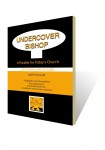
Join Bishop Ruby Kinisa as she visits small churches "under cover" to learn what people would never share if they knew they were talking to their bishop.
Undercover Bishop will always be available in PDF form on 2x2virtualchurch.com for FREE.
Print or Kindle copies are available on Amazon.com.
For bulk copies, please contact 2x2: creation@dca.net.
MISSION INSPIRATION OFFER
A visual and biblical guide to help congregations define their missions.
Contact Info
You can reach
Judy Gotwald,
the moderator of 2x2,
at
creation@dca.net
or 215 605 8774
Redeemer’s Prayer
We were all once strangers, the weakest, the outcasts, until someone came to our defense, included us, empowered us, reconciled us (1 Cor. 2; Eph. 2).
Be calm. Wait. Wait. Commit your cause to God. He will make it succeed. Look for Him a little at a time. Wait. Wait. But since this waiting seems long to the flesh and appears like death, the flesh always wavers. But keep faith. Patience will overcome wickedness.
—Martin Luther