4/7InkzHVUEQeEdU9vpc1tikzEhChrKmPfvXI-FSDBrBQ

Object Lessons for Adults

Adult Object Lesson: Epiphany

Tuesday


wisemenIsaiah 60:1-6  •  Psalm 72:1-7, 10-14  •  Ephesians 3:1-12  •  Matthew 2:1-12

Epiphany falls on a Sunday this year. Christmas included only one Sunday this season. We’re betting many in your congregation missed it!

This Sunday is a celebration of the arrival of the three kings. The symbolism of the three kings is vast. It wasn’t by accident that the story of Christ’s birth includes the interruption of an undesignated number of truth seekers from unnamed parts of Earth. From the very beginning, the birth of Christ was a story meant for all mankind.

Tradition has decided that three kings came. The Bible is not specific. Three is a great number for storytellers. It gives their story a chance to rise and fall and is not so many that people can’t remember. Among the gifts they brought (yes, there were more) were three named items: gold, frankincense and myrrh.

For today’s object lesson sermon, wrap three small gifts. One should contain a small cross. Another should have a candle. The third should have a match.

Ask three congregation members to open the gifts one at a time. You can decide which order will work well with your message, but here are suggestions of what they might mean in your sermon.

The cross: a reminder that God’s gift to us was his Son who would be sacrificed for our sins.

The candle: the light of the world (light being a symbol of Epiphany).

Arise, shine; for your light has come, and the glory of the Lord has risen upon you.  For darkness shall cover the earth, and thick darkness the peoples; but the Lord will arise upon you, and his glory will appear over you. Nations shall come to your light, and kings to the brightness of your dawn.

The match: the spark, the spirit, the need for the faithful to do something with the gifts bestowed upon us.

We are reminded that one of the unnamed gifts of the Magi was the journey. The Magi went to great effort just to get to the bed of the baby Jesus. The journey was like striking the match. It set the story still told today in motion. The light from their match (or star) has never burned out.

photo credit: Jenn and Tony Bot via photopin cc

Adult Object Lesson: Christmas 1

Boy Jesus in the TempleDo You Know Where Your Children Are?

1 Samuel 2:18-20, 26   •   Psalm 148   •   Colossians 3:12-17   •   Luke 2:41-52

Today’s object is a GPS tracker.

This is an occasion to talk about trust in God’s plan for us.

Once upon a time, part of growing up was running free in the neighborhood or the nearby countryside. “Be home for dinner” was the only parental warning.

Fewer and fewer modern parents can remember the days when we didn’t know where our children were every minute of the day.

It was a mere ten years ago that cell phones became affordable and pocket-sized. Soon every caring parent was making sure their child had one — emergencies and safety were the parental excuses. But whatever the excuse, the tether between and child and parents is stronger today than ever. It might not be until the child is away in college that he or she finds the will and the power to ignore the phone call from Mom or Dad.

It is hard for today’s parents to imagine losing track of your child for three days or allowing a man of the temple to take charge of the welfare of a son as Hannah did in the Old Testament (especially a man who had as dismal a track record with his own sons as did Eli!).

We’ve lost the sense of trust in our religious bodies, in our communities and even in our children. Sadly the loss of trust has been earned in many cases.

Have we also lost our faith in God to lead and guide us through an untrustworthy world?

Both the Old and New Testament stories for today’s readings demonstrate parental trust. Hannah and Mary relied on God’s intervention in their roles as mothers.

In the early church or medieval era it was not unusual for the first son and daughter in a large family to be relinquished to a monastery or nunnery. We are actually living in the tail end of that custom today.

What does that say to modern parents? How much do we trust our churches? How much do we trust God’s will in our lives?

Both Hannah and Mary were parents before God’s gift and sacrifice of his Son.

We don’t need a cell phone to talk to God. Do we think to use the direct connection allowed us?

Mary and Hannah were left to ponder similar questions.

Adult Object Lesson: Advent 4

swing

With A Song in Your Heart — SING!

Luke 1:39-55

Today’s object lesson is a song. Today we ask our adults to remember a time gone by when we didn’t listen to music on itunes, or the radio or on TV every minute of day. Think back to the day when our songs were in our minds and not planted in our subconscious by professionals—back to the day when we owned our own music—one of a kind—probably never repeated—no copyright needed.

That may predate your congregation.

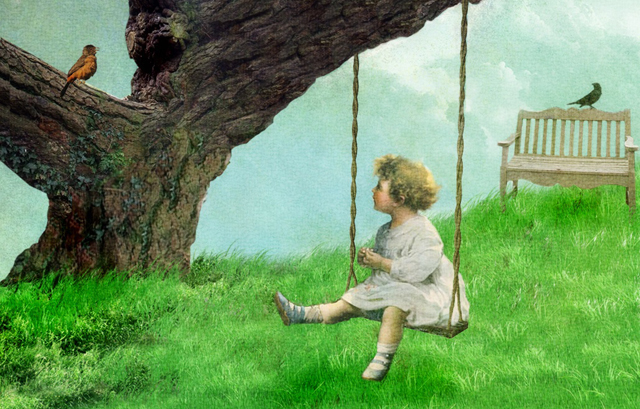
Ask them if they can remember their childhoods or watching their children or grandchildren blissfully swinging and singing a song of their own invention with each pump of their gangly legs.

Today, it is rare that songs spring from our hearts. The Bible has many notable outbursts of song. Miriam sang when the Israelites were delivered from their Egyptian captors. David sang — often.

It was a different age. They sang without a thought of ratings!

In today’s scripture, Mary sings a beautiful heartfelt song. Ask your congregation to close their eyes as you read the words of the Magnificat from the Bible.

Have them open their eyes and sing the Canticle of the Turning together.

Experience the power of song.

Incidentally, recent research indicates that humans are wired to communicate in song. Early evidence indicates that all cultures may respond to music in very similar ways.

(This came up in our Twitter feed — or we wouldn’t know this to share with you!)

Song is powerful.

Today is a day to remember that we all have a song inside of us. We don’t have to wait for a professional to fine tune it and make it marketable to the masses. Just sing it. God is listening.

PS: (If you really need an object, start the talk with an iphone in your hand, adjusting your earphones as you turn to your congregation.)

photo credit: rubyblossom. via photopin cc

Adult Object Lesson: Advent 3, December 16, 2012

Tuesday

santa

He’s going to find out who’s naughty or nice!

Zephaniah 3:14-20  •  Isaiah 12:2-6  •  Philippians 4:4-7  •  Luke 3:7-18

The third Sunday in Advent is a good time to relate biblical tradition to secular tradition. 

We are tempted to think that awaiting Christmas is all warm and cozy. If we don’t feel that way there must be something wrong with us!

Today’s lectionary tosses that wishful thinking out the window. There is definitely something wrong with the people listening to Zephaniah and John the Baptist.

Today’s Old Testament reading and Gospel read a lot like Santa’s list of Naughty and Nice…only today’s writers are definitely concentrating on the naughty.

Your object today can be a scroll on which you can write some of the naughty notions talked about in Zephaniah and Luke. Zephaniah brings harsh words of warning to God’s people who are falling to temptation. John the Baptist addresses specific segments of his following with direct and practical advice on how to make their sorry lots better. You might have a second scroll for the Nice things John suggests.

And then there are the two other scriptures: Isaiah and Philippians connecting the Old and New Testament readings.

What is their message? Be joyful.

That’s the funny thing about Christmas.

Naughty or nice, it all comes down to doing something about our sin and rejoicing. Joy to the World. 

photo credit: LadyDragonflyCC <3 via photopin cc

Adult Object Lesson: Advent 2, December 9, 2012

Tuesday

jesus_baptismbyJohnToday’s object lesson is a Christmas carol. It’s not one of the favorites but it is still widely known.

Green Grow the Rushes, Ho.

It is a centuries old, English folk song, a counting song, not unlike the better known Twelve days of Christmas, but more transparent in its meanings.

Like many folk songs, the words can vary and the interpretations can be debated.

Here is a link to a simple folk rendition where you can hear the tune. Here’s another, more physical, version. It’s having fun like this with this otherwise LONG song that has made it last for hundreds of years! You’ll note that each version changes the words slightly. Words are fair game in folk music!

Here is a common version. Focus on the words for the number 2.

I’ll sing you twelve, Ho
Green grow the rushes, Ho
What are your twelve, Ho?
Twelve for the twelve Apostles
Eleven for the eleven who went to heaven,
Ten for the ten commandments,
Nine for the nine bright shiners,
Eight for the April Rainers,
Seven for the seven stars in the sky,
Six for the six proud walkers,
Five for the symbols at your door,
Four for the Gospel makers,
Three, three, the rivals,
Two, two, lily-white boys,
Clothèd all in green-o
One is one and all alone
And evermore shall be so.

Two lily-white boys. There are different interpretations of what this means, but one common interpretation is that the lily-white boys are John the Baptist and Jesus. The clothed all in green part comes from obscure customs of decorating the altar area with holly and mistletoe, plants with different colored berries but both ever green.

This opens the door for a discussion of the two very different cousins and their role in the Christmas narrative. Their devotion to one another despite their profound differences in personality and their differing birthright missions was a catalyst that sparked Christianity and makes the message so memorable as to be told 2000 years later.

So why do we work so hard today at being the same?

Adult Object Lesson: Signs of Christmas

Jeremiah 33:14-16  •  Psalm 25:1-10  •
1 Thessalonians 3:9-13  •  Luke 21:25-36

Poinsettias are already for sale. What a perfect object lesson to go with the parable of the fig tree!

You know summer is coming when the fig tree sprouts. You know the celebration of Jesus’ birth is coming when you see poinsettias for sale in the grocery store. Talk about the other signs of Christmas—TV and radio ads using Christmas music to grab your attention, charity solicitations in the mail, and your neighbors Christmas lights brightening your lawn in the evening.

Talk about the prophecies in Jeremiah and the sentiments of the psalmist—how the signs bring both hope and anxiety.

photo credit: RedTail_Panther via photopin cc

Adult Object Lesson: Christ the King Sunday

Daniel 7:9-10, 13-14  •  2 Samuel 23:1-7  •
Psalm 93  •  Revelation 1:4b-8  •  John 18:33-37

We crown Jesus king next Sunday, despite his earthly protests.

God resisted the concept of kings until his chosen people demanded one. Kings are an acquired taste!

Kings are a foreign concept to Americans. We read about kings in story books. We respect the monarchs of other countries, but the idea of being a subject under a king that rules by birthright is not easily understood by us.

Yet that is the imagery of today’s scriptures.

Today it wouldn’t be a bad idea to point out what “kingship” entails.

Use a flip chart and start to make a list.

Ask your congregations for words that they might associate with an earthly king.

Add their suggestions to the chart and talk about how the earthly king might correspond to Jesus as King.

Expect words like crown, castle, throne, realmqueenpower, subjects, scepter

Create a little chart, adding the heavenly counterpart to the analogy.

Adult Object Lesson: November 18, 2012-Mark 13

Tuesday is object lesson day.Daniel 12:1-3  •  Psalm 16  •  Hebrews 10:11-14 [15-18] 19-25  •  Mark 13:1-8

Hope Springs Eternal

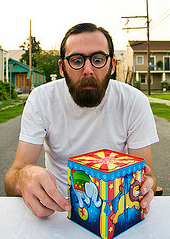
Today’s object is a jack-in-the-box. This remains a popular toy despite its low tech nature. It is a variation of the even less technical peek-a-boo game—the first game parents play with their infants.

Children’s games evolve as we get older. Peek-a-boo becomes hide and seek. Hide and seek becomes Find Waldo. Find Waldo has its online variations.

The games are all about expectations. We are willing to risk some temporary discomfort for the anticipated reward.

That’s what today’s lessons are about—coping with a sense of despair with the hope of something better. Apocalyptic scripture is all about a promised end for those who endure the uncertainties of the day. Hope is a common denominator.

Hope is what makes us work for a better life. Hope is what makes us laugh. An unpredicted turn of phrase or action that goes against what is anticipated is the foundation of humor. Hope is what makes us believe.

Babies play this game, the disciples played this game, and we play this game.

So turn the handle on the jack in the box and experience hope and anticipation with its fulfillment (however silly)—again and again and again. It will strengthen you for bigger dreams.

photo credit: Brother O’Mara via photopin cc

Adult Object Lesson: Mark 12:38-44, November 11, 2012

1 Kings 17:8-16 • Psalm 146 •
Hebrews 9:24-28 • Mark 12:38-44

Developing Spiritual Habits

Today’s object is a skill game — paddle ball (a paddle with a rubber ball attached with an elastic string) or a cup and ball toy (bilbo catcher) pictured here.

This lesson can be adapted for use with children or adults.

The lessons in today’s lectionary reference things that are habits in our lives. Habits are a demonstration of an acquired skill. There are good habits and bad habits. Everyone has them!

Practice whichever game you choose until you can paddle a good series or catch the ball with ease. You’ll want to show your skill as you start your sermon — perhaps missing and improving as you talk.

The widow in the Old Testament story is going about her daily routine, knowing that this may be the last time she ever prepares a meal for her son. Along comes Elijah and claims her last morsel. Habits can have predictable results and can be alarming.

The Psalm today is part of a series of psalms that repeat the theme of praising the Lord, beginning with the psalmist’s own voice of praise and ultimately including everything that has breath. Habits can gain momentum.

The tables are turned in the Epistle, where Jesus’ one-time sacrifice is contrasted to the habits of priests who carry the sacrificial animal blood into the temple again and again. Good habits once, but now they are unnecessary. Habits can become useless.

And finally we come to the Gospel story of the widow’s mite. Here, Jesus is watching a ritual take place. One after another, the faithful come to the temple with their offerings. The rich make quite a spectacle of their giving and they are probably accustomed to making their offerings when there is a good audience. The widow is also part of the habit of giving. It is so ingrained that she gives from the little she has with no Elijah promising her an endless supply of oil and bread. Habits can define character.

The point of the object is to demonstrate how with practice the challenges we undertake get easier and easier. Actions that we undertake as challenging become habits. It’s tough to hit or catch the ball at first. Eventually the game is conquered. Muscle memory and balance are imprinted on the brain. Like riding a bicycle, it’s not forgotten. (You could use a bicycle as your object!) Point out that the motivations for the habits also become embedded in our minds. Watch you don’t get too adept at your challenge game! You’ll risk looking like the rich givers—showing off!

You don’t have a reason for hitting or catching the ball except the satisfaction of achieving the goal. What are the motives behind your worship habits? The motives mattered more than the gift to Jesus.

Our faith lives are built on habits—habits of prayer, praise, thanksgiving, attendance and giving. We don’t even stop to think.

If this is your church’s stewardship Sunday, you might point out that the habits of giving need to be reexamined now and then—new talents and skills discovered, new obstacles overcome.

You could point out that habits in giving need updating. $5 in the offering plate in 1970 doesn’t go as far as $5 in the offering plate today.

But mostly, today’s lesson is about the overall value of practicing faith skills until they are part of our lives and we are willing to give to God without measuring the cost to ourselves.

The Difference Between a Carol and a Hymn

If they haven’t started already, they will soon! Christmas Carols will be on every retail store Muzak, the radio, and TV commercials.

There is something about the “sound” of a Christmas Carol that touches emotions immediately. It has nothing to do with being “pop.” Most popular Christmas Carols were written hundreds of years ago.

Part of the thing that distinguishes a “carol” is its seasonal nature. We don’t talk about them much but there are Advent carols and even Easter carols.

Many of them grew from folk music.

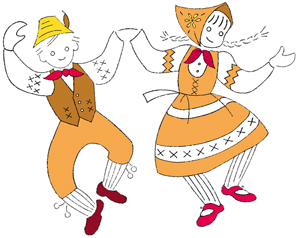
But a key distinguishing element of a carol is this. From the very beginning, carols—as differentiated from hymns—were meant to inspire DANCE!

Has your congregations danced to its Christmas music lately?