Redeemer and 2×2 takes SEPA’s recent request for congregations to make multimedia presentations about their ministry seriously. It is a goal of 2×2 to conquer video for use on its website, so it was a welcome challenge.
We learned basic recording techniques and syncing sound tracks to slides. We added transitions. We’ve got a lot to learn, but we are happy with our start and will soon share our experiences with others.
Blogging may be good and it may reach all over the world. But the word of God says, “Let us not give up meeting together, as some are in the habit of doing, but let us encourage one another . . . . ” (Hebrews 10 :25) and to my understanding I am going to church.
We have never advocated blogging as a replacement for Christian community. We see it as enhancing Christian community.
There is value in assembling as a people of God. Most of the people who read and correspond with us through our blog are active in such assemblies and send us many photos of their congregations.
Assembling as a congregation is not in itself an evangelism tool. The sizes of these assemblies are shrinking—big churches and small churches alike. Most are experiencing sizable decline. As they shrink, they are becoming protective of who they are. In a sense they forsake who they might become, if they actually had a way of reaching out.
The value of blogging is that you reach beyond the four walls of your congregation and start to learn about the people who are not part of your assembly—yet.
As for the people of 2×2 and Redeemer? We have been locked out our place of assembly by all the other Lutheran congregations in our region. This was an unnecessary cruelty and was designed to make taking our property, our offerings and possessions easier.
And still we attend church — sitting several times a month with the very people who condone this action—some actively, most passively. We worship, we pass the peace and sometimes commune with them. We listen to words read from the Bible that point to the wrongs of these actions. We have visited 60 happy and contented congregations who would rather not be bothered. We live the Good Samaritan story every day. The Levite and Pharisee pass us by.
We worship with others even when it is difficult to do, even when we are treated with only minimal hospitality and no recognition of what their communities have put our community through. We have abided condescending platitudes. We have also met some really nice people!
Congregations seem to find justification in their communal acceptance of wrong.
We still believe in local assembly and gather in our own “upper room” in a theater that has loaned us the space for three years while our church has persisted in vilifying our members to justify their leaders’ actions. We pass our locked church, a symbol of atrocity, every day.
We still get together once a week for worship and often during the week to work on projects or just enjoy one another’s company. We still help one another through tough times and celebrate good times. We still pray for one another and for the rest of the church that treats us so badly.
We agree with you! Go to church.
But beware! Just being there is not enough. The gospel—including the book of Hebrews—makes other demands on us.
Don’t forget the teachings of love, forgiveness and reconciliation. Don’t forget the admonition to go into the world and make believers of all.
Blogging has made this possible for every Christian.
2x2virtualchurch is the web project of Redeemer Lutheran Church in East Falls, Philadelphia, shunned by the Southeastern Pennsylvania Synod of the Evangelical Lutheran Church in America. They view us as too small to fulfill any mission purpose and seized our property and locked out our members.
2x2virtualchurch is now two years old. We started knowing very little about the web but it seemed to be a logical and viable mission opportunity for a congregation raped of its heritage.
It’s been a voyage of discovery.
We’ve documented our growth statistics before but in the last month we began to add new dimension to our ministry.
About a month ago, businessesgrow.com (Mark Shaefer’s marketing website) featured a 2×2 guest blog.
That blog was picked up by five other major blogs including a couple of business web sites and two Christian Social Media web sites. (These are the ones we know about!)
Yesterday, we received a request to participate in a podcast for a Christian Social Media site. At the same time we are about to launch our first multimedia video.
This is all within a few weeks!
So the progression has been:
2011: Readership grows from 1 reader per month in February to a few hundred per month
2012: Readership grows from an average of 20 readers per day to 50 readers per day
2013 to date: Readership grows from 50 readers per day to an average of 90 per day and more than 4000 per month
This makes Redeemer and its 2×2 ministry the congregation with the widest reach in SEPA Synod—which declared us to be closed and unfit to manage our own ministry in 2010. (They wanted our property.)
The lessons to be learned from our ministry:
Prepare to give a solid year of dedicated work before making any value assessments. 2×2 started to gain momentum when we started posting daily in the summer of 2011.
Post frequently at least three times a week.
Look for interests that aren’t being addressed. We discovered a demand for object lessons for adults that draws daily traffic to our site. Churches are also looking for easy dramas—plays that don’t require a lot of costumes and rehearsals. We are trying to figure out how to offer music!
Your audience is the world once you begin using the web. You can write for just the people who live near you but don’t close the doors on interesting opportunities. We have many stories to tell of how our ministry is impacting the lives of Christians thousands of miles away in surprising and exciting ways.
Be helpful to your readers. Our free resources geared to small congregations drives our traffic.
Cast a wider net when fishing for men. Most church web sites are all about them. They may succeed locally with this approach, but they will be missing mission opportunity.
Don’t look to professional leadership to have the skills needed to forge the way in this type of ministry. They have been busy learning other things. Turn it over to lay people.
Don’t rely on hierarchical support. They are not likely to understand the potential of the web. They were born of an era when church structure was locally focused with distant oversight. This is not likely to change without a major reformation.
Don’t expect accolades for your success from the greater church. Again, they frequently don’t understand the web and are still assessing congregational viability by 1950 standards. It will be five years at least before they realize what they are missing. By then things are likely to have changed still more.
Don’t expect regional bodies to admit their weaknesses.
Where to from here?
2×2 has gained credible blogging skills. We will now look to be adding more video and podcasting and more helpful resources for small church ministry and world mission.
We hope to cooperate with other local ministry efforts, offering our expertise to their causes.
We’ve grown a bit “like Topsy” but we will now become more intentional in creating our ministry plan—something Redeemer was always good at!
We have achieved this success on a $0 budget as our hierarchy claimed all our offerings at the same time it challenged us with legal expenses. We now have a readership base that can monetize our ministry. The economics of scale will allow us to do this at prices far lower than traditional publishing and we will remain dedicated to providing most resources for free as part of our mission.
There is a lot of hard work in learning all these new mission skills. We will be glad to share our experiences with any church interested in diving in!
I received an anonymous letter from a member of a SEPA congregation this week. The writer added a note that she was sending the letter to ELCA Presiding Bishop Hanson and several other church leaders including our local bishop.
She noted that she doubted letters make any difference. True, anonymous letters give the recipient an excuse to blow off any point the writer makes no matter how valid.
We understand the need for anonymity. We live in a Synod that is funding its ministry with seizures of property and lawsuits against laity.
Clergy have no room to criticize. Their universal silence on these issues is a form of anonymity.
We at Redeemer have written many signed letters almost all of which have been ignored. The single exception was the first letter we wrote to Bishop Hanson, probably early 2008. The Bishop glibly dismissed our very serious issues. Lots of God words, no God actions. His attitude trickles down to his staff and clergy. The ELCA legal offices, funded with parishioner offerings, responded to a Redeemer member’s letter with a note that they feel no obligation to get involved. Bishop Burkat has never responded to any of our letters. The people we pay to be there to make sure the congregations are protected spend our offerings protecting themselves.
We are going to reprint this anonymous letter because it has value. This writer took the time to understand the issues — something SEPA clergy, the Synod Council and Synod Assembly and the courts have failed to do. This writer nails the issues. Write on!
Here’s the letter (with minor spelling/grammar edits):
Dear Bishop Hanson,
I belong to Peace Lutheran Church in Bensalem, Pa., which is part of SEPA Synod. I recently attended a charity event in Philadelphia and met a woman from a church in Lansford, Pa. We got into a conversation about Redeemer Lutheran Church and Bishop Claire Burkat and how sad that their church was taken from them and how their valiant fight to regain their spiritual home was knocked down by the Pa Supreme Court, citing “church vs. state.” The woman I sat with told me that her church belongs to the Slovak-Zion Synod and that their Bishop (Rev. Wilma S. Kucharek) was investigated by the authorities for making improper withdrawals from a congregation’s accounts, causing the downfall of a church in New Jersey. She locked them out of their own church, like Burkat, and then sold their properties for a huge sum of money, forcing the congregation to now worship in a rented facility when they already had a mortgage-free church and parsonage of their own. She heard this from some people she knows that had attended a Synod Assembly cruise. Are you even aware of this in Chicago?
What kind of organization allows the taking of church properties that were built and paid for by the members of these congregations without any help from their synods. Just because you have hidden clauses in your constitutions that allow Synod Bishops to abscond with properties does NOT make it morally right. It is actually criminal to take by force another’s possessions for your own profit or gain. These clauses do not appear in the congregation’s constitution (I checked) but appear in the Synod’s constitution. How sneaky. Why didn’t you put this language in the congregations’ constitutions and spell it out more clearly so the average parishioner can understand the language? “That the Synod Bishop may close, at his/her discretion, the congregation’s church, seize their property, sell it, and then distribute the funds as he/she sees fit.” Wouldn’t that be more befitting to a religious organization to be honest and more forthcoming with the followers. You should also point out to the congregation to NOT come to you with their problems because you are an “interdependent” organization.
I am ashamed of how the ELCA has disgraced the Lutheran religion by ignoring Martin Luther’s principles of fair play for all. He would never condone abusing the weak by taking their possessions to further enhance one’s already lofty standing. Greed is a terrible sin. God knows who these bishops are. They can’t fool him with their empty prayers and their false justifications that they are doing this for the overall good of the Synod. These thefts of properties will be seen for what they are by the Lord.
Bishop Hanson, I’m sorry to say, the ELCA is now being run by bureaucrats and lawyers who don’t know what it’s like to honor the Lord by doing what is right in the Lord’s eyes and not the courts. There can be a happy medium but right now there isn’t. By the interdependent nature of the ELCA, you’ve divorced yourselves from your followers (the mass that supports the organization) by taking away their right to a fair an unbiased hearing regarding the closing of their churches. They can’t go to the courts because of the “separation between the church and state.” The Synod assemblies are a joke. The people who sit on these assemblies have no training in judicial matters in order to make proper judgments. They are just parishioners of local churches who volunteer to attend a yearly gathering and are clueless as to what’s going on. They are heavily influenced by the bishops, plus I don’t think that the bishops even need their approval to close a church.
It’s just so wrong that just one person can decide the fate of so many. At least the Catholics can go the Vatican Council in Rome where they have already overturned church closings in places like Cleveland, Ohio, by over-ruling local Bishops. The Lutherans have no such recourse.
Claire Burkat may have sued some members of Redeemer for standing up to her abuses, but she will not be able to sue me.
Signed, Disgusted
Here are a Few More Supporting Points
This writer describes the problems fairly accurately. The interdependent constitutions leave parishioners vulnerable to various self-serving interpretations, putting anyone who raises an issue at risk. Parishioners are the most vulnerable.
The writer also does not mention the founding Articles of Incorporation of ELCA Synods. These foundational documents forbid bishops from taking property and limit the power of the Synod Assembly. The writer is dead right that Synod Assemblies don’t know enough about church law to make decisions. Also, about a third of the Synod Assembly (the clergy) have a built-in bias. They owe their next call to their relationship with the bishop.
The clauses in the Synod constitutions have been altered over the years. The original model Synod Constitution calls for synodical administration to be temporary in nature and with the consent of the congregation. It was intended to help struggling congregations. Tweaks here and there presented to unsuspecting Synod Assemblies have reversed the intent of the constitution and violate the Articles of Incorporation—which was further compromised by Judge Lynn’s order regarding Redeemer, issued without hearing the case. Saint Paul knew what he was talking about when he advised church people to stay out of court!
Consequently, a clause intended to help congregations find their way through difficult times is now used to seize assets and help the synod through troubling times.
In Redeemer’s case, Redeemer appealed the issue of Synodical Administration to the Synod Assembly. The Synod Assembly never voted on the issue we appealed. Synod officials used our appeal to present a question allowing them to take our property (which we had not addressed in our appeal). Like lemmings the Synod Assembly voted on an entirely different issue—and an issue over which they have no constitutional authority. All SEPA Lutherans were victims of bait and switch.
Because of Synod Assemblies unquestioning decision, no Lutheran congregation really owns its own property anymore. A long-standing Lutheran tradition is gone. Your bishop needs only to make a claim on your property and your congregation is toast. There are no standards to be met. If Bishop Burkat needs your property to meet her budget (including her salary) she can claim it.
Back when Redeemer’s money was taken (1998) we were told the money would go to a Mission Fund. It was later reported that Mission Fund money is tapped by the Synod to fill deficits. When our Ambassadors visited Holy Spirit in NE Philadelphia, the week before they closed, their pastor explained that their money would go the the Bishop’s Discretionary Fund. At least that’s more transparent if not nobler. We suspect there is even less control over that fund than the misnamed Mission Fund.
We hope there are more letters written and we encourage you to sign them. Send them our way. As long as they are factually accurate, we will consider publishing them. At least you’ll know your letter has a chance of being read. Right now, the ELCA’s circular files are wide and deep!
The best people to put an end to the travesties of SEPA Synod are SEPA Lutherans. Ask your Synod Assembly to revisit the issues with Redeemer. We are still alive and well. We have grown a base of support during our years of exile and are ready to resume our ministry with our property— if SEPA Lutherans can ever manage to deal with the issues for which they have accepted responsibility.
It should be obvious to SEPA Lutherans that the sad story of Redeemer’s lack of viability was always a crock. Redeemer, even with many of its members in hiding, is stronger today than ever. We reach more people each week than any church in SEPA. We are positioned to restore our endowment to its 1990s high point—before SEPA cast its line over our waters (and they weren’t fishing for men).
There is more economic potential in open churches than in closed churches.
Organizations that thrive in the 21st Century will be distinguished by two attributes: entrepreneurship and organizational foresight.
He suggests that the word innovation be replaced with the word “entrepreneurship.”
He notes these subtle but significant differences (the bullets are quotes):
Innovation requires creativity but, unlike entrepreneurship, does not address issues like tolerance for risk, organizational agility, improvisational ability and speed.
Innovation often comes in bursts after focusing on discrete ideas and issues, while entrepreneurship requires cultivating a certain kind of culture, defined by a set of practices and attitudes that are infused throughout an organization.
Innovation implies the creation of something new, while entrepreneurship can mean dramatically improving what is already working with new vision and processes.
This sounds impossible. It is not. Even small churches can follow it.
The problem is that church hierarchies don’t recognize the potential. Armed with an impenetrable sense of entitlement and a tradition that supports it, they measure their congregations by ancient standards. These standards are failing almost everywhere!
The entrepreneurial church is not about making money for money’s sake, but is more about creating revenue streams with ministry projects. More lucrative ministries will provide funds for ministries that will never be self-supporting.
People today hesitate to give offerings, especially when they can’t see their offerings at work. More and more, congregations are begging for offerings just to help them survive — not to help them serve. It’s a losing proposition.
Less committed people of faith are not going to see this as a good investment of their time or tithe. They are more likely to contribute both money and energy to projects when they see them making a difference. They are not seeing this in churches that have budgets that are top-heavy in overhead.
There are many opportunities that are entirely in keeping with the mission of the Church.
One of Redeemer’s strengths is the ability to recognize opportunity.
There would be no conflict between Redeemer, East Falls, and the Southeastern Pennsylvania Synod of the Evangelical Lutheran Church in America, if Redeemer had been nurtured and granted the freedom their constitution gives them to shape and fund their ministry in less traditional ways. Are we not regularly implored to “transform”?
Our Christian Day School, which was ready to open as a Christian School for the first time in 25 years, would be providing upwards of $6000 per month for ministry—and creating a Christian witness in a neighborhood which is losing its Christian schools.
Our aid to immigrant families would be producing $100,000 per year. Redeemer had a plan in place that would help immigrant first-time home buyers. The expertise of our members would ease the path to home ownership and the congregation would gain some money in the real estate transaction, which would then go to help another immigrant family.
Our website would generate another few thousand per month for ministry. The website reaches out to small churches all over the world.
More than enough resources for a neighborhood ministry.
This is no different from religious publishing houses making their living publishing books or religious social service agencies tapping into government revenue streams. And it doesn’t camouflage mission to meet government requirements.
Unfortunately, our regional body has no vision for its small churches. They are waiting for them to die.
It will take a while for the Church to recognize that they can no longer control the voice of the faithful. The reason for this delay is that congregations and individual Christians do not yet realize that we have more power than ever before in history.
We are accustomed to abiding in silence, accepting what we are told and assuming that the powerful within the church have godly interests.
This is not always true.
Martin Luther took a huge risk when he hammered his list of 95 complaints onto the cathedral door. The response was predictable. Luther was forced into hiding for fear of his life. Fortunately, he made a few well-positioned friends who helped him over this rough spot. He emerged to become a respected preacher and teacher of the Word.
Martin Luther wasn’t the first to raise many of the issues he cited. He was the first to survive. He was the first with the power of a printing press to amplify his voice.
The old tools of intimidation still work. Clergy who are beholding to hierarchy are easily silenced.
During the extended conflict between Redeemer Lutheran Church and the Southeastern Pennsylvania Synod has anyone wondered why it is the lay people who have been dragged through courts? The clergy who were working with the congregation, voted with the congregation, and encouraged the congregation headed for the hills after private meetings in the synod office.
Today, each individual within the Church has far more power than Martin Luther.
We have a voice that will be more difficult to control.
Eventually, our voices will have influence.
Redeemer, excluded from participation within the church, started a blog. We are one of very few churches who have taken this step and use this tool for weekly outreach. It has both changed and shaped our ministry in ways we never expected.
Blogging builds community. We have encountered dozens of individual bloggers who write from a spiritual point of view. They are poets, photographers, parents, writers, artists, and adventurers. They are all over the world—Thailand, Armenia, Scandinavia, Africa, the Mideast. Some of them have church connections. Others do not. They tend to represent the age demographic that is missing in the church on Sunday morning—20-40.
They have discovered that within the Church, they have little voice, but outside the Church, they can grow.
The ability to grow as individuals is a key factor that is missing in many church communities.
Modern youth have been reared in a world where they must constantly reeducate themselves. They are involved in an ongoing process of self-discovery. In the past this discovery period ended at about age 30, when we settled down. This will no longer be true for any of us, regardless of age.
Self-rediscovery tends to be discouraged within the Church. We are likely to be assigned a task that Church needs to have accomplished. We will be told how to do it—how to teach, how to sing, how to fix the altar, and how to distribute the offering plates. Once we accept one of these jobs, it may be ours for life!
It is no wonder that people turn away from the Church. They seek community where their voices can be heard—their ideas and talents recognized.
If the Church does not find a way to welcome the voice of the people and adapt to modern expectations, they will find their churches to be empty on Sunday mornings.
Church leaders who face this change in society with tenacious resistance will enjoy fleeting successes.
A storm is coming. A wise church would nurture voice if they want transforming change.
Today’s Alban Institute blog post addresses church resilience. It includes the thoughts of Judith Jordan who describes resilience as not so much an “intrinsic toughness” but more as an ongoing process of nurturing and fostering of relationships.
All churches can be resilient. We notice resilience more when the stakes are higher—but both large and small churches can rebound. They can redefine their missions. They can survive.
Resilience grows from love.
That’s what the Church is supposed to be good at. Wealth gets in the way.
The Church at every level is challenged today. Almost all church activity is funded by the contributions of individuals. That quarter that clinks in the offering tray must fund the local church, a regional body, the national church and all church agencies.
It is getting harder for church entities more distant from the members’ pockets to survive. Power is their only tool.
In the Lutheran Church with its interdependent structure, there is very little power assigned to church hierarchy. They are supposed to exist as servants of the congregations. But the economy has hit them hard. They crave more direct access to the wealth of congregations.
They start to stretch their powers, tweaking their constitutions a little here, a little there, until they are wielding powers that were never bestowed upon them in their founding documents.
The sense of mission begins to fade. It becomes replaced with pageantry. Pageantry makes things look better—for a while.
The mission of most churches today is funding their budget.
In this atmosphere it is harder to see resilience. The message of love is lost.
Love breaks down barriers. It opens hearts.
Resilience is hindered in a culture of criticism and judgment. That’s what many congregations experience within the structured church. The list of judgments against small congregations can be long and fabricated. The claims are difficult to prove, but few care as long as they are not personally affected.
Lay leaders are too strong.
People are resistant to change.
People are living in the past.
People are unwelcoming.
People can’t support clergy.
People can’t accept new ideas.
Says who? The people who want to claim church assets.
Funny, the faulty lay people who are “destroying their churches” with their backward thinking are thriving in the secular world which changes more frequently and at a faster rate.
Much of the criticism of congregations reflects denominational needs.
Running a denomination is expensive. Offices are expensive. Staffing an office is expensive. Keeping up illusions is expensive. The ONLY source of income for denominations is congregational members.
The poor, the needy, the sick, the young and old dependents, the infirm or visionaries need not apply.
Constitutionally, in the ELCA, no congregation is required to give to the denomination. Withholding support for a denomination may be the only voice a congregation has.
But denominations can ignore the voice and interpret the lack of support as the congregation’s failure—never its own.
It should be a huge red flag within a denomination when criticism focuses on lay people to the point of naming them and suing them. Any denomination that puts limitations on the laity’s ability to serve denies the example of Christ, who nurtured a ragtag group of peasants and spent most of his time with the needy.
You don’t hear limiting words from lips of Christ. All that comes later. It echoes through the centuries and may be the undoing of the mainline church.
Both clergy and lay leaders are all capable of leading congregations in renewal. But if their view of a congregation is only a measure of dollar signs for the denomination, then there is real trouble.
Any denomination that seeks to limit any individual’s talents is doing a disservice to their message.
Redeemer members gathered this Easter on the sidewalks of our forbidden house of worship. Our pastor led us in a song. We took turns singing verses of I Know That My Redeemer Lives. Redeemer still is a church full of soloists.
We then went to a member’s home for Easter Fellowship. Ham and kielbasa. Delicious.
We had changed our Easter time to accommodate the plans of our members. So when two carloads passed by the church at the normal time for Redeemer worship (10 am) they found an empty church (as opposed to an empty tomb).
We caught up with them later and took a second photo.
Fortunately, we can resurrect our sign which our bishop was so intent on destroying. It’s looking better than the church!
Take away the name. Take away the heritage. Destroy the church. Control the wealth.
SEPA, let the people who love a church, care for it. That’s the Lutheran way.
2×2 will be undergoing some changes in the next few days. They are structural in nature but over time, will allow us more flexibility in our outreach.
You won’t see a big change at first. We might be adding less content for a few days. But eventually, 2×2 will be easier for our readers to navigate and to find the types of content they are seeking.
We thank our readers and ask for your patience during the process. We are not quite sure what to expect as we work with the experts.
2×2 is growing quickly. Our monthly traffic is more than three times what it was last year at this time. We now have more than 4000 unique visitors every month and a growing subscription list. Last year we had 13,000 unique visitors. In the first two months of this year we’ve had 6,500 visitors, putting us on track to reach 40,000 by year’s end. This figure does not count subscribers who read our posts in LinkedIn, Facebook, Twitter or in email feeds. Combining subscribers with new visitors we are reaching close to 10,000 readers every month. It is probably fair to say that Redeemer, through 2×2, reaches more people than any other Lutheran congregation in the Southeastern Pennsylvania Synod of the Evangelical Lutheran Church in America (SEPA / ELCA).
Not bad for a church that doesn’t exist.
The 2×2 Story
The Church likes roadmaps. They like to be able to say, “If you do X, your congregation will achieve Y.”
It’s been a while since formulas like these worked in the Church. It is a source of frustration and conflict.
There is no roadmap for where the Church is going. Societal and technological changes have created unchartable challenges.
The methods of the past aren’t working. There is no time or patience to test new ideas. Everyone at every level is feeling an economic pinch. The easy way out: Blame the congregations. Close them down. Salvage their property for the use of the regional body. Make sure the national church gets their share of the loot.
Redeemer was a congregation willing to try new things, willing to take some risks, even willing to sacrifice today’s statistics for tomorrow’s ministry—a concept that was widely discussed in our planning meetings.
We were beginning to see significant success, but our cash-strapped regional body was impatient and preferred to see failure. A couple of small church failures each year would fund the synod’s six-figure annual deficit—until there are no more small churches to plunder.
The expectation was that little churches would not have the stamina or resources to resist. It made sense. Full-time paid professionals fighting part-time volunteers. Easy pickings.
Then came Redeemer. We had presented a 20-page ministry plan we had researched for six months and asked to call a minister who had helped us write the plan. SEPA ignored us. They never even discussed our plan with us, while they represented publicly that they were working with us.
SEPA strong-armed Redeemer out of their property in defiance of their own governing laws. The conflict is now some seven years old.
We took our ministry online which was always part of our ministry plan, although it was not Step 1. Step 1 was opening an income-producing Christian Day School, which was projected to produce upwards of $6000 per month for ministry. The empty building has earned nothing for nearly four years under SEPA’s “administration.”
Online ministry requires no property and not a great deal of money—less than $200 each year. We had no idea what to expect. We just started to write about our experiences and presented the types of resources we use regularly in our worship. We have a lot of experience as a small church. We share it.
Our resources are driving our traffic. The Easter play we posted last year had about 200 downloads last year and 3000 downloads so far this year. Our continuing series on adult object lessons also has steady readership.
The followers of our commentaries are an eclectic group and mostly young people—the very demographic that eludes the mainline church. They tend to be passionate, artistic, creative and they are all over the world.
We will continue to build the 2×2 platform for ministry and share the concepts we are pioneering.
Thanks for visiting us now and then. Feel free to contribute or let us know what type of content would benefit your small church. We’ll try to supply it.
Issues between SEPA and Redeemer Are Not Fully Resolved
2×2 has been sitting on this post for a few weeks.
It is uncertain that the member churches of SEPA will give any regard whatsoever to this report. They are likely to continue to believe everything their leadership tells them — which is how this mess started.
Several weeks ago Bishop Burkat issued a letter to clergy and rostered leaders claiming all matters regarding Redeemer are settled. Although generally true, an important detail was left unmentioned.
As your 2013 Synod Assembly approaches, SEPA congregations should not be assuming that the litigation involving them and Redeemer Lutheran Church in East Falls is over.
The ruling in January was made without prejudice and awaits decisions in several other court matters. The current judge has retained jurisdiction over future litigation, a step that would not be necessary if the issues were in fact settled.
A full and correct report from your leaders would have included these details which affect you. Partial truths and even untruths have often fueled this conflict, which never had to be.
If you don’t know whom to believe, look into it for yourselves.
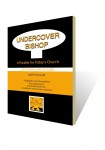
Join Bishop Ruby Kinisa as she visits small churches "under cover" to learn what people would never share if they knew they were talking to their bishop.
Undercover Bishop will always be available in PDF form on 2x2virtualchurch.com for FREE.
Print or Kindle copies are available on Amazon.com.
For bulk copies, please contact 2x2: creation@dca.net.
MISSION INSPIRATION OFFER
A visual and biblical guide to help congregations define their missions.
Contact Info
You can reach
Judy Gotwald,
the moderator of 2x2,
at
creation@dca.net
or 215 605 8774
Redeemer’s Prayer
We were all once strangers, the weakest, the outcasts, until someone came to our defense, included us, empowered us, reconciled us (1 Cor. 2; Eph. 2).
Be calm. Wait. Wait. Commit your cause to God. He will make it succeed. Look for Him a little at a time. Wait. Wait. But since this waiting seems long to the flesh and appears like death, the flesh always wavers. But keep faith. Patience will overcome wickedness.
—Martin Luther