That’s the part of the lesson Jesus taught to the disciples when they were challenged in prayer.
Ask. It will be given.
Seek. You will find.
Knock. The door will open.
Following biblical advice, Redeemer will just keep at it.
We’ve been at it particularly hard for the last six years of our 122-year history.
Early on, even before all the lawsuits, we wrote monthly letters, which our presiding bishop, bishop, and trustees steadfastly ignored.
One of our members writes regularly to pastors. They hold keys to the doors of the democratic nature of our church government. When they’ve responded at all, the attitude has been like the head of the household who wants to go back to bed with his children in Jesus’ story. They want to be left alone in their congregations.
We started visiting congregations — all of which voted to take our property for themselves. We know they had been fueled with inflammatory falsehoods, exaggerated tales, one-sided accounts, which influenced them to believe that taking other people’s property, and expelling men, women and children from the church was somehow the godly thing to do.
Early on, we wrote letters or sent cards to the churches. Later we just published our visits on Facebook and our blog. We discovered that other churches are much the same as ours, making their hands-off attitude all the more difficult to fathom. We’ve been to 68 congregations so far. We know more about your ministries than you knew about ours when you voted to take our property.
We continued our ministry which led us in innovative directions that could now benefit the whole church. Redeemer’s greatest value is not its corner property in an affluent neighborhood. It is our people who have a 132-year legacy which is still growing despite efforts to pack our ministry in cardboard boxes and store them in the seminary archives. Out of sight. Out of mind.
After six years of tiring and expensive conflict we remain an active Christian community that grew new networks when we were excluded from the ELCA. We are obviously viable. We have something to add to the faith community which is our heritage—more now than when you took our land.
And so in the spirit of the Lord’s teaching, we will continue t0 ask, seek and knock.
Ask.
Please recognize our valuable ministry. Return our property to us and partner with us as we all pledged to do 25 years ago when we agreed to be part of the interdependent ELCA.
Seek.
We seek peace and reconciliation. We want to belong—not as second-class citizens with a set of rules just for Redeemer but with the same rights and privileges all member churches share.
Knock.
You know where we are. We know where you are. Why can’t we talk this through?
If what is going on in East Falls is so right, why is it shrouded in hateful vindictiveness? Why is everything so hush-hush? Why are people so afraid to act?
East Falls is still OUR neighborhood. We don’t have to go to community council meetings to court neighborhood leaders. We ARE respected neighborhood leaders, already friends with other neighborhood leaders. The best people to create Lutheran ministry in East Falls are the Lutherans of East Falls.
We have a plan we would like to present to SEPA Synod Council. Our experience is that anything presented privately never sees the light of day. We’ll publish our plan for ministry here first.
Watch for it. Answer the door when we knock. Please.
Today’s church is in trouble. Everybody in the church knows it. Some (fairly few) congregations are still large enough to get by without facing the new age but most churches are feeling just how tough the next two decades are likely to be.
The answer in our area of the church (the Southeastern Pennsylvania Synod of the Evangelical Lutheran Church in America) has been to check out on the people who have brought the church this far. They prefer to look for new faces to deal with—if they can find any. New faces will be easier to manage. They have no heritage at stake.
That was said to us at Redeemer in so many words by Bishop Claire Burkat.
White Redeemer must be allowed to die.
Black Redeemer . . . we can put them anywhere.
Beyond this, when it looked like the judge was going to rule in our favor, Synod scurried and wrote a proposal to the judge. The proposal was that they would reopen Redeemer under their control and our current members were welcome to attend but would not be allowed any leadership role.
The judge sidestepped all the issues and ruled that he has no jurisdiction in church affairs. The appellate court ruled in its dissenting opinion that if the law were applied, Redeemer’s arguments should have been heard.
SEPA has hidden behind this dubious win and interpreted it as having free reign. In fact, they have free reign as long as members do not exercise their constitutional roles in running their church. The courts don’t want to do this job for you.
The problem with this conflict is that from the start, SEPA refused to deal with members. If they were to have any presence in our community, they wanted it on their terms with different people, who we can presume would thrive as long as they voted the right way.
When we want to deceive or lash out, it’s easy to do. Hey, there’s always someone else we can start over with, relationships and even reputations are disposable. We don’t have to look you in the eye, it’s dark in here, and we’re wearing a mask.’
He calls this approach “an experiment in fake.”
It turns strangers into actors on a screen, and sometimes we help them, but often, we become inured to their reality, and treat them with a callousness and indifference we’d never use in our village.
Recently, I was cleaning out the home of a deceased pastor. I found a folder on a prominent table. In that folder was The Lutheran article about the life and death of one of the founding leaders of the Lutheran Church in America, Dr. Franklin Clark Fry. With it was an article from Time magazine that called him “Mr. Lutheran.” There was also a bulletin from his funeral.
Then on June 6 of this year, someone from this pastor’s family called me to honor Dr. Fry’s “glory day.”
I was surprised that anyone would recall a death of a church leader in 1968 and that they would think to call me. I am only remotely connected to Dr. Fry. His grandchildren are my cousins. But I was struck by the power of his leadership and influence. I’d heard plenty of stories about him as I grew up—mostly about how he insisted that congregations and clergy follow the rules. He would meet personally with people when he could have mailed a letter or picked up the phone.
His leadership had lasting influence.
That influence is waning as Lutheran leaders exert less and less power with more and more force.
The people they lead are treated as expendable. If you don’t think so, try disagreeing.
When this happens in the church — an institution that is supposed to matter — things get phony fast.
Our leaders no longer know the people they are leading. They never deal with them. They use clergy as intermediaries. They don’t respond to mail or email. They speak to us through letters and email blasts and call it “mutual discernment.” They deny us voice and vote in Assembly and rely on no one enforcing the rules—or even knowing what the rules are.
They are afraid to look their own people in the eye.
As Seth says. When you look people in the eye, you own the results.
You want to resolve things in East Falls? Look us in the eye.
The reason the Church is failing is because large churches are failing.
In today’s Alban Weekly post Steve Willis points out that even in the 1960s and early 1970s, when the Protestant Church was at its statistical peak in America, one denomination’s statistics showed 44% of all congregations had fewer than 100 members and 73% had fewer than 250 members.
Small churches have always been the backbone of the greater church.
During the halcyon days of the American Church, the vision was that small will become big. This is America! There are only three sizes of eggs—large, extra large and jumbo. We worship at the altar of big. Big churches must be better churches.
Why are they still outnumbered by small churches?
In postwar America, Christian pastures looked to be forever verdant. Denominations which operated for decades with a president (now upgraded to bishop) and an assistant and secretary, began to grow staffs of eight, nine or fifteen. The support of booming suburban churches made this hierarchical growth possible.
In many cases, these churches were booming because of white flight from the cities. They were already benefiting from the assets of the small churches. Today they are returning for what they left behind.
Smaller churches were never large supporters of hierarchy. They could support a small denominational office, but never at the modern levels. Truth be told, they received very little attention or benefit from hierarchy, so it is easy for them to question benevolence dollars sent in that direction.
But now the big churches of the suburbs are struggling with dramatic drops in attendance and giving. Some have lost a third of their members. Some half. It will be a while before they can’t pay their own bills. Half of 1500 still leaves 750 supporting members—triple the size of an average church. Nevertheless, the dreams of unending growth and prestige are fading. In order to continue the same level of support for hierarchy, they have to sacrifice their own mission.
That noise you hear is the sound of the church imploding.
It is hard to let go of the flagship hierarchies we’ve created, even when no one really knows what they do! They are part of our brand! After all, we gave them power, and they WILL use it to survive!
How do we keep funding the system we thought would grow and grow back in the post-war boom?
We target the small churches—the churches that were always small, never planned to be very big, had carefully paid their own way, are probably debt-free, but now struggle to meet the expectations of hierarchy. They compete with larger churches for leadership talent, which now expects minimum salary packages that are similar in every church regardless of size.
In historic Lutheran polity (still practiced in places) a church that chooses to close can still determine what to do with their assets. But some synods—the ones with unwieldy hierarchies—have actively made sure that it never comes to that. They look for any opportunity to impose their administration (which under the founding documents is also supposed to be voluntary). They use all kinds of terminology that hoodwinks lay people.
You’ve been designated a “mission development” church. You think you are getting special help. “Mission development” status can give your regional office control of your assets. The lay people don’t see it coming.
You have an interim pastor. Those interim pastors report directly to the bishop.
The last resort: something that doesn’t appear in their governing documents except by incremental tweaks of their constitutions which are now in conflict with the founding corporate documents: involuntary synodical administration. This has become a euphemism for theft. Has ISA (as they cutely call it) EVER been about administration?
All of these methods are ways of diminishing the influence of pesky lay people. They are a means to control—first of the people, then of the people’s assets.
These methods are coming into play more frequently today. The big suburban churches can’t afford the hierarchy they have come to rely upon.
The Southeastern Pennsylvania Synod of the Evangelical Lutheran Church in America got by for almost all of its 25-year history by passing hefty deficit budgets—filling the gap with the assets of closed churches. It has been only the last couple of years that they were able to boast of a balanced budget. Even so, their projected incomes have been off by six figures. Only the spin has changed. They can boast of the balanced budget and soft-sell the shortage in funds.
They won’t be so beneficent when they analyze the budgets of the small churches whose assets they covet.
Small neighborhood churches are not necessarily dying. Our communal vision is clouded by greed. That faulty vision is keeping the hierarchies from doing their job in supporting the small churches.
From Willis’s article:
We see our situation through the same spectacles that the dominant, secular American culture views the world. The problem is not that we are getting smaller and more peripheral. The problem is a lethargic faith imagination and a graceless covenant love….
The small-church lament is not about being left behind. It was always behind, always out of step, and always at the margin. The small-church lament is that things are not as they should be. And that lament has a long, important tradition in the life of covenant people. Angry protestations about declining membership rolls and budgets do not offer a prophetic word to the church. But paying closer attention to people and places and speaking out about who people are and what they are created for carry the potential for genuine transformation.
Today’s small church lacks professional leaders who can embrace their potential. The failing suburban model needs the assets of the cities and rural areas, the places from which they drew their members 40 years ago.
In coveting small church assets, church leaders are doing grave disservice to the churches they serve. Assets which are valued only to fill irresponsible hierarchical shortfalls are assets squandered. Properties in well-populated neighborhoods are sold to replicate a dying model in a new location for a few decades. In doing so, they have squandered the assets of the communities who provided them—at considerable lay sacrifice. In their struggle to control the assets of member churches, they violate the lay leadership — who are the source of all hierarchical wealth.
A beautiful thing happened in East Falls yesterday that meant so much to us at Redeemer.
I told the Ambassadors about this on our way to visit our 65th church this morning. They, too, were moved. (I’ll write about our very interesting Ambassador’s visit later.)
What happened yesterday points to the impact of a neighborhood church that reaches beyond church statistics.
For several years, about ten years ago, Redeemer held two-week music camps in the summer. Most of the children who attended were not Redeemer members. We usually worked on a cantata for the holiday season or just taught choral music.
This week one of the girls who attended our music camp graduated from high school. Her family is very active in another East Falls church but they crossed Midvale to take part in events at Redeemer. This led to the whole family attending Lutheran Church Camp, which led to music from Lutheran Church Camp being introduced in Roman Catholic Schools. There is a cross-cultural nature to religious life in East Falls.
Anyway, I hadn’t seen much of the family for years, while we fought this shameful church battle.
Nevertheless, the family remembered the role Redeemer had played in their child’s upbringing. I was invited to attend the graduation party.
Redeemer had many such programs going on. We hosted the East Falls Children’s choir, had six-week summer day camp and had an ongoing legacy and reputation for quality child care. Many adults in East Falls can remember attending Redeemer’s programs, which have established significant good will in the community.
Much of this has been squandered by SEPA’s greedy interference. As they coveted our assets, they needed to paint a picture of a failing and desperate church. The Bible calls it “bearing false witness.”
It was heart-warming that years after SEPA locked our doors, some people in the neighborhood remember their roots in Redeemer.
Bishop Burkat’s forecast was that the memory of Redeemer would be gone in six months.
That’s not all she has been wrong about!
The reach of a neighborhood church is well beyond statistics. For that reach to begin to show statistically, there must be consistency and follow-up—impossible when you take a caretaker approach to ministry and/or bring conflict to a congregation every few years.
Open the church doors in East Falls. Return the land to East Falls Lutherans and let ministry happen in this neighborhood again—the Lutheran way.
The call process in the Lutheran Church is a bit of a mystery. It operates on two levels.
There is the call to vocation, which comes from God. Preachers love to tell the story of how they thought their lives were headed in one direction and suddenly God grabbed them by the elbow and pointed them toward the Church. This type of call is documented in the Bible—Noah, Moses, Saul, David, Jonah, Job, Mary and all those disciples and the succession of apostles.
Then there is the congregational call. This call is issued by congregations or perhaps extensions of the Church (hierarchy, seminaries, camps and social service agencies).
Sometimes we get the two confused. The process makes it seem like every congregational call is akin to a biblical call, with God pulling the strings.
The ELCA call process is often more convoluted—and weighted toward the interests of clergy and synods.
Biblical calls were usually undesirable, risky, downright dangerous. Today’s congregational calls come with mandated salaries, benefits and perks.
There are two types of constitutional calls.
Term calls end when the designated time is up. (Bishops have term calls.)
Regularized calls, now being called “settled” calls, have no time limitation. The pastor can leave with 30 days notice or the congregation can rally a two-thirds vote to make a change. If things go well, no problem. If things are not going well, conflict is likely to result.
Redeemer’s Experience with the Call Process
At Redeemer we had some interesting and sometimes dramatic experiences with the call process. We went along with it for years. There came a point when we realized that our partner in the call process — the synod — was less than forthright. The candidates being presented to us were needy. They were being sent in our direction to satisfy their problems not to serve. They needed the income. Their roster credentials were expiring. They had serious problems in previous churches. They wanted their families to be disrupted as little as possible. They were seeking a secure and comfortable life.
We had yet to read the published theories about “caretaker ministries.”Caretaker ministries are ministries of intentional neglect. Pastors are expected to do nothing but keep people happy while the congregation dies. Ten years of neglect is expected to result in a successful caretaker ministry and closed church. (Why aren’t ELCA congregations outraged by this?)
Lay leaders aren’t let in on this secret. Lay leaders think they have called a pastor who will make a difference. They keep trying, spending resources on the required pastor, but doing the work alone.
Of course, the result is strife. Guess who is to blame!
In 1997, Redeemer issued an 18-month term call to a synod staff member. Bishop Almquist pulled the pastor out after three months. He needed his service in the suburbs. No other solution to filling the pulpit was offered for the following year. Was this an escalation of the intentional neglect of a caretaker minister? (A year later Bishop Almquist seized a big chunk of our endowment money. He sent that pastor to our bank!)
Within three years we went from the same Bishop pulling a “called” pastor out to attempting to force an “uncalled pastor” in.
In 2000, we were asked to regularize the call of a pastor who had been serving a one-year term. The congregation council did not recommend renewing the call under the conditions the synod presented — which reduced service from 12 hours a week to 10 hours a week. Congregational leaders felt responsible for more ministry—not less. We were willing to renew the term call, while we sought a better solution. (This was before the interim concept had taken hold.) The reduction was the pastor’s idea — not ours. (Ten hours a week happens to be the minimum required to maintain a pastor’s roster status. Rostered status maintains things like pensions and credentials.)
The goal of synod leadership was to make this weak relationship permanent—even though there is no constitutional requirement to do so. The interests of the synod and the pastor trumped the interests of the congregation.
Bishop Almquist asked Redeemer’s council to vote again. The second vote failed, too. Bishop Almquist insisted that the call question be presented to the congregation. He was hoping that the congregation would vote against their leadership. Yep, he was orchestrating dividing the congregation! The congregational vote—the third vote on this call—failed, too.
Bishop Almquist refused to work with Redeemer in presenting any other candidates.
The mysterious call process shrouds a basic fact.
Synods exist in large part to keep pastors employed. Since clergy talk with each other more than with congregations, congregations are always at a disadvantage.
Once those settled calls are finalized, change is almost impossible without conflict. That’s OK. It creates a job market for interim pastors—one of the few areas of ministry that seems to be growing. All the perks of rostered clergy with minimal commitment.
The Call Process in Action
Recently, we encountered the call process again. Our Ambassadors attended a service that featured a trial sermon followed by a congregational vote on a candidate’s call.
A congregation’s future was resting on what would take place during this hour. Congregational representatives had already spent some time with the candidate. There had been a congregational “meet and greet.”
The trial sermon should be a critical part of a job interview — an opportunity to display leadership and vision.
The service began with the pastoral candidate apologizing for being late. Logistics. The apology continued. There had been no time to study the order for worship. Please bear with the circumstances.
In the secular world, this might be considered getting off on the wrong foot.
The congregation graciously gave the candidate the necessary direction. On with the liturgy.
Things went fairly well.
Time for the sermon—the all important trial sermon. Surely, the candidate had slaved in preparation. The candidate would want to demonstrate a grasp of theology and how it might influence leadership and the direction of the congregation. The candidate would want to build on conversations with church leaders and inspire the congregation who would be voting in just minutes.
The candidate began the sermon by asking the congregation to identify the liturgical color for Pentecost. The congregation called out correctly, ”Red!” No, the candidate said, pointing to the paraments. It is green to symbolize growth.
Green is the color for the Sundays AFTER Pentecost—Ordinary Time. Incomplete information was preached.
The lesson for the day was the gospel story of the widow of Nain at the funeral of her only son. The candidate addressed the Gospel story briefly, mentioning how “neat” it was that Jesus only touched the funeral bier to bring the young man back to life. The candidate defined bier for those of us with limited vocabulary.
The candidate rambled from that point on, talking about personal struggles. Jesus had lifted the candidate from a troubled past, just as he raised the widow’s son. The rest of the sermon was all about her life.
The candidate’s family was introduced. A recently deceased family member who had been prominent in the church was mentioned. His presence was felt.
Things had better go well!
The vote seemed to be a formality. It would be cruel to parade the children before the congregation if there were any chance a vote might not succeed.
Asking a congregation to vote on such a flimsy foundation would be considered preposterous in any other organizational venue. But not in the Church. In the Church it is par for the course to limit information given to congregations. Bishop Almquist had even refused to provide a candidate’s name prior to meeting the congregation. The less the congregation knows the better.
Likability seems to be the major credential in creating “settled” pastorates—not theology, not preaching, not leadership skills or a successful mission record.
We left at the end of worship. We don’t know what questions were raised in the voting process.
According to the congregation’s website. the congregation voted to approve this “settled” call.
The congregation voted for a candidate who arrived late and unprepared, who displayed minimal theological insight, who talked down to the congregation, presented misleading information, spoke in great detail of a deeply troubled past, showed no grasp of the congregation’s immediate challenges and shared no vision for their future together.
They have their settled pastor.
Under the same circumstances, a secular organization would keep looking.
There is a reason congregations accept candidates with ease. There is the tendancy to want to be friendly—and if a congregation does not cooperate, the congregation is labeled as troubled and the pool of candidates dries up. In other words, we have little choice.
If status quo is maintained for the next few years, the call will be celebrated as successful.
If the congregation declines, the quality of professional leadership will not be cited.
The call process in the ELCA needs a serious overhaul. The interests of the congregation need to come first—way before the comfort and convenience of candidates. This does not require a constitutional change. Rather, it requires a change in attitude among professional leaders.
There needs to be professional accountability. There needs to be a service mindset—not an entitlement mindset.
It should start with a more realistic call process.
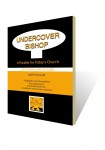
Read Undercover Bishop—a parable written from our Ambassadors’ experience visiting 65 churches in two years.
One More Example of the Redeemer Call Process
Redeemer went for years without a called pastor. Bishop Almquist did not work with our congregation at all for most of his second term. During this time Redeemer formed strong relationships with many pastors.
We worked with two qualified Lutheran pastors who were both well liked and were demonstrating their ability to work with the current church members and to grow the congregation. Fifty-one members joined while we worked with both pastors. We wanted to call one and struggled to determine which to call. At last one became unavailable which made our decision for us. We thought that a new bishop might not have the prejudices of the previous bishop. A fresh start! We brought a resolution to Bishop Burkat requesting a call. All the details of the call had been worked out and agreed upon and the pastor was willing to commit five years. All we needed to move Redeemer forward in a strong way was Bishop Burkat’s approval of the call.
The bishop’s office met privately with the candidate and we never saw him again. A few weeks later, there having been no conversation with our congregation, we received the letter that we were closed. Two months after that we received the letter revealing that SEPA Synod, even at that time, was already trying to sell our property—property that did not belong to them and which the Synod’s Articles of Incorporation expressly forbid them from conveying without the consent of the congregation.
It might help to actually ask ourselves this question. If people are seeking a faith community (and fewer people are) why would they choose your church?
Most churches are remarkably the same—at least at first glance. I write this with some authority, having visited 65 in the last two years. Congregational culture doesn’t seem to vary much.
Most churches think they are friendly.
Most pastors think their message is worth listening to.
Many pastors assume they are approachable.
Most churches aspire to excellent music. Some have capable and flamboyant organists. Others have just as capable lay ensembles leading worship.
Fewer churches offer educational offerings.
Fewer churches have youth or children. (This should be alarming to regional bodies!)
Service offerings are generally cookie cutter. A few embrace a cause.
One congregation we visited had several service opportunities all centering on cancer. Will prospective members feel this must be their cause, too?
Some have embraced sexual orientation causes. Will visitors feel that joining these congregations is making a statement on these issues?
Many participate in Habitat for Humanity or popular Walkathons.
There seems to be less association with denominational service organizations. This was unintentionally encouraged when Lutheran social service agencies started currying favor for public dollars.
Many Lutheran churches we visited are just getting by with little sense that there is a future.
What do visitors see when they walk through your doors? Is there a reason for them to return?
How we see ourselves matters. How others see us may matter more. Most people visiting a church are asking questions like these.
Will I feel welcome?
Will my whole family feel welcome?
Will my membership make a difference in my life?
Will I be able to participate with all my heart and soul and mind?
Our assumptions about why people choose to join a church can be very wrong.
Back in 1998, a Tanzanian family began attending Redeemer and asked to join. Bishop Almquist was interested in closing Redeemer. They had already seized a good bit of our money. We were discouraged from accepting new members. A synod representative actually visited this family and asked a rather presumptuous question. “Why would you want to join that church? Wouldn’t you be happier in a church with more people like you?”
That family made their own choice to join Redeemer and became the backbone of a new ministry. A decade later SEPA Synod, stuck in their prejudicial past, decided that the nearly 60 members with East African roots who had joined Redeemer since 1998 didn’t count. They claimed this mission outreach had been done without their oversight—although there is no requirement to check with SEPA before accepting new members. Why was a racial distinction made in a Church that claims to be EVANGELICAL?
In this scenario church leaders made an assumption. They assumed what might be best for Redeemer. Their vision for us was not our vision. We were judged on their assumptions.
Assumptions in today’s church beg to be challenged. Assumptions lead to status quo. The status quo in today’s church is decline.
Question everything. Explore.
If you want your congregation to stand out in some way, it would be helpful to know what other congregations in your region are doing.
Here’s a reality—
Few pastors ever hear other pastors preach.
Few choirs hear other choirs.
Most active church members have no time to visit other churches.
Most churches buy into the same curricula and purchase the same hymnals.
And so most muddle along, assuming they are doing a great job—living in their own bubble. They wonder why more people don’t become involved. They don’t really have a way to measure. The statistics they are able t0 gather reflect failure.
Here’s a suggestion.
Visit other churches. Send two or three members once a month to visit and report on what they learn. Visit churches in your own denomination. Cross denominations.
You may discover a need you can fill.
You may learn about a new resource or mission opportunity.
You might become allies in local projects.
You might begin to see yourselves through a visitor’s eyes.
I’d seen this episode of Dr. Phil before, but it was just as compelling the second time. Dr. Phil was interviewing a mother and her adult daughter. The daughter was a family outcast. The mother did nothing but criticize the daughter, who could do nothing to earn her mother’s approval. The siblings were cautiously following the mother’s lead, shunning the sister.
At first, I was tempted to think the girl was given to hyperbole, but Dr. Phil was being unusually harsh with the mother. What was he seeing?
He pointed to various events in the daughter’s life which had drawn criticism. Sure enough, the mother was unrelentingly critical. There were plenty of good reasons to shut the daughter out of the family circle and she had no trouble recounting each one. Nothing her daughter said was true. Why waste time with her? The daughter was trouble. All drama. Always was; always will be.
Slowly, point by point, the doctor provided proof that the daughter was telling the truth in many of the accounts. She was truly deserving of the family’s attention or support in some difficult circumstances. The mother’s attitude, not the daughter’s actions, had poisoned the family.
At the end of the program, Dr. Phil pointed out that what the mother was doing was applying her expectations (which were low) to every interaction she had with her daughter. When the daughter slipped up, she was quick to point out that her failings were exactly what was expected, proof of the mother’s superiority. Every misstep had an “I told you so” waiting.
While she was busy counting her daughter’s flaws, she was failing to see anything good. A son was cheered; the daughter jeered.
It was hard to watch, especially when you’ve walked in the girl’s shoes.
We, at Redeemer, have lived this story.
Dr. Phil pointed out that everyone can fall into this mother’s habit. We have to learn to see beyond our expectations.
The Southeastern Pennsylvania Synod of the Evangelical Lutheran Church in America has been picking on Redeemer in similar fashion for decades.
Someone at some time in the past — does anyone know who or why? — decided Redeemer was trouble. Ever since then, church leadership has looked to see their low expectations of this good congregation proven. Every little thing that might be construed as wrong was paraded before the entire church. Every good thing (and there have and continue to be many) count for nothing. Add the fight over property and the synod’s ongoing financial crisis and you have a whole new dynamic.
In the mother/daughter scenario, the whole family was drawn into the drama, finding it easy to take the mother’s side. We’ve seen the same behavior. The whole church—clergy and congregations—are willing to accept the bad, never looking for reasons. In this case, they stood to gain in doing so. It wasn’t just a broken relationship. It was a broken relationship with a $2 million property attached as the economy was making things difficult for everyone. The potential payoff made it all the easier to find fault.
SEPA cannot see beyond its expectations foreshadowed in 2006. Redeemer’s president at the time knew nothing of SEPA’s fault-finding with the congregation he and his family had joined ten years before. In fact, 95% of Redeemer’s members had joined in the last 10 years and knew nothing of Bishop Almquist and previous episodes with SEPA.
Redeemer’s president was trying to work with the Synod. He contacted SEPA offices many times. No response. At last, a synod staff member confided, “It doesn’t matter what your congregation does, the bishop intends to close your church.”
This was right after Bishop Burkat’s first election. All she knew about Redeemer was what she had been told. It did not come from any process of “mutual discernment.” Such claims are just part of the myth.
People find it easy to believe the story.
It’s Redeemer. What do you expect?
The situation wasn’t beyond hope in 2006. There was enormous potential. (Still is!)
There could be healing. Dr. Phil gives the recipe for reconciliation and healing. (A similar recipe can be found in the Bible.)
You have to look beyond your expectations, he advised. Start with small talk. Get to know one another again.
At the end of the program, Dr. Phil revealed the family incidents that had occurred when the daughter was just four years old. They were very real and horrifically tragic. The mother, the leader of the family, had not handled the situations well. She found a way to escape. The daughter became a reminder of a terrible time. A new child became the focus of all attention. A fresh start. The daughter was left behind, bearing the blame for something beyond her control for twenty years—throughout her entire childhood and into her adult years.
There are real reasons for the on-going tragedy in East Falls that continues to burden the SEPA family. There were incidents in the past that caused division. Many have no recollection of these incidents, but since then everyone in the church has been looking for only bad things from this congregation (while benefitting financially).
Multicultural ministry. Doesn’t matter.
Multilingual ministry. Doesn’t matter.
Blended worship. Doesn’t matter.
Neighborhood Christian Day School. Doesn’t matter.
Six-week, full day summer Bible School. Doesn’t matter.
Ground-breaking web site. Doesn’t matter.
Five-fold growth in two years. Doesn’t matter.
International fellowship. Doesn’t matter.
What matters is a history that none of us can remember. Can you?
It isn’t fair. It isn’t right. It could happen to any church. We wonder if it already is!
Any congregation could become the church’s whipping boy. All you have to do is dare to disagree. Write this church off. Collect its assets for your own use. No one was supposed to notice or care!
The good news. This can be fixed. Start with small talk.
Last week 2×2 heard from two readers, each identifying themselves as a fan of 2×2—and each from Nigeria.
We had noticed growing traffic in this area of the world, but this was the first time we had connected.
We do not know if the two who wrote to us are acquainted, but their interest added to a phenomenon that we never dreamed would be part of our ministry.
2×2 Connects Churches Worldwide
A few months ago, 2×2 made an effort to put some of our regular readers in touch with one another. With permission, we shared email addresses and wrote letters of introduction.
We were surprised when a church in Pakistan told us of their plans to send a representative to Nairobi, Kenya. We were surprised again when a church leader in Nairobi took his Pakistani guest to visit a church in western Kenya. They had all met through 2×2, which is the web site of the excommunicated Lutherans in East Falls, Philadelphia.
Last week, one of the Nigerian readers asked to be connected to churches in Kenya. Again, with permission, we connected 2×2 readers.
Meanwhile, here in Philadelphia, a missionary couple, home from their work in Sweden visited 2×2. We had lunch together and talked about their house church ministry.
The ELCA and its regional entity, the Southeastern Pennsylvania Synod, considers its East Falls church to be closed. There was never a vote. There was never any dialog or mutual discernment. Just a decree, five years of litigation, and a foolish, self-serving land grab. This could not have happened if ELCA rules had been followed.
Excluded from Lutheran fellowship, Redeemer’s Ambassadors have visited 61 sister congregations. Most of them have the same basic ministry.
Redeemer was heavily engaged in experimental ministry and succeeding. We were taking the risks (with our own resources) that Bishop Burkat is now asking all churches to take.
But the ELCA is intent on destroying us and taking our assets for their own survival.
2×2 has operated on a shoestring budget.
Imagine the influence we could be having within the ELCA — the denomination we supported for 122 years.
Imagine what we could be doing with income we could be earning with our educational building—an asset we built with our own resources and were fully prepared to use again when SEPA locked the doors.
Imagine the influence we could be having locally with the use of the property our members purchased and the buildings we built. We could be building the same kind of connections in our own community that we are building all over the world.
But we are kicked out, attacked in court and treated as undesirables. Why?
No one ever told us, but then we know the answer. SEPA Synod is funding its regional office by closing churches and assuming property and endowment assets as their own.
Here’s the lesson they have failed to learn.
There is more ministry potential in open churches than in closed churches.
There is more economic potential in open churches than in closed churches.
There is more possibility of innovation when regional offices are not trying to control parishes.
Redeemer knows this because we never closed — no matter what SEPA says. We do all the functions of church and we do this under horrendous conditions.
Last year, we sent some recorded music to churches who follow 2×2, with a suggestion that they teach the songs to children. Today, one of the mission workers wrote asking us to send more recorded music for their children to learn.
We’ll send them some of the songs we used to teach our own children.
Join Bishop Ruby Kinisa as she visits small churches "under cover" to learn what people would never share if they knew they were talking to their bishop.
Undercover Bishop will always be available in PDF form on 2x2virtualchurch.com for FREE.
Print or Kindle copies are available on Amazon.com.
For bulk copies, please contact 2x2: creation@dca.net.
MISSION INSPIRATION OFFER
A visual and biblical guide to help congregations define their missions.
Contact Info
You can reach
Judy Gotwald,
the moderator of 2x2,
at
creation@dca.net
or 215 605 8774
Redeemer’s Prayer
We were all once strangers, the weakest, the outcasts, until someone came to our defense, included us, empowered us, reconciled us (1 Cor. 2; Eph. 2).
Be calm. Wait. Wait. Commit your cause to God. He will make it succeed. Look for Him a little at a time. Wait. Wait. But since this waiting seems long to the flesh and appears like death, the flesh always wavers. But keep faith. Patience will overcome wickedness.
—Martin Luther



 Redeemer Will Ask, Seek and Knock