4/7InkzHVUEQeEdU9vpc1tikzEhChrKmPfvXI-FSDBrBQ

Commentary

Where the Bill of Rights Fails

Freedom to Be Oppressed by Your Religion

America was founded on the principle of Freedom of Religion. Early settlers came to escape state oppression of the emerging sects in Europe. Over the centuries, many faiths have sought refuge on American soil.

The First Amendment in the Bill of Rights prohibits the making of any law respecting an establishment of religion, impeding the free exercise of religion.

The legal system lives in fear of stepping on the exercise of religion. In recent court decisions they have gone so far as to determine that religious groups do not have to follow their own rules. That opens a new door. The leaders of religion can themselves become lawless oppressors.

That is the result of a recent Pennsylvania Supreme Court decision that determined the case brought by the Southeastern Pennsylvania Synod of the ELCA against a member church (Redeemer, East Falls, Philadelphia) could not be heard. Yes, they brought a case against a member church and then argued that the case they brought should not be heard.

The court gave SEPA Synod a victory by default —not based on evidence. They determined that it was up to the denomination to police its own rules. Fat chance.

A strong dissenting opinion concluded that if the law is applied, Redeemer’s arguments deserve a hearing. How are members of faith communities to assume that the laws they agreed to upon joining the community mean nothing?

That creates a very real problem for all the faithful. If constitutions agreed upon by religious groups when they go to the legal trouble of incorporating mean nothing, then faith communities are faced with potential lawlessness. The laity are sitting ducks for potential abuse. Clergy will run.

Faith communities can expect to be victimized by hierarchy. It is happening with greater frequency. The conflicts are usually about the value of real estate — not doctrine. Within the ELCA there are several cases of “hostile” takeovers—raids in the middle of the night or by stealth and deceit. One bishop, anticipating trouble, went so far as to call ahead to the sheriff and police department and warn them to expect a call from church members, but that they were allowed to change the church locks.

It is not the Church’s finest hour. As proven by Redeemer’s experience, Church leadership will not hesitate to use their protected status to tyrannize their members — those with the least power, the laity. You won’t read much about this on the pages of The Lutheran.

“I have the power,” Bishop Burkat was heard to say as she prepared to raid Redeemer. If so, it is a power allowed by courts side-stepping the issues. It is not a power given by the ELCA constitutions/articles of incorporation or by God.

It’s legal because the law exempts the church. Perhaps there is hope.

The law has finally stepped in on the Roman Catholic Church and its handling of crimes within its ranks—but not before a great deal of damage was done to both victims and the Church.

On this Independence Day, it is worth noting that the Bill of Rights does not protect the members of faith communities from the abuses of their own leaders. This can be stopped by the members of the faith community, but experience is proving that the religious don’t care unless they are directly affected. They are free to use other provisions of the Bill of Rights such as Freedom of Speech and Freedom of Assembly. Odds, in the current atmosphere, are against it.

What a waste of the First Amendment.

For God and Country

Redeemer traditionally closed worship on the first Sunday in July with a patriotic hymn sing. Visitors often confessed they knew only the first verses of most of the patriotic hymns and hadn’t sung them since their school days.

Somewhere in recent history it became politically incorrect to mix love of God and country. To most service men and women, it is hard to separate the two. Faith in God gives them the courage to face patriotic duty that might bring them at any moment before their Maker.

Such courage is needed outside of war as well. Important battles are fought every day—in homes, offices, schools, communities and churches—without guns and armor.

Perhaps a God-driven sense of patriotism is less understood today since the armed services are now voluntary. It is less common for young people to sacrifice two to four years of their lives in service to their country.

Parishioners—who may have spent months of their youth in cold, muddy trenches dug in foreign soil—watch pastors who never laced a boot carry the nation’s flag from sanctuaries.

Sanctuaries are for worshiping God, not country. The flag must be removed. Patriotism and religion will not mix.

There is little point in arguing that God and patriotism mix often in the Bible. Back in the day, the leaders of God’s people moved seamlessly between the altar and the battlefield.

It has been possible for Christians — and other faiths — to blend their love of God and country.  There may be no connection, but churches were fuller in the days when they did.

Today and next Sunday, sing the hymns of faith.

Here are a few:

My Country, Tis of Thee

America, the Beautiful

The Star-Spangled Banner The fourth verse especially: Blessed with victory and peace, may this heaven-rescued land praise the power that made and preserved us a nation.

God Bless America

Faith of Our Fathers

The Battle-Hymn of the Republic

June 30: Social Media Day—July 1: Social Media Sunday?

Do We Need Social Media Sunday?

Three years ago, the Social Media company, Mashable, created Social Media Day. In 514 cities, Social Media enthusiasts will gather (many in a bar) to put a real live face and warm handshake to the entities that drive the keyboards and hide behind little square avatars. It will happen again tomorrow, June 30.

Perhaps we will someday declare a Social Media Sunday, a time when Social Media Ministries physically welcome the people whose lives they touch from a distance.

It raises an interesting concept? What kind of program would a church’s SM Sunday promote?

There would be a temptation to do things the way the Church always does things.

They would hold a big worship service centered around a few people doing a few things in the chancel while everyone else sits or stands (as able) on demand. They would ask the strangers to break into ancient song at appropriate times, prompted by an overpowering organ. They would focus the newbie’s attention on the scriptures as interpreted by one person for fifteen, twenty, or thirty restless minutes. They would require that they shake everyone’s hand without really knowing a thing in the world about the hand they are shaking. They would bless them as they turn to walk out the door to be greeted warmly (perhaps) by a caring pastor and one or two others before returning to total anonymity.

That’s how a church service might seem to the uninitiated. Churches all over the country do this every Sunday, many with feeble results.

(And people say Social Media doesn’t create true community!)

How would you plan a Social Media Sunday?

God Speaks to Peter’s Successors

God speaks to Peter's Sucessors

One bishop hears something entirely different.

Danger Zone: Trust in the Church

“In God we trust. All others pay cash.”
That’s a fairly common American sentiment.

The Church has a way of warping our innate sense of caution. The old hymn teaches us to “Trust and obey, for there’s no other way to be happy in Jesus.”

The concept of trust in God, foundational to our faith, gets projected onto trust in people, trust in leaders, trust in the hierarchy. People may not be asked to trust church leaders, but there is an expectation that they are worthy of trust. So why not?!

There are good answers to that question.

Why not?

Because Church leaders are people. Church leaders are subject to the same temptations and challenges in life. They are just as capable of self-interest and foolishness. Donning a collar or a fancy robe or hat does not change human nature.

Placing unquestioning trust in Church leaders is all the more dangerous because trust in people becomes intertwined with trust in God. If we challenge people in the Church, are we challenging God?

Recent struggles in the Church suggest that blind trust in Church leadership is no more fruitful than blind trust in politicians. Children have had their lives shattered because they trusted men whom the Church presented as trustworthy. It took decades for Church leaders to come to grips with the problem. There is no reason to mention the expense. The price paid by the victims is so much higher.

Stories that make the news are not isolated. The Church shatters relationships with the faithful in other ways as well. It is just as slow to self-correct. It may even be impossible.

Seth Godin wrote yesterday on the subject of trust. He made a valid observation. Trust grows in times of crisis, when leaders stand by their people, when the going is tough, when it would be easier to run or hide, abandoning the faithful—or to lie.

Indeed, it is in times of crisis that trustworthiness shows its mettle. It is rarely seen in today’s Church.

photo credit: jrodmanjr via photo pin cc

The Story of David and Goliath Endures

This week’s Old Testament lesson is one of the most enduring stories in the Bible. David, a peon in King Saul’s kingdom, takes on Goliath, the huge and well-equipped leader of the Philistine Army.

We all know the story but it never hurts to re-read it. Ever notice how much detail the writer includes about Goliath’s weapons and armor? There is no room for doubt. Goliath was the superior leader in every way. This is followed by a rare comic description of the boy, David, stumbling through the palace, trying to walk a straight line while wearing the armor King Saul has provided.

We all know the story and the outcome. Little David rushes unprotected into battle and slays Goliath with a homemade sling and a pebble picked up from the wadi.

We know that David’s victory catapults him to a prestigious position in Saul’s court that eventually sends Saul into a jealous, mad rage. We know the side story of David’s fast friendship with Saul’s son, Jonathan.

The story endures because we can all empathize. Everyone knows how it feels to face a foe that is larger, better funded, more powerful and attractive to followers. Little children stand before parents, teachers and the many authorities they encounter. They are weak and defenseless. They understand David.

Adults can empathize. They’ve stood before bosses who hold the purse strings and offer security —the more you follow their leadership, the greater likelihood of security.

Athletes know the feeling of facing with dread an opponent of stronger repute.

We all understand the story of David and Goliath.

Especially, we little churches. We — and our members — face the unchecked power of the bigger Church. When positions of power are abused, the result is bullying. The Church is not immune.

Things are changing. Young men in Philadelphia are challenging the Church hierarchy in Philadelphia that looked the other way as Church leaders abused their power. It took decades to muster courage and their fears were realistic.

And then there is little Redeemer, facing the Evangelical Lutheran Church in America, which stripped them of their property and endowment, and shut the door on their individual participation in the denomination. They’ve fought back while others in the Church have watched from positions of safety.

It’s a different kind of battle. One little pebble is not likely to end this conflict. More than five years after the opening volley, Redeemer is still alive, fulfilling its “missional” purpose and fighting with no war chest or armor — only a web site to speak for them and trust in God.

Will it ever end? Pride, power and a disregard for purpose are the Goliath that stands in the way.

OBJECT LESSON:

Illustrate Saul preparing David for battle. Ask a small child to stand before the congregation. Prepare the child beforehand. Make sure you choose a child who can participate without harming his or her self-image.

Start to dress the child with sports gear (hockey of football) until it becomes apparent that the child can barely move, much less play a sport. Then start to take the gear away. Ask the child how he or she feels without the “armor.” Draw the comparisons to David. Take your pastoral message from there.

Blue Ribbon Gaffes in East Falls Christendom

It was announced yesterday that the plan proposed by the Philadelphia Roman Catholic Archdiocese’s Blue Ribbon Panel for Education is not resonating with the peons in the pew—at least not in East Falls.

Several months ago, the esteemed committee reviewed its parochial school system and announced dozens of school closures and mergers. The Committee has already reversed a good number of its Blue Ribbon decisions, but not in East Falls. That property in East Falls is just too valuable to be wasted on the young.

And so, the Archdiocese announced with Blue Ribbon wisdom that the children of East Falls would travel several neighborhoods away to be part of a parochial school in Manayunk that would bear a new name, St. Blase. (St. Blase is the patron saint of people with fish bones caught in their throats.)

The Blue Ribbon committee made the mistake so common among hierarchies, real or imagined. They assumed the families of East Falls would thank them for their wisdom and, at their first opportunity, wind their way through the crowded back streets of Manayunk, checkbooks in hand, to enroll their little ones in St. Blase. But they didn’t.

It doesn’t work like that any more. Neighborhood matters. Neighborhood is a choice people make—not hierarchies or Blue Ribbon committees. There may have been a time when Church was such a powerful force in society that people would follow edicts that were clearly designed to benefit hierarchy at the people’s expense. Those days are over.

And so, St. Blase is not to be. The Archdiocese has declared it. If it’s any solace to our Catholic neighbors, the Church is saving spots for their children in parochial schools even farther away. (They just aren’t getting the message.)

The Catholics aren’t alone in their mismanagement of the people of East Falls. Up the hill, the Lutherans thought they could just close the church on the white members of Redeemer and create a relocation plan for the black members. A simple hostile property takeover, thinly veiled in pompous rhetoric. Should have been quick and easy.

That plan isn’t working very well either.

Neither hierarchical plan makes any sense to people who actually know and care about the people involved. But those valuable properties just blind the Church from common sense—along with any sense of mission.

The Every Day Dad — A Father’s Day Tribute

In today’s world, the measure of fatherhood is often cited as a statistic in parenthood as a spectator sport.

“My dad was there for every game.” “Dad came to every performance.”

Watching the little ones grow is a rewarding part of fatherhood, no doubt, especially when life is all promise, the path to a bright future is smoothly paved, and the children shine with a glow which casts light on the parents.

My dad is 85 years old. Was he there for every childhood event? Probably, at least a good share. My memory of childhood events is growing dim. But this I can recall. Dad was there every day. In the humdrum routine of daily family life, Dad was front and center. He still is.

Dad’s routines are all the more remarkable because his life habits have spanned more than eight decades.

Dad is a retired pastor. He was certainly capable of flowery prayer, prayer designed as much for an earthly audience as for God’s ears. But he was rarely so tempted.

To this day, Dad sits at the breakfast, lunch or dinner table—at home or in any restaurant. He waits for the food to be placed before each person. He bows his head, inviting others to do the same, and says the same grace said in many Lutheran homes.

Come, Lord Jesus, be our guest.
May these gifts to us be blessed. Amen.

The words never lose their meaning to us. I doubt they bore an infinite God. They are said with passion. In moments of crisis, they might even be repeated through tears.

Three times every day the family returns to its roots, our faith. Three times, every day, each family member of any generation, witnesses the priorities of our foreparents.

Some people on this Father’s Day, will praise their extraordinary fathers. My dad — he is just an every day father. That’s the best kind!

Church Lingo: Keeping Our Message Obscure

Simplicity is a sign of truth and a criterion of beauty. Complexity can be a way of hiding the truth.”
— Helena Rubinstein

The message of Christianity is simple. God is love. Because God loves us, we are to love one another.

This simple message becomes obscure in the hands of theologians and church professionals. There is incentive to make it complicated. Church leadership has a very long tradition of cultivating mystery about their work.

Like many cloistered professions, the Church creates its own lingo. We know what we’re talking about. Why don’t you?

The difference is that our “business” is the message. We need to communicate clearly.

When we make our message obscure we defeat our purpose. It is no wonder that the “we” of the church is a shrinking number.

Let’s look at some of the hot buzzwords in the church today. (Warning! All words commonly used in the church are not actual words!)

Mission: Mission originally meant the act of sending. It has come to describe organizing for the propagation of faith. In that sense, it is a compelling word to Christians. Today, it is attached to almost every enterprise and is often the “hook” for fund-raising. Almost every solicitation for funds from any church-related institution has this word displayed prominently. People are far more likely to give to a “Mission Fund” then to sacrifice for the day-to-day operating expenses of bureaucracies—which is where the money can go. And so we have the Synod Mission Fund, the Seminary Mission Fund and the churchwide Mission Fund. The better to attract dollars. Congregations! Hurry! Start your own mission fund and get your piece of the pie!

Missional: This is an attempt to make mission an adjective so the word “mission” can be used more often. Coming soon: more non-words like “missioning.”

Discernment: This is the act of figuring things out. Discernment seems more intentional and focused. It is used often by church leaders and denominations. They spend a great deal of time trying to figure things out. When they can’t, they write about discernment and it seems like they have accomplished something or are about to accomplish something truly great. Results of discernment are not discussed nearly as often as the acts of discernment. Very few people actually recall the discernment process or a discernment meeting. They were probably busy trying to figure things out while someone else did the discerning.

Viability: Church leaders love to talk about viability — the ability to stay alive. They usually focus on other people’s viability and not their own.

Transform: This has been a church catch word for a while. The word “change” was just too scary. Nobody wanted to be “changed” by church leaders. They are not standing in line to be “transformed” either, but it sounds better. It is never quite clear what the goal of church transformation is or when transformation actually occurs, but we are all working at it.

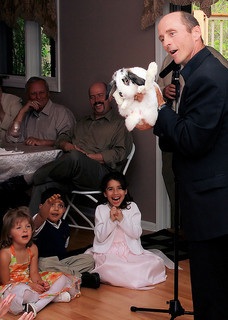
Transformational Ministry: This is a much talked about but seldom seen phenomenon. Often, it has little to do with transformation or ministry. It has more to do with economic viability (see above). Congregations can transform greatly but go unrecognized until they can contribute more to the denomination or hire more professional help. If you are really good at transforming no one will notice. It is like a magic act. The rabbit appears and then it disappears. But what happened to the rabbit when it disappeared? It doesn’t matter to the church as long as the act keeps playing and it can be chalked up as transformational ministry.

Thus ends today’s vocabulary review. Do you have a favorite church buzzword?

photo credit: visualthinker via photo pin cc

We Have A Pope (Movie Review)

There is a delightful foreign film playing in artsy movie theaters. It was filmed in Italy and is subtitled. It is titled in English “We Have A Pope.”

It is not likely to draw huge audiences. That’s a shame. It is a great film.

The premise is simple but daring. A pope dies. The College of Cardinals meets to elect a successor. After many ballots, a dark horse emerges and receives a substantial majority. The black smoke wafting over the Vatican turns white. Throngs eagerly await the new pope’s first appearance on the balcony.

The new pope has second thoughts. He doesn’t want the job. He flees.

All of Catholic Christendom waits unaware of the drama behind the Vatican’s closed doors. Rumors fly.

The new pope explores his misgivings. He walks incognito through the streets of Rome for several days. The audience is slowly introduced to a man who appears to be a perfect candidate for pope. He seems so kind and understanding. He has his “pope” outbursts but he is generally humble, charmingly vulnerable, and in touch with humanity.

Meanwhile, back at the Vatican, an atheist psychiatrist is sequestered with the College of Cardinals, held captive by the rules of the Church until the new pope is introduced. He emerges as the leader of leaders.

The movie poses many questions about the Church and its unquestioning dependence on hierarchy and its definition of leadership.

The ending took the audience by surprise. Many were grumbling with dissatisfaction as they filed out of the theater.

It was the perfect ending.

It leaves us asking if the church, with all its rules, rituals and traditions can make mistakes. Can the College of Cardinals make a mistake? Can they elect the wrong person?

Can Synod Assemblies make mistakes?

Are the people we look to for leadership any more sure of themselves than the people they lead? Are the people who crave power the best candidates to hold positions of power?

Most important: What do we do when “the system” fails?

Watch this film because it’s funny, entertaining and great story-telling. It is filled with characters we have encountered in any church structure. Think about this film because, even as fiction, it airs weaknesses in the church that few people care to ponder.