4/7InkzHVUEQeEdU9vpc1tikzEhChrKmPfvXI-FSDBrBQ

Uncategorized

Weekly Slideshow: Obeying God’s Law

Part of the Bible We’d Like to Ignore

God’s Rules for the Sticky Parts of Life

Some of the Bible’s toughest advice is found in this week’s lectionary—yet it is the part of life that we often need the most help with.


The lessons deal with getting along with each other and with God. It’s tough living a godly life when we are filing divorce papers, suing one another, feeling jealousy, hatred and disagreement—all those times when we’d rather not talk to one another distance us from God.


Much of this week’s slideshow concentrates on the Old Testament lessons from Deuteronomy 30:15-20 and Psalm 119:1-8. The New Testament lessons are Matthew 5:21-37 and 1 Corinthians 3:1-9.


We attempt to find thought-provoking images—the kind that can start discussions or illustrate an important point. You’ll see more than mountain vistas and waterfalls which are the focus of many scripture slideshows.


We started this series six-weeks ago and so far about 300 people are viewing the slideshows each week.


It’s a learning curve for us as the software for slideshows is not the most stable. Line breaks can be funky and transitions often don’t work online.


The shows are in raw Powerpoint format and therefore you can edit them easily for your system and needs.

If you find this to be a helpful worship resource, please consider subscribing to 2x2virtualchurch.com (upper right part of this page). You’ll get an email link to a new slideshow each week.


Adult Object Lesson: Light of the World

bushelThis Little Light of Mine . . . 

Matthew 5: 14-16
“You are the light of the world.
A city built on a hill cannot be hid.
 No one after lighting a lamp puts it under the bushel basket,
but on the lampstand, and it gives light to all in the house.
 In the same way, let your light shine before others,
so that they may see your good works
and give glory to your Father in heaven.


We once had a church organist who was technically very capable but had no church background. I asked him to play “This Little Light of Mine” one Sunday. Although easy enough to play by ear, I found printed music for him.


He balked. “This is unsingable,” he said. “The rhythms are too difficult.”


The pastor was by my side smiling as I responded.


“Every three-year-old who has been to Sunday School knows this song. Play it.”


Start today’s lesson by singing This Little Light of Mine together.


It is fun to sing. It is not just for children. Gospel singers like it, too.


It builds on a concept, straight from the Bible, that we often don’t think about today.


What is a bushel? How would you put a light under a bushel?


Having grown up in a house on a lot carved out of a cornfield, I knew from a young age that a bushel was a measure. My brothers and I gleaned corn from the field, shucked it, filled bushel baskets, and sold the corn to a granary—my first job!

Our bushel “baskets” were metal. I never really thought about putting a candle under one.


A bushel basket is about the size of a small wash basket. If you have one a bushel basket, use it. If you don’t, use a small wash basket.


You might use a small candle. A tea light would be perfect.


Keep in mind that the bushel in Jesus’ time was probably a woven basket. Because of the size and airiness of the bushel basket, covering it would not deprive the flame of enough oxygen to extinguish the light, but the light would not shine so brightly or so far.


The analogy is more about impediment. The song leaves the snuffing out to Satan.


Our lot is to keep the light shining as brightly as we can.


Today’s adult object lesson leads us to ponder how we create impediments that keep our lights from shining—and in doing so tempt Satan to finish the job.


Ask your adult learners what stops them from doing their best. How are they shading their lights?


And then sing the song!

This little light of mine.
I’m going to let it shine.

 Hide it under a bushel, no!
I’m going to let it shine.


(At this point you could add some verses written by your adult learners. For example: Won’t let time get in my way. I’m going to let it shine.)

Don’t let Satan blow it out.
I’m going to let it shine.

All around the neighborhood
I’m going to let it shine.

photo credit: Lodigs via photopin cc

Slideshow: Epiphany A5: Salt of the Earth

Slides to Accompany Lectionary for February 9, 2014


Slideshow: The Beatitudes

2×2’s latest slideshow suitable for projection during worship. Slides illustrate all lectionary readings for Epiphany A4.

Movement in Worship

One 2×2 reader responded to yesterday’s post about using tablets and mobile devices in worship with another thought. As we gather around these stationary devices, there is a greater need to move. Our bodies need movement.


Her email returned me to the 1960s.

I was part of a school choir. At Christmas, we crowded onto specially constructed risers and formed the Singing Christmas Tree.

Each year, towards the end of the concert, the boys at the top of the tree would start something to rile our director. It was an annual game that never disappointed.

“If you start to sway, I will pull the curtain. Mark my words. I will. I will pull the curtain.”

We acted appropriately chastised while attempting to hide our glee. We knew what was coming.

At the first strains of Silent Night, we started to sway. Every year.

She never pulled the curtain.


Back then, as a choir stemming from the culture of northern Europe, we were expected to perform like statues. The Singing Statues.


Today, with the infusion of multiple cultures and the relative boredom of watching the stiff performances of the Lawrence Welk singers on eternal reruns, movement is becoming expected. It is part of the delivery of the message.


It’s time to think about how these needs might change our worship. It’s nothing new. Miriam danced. David danced. It’s entirely biblical.


Not only do our bodies need motion but our souls need expression.


It’s all right. Go ahead. Sway!

Adult Object Lesson: Follow Me

pulltoy2Matthew 4:12-23

Follow Me!: Appreciating Discipleship

In today’s gospel. Jesus calls his first disciples.


What does it mean to follow Jesus?


Today’s object is a pull toy. Any pull toy would work, but one with some extra duckies or cars would be best. Have a youngster pull the toys as you talk. Some mishaps are likely and that can weave into your message.


Pull toys are among the first toys we give our children. They become leaders as soon as they take their first steps.


Here’s the analogy. The person pulling the toy is the leader. The puller can be God/Christ with people connected by a tether of faith, supported by the Word.


But the analogy can expand. The followers can be a succession of the faithful. But following is rarely a straight line. The cars or duckies can topple and make life more difficult for those following. The tether can become tangled. Oh my!


The role of follower or modern disciple is not easy. It never was. We have the Bible to follow. Then comes doctrine. There are constitutions (tons of them). There are professional church leaders. There are lay leaders of various sorts. There is tradition.


And then there is conscience. What place does this have?


The water is murky for us modern disciples.


Suggest this: A good follower is also a good leader. Each of us is tethered to others. This gives us responsibility.


Too often church leaders think of followers as help that works sacrificially at the grunt jobs for an occasional earthly attaboy or attagirl and the promise of a seat at the heavenly table.


To some, a good church follower doesn’t question and contributes healthily to the expenses of the church.


A good follower is a repetitive church statistic—the one you can count on over and over. If your monthly attendance is 1000, that probably includes 200 counted four times!


In today’s Gospel, the first disciples gather around Jesus. Some show up on their own, encouraged by friends.


The first step in discipleship is showing interest.


Look around your congregation and ask how many qualify so far.


The second job is to accept the invitation. The disciples had to agree to leave wife, parents, and their source of income.


Ask how many in the congregation are still “in.”


This should bring a chuckle. To do so today would be an extreme gesture of devotion. It was in Jesus’ day, too! Does anyone expect this measure of devotion today?


A brief review of the ups and downs of the biblical disciples is in order. They questioned. They  made mistakes—huge mistakes. They took ridicule — sometimes even from Jesus. They suffered. They kept coming back. In the process, they became leaders.


So what do we expect of today’s followers? Serious answers to this question could be  revealing.

  • We expect monetary support.
  • We expect attendance.
  • We expect baptism. Why isn’t the baptism of the disciples memorialized in today’s gospel?
  • We expect some form of labor. How’s the plea for volunteers going in your church?
  • We expect followers to be hungry to learn.  Why is adult education so poorly attended?
  • We expect participation in church government. What barriers do we set up to control participation?
  • Do we expect innovation? Do we allow for missteps along the way?
  • Do we expect questions to lead to thought leadership?
  • Are we more interested in bringing people to Christ or bringing them to the Church?
  • Which of these questions is most important?


There are many possible questions! Let them flow.


What is expected of followers of Christ?


Are we a simple pull toy? Or are there multiple tethers at work? (If your group is small, you might ask them to draw how they might illustrate their church structure as a pull toy.)

photo credit: D. Bjorn, Catchin’ Up via photopin cc


Slideshow for Worship: Epiphany A3

Jesus Calls His First Disciples

12 images illustrate each of the four lectionary texts for the Third Sunday in Epiphany.

This is our third offering in this new series. 200 people viewed last week’s slideshow on Slideshare.

Adult Object Lesson: Agnus Dei

Lamb of God? What’s That?

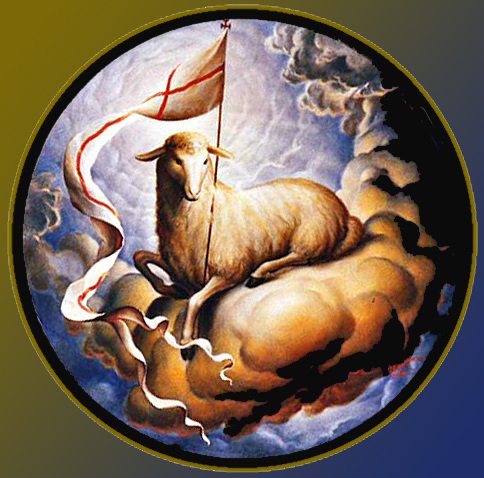
origin_5763470803Today’s gospel tells the story of Jesus baptism from a different point of view than the other gospel writers. The banks of the Jordan are crowded with spectators. It might be a bit like Woodstock!


John looks at Jesus and makes an announcement. “Here, folks, comes the Lamb of God.”


Huh?


Lambs don’t mean much to us today. In Jesus’ day, they meant a lot. They were money in the bank. To sacrifice a lamb was to sacrifice something of value. The people on the banks of the Jordan could relate to two stories from their heritage: Abraham’s sacrifice of Isaac and the Passover story.


Sacrifice is a tough concept to visualize. Any “object” seems trivial in comparison to the foreshadowing of God sacrificing his Son.


Today, explore the idea of sacrifice and perhaps your adult learners can suggest objects that mean  something to them.


Sacrifice is often intangible.


Sacrifices can be forced upon us. A jail sentence is a sacrifice.


Sacrifices can be cultural. Slaves sacrifice freedom. Women are often culturally expected to sacrifice their own potential for the order of society.


Time spent at work is a sacrifice from time spent with family. Parents sacrifice their own desires  to better the lives of their children. Sacrifices are costly emotionally and monetarily. Sacrifices are supposed to mean something. One person’s sacrifice should make a difference.


Ask your adult learners what might symbolize sacrifice. Ask: What is given up? What cause is furthered?


It might be a diploma. Choosing to devote time and money to education is a sacrifice that parents and students make to further their careers and ability to serve.


It might be a baseball and bat. In baseball, a capable athlete, who could use his at bat to try for a grand slam, goes for the bunt to move teammates around the diamond.


It might be a spreadsheet. In business, decisions must be made. What great feature might be sacrificed to keep down production costs or get a product to market.


It might be a helmet or medal. In war, sacrificial decisions are made. It is called heroism when one soldier risks his life to save another. It is called collateral damage when decisions are made to sacrifice villages to meet a strategic goal.


Today’s lessons are a bit mystical. Jesus is the Lamb of God. Lambs are meant to be sacrificed. Even God’s lamb. But what cause will be furthered?


Nothing short of saving the world.


Images for Preaching and Teaching

Epiphany A2: Second in Slideshow Series

We launched a new series this week and we are working a bit ahead. Here is the second in our series of images to accompany teaching on the scriptures for the second Sunday in Epiphany. Individual slides can be downloaded from the Page created for this week.


Hey, that’s my shirt!

2×2’s Mission Relief to Pakistan Grows

relief3We can’t say we knew what we were getting into when we set out to help the terrorized Pakistani Church, but our experiment is growing.


Read a fuller story here. In short, 2×2 found a way to directly help Christians in a part of the world that even the organized church has trouble serving.


Pakistani church leaders sent photographs of the distribution of 62 pounds of clothing sent by 2×2 readers. Lots of photos. We published a few, but we forwarded them all to the people in Michigan who orchestrated the collection.


They have been writing about their experience.


Young teenagers gather around the computer screen and see with excitement that their treasured outgrown clothing has brought a smile to the face of a child far away. “That’s my shirt!”


It makes a difference when you can actually see your efforts in action.


The adults have written “Count us in for another round.” Some have suggested improvements.


It is a new way of doing mission. There is no expensive infrastructure—no subsidized missionaries, no costly entourages of visitors checking in from the States. The work builds solely on relationships of people who in most cases know each other only through the internet.


It took some time. Months of trust-building. Weeks of figuring out logistics. All volunteer.


It has been effective.


“Count us in for another round.”