A 2×2 member sent this link today.
This is an uncanningly uplifting video. Let it inspire you.
29 Jun 2013



A 2×2 member sent this link today.
This is an uncanningly uplifting video. Let it inspire you.
2×2 has pen pals in many corners of the world. The leaders—and sometimes the church members—email us stories from their ministries regularly — at least once a week.
Our mission efforts are very hands on. And we do this work with a zero budget.
We share these ministries under our Friends in Ministry menu tab. Today we add a fifth Kenyan ministry to our fellowship. There are three in Nairobi and two near Kisii.
Welcome Shalom Evangelistic Gathering!
We continue to be amazed that these fellowships — all of whom met on 2×2 — continue to influence one another in very tangible ways.
Recently, the Fellowship in Pakistan sent a representative to meet one of the churches in Kenya. That church leader traveled with him to meet another church in the 2×2 fellowship in the western part of Kenya.
This month, a church leader in Nigeria wrote telling us of his plans to travel to Kenya. He asked for a contact there. With permission, we put him touch with a leader of a church in Kenya. They reported last week that the visit went very well.
2×2 seems to be well-named. We are spreading a network of Christian fellowship we didn’t envision when we started our website. We simply had an idea that we could have both a local and global ministry.
There is more news afoot in our international ministry. Check back in a week or two!
You are welcome to join our fellowship.
The call process in the Lutheran Church is a bit of a mystery. It operates on two levels.
There is the call to vocation, which comes from God. Preachers love to tell the story of how they thought their lives were headed in one direction and suddenly God grabbed them by the elbow and pointed them toward the Church. This type of call is documented in the Bible—Noah, Moses, Saul, David, Jonah, Job, Mary and all those disciples and the succession of apostles.
Then there is the congregational call. This call is issued by congregations or perhaps extensions of the Church (hierarchy, seminaries, camps and social service agencies).
Sometimes we get the two confused. The process makes it seem like every congregational call is akin to a biblical call, with God pulling the strings.
The ELCA call process is often more convoluted—and weighted toward the interests of clergy and synods.
Biblical calls were usually undesirable, risky, downright dangerous. Today’s congregational calls come with mandated salaries, benefits and perks.
There are two types of constitutional calls.
Term calls end when the designated time is up. (Bishops have term calls.)
Regularized calls, now being called “settled” calls, have no time limitation. The pastor can leave with 30 days notice or the congregation can rally a two-thirds vote to make a change. If things go well, no problem. If things are not going well, conflict is likely to result.
At Redeemer we had some interesting and sometimes dramatic experiences with the call process. We went along with it for years. There came a point when we realized that our partner in the call process — the synod — was less than forthright. The candidates being presented to us were needy. They were being sent in our direction to satisfy their problems not to serve. They needed the income. Their roster credentials were expiring. They had serious problems in previous churches. They wanted their families to be disrupted as little as possible. They were seeking a secure and comfortable life.
We had yet to read the published theories about “caretaker ministries.” Caretaker ministries are ministries of intentional neglect. Pastors are expected to do nothing but keep people happy while the congregation dies. Ten years of neglect is expected to result in a successful caretaker ministry and closed church. (Why aren’t ELCA congregations outraged by this?)
Lay leaders aren’t let in on this secret. Lay leaders think they have called a pastor who will make a difference. They keep trying, spending resources on the required pastor, but doing the work alone.
Of course, the result is strife. Guess who is to blame!
In 1997, Redeemer issued an 18-month term call to a synod staff member. Bishop Almquist pulled the pastor out after three months. He needed his service in the suburbs. No other solution to filling the pulpit was offered for the following year. Was this an escalation of the intentional neglect of a caretaker minister? (A year later Bishop Almquist seized a big chunk of our endowment money. He sent that pastor to our bank!)
Within three years we went from the same Bishop pulling a “called” pastor out to attempting to force an “uncalled pastor” in.
In 2000, we were asked to regularize the call of a pastor who had been serving a one-year term. The congregation council did not recommend renewing the call under the conditions the synod presented — which reduced service from 12 hours a week to 10 hours a week. Congregational leaders felt responsible for more ministry—not less. We were willing to renew the term call, while we sought a better solution. (This was before the interim concept had taken hold.) The reduction was the pastor’s idea — not ours. (Ten hours a week happens to be the minimum required to maintain a pastor’s roster status. Rostered status maintains things like pensions and credentials.)
The goal of synod leadership was to make this weak relationship permanent—even though there is no constitutional requirement to do so. The interests of the synod and the pastor trumped the interests of the congregation.
Bishop Almquist asked Redeemer’s council to vote again. The second vote failed, too. Bishop Almquist insisted that the call question be presented to the congregation. He was hoping that the congregation would vote against their leadership. Yep, he was orchestrating dividing the congregation! The congregational vote—the third vote on this call—failed, too.
Bishop Almquist refused to work with Redeemer in presenting any other candidates.
The mysterious call process shrouds a basic fact.
Synods exist in large part to keep pastors employed. Since clergy talk with each other more than with congregations, congregations are always at a disadvantage.
Once those settled calls are finalized, change is almost impossible without conflict. That’s OK. It creates a job market for interim pastors—one of the few areas of ministry that seems to be growing. All the perks of rostered clergy with minimal commitment.
Recently, we encountered the call process again. Our Ambassadors attended a service that featured a trial sermon followed by a congregational vote on a candidate’s call.
A congregation’s future was resting on what would take place during this hour. Congregational representatives had already spent some time with the candidate. There had been a congregational “meet and greet.”
The trial sermon should be a critical part of a job interview — an opportunity to display leadership and vision.
The service began with the pastoral candidate apologizing for being late. Logistics. The apology continued. There had been no time to study the order for worship. Please bear with the circumstances.
In the secular world, this might be considered getting off on the wrong foot.
The congregation graciously gave the candidate the necessary direction. On with the liturgy.
Things went fairly well.
Time for the sermon—the all important trial sermon. Surely, the candidate had slaved in preparation. The candidate would want to demonstrate a grasp of theology and how it might influence leadership and the direction of the congregation. The candidate would want to build on conversations with church leaders and inspire the congregation who would be voting in just minutes.
The candidate began the sermon by asking the congregation to identify the liturgical color for Pentecost. The congregation called out correctly, ”Red!” No, the candidate said, pointing to the paraments. It is green to symbolize growth.
Green is the color for the Sundays AFTER Pentecost—Ordinary Time. Incomplete information was preached.
The lesson for the day was the gospel story of the widow of Nain at the funeral of her only son. The candidate addressed the Gospel story briefly, mentioning how “neat” it was that Jesus only touched the funeral bier to bring the young man back to life. The candidate defined bier for those of us with limited vocabulary.
The candidate rambled from that point on, talking about personal struggles. Jesus had lifted the candidate from a troubled past, just as he raised the widow’s son. The rest of the sermon was all about her life.
The candidate’s family was introduced. A recently deceased family member who had been prominent in the church was mentioned. His presence was felt.
Things had better go well!
The vote seemed to be a formality. It would be cruel to parade the children before the congregation if there were any chance a vote might not succeed.
Asking a congregation to vote on such a flimsy foundation would be considered preposterous in any other organizational venue. But not in the Church. In the Church it is par for the course to limit information given to congregations. Bishop Almquist had even refused to provide a candidate’s name prior to meeting the congregation. The less the congregation knows the better.
Likability seems to be the major credential in creating “settled” pastorates—not theology, not preaching, not leadership skills or a successful mission record.
We left at the end of worship. We don’t know what questions were raised in the voting process.
According to the congregation’s website. the congregation voted to approve this “settled” call.
The congregation voted for a candidate who arrived late and unprepared, who displayed minimal theological insight, who talked down to the congregation, presented misleading information, spoke in great detail of a deeply troubled past, showed no grasp of the congregation’s immediate challenges and shared no vision for their future together.
They have their settled pastor.
Under the same circumstances, a secular organization would keep looking.
There is a reason congregations accept candidates with ease. There is the tendancy to want to be friendly—and if a congregation does not cooperate, the congregation is labeled as troubled and the pool of candidates dries up. In other words, we have little choice.
If status quo is maintained for the next few years, the call will be celebrated as successful.
If the congregation declines, the quality of professional leadership will not be cited.
The call process in the ELCA needs a serious overhaul. The interests of the congregation need to come first—way before the comfort and convenience of candidates. This does not require a constitutional change. Rather, it requires a change in attitude among professional leaders.
There needs to be professional accountability. There needs to be a service mindset—not an entitlement mindset.
It should start with a more realistic call process.
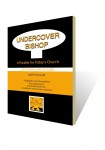
Read Undercover Bishop—a parable written from our Ambassadors’ experience visiting 65 churches in two years.
Redeemer went for years without a called pastor. Bishop Almquist did not work with our congregation at all for most of his second term. During this time Redeemer formed strong relationships with many pastors.
We worked with two qualified Lutheran pastors who were both well liked and were demonstrating their ability to work with the current church members and to grow the congregation. Fifty-one members joined while we worked with both pastors. We wanted to call one and struggled to determine which to call. At last one became unavailable which made our decision for us. We thought that a new bishop might not have the prejudices of the previous bishop. A fresh start! We brought a resolution to Bishop Burkat requesting a call. All the details of the call had been worked out and agreed upon and the pastor was willing to commit five years. All we needed to move Redeemer forward in a strong way was Bishop Burkat’s approval of the call.
The bishop’s office met privately with the candidate and we never saw him again. A few weeks later, there having been no conversation with our congregation, we received the letter that we were closed. Two months after that we received the letter revealing that SEPA Synod, even at that time, was already trying to sell our property—property that did not belong to them and which the Synod’s Articles of Incorporation expressly forbid them from conveying without the consent of the congregation.
 I updated all the blogs I manage today. It was a simple click. Done.
When the installation was over a screen appeared detailing the benefits and features of the update.
There were three tabs at the top of the page: What’s New, Credits, and Freedoms.
I had already read What’s New. The Credits don’t interest me (although I’m grateful). I had to explore Freedoms.
The Freedoms tab explained the WordPress philosophy. The software is free. Anyone is free to modify and improve. In fact, they hope we do!
Several new business models revolve around the concept of “free.” Social Media is one of them. Facebook, Twitter, Pinterest, etc. — all free to users. In the early days of this model, business people weren’t sure what to make of it.
Then FREE started to make billions. People chose to embrace the power of FREE.
Wikipedia has become an amazingly thorough and accurate encyclopedia with almost instantaneous updating. You hear on the news that a celebrity died. Check Wikipedia—it’s likely to already reflect the news.
Wikipedia opened its pages to contributors and editors — anyone. They rely on the idea that people want to share, appreciate accuracy and detail, and will correct what they discover is wrong.
You can find information on the most obscure subjects on Wikipedia. (We may start a Wikipedia page!) The editorial barriers that existed in a world of space limitations are gone.
What can the Church learn from this?
The Church is scared silly of FREE. They are protective of what they have. They want to give nothing away.
Control of assets is more important than use of assets.
That’s what is keeping the congregations from using Social Media.
Social Media costs practically nothing monetarily. The investment in Social Media is an investment of time and talent. It involves giving your message away.
Most churches have already dedicated a healthy third of their resources to proclamation. They hire a pastor to collate, interpret, teach and preach. Unfortunately most churches are investing that money on reaching very few people.
There is another way. With Social Media you can take the same message, already paid for, and reach millions.
But congregations, accustomed to old business models, ask, “What’s in it for us?”
Someone will be quick to say, “Let’s add a Donate button.”
This approach to Social Media is backward. Social Media works on the giveaway business model.
There may be a time and place for that Donate button, but first you have to establish voice and prove your dedication to your message and your readers.
But Church leaders are not leading the way. They’ve forgotten their roots! Our message should be free!
If there is any office of the hierarchy that should be subsidized, it is the church’s “house organ”—the voice of the denomination designed to reach every member. And potentially more.
The Evangelical Lutheran Church in America (ELCA) has a magazine, The Lutheran. It is subscription-based. That barrier limits its effectiveness from the start.
The physical magazine works the old way. Readers get their magazine in the mail. They can read and participate by writing letters to the editor. Few will get printed. No room. The editors will choose who can comment.
There are no space limitations online. So why do we set up the same barriers as if there were?
The Lutheran online teases readers and expects them to pay to read and comment. They may be able to measure how that is working for them. What they can’t measure is how it might work better for them in the long run to eliminate that barrier.
Church house organs should be free. (Advertisers should be demanding this!). You want people to know your story. You want to engage the Lutheran community and build that community. There should be no fear of the dialog that results. It should be refreshing. People like to know they have a voice. They expect it today.
The same is true at the denominational and congregational levels. Their online presence should be delivering valuable information to the region and community. The news and features should be outreach-oriented—not all about how great the regional office or congregation is. The proof of the pudding is in the reading—and serving.
There is practically no effort at these levels to embrace the media tools available.
It’s all because we still focus on the offering plate and the structure that dwindling offerings must support.
The Church today exists in a world where people expect something for free. It helps differentiate those dedicated to service from those dedicated to self-interest and self-preservation. When people see you walking your talk — then they want to be part of the mission. When they are sure of their investment, they are more likely to become supporters of mission.
By the way, the giveaway model was how the Church got its start and spread all over the world within a few centuries. Imagine what we could be doing today with a simple return to our roots.
It might help to actually ask ourselves this question. If people are seeking a faith community (and fewer people are) why would they choose your church?
Most churches are remarkably the same—at least at first glance. I write this with some authority, having visited 65 in the last two years. Congregational culture doesn’t seem to vary much.
What do visitors see when they walk through your doors? Is there a reason for them to return?
How we see ourselves matters. How others see us may matter more. Most people visiting a church are asking questions like these.
Our assumptions about why people choose to join a church can be very wrong.
Back in 1998, a Tanzanian family began attending Redeemer and asked to join. Bishop Almquist was interested in closing Redeemer. They had already seized a good bit of our money. We were discouraged from accepting new members. A synod representative actually visited this family and asked a rather presumptuous question. “Why would you want to join that church? Wouldn’t you be happier in a church with more people like you?”
That family made their own choice to join Redeemer and became the backbone of a new ministry. A decade later SEPA Synod, stuck in their prejudicial past, decided that the nearly 60 members with East African roots who had joined Redeemer since 1998 didn’t count. They claimed this mission outreach had been done without their oversight—although there is no requirement to check with SEPA before accepting new members. Why was a racial distinction made in a Church that claims to be EVANGELICAL?
In this scenario church leaders made an assumption. They assumed what might be best for Redeemer. Their vision for us was not our vision. We were judged on their assumptions.
Assumptions in today’s church beg to be challenged. Assumptions lead to status quo. The status quo in today’s church is decline.
Question everything. Explore.
If you want your congregation to stand out in some way, it would be helpful to know what other congregations in your region are doing.
Here’s a reality—
And so most muddle along, assuming they are doing a great job—living in their own bubble. They wonder why more people don’t become involved. They don’t really have a way to measure. The statistics they are able t0 gather reflect failure.
Here’s a suggestion.
Visit other churches. Send two or three members once a month to visit and report on what they learn. Visit churches in your own denomination. Cross denominations.
If you want to learn about the world, travel. If you want to learn about the Church, visit.
Three Redeemer Ambassadors returned to Hartwick Seminary Church in upstate New York last Sunday. Hartwick is a small church. It has always been a small church. It has no illusions of ever being a large church. They are about to celebrate their 175th year in mission to their rural community which includes seasonal tourists.
On this Sunday, they were fulfilling their mission. Their attendance was about 30 and a third were tourists.
What a pleasant experience!
The congregation pulled together as a team. The organist was great. A wonderful soloist stepped up to fill some time while they were waiting for their pastor who was coming from conducting a service at a sister congregation. The leadership was obviously accustomed to rolling with the punches.
The sermon actually addressed the gospel in contrast to some of the churches we visit where the sermon is a meandering of thoughts.
The children were actively drawn into the children’s message, interacting with the congregation. All the visitors were invited to a potluck following the service.
They passed out a new hymn that was written by the pastor.
As we have often found, the size of the congregation has little to do with the quality of worship or the fulfillment of mission.
 I grew up in the Church . . . in a preacher’s family. A network of preachers’ families, in fact. Generations of pastors and numerous aunts and uncles representing several denominations working in ministry.
It was not until recent years that I heard the term “settled pastor.” But then, fifty years ago, most pastors were settled. It was so much a part of what being a pastor meant that there was no special term.
Perhaps we hear the term today because the Church is hanging on to a relic of the past. These are unsettling times!
A “settled pastor” is a pastor who is called by the congregation with no term limitation. Sometimes it is called a “regularized” call.
It’s not something lay people think about much. They should. The concept can make or break their church and cause lay leaders a lot of heartache. And they won’t see it coming!
There was a time when pastors were assigned to a congregation or called by congregational vote. There they stayed, baptizing, marrying and burying generation after generation of the faithful. A pastor might leave to serve a richer parish or to suit personal goals. The only other reasons to leave were seriously bad behavior or conflict. Poor performance was rarely a reason. Congregations can eke by with a poor, but beloved, pastor for years as resources dwindle.
Redeemer Ambassadors visited one congregation recently that had the same pastor for 18 years. It declined steadily despite the fact that their neighborhood was vibrant. They closed the week after our visit.
They had a “settled pastor” but where did that get them?
The reason the term “settled pastor” is used more frequently is that the concept is becoming rare. Pastors rarely settle into their communities intending to stay for decades—even when they accept calls as “settled pastors.”
Some accept calls to small congregations as stepping stones, proving grounds. Others don’t want a long-term commitment or even a full-time commitment. Their personal lives demand flexibility. Many enter the ministry as second careers and anticipate retiring within a decade or so. They will never be seasoned, full-time pastors. Frequently, they become “interim pastors”—also a new term.
It is probably the growing use of “interim” pastors that the term “settled” has become prevalent. The concept of “interim ministry” is short-term help while congregations consider long-term candidates. Interims terms should be a few months. They are often well over a year—intentionally so. The better to keep the stable of pastors employed.
Consequently, the goal of calling a “settled pastor” is archaic and unfair to congregations who buy into the concept that the pastor they are calling is deeply committed.
The modern congregation is likely to be equally unsettled. Demographics within communities can shift every five years.
So why is the Church pretending that “ssettled pastors” are either the norm or a good idea?
The concept serves another purpose that is rarely stated.
Settled pastors have significant constitutional advantages for clergy and professional leadership. In the Lutheran Church, the settled pastor can leave a congregation at any time with only 30 days notice. However, if a congregation is unhappy, stagnant, achieving none of its goals, declining in giving and attendance and facing a fragile future, they cannot make a leadership change without taking a vote—a two-thirds vote. Usually, twenty percent of an organization plays significant leadership roles. So lay leaders must convince three times their number, from a pool of less committed members, that a change is in the best interest of the congregation.
Having a settled pastor in place, means a problem for the regional body has been solved. A pastor has a job for as long as he or she wants it. Neither the pastor nor the congregation will be knocking on their door for a while!
Church lay leaders must be very careful. Making any kind of demand on a settled pastor can signal war. It won’t be declared as such but lines will be drawn. The settled pastor can easily use his or her position within the congregation and community to subtly rally support. The war will be fought with gossip and innuendo. “Hush! Did you hear ….?”
Lay leaders may be acting with the future of the church in mind, but soon they may be seen as malcontents and troublemakers. “Poor pastor! What he or she has to put up with!”
Their reputations in the community may be strong enough to bear it, but their voice in the church will be filtered.
Congregations will be divided. Conflict may take a serious toll and years to resolve—whether or not the pastor stays.
Perhaps it is time for congregations to insist on term calls as the norm rather than the exception, so that the comfort and security of being a “settled pastor” does not lead a congregation into long-term decline. If a course correction can be made, the existing pastor will have incentive to lead—create and meet benchmarks—and not take their call for granted.
“Unsettled pastors” might be the right servants to lead today’s church.
It’s more work for hierarchy and less secure for clergy.
But then church work is always hard and insecure for the laity.
All welcome.
This is an important question. We’ve addressed it before, but the answers keep changing. The answers of 20 years ago will not be the answers of the next 20 years. The answers this year may not be the answers of next year.
Old answers address old concerns. Here are some old answers.
A successful church has
These old measures allow for a status quo existence.
A traditional church can be criticized if their members do not live within five miles. It’s a sign that the church membership has left the neighborhood and can signal the regional office that the church is ripe for takeover. They equate “scattered” with “diminished.”
Geography is not that important anymore. Even our bishop travels about 20 miles to the church she chose to join!
At times the church sets goals for us. One such goal is diversity. Despite the emphasis on inclusion, the church has been largely unable to achieve diversity in the congregational setting. The answer has been to set up separate but equal worship venues. Two or three populations worship at separate times in the same building or are encouraged to serve others like them in their separate location. These multiple communities can worship in the same building for years and know nothing of the “others.” This is playing at diversity. It helps provide some statistics so that it looks like goals are being achieved while congregations remain comfortably homogenous. Homogenous congregations face fewer faith challenges and are more likely to contribute more.
Settled pastors with settled congregations are the goals. So the value of these statistics is rarely challenged.
Why is this the goal? Without this financial foundation of the pooled resources of “settled” churches, the hierarchy will fail.
This archaic way of defining and promoting diversity eases the comfort of pastors as much as the comfort of parishioners The pastor of the homogenous congregation feels less challenged when a pastor with different skills serves the diverse congregation. There is peace in the diverse, but divided, kingdom.
This is all preserving the past while feigning innovation.
Here are some statistics that churches should be measuring if they want to survive in the Information Age.
Community Involvement: How many community events did your congregation participate in as a congregation this year? How many times did you write about this on your blog and link it to local press sites?
Events: How many events in addition to worship did your congregation host? These can be charity events, artistic offerings, workshops, online events. In a diverse world multiple entry points to church life are needed.
Email List: How many people in the community can you reach by email should you want to rally support for a cause? How many on your list are members? How many are nonmembers?
Many churches used to remove nonmembers from mailing lists to save print and postage. This reinforced the thinking that evangelism is communicating only with people you know.
Since email costs practically nothing, this thinking (which was frugal but unwise) needs to change. Grow that email list!
Website and Blog: Do you have a web site with a blog attached? How many times a week do you post? How many people in your church are involved in the web site? How do you promote your posts to build your online witness? Are your subscriptions growing? Are you getting online feedback?
Collect Statistics: In the old days, an usher stood at the back or the church and clicked a counter as people walked through the door. That worship attendance statistic was all important.
That statistic is fairly useless today. There are so many other ways to measure involvement and provide ways to contribute.
How has your website grown this year? It should grow at least 15% every year. (2×2 doubled its readership in its second year and is on track to quadruple it second year statistics this third year.) Web sites with blogs are easy to measure. You can measure reach, numbers of readers and time spent on the site. This information will help you plan your ministry offline.
How are you enriching your members’ lives? How are you providing a faith-building environment that involves life-long learning? How are members able to express their faith?
These are some of the measures of the emerging church. They used to be difficult to measure. Not anymore!
The new successful church may look more like this:
We know this can be done. Redeemer has already proved it.
Seth Godin, one of the earliest and most prolific bloggers, celebrates his 5000th post today. Congratulations, Seth. You make a difference in many worlds!
2×2 is approaching 1000 posts. We have a way to go!
In Seth’s reflection on his exercise in sharing an observation with the world daily for more than ten years, Seth writes:
My biggest surprise? That more people aren’t doing this. Not just every college professor (particularly those in the humanities and business), but everyone hoping to shape opinions or spread ideas. Entrepreneurs. Senior VPs. People who work in non-profits. Frustrated poets and unknown musicians… Don’t do it because it’s your job, do it because you can.
Why don’t more preachers blog? Surely they see themselves as shaping opinions, values and spreading ideas.
Blogging is a gradual art. It’s like having coffee or tea with your neighbor every day. The bonds build slowly.
Why don’t more preachers blog? It’s work. The rewards are not immediate. It’s not part of the job description.
Preachers still think the world is going to come to them.
I’ve noticed a few church websites that contain blog entries. They tend to be once a week for about six weeks before they drop off. I remember one that I opened eagerly from the link on the home page. The announcement was so enthusiastic! It had just one blog entry that had been posted more than a year earlier.
2×2 challenges pastors to blog daily for a year. If that’s too hard, blog daily for three months. Any shorter and you won’t learn from the experience.
Do it first thing. Share with your community before 9 am. Or post at the end of the day—whatever rhythm works for you.
See if it doesn’t make a difference in your community. It may also make a difference in you!
As Seth notes:
I’ve never once met a successful blogger who questioned the personal value of what she did.
Our worship gathering started a little blue today. We Redeemer members are tired of being ignored or looked down upon at best and demonized at worst. Our members walked through our worship doors this morning fed up. We allowed some time for complaining.
Our members have plenty to gripe about. This month, we enter our sixth year of persecution by the leadership of the ELCA. We’ve been treated very badly and the courts, which are beginning to sympathize with us, still must defer to the original court ruling that says the church has to settle this themselves. The dissenting opinion that sided with Redeemer seems to be gaining support as court actions continue.
The Church is powerless to fix its own problems. They seem to be unable to practice much of anything that they preach. What good is any church that when put to the test is totally impotent? That’s the ELCA.
We soon put our problems aside, learned a new hymn and began worship. By the end of the service and our discussion of the amazing faith of the centurion, we were in a better mood.
Sometimes people outside the Church can see the bigger picture most clearly. That’s Redeemer’s experience, too. Many of the people who have been most generous in helping us have no church affiliation. Church people look the other way. Silence and inaction is all we’ve seen from SEPA congregations.
Redeemer has maintained our community. We are poised both financially and administratively to resume our ministry in our own community with our own resources.
If our situation was so dire—as SEPA falsely claimed—we could not have maintained our ministry for more than a few months. We’ve continued to grow our ministry for the last four years!
Our ministry was not the reason for the conflict in East Falls. SEPA Synod’s failing finances are the cause. Six years later, they are still in pretty bad shape. Redeemer is holding its own!

A visual and biblical guide to help congregations define their missions.