There is a minor debate on the internet over whether the Christmas song, The 12 Days of Christmas, is a centuries old song sung just for fun or if it was a secret way of teaching the fundamentals of the Christian faith at a time when teaching the Catechism might have cost you your life.
The internet watchdogs point to the publication of the song in England in the 18th century with the tune predating it to France. It was nothing but a children’s game set to music, they say with certainty. But then if the message was so secret that it might have cost a person freedom or life, they wouldn’t dare tell anyone . . . so who knows.
Whether rooted in history or not, it is fun to think of religious truths when singing the song. It can even help you remember whether it is nine lords aleaping or nine ladies dancing. So why not use it to teach!
For those who want to give religious meaning to a secular song, here are the meanings some people assign to the 12 crazy Christmas gifts. If nothing else, they make an endless trivial song a bit more interesting!
1 The Partridge in the Pear Tree is Jesus Christ, the Son of God
2 Turtle Doves represent the Old and New Testaments
3 French Hens represent the Virtues—Faith, Hope and Charity
4 Calling Birds represent the Four Gospels and/or the Four Evangelists
5 Golden Rings represent The first Five Books of the Old Testament, the “Pentateuch”
6 Geese A-laying represent the six days of creation
7 Swans A-swimming represent the seven gifts of the Holy Spirit (wisdom, understanding, wonder, right judgment, knowledge, courage, and reverence)
8 Maids A-milking represent the eight beatitudes
9 Ladies Dancing represent the nine Fruits of the Holy Spirit (love, joy, peace, long-suffering, kindness, goodness, faithfulness, gentleness, and self-control)
10 Lords A-leaping represent the ten commandments
11 Pipers Piping represent the eleven faithful apostles
12 Drummers Drumming represent the twelve points of doctrine in the Apostle’s Creed
I recently reread Mark Twain’s Tom Sawyer and Huckleberry Finn. They were first read to me by my fourth grade teacher — a chapter a day after lunch. I read the books myself several times since. In my latest re-reading something jumped out at me. There was a reference to blue Sunday School tickets.
I was a child more than 100 years after Tom’s Sawyer’s time, but I remember blue Sunday School tickets. These were given to us as children as a reward for memorizing Bible verses. We memorized The Ten Commandments, Psalm 23, the Corinthians Love Chapter, The Beatitudes, etc. Ten assigned passages later and we would receive a red ticket. The tickets were to be collected and traded for a prize — a Bible or a pencil with a Bible verse or some other devotional knickknack.
Memorization was also a feature of our Vacation Bible School. Each year, we learned a new classic Christian hymn. I can still sing Built on A Rock, Beautiful Savior, This Is My Father’s World and several others by rote.
Memorization was an important part of our faith training. These words are etched in our hearts as we face life’s challenges.
But memorization is a dying life skill. Retrieval of information is so readily available, why clutter your memory with Bible verses or hymn lyrics?
The reason is that the memorized words become part of who we are — our culture.
I was impressed to visit a neighbor’s home one holiday. The large living room was crowded with lively chatter. In one corner, a man was playing the guitar for the pleasure of a few. Then he began to play When I Survey the Wondrous Cross. The entire family stopped what they were doing and with bowed heads sang the entire hymn — every verse — from memory. I have never experienced a more reverent moment in any sanctuary.
The Church should consider reviving the fine art of memorization. The blue tickets weren’t such a bad idea!
You can introduce the concept as part of a Children’s Sermon. Write a verse on cards and ask the children to say the verse together a few times. Give the cards to all the children, even those who do not read. Their parents can teach them the verse. Have the rest of the congregation join in. Have them take the card home and come back next week without it and repeat the verse by memory.
Here are 15 verses to start your memorization program. They are short — a good starting point and suitable for even very young children. Build up to the longer passages!
To find more verses just plug “Bible Verse Memorization” into your search engine. There are a number of sites with great suggestions.
1 John 5:3
This is love for God: to obey his commands
Proverbs 3:5
Trust in the Lord with all your heart.
Romans 3:23
All people have sinned and come short of the glory of God.
Psalm 145:9
The Lord is good to all.
Matthew 28:20
I am with you always.
1 John 3:23
Love one another.
Psalm 118:24
This is the day the Lord has made; Let us rejoice and be glad in it.
Psalm 136:1
Give thanks to the Lord, for he is good. His love endures forever.
Luke 6:31
Do to others as you would have them do to you.
Philippians 4:13
I can do everything through Him who gives me strength.
Ephesians 6:1
Children, obey your parents in the Lord, for this is right.
A fundamental problem facing the Church today is educating members as well as the community. Who are Christians? What do we believe? What difference can we make?
The Sunday School is no longer efficient or particularly popular and is generally seen as a service to the very young. We’ve all seen the kids dropped off so mom and dad can grab a cup of coffee and read the paper in peace.
Vacation Bible Schools have shortened their offerings and limited their outreach— again, to the very young.
Many children are gone from church life by the traditional age for Confirmation training. Even large churches have fairly small confirmation classes.
Children’s sermons have become popular over the last few decades, perhaps to fill this void. Our Ambassadors have observed quite a few. In most cases, they addressed only the very youngest children. Interestingly, the exceptions — where older children were involved — were some of the better sermon offerings. In one suburban church we visited, children as old as 12 or 13 joined the gathering of children. In another, led by a lay member, older children were enlisted to act out part of the sermon. The message of both sermons can be remembered weeks and months later. The ones where the pastor spoke awkwardly to unfocussed preschoolers, while adults giggled at the children’s responses, are long forgotten. (No wonder older children don’t participate!)
The concept of a children’s sermon can help fill the educational void in the Church. Try enlisting everyone in the congregation to take part in the message.
Here are some suggestions for how this can take place:
Teach the chorus of a new hymn to the children. Ask the adults to join in. Then sing the hymn together before the service ends.
Have some hands on activities that involves adults. In one such sermon, the children were asked to look around the sanctuary to identify someone they trusted. That person then took part in a trust exercise that illustrated the gospel message of the day.
Pose a question to the children and ask them to find the answer from someone in the congregation. You might even suggest someone they can ask. This helps children expand their knowledge of other people in their worshiping community.
Have an older child accompany a simple song on guitar. The children will see themselves in that role in a few years.
Have an older child tell a story or lead a prayer.
Working together on a children’s focus in worship can become a project for your teens. Learning about faith will quickly become part of the fabric of your congregation, regardless of age.
This approach takes a little more time — not much. But it is time well spent. It will help create learning as a life-long Christian habit.
A new chapter is about to begin in the continuing saga of Redeemer Lutheran Church in East Falls.
One year we are told we are closed by the bishop, who has questionable authority to take such actions without a congregational vote. We go on for some time. Then we are told by SEPA Synod’s legal counsel by fax that we are “officially terminated” — again, with questionable authority. We appeal that decision to the Synod Assembly who never votes on that part of our appeal. Then Synod Council, who has no authority to vote congregations closed, decides they need to vote to “officially” close Redeemer. Now, according to the community calendar in East Falls, Redeemer is OPEN and celebrating Christmas tonight.
No one told the people of Redeemer! No one invited the people of Redeemer! They have our mailing list!
None of the clergy about to celebrate Christmas in the sanctuary we built with love for the glory of God has shown an iota of concern for the people of Redeemer or East Falls. Sadly, neither have the congregations of the NW Olney Conference. We’ve seen nothing but arrogance from SEPA leadership.
While they are using the name Redeemer, they do not represent the people of Redeemer from East Falls, whom they have sued as a congregation and as individuals in order to seize our assets.
The message of Christmas just doesn’t seem to be breaking through.
You cannot reconcile people from a position of arrogance. The message of Christmas is about God coming to Earth in human form, to suffer humility for the people. The people of Redeemer have seen none of that modeled by representatives of SEPA.
Shame!
SEPA Lutherans: if you want to reconcile with the people of East Falls, begin by knocking on our doors and acting like we are children of God. We haven’t gone anywhere, we’ve just been locked out of our church for two years and three months.
The notice in the Community News Calendar says All Welcome. Now that’s news!
“Ministry in East Falls is not good use of the Lord’s money.”
“A church with no parking lot has no chance of survival.”
“Mission outreach? You’re not allowed to do mission outreach.”
“White Redeemer must be allowed to die. Black Redeemer . . . we can put them anywhere.”
“There are no ministers for you.”
These are quotes from SEPA leadership regarding Redeemer in the last 15 years. Apparently the Southeastern Pennsylvania Synod of the Evangelical Lutheran Church in America is changing its attitudes and platitudes. They have hinted a new ministry is about to begin to the people of East Falls (while they are still pursuing the people who sacrificed for the old ministry in court).
Are they admitting they were wrong all along!? The Lord’s money (provided by the people of East Falls) can be well spent in East Falls?
Are they really planning a new ministry for this neighborhood which they have bullied and abused for nearly two decades? Or . . . is this a pre-election move to satisfy those voting for bishop in 2012 that SEPA’s motives in East Falls were part of a well-planned strategy with God’s Love at its core?
Will SEPA suddenly stop suing East Falls Lutherans and welcome them back into their church? Or will the “new ministry” in East Falls welcome only new and better Christians who have no baggage in life — and therefore little need of a church?
Will this new church in East Falls be the only Lutheran Church that does not own its property and is totally managed by outsiders? Will this new community of Christians be divided from the outset by those “allowed” to serve as leaders and those who, by virtue of being part of Redeemer in the past, will be banned from full participation. This (which has no constitutional foundation in Lutheranism) is precisely what SEPA recommended in court.
Is SEPA a reconciling denomination? Time will tell.
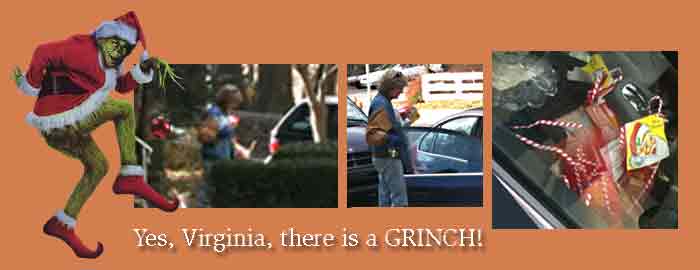
Today’s scheduled “Clean Out” of Redeemer Lutheran Church, announced as a preparation for a new ministry to this neighborhood, did not draw a crowd. We counted three or four adults and a couple of youth. By noon they had mostly carried armfuls of items and placed them in the trunks of their cars. Hmmm. If these items are worth saving, shouldn’t they be saved for the newer and better Lutheran Church planned by the Synod?
We’ve already watched as other things were carried from Redeemer. Ten folding chairs were placed in someone’s hatchback. Four cartons of records went into another car. The neighborhood reports.
The items they were salvaging from the people of Redeemer this morning included boxes and books and kitchen items and such treasures as Christmas stockings. Some hopeful Lutheran children, eyes bright with Christmas excitement, may receive a gift of four-year-old candy courtesy of the people of Redeemer.
Meanwhile Redeemer, “closed” by a constitutionally questionable edict, plans a Whoville Party to celebrate the third year SEPA has locked the neighborhood out of God’s House on Christmas Eve.
What did the Grinch do? He cleaned out Whoville just before Christmas. Yes, Virginia, there is a Grinch!
“Let the little children come to me, and do not hinder them, for the kingdom of God belongs to such as these.” Mark 10:13-15
Our Ambassador visits reveal a remarkable variety of approaches to what seems to be the simple task of welcoming. Some assign the task to official greeters; others let the pastor handle it. Some ask visitors to introduce themselves; some point you to the guest book. Some church members wear name tags. Some offer coffee and sweets; others offer a meal.
There is a sense that this can be a challenge to congregations, especially when visitors have been rare for a while. While our Ambassadors cannot claim that they ever have been made to feel unwelcome, there are some churches who have honed their greeting skills a bit more than others.
We suspect one of the congregations we visited was conscious that this might be a weak point in their ministry. The bulletin included a prayer petition that their congregation “may learn the hospitality of Scripture and welcome our friends, family and guests with it.” Interestingly, while the congregation was entirely pleasant in passing the peace and saying hello, not a soul introduced themselves–not even the pastor. In contrast, on another visit to a church where the pastor was away, we were greeted first on the sidewalk and by virtually every person who walked into the sanctuary. We were even offered a tour after the service. We knew the names of several members before worship began. Their liturgy included a moment early in the service for welcoming. Hospitality clearly had been modeled and engrained in this community for some time.
As in much of church work there is a temptation to create a program for encouraging hospitality. It should be as simple as modeling good habits. Start with the children!
Redeemer Lutheran in the East Falls neighborhood of Philadelphia, had a strong ministry to East African immigrants. Upon entering the home of one of our immigrant families, every family member comes to the door and shakes your hand. It was not surprising to see even the youngest children practicing this skill in church. It gave them a confidence that grew and soon translated into other skills.
This custom, brought to us from a foreign land, flies in the face of America’s best parenting practices.
We teach our children “don’t talk to strangers.” Adults tend to model what they teach their children. Our children can grow into adults who are afraid to reach out to shake hands and say the simplest words of introduction, “Hello. Welcome to our church. I am Tom. What is your name?”
This simple script is a recipe for teaching the fundamentals of hospitality. Begin to teach your congregation welcoming skills by teaching this script to your children.
Give a children’s sermon on “welcoming.” There are many scriptures to use as a foundation, including the “Suffer the little children” passage quoted above from the NIV translation.
As an exercise, ask the children to shake one another’s hands and follow the script. Allow enough time for them to get over the awkward giggles.
When they have greeted every child. Ask them to walk down the aisle and practice it with adults. Ask older children to walk beside them to help them.
Ask the adults to turn to the person next to them and practice.
Repeat as needed.
Give the congregation the assignment of doing this every week with every visitor. Make sure they see church leaders practicing what they preach! If visitors are rare, practice on the people you know. Be ready to greet the first new face!
The Sunday School in America was once the backbone of a neighborhood’s church and social life. It was not unusual for people to “belong” and enroll in Sunday School and not bother joining the congregation. At one time they had their own set of officers and controlled their own offerings and budgets.
Sunday Schools had class structures that were graded for the children and often segmented in some manner for adults as well — grouped by decades or marriage status. They adopted names like The Loyal Mizpah or The Busy Bees and met socially at least once a month with the entire Sunday School coming together for a pot luck or picnic less frequently.
On Sunday mornings, classes met in their small groups and then joined together for a closing with a mini-worship service. That’s why so many churches have open stage areas with classrooms lining the perimeter. The form of “beehive” architecture met the function of the day. The structure was introducing and practicing the concepts of worship.
Those days are over. Sunday School’s are failing. Their budgets and governance were turned over to the church governing board. When they exist at all today, they are provided for the benefit of the very young.
Eventually, the church’s failure to educate will affect the entire life of the church.
“Eventually” may be now.
The attention and availability of children are torn by the structure of today’s society. They drift between the homes of Mom and Dad. Some have as many as eight grandparents to please, if you count the active “step” relationships. In addition, society no longer protects Sundays. Stores are open and young parents and teens are staffing them. Schools schedule events on weekends with no consideration for the increasingly diverse faith demands of their constituency. As one public school basketball coach told one of his students who protested a Sunday morning practice, “Prayer isn’t going to improve your jump shot, son.”
So what’s the Church to do. Let’s start by recognizing it’s our responsibility. We have to start teaching and the only way to begin may be during the church service.
That will require the Church Service to open the dialog a bit. Some pastors have begun to pose questions during their sermons and sit back to allow discussion. We experienced this in one of our Ambassador visits. An older woman sitting near us turned to explain, “He thinks we are discussing his sermon. We’re not!” Another added in an apologetic whisper, “He’s been here only a year. We don’t have him trained yet.”
Teaching during the service may require some retraining on many levels. A good place to start is within the framework of a children’s message. Congregations are more likely to accept some experimentation within this context.
Our Ambassadors have witnessed several approaches to a children’s message.
The fallback children’s sermon platform is the object lesson. An object is presented and the pastor ties it metaphorically to the message of the day. The younger the child, the less likely object lessons have much meaning. Children think more concretely.
Some pastors simply strip down the message they are about to give to the adults. These are often awkward and easily dominated by the enthusiasm of the children who are happy for the attention and a chance to participate, but haven’t a clue what the pastor is talking about.
Another approach is highly scripted and usually involves the use of puppets. The puppet sermons we have witnessed have been very well crafted and performed with a solid message, but they tend to lack any interaction with the children or congregation at all.
Sometimes a lay person presents the children’s message. It may be a parent or a school teacher accustomed to talking to children.
The children’s sermon is often no more than a short talk. Sometimes the gathered subgroup joins in prayer.
In about 80% of our visits, the children were dismissed from the rest of the service.
These tend to be the most common structures of a children’s message delivered within the structure of a church service. In our next few posts we will explore ideas for maximizing the teaching value of a children’s sermon and how to begin involving (and teaching) the adults.
Creative people are often not welcome in the church.
That may seem like a bold statement, but there is some truth in it. Creative people insist on change. The Church talks about wanting change, but it is often presented by people who are rather transparent in their real goals. They want the Church to change their way. They want the Church to be more secure financially. They want the congregation to give and get along.
If the formula is so simple, why are most churches in decline?
If Churches are to embrace change they must embrace creativity, and that is a rare commodity within the rigid framework that many churches have. In some of our Ambassador visits, we have encountered congregations that post in their bulletin or web sites a list of ways newcomers can contribute: sing in the choir, serve on a committee, join the altar guild, usher, read lessons, etc. That list can be a formidable barrier to thought leadership or creativity. There is a sense that people are pegs that fill the Church’s predrilled holes.
Today’s Church needs to explore the concept of “creativity” and the power (and change) that word can create.
Creative people solve problems. Often “creative” is used to describe talent. “John is a creative person. He plays the organ so well.” But what problems did John solve? It is indeed a blessing to have talented people. But creativity is something different. It’s an atmosphere . . a way of thinking. When creativity is nurtured, talented people come out of the woodwork! You might be surprised at the talent you didn’t dream was there!
Here are some traits to nurture in your creative congregation.
Creative congregations are motivated by mission. It begins with a personal sense of mission and is later applied to a group’s sense of mission.
Creative congregations foster prayer. Prayer reminds us of Whom we serve and why we have a mission. Many opportunities should be provided for individual and community prayer.
Creative congregations discourage labels. If your Church has been exploring a problem for some time they have probably subconsciously labeled every aspect of the problem. “Those people are adversarial.” “The pastor won’t like this idea.” “Old members won’t go for it.” “The community is going to object.” “We don’t have people who can do that.” Get rid of the labels. Just stop it!
Creative congregations challenge the advice of “experts.” Would the Church be facing such problems today if the “experts” had all the answers? Experts have some answers. However, experts can have their own agendas. They want to see their pet solutions put into place. Don’t ignore them — just don’t be afraid to challenge them. Creativity requires fresh thinking. If every problem is approached with a “must do” list, you will end up with the same solutions, proposed by the same experts.
Creative congregations explore ideas. They ask the question “What if . . . ?”
Creative congregations look for order in confusion. By sorting through a mess, you might find some treasures. By rearranging the chaos, you might find exciting connections between ideas.
Creative congregations embrace serendipity. The unexpected can spark the change you are looking for. In church work, serendipity can walk through your door any Sunday. It can be a new person, a new community event, a new learning, a new pastor. Embracing serendipity can change the definition of success and failure. Make it a habit. So what if only three people showed up at your special event. What did you do with those three people that gave them something to talk about the next day?
Creative congregations are patient . . . to an extent. They know that the creative process takes time. They know the discipline required to work at it. As long as the process has direction, their people will exhibit patience. But if the process is stone-walled, they will leave. Water and watch creativity grow. Ignore and watch it wither.
Creative congregations are tenacious. They will work hard at a project given an environment that allows them freedom to make a difference.
Creative congregations network. Change requires fuel. Networking with other churches and neighborhood groups provides the opportunity to share objectives and ideas. This helps congregations find resources and ideas.
Creative congregations are expressive. They are confident in their mission and are not afraid to say so — as individuals or as a group. Provide venues for members to express themselves. These might be within worship, a parish newsletter, or as part of discussion groups. Create a congregational blog!
Creative congregations follow their instincts. It may be the Holy Spirit nagging at you.
Creative congregations are courageous. A truly creative congregation is going to be challenged. The Church must at times challenge hierarchical and societal policies. Congregations that have fostered creativity are best equipped to face such challenges.
Creative congregations challenge naysayers. And there will be plenty of them.
Creative congregations constantly reassess. They are not afraid to admit they are wrong. They try new ideas, assess progress and tweak with abandon. Failure to try will leave you with the same old church. Good ideas that may one day fulfill their promise will be abandoned too soon.
Creative congregations are not afraid to have fun. People discover themselves in games and laughter. Provide many opportunities for your congregation to enjoy themselves. Send your members to church camp! You will be creating creative people. Creative people create creative ministries.
Change in the Church is painstakingly slow. When things are going well, there is no need for change. When times are challenged, as they are today, the need for change is shouted from the pulpit.
The Church really wants things to stay the same. This is just as true at the denominational level as at the parish level. We all long for the day when 100 or more people came together on Sunday morning and put their offerings together to pay for one pastor’s leadership. We called this the “viable” congregation.
Church became more expensive as the costs of maintaining property and professional compensation packages began to rise at the same time attendance began to drop.
It is the collapse of this economic model that inspires the cry for “Change!” Otherwise, we’d be doing ministry the same old way. In fact, we are! Change is demanded in theory, but discouraged in practice.
The wall standing between the Church and the future is its past. Congregations are first judged by their ability to meet the needs of an outdated economic model before they can implement any change. And so things slowly grow worse.
At one of our Ambassador visits, a pleasant young lady gave a report to the congregation on her first visit to a Synod Assembly (the annual business meeting of all congregations in the synod). She was in obvious awe of her experience and made a spirited presentation. She was especially impressed with meeting the bishop, whom she described as “the person who makes it all happen.”
She is wrong. It is not the bishop who makes ministry happen. Fueled by the Holy Spirit, it is the people in the congregation — the people who risk their time, talent, faith and resources to serve their Church. If they are lucky, they have good professional leaders to serve them, but many congregations today toil to provide the same basic ministries to their communities with much less professional commitment then they had in the past.
The denominational answer to the challenge is to attempt to manage change from afar. This is a failing proposition as evidenced by the number of church closings that result.
Strapped for cash, leaders are tempted to examine neighborhood ministries for signs of failure that might justify seizing congregational assets. Small churches find themselves planning their future with their eyes constantly glancing over their shoulders.
Unfortunately, protecting financial and property assets has become the overriding mission of the Church. We are forgetting that the will and spirit of the faithful are also resources to be protected.
Congregations must be empowered.
A better approach would be to create an atmosphere that ENCOURAGED risk taking and SUPPORTED and REWARDED new initiatives. But the congregational outposts that have the most potential for encouraging growth, are given only platitudes. Encourage multicultural ministry. Discourage bullying. Etc.
Good ideas! How?
The Need to Take Risks
The Church faces other problems as well — some economic, some societal, some theological. None can be effectively addressed without risk.
2×2 addresses some of these problems in our virtual ministry, just as we once did when we had physical resources — which were seized by our denomination, just as we were beginning to make significant progress.
Our experience gives our sister congregations reason to fear.
The Church must acknowledge that the economy has made ministry difficult. This does not mean ministry must end. It means resources must be spent differently with ministry as its goal.
The problem is not going to be solved with caretaker ministries and forced church closings, which do nothing but reward the hierarchy at considerable cost to the community of believers.
The standard approach of the church to any significant challenge is to acknowledge it and pray. And often that’s where the problems stay — in our thoughts and prayers. Action does not follow.
Change will not happen without individual congregations sticking out their necks and trying new ideas. New ideas cost money. Congregations must be free to use their resources without fear of denominational interference. A few failures can be expected before results begin to show.
This is a foundation of Lutheran polity. We must be free to Act Boldly.
We live in a world of big box stores that are as likely to have security guards standing at the door as “welcomers.” But it wasn’t so very long ago that the typical shopping experience was much more personal.
You would walk through a shop door and a clerk behind a counter or perhaps stocking shelves would look up and say, “Good morning. How can I help you today?”
This is a great question. It is different than a shorter “Can I help you?” or a brusk “What do you want?” which both sound a bit like your visit is an interruption.
The phrasing is actually important. “How can I help you today?” defines the role of the shopworker and lays the foundation of the transaction that is about to follow. The shopworker is the servant. The shop visitor is there to be served. Furthermore, it prompts the customer to define his or her expectations and opens the door to new possibilities.
There is also an immediacy to the question. “How can I help you today?” implies the desire to drop everything and care for the customer’s needs at the moment. The shopworker is reminded of his mission every time he or she asks the question.
How does this relate to blogging? There is no customer standing in front of you.
Blogging is hard work. It can be solitary work when you are trying to find a topic of interest. It is extremely common for bloggers to burn out after a few months. You will face dry spells. You will struggle at times to find direction. But it helps to remember that when your fingers hit the keyboard, you are initiating a transaction with your readers.
Remembering to ask this question will help. Write it on an index card. Tape it to the side of your computer screen. “How can I help you today?”
An image of your audience may begin to form in your mind. You may start to imagine them at work in their lives.
Soon other questions will follow: What information are they looking for? What questions do they have that I am qualified to address? How can I make their day better or their work easier? Do they know God? How can I help them know Jesus?
Come to think — this is a pretty good question for all Christians to ask themselves as they gulp down their morning coffee.
Join Bishop Ruby Kinisa as she visits small churches "under cover" to learn what people would never share if they knew they were talking to their bishop.
Undercover Bishop will always be available in PDF form on 2x2virtualchurch.com for FREE.
Print or Kindle copies are available on Amazon.com.
For bulk copies, please contact 2x2: creation@dca.net.
MISSION INSPIRATION OFFER
A visual and biblical guide to help congregations define their missions.
Contact Info
You can reach
Judy Gotwald,
the moderator of 2x2,
at
creation@dca.net
or 215 605 8774
Redeemer’s Prayer
We were all once strangers, the weakest, the outcasts, until someone came to our defense, included us, empowered us, reconciled us (1 Cor. 2; Eph. 2).
Be calm. Wait. Wait. Commit your cause to God. He will make it succeed. Look for Him a little at a time. Wait. Wait. But since this waiting seems long to the flesh and appears like death, the flesh always wavers. But keep faith. Patience will overcome wickedness.
—Martin Luther



 There is a minor debate on the internet over whether the Christmas song, The 12 Days of Christmas, is a centuries old song sung just for fun or if it was a secret way of teaching the fundamentals of the Christian faith at a time when teaching the Catechism might have cost you your life.
 Whether rooted in history or not, it is fun to think of religious truths when singing the song. It can even help you remember whether it is nine lords aleaping or nine ladies dancing. So why not use it to teach!