Failure to embrace social media is failure to do mission.
“Why don’t they come to us?” That’s the question many church people ask. “We’re friendly. We care about them. We have something to offer. Why don’t they come?”
One thing the last few decades have proven to the church is that people are not going to come to them like they once did. It’s not because your congregation isn’t a good group of people doing great things. It isn’t because they don’t believe in religion or the church.
It’s because today’s world provides more options to fulfill their needs — socially and spiritually.
Businesses experienced the same challenges. They knocked on doors. They advertised. They gave things away. They sponsored ball teams. Some strategies worked for a while. Along came social media. At first businesses used the internet to plug themselves shamelessly. It didn’t work very well. Then they discovered that if they provided valuable information for free on the internet, people would start coming to them. It’s not unlike the hymn –They will know we are Christians by our love. Use the internet pulpit to show your love.
Last year 2×2 visited dozens of congregations. When we choose a church, we review web sites. We learned: The internet is the most powerful resource the church is not using. Many congregations have no web site. Most have a web site that is painfully static, often not updated in years. Some have wrong information on their sites. The voice of the site, if one can be discerned at all, is usually the pastor’s, and it is rarely more than a reprinted sermon. We haven’t come across a single congregational web site that is giving people any reason to visit their site if they aren’t specifically looking for service/event times or directions. Church web sites are all about the church and not about the people they serve or hope to reach. Failing to focus on others, makes their web sites almost useless.
Reaching out to the community is evangelism. Congregations no longer have to wait until Sunday morning to send their message. Every hour, day and night, is available for you to reach your audience. The more you offer, the larger your audience grows. The more you concentrate on the needs of your customers and what’s going on in their lives and in their communities, the more successful you will be. The take away message: stop talking about yourselves and talk about what is going on in your community.
This web site is a social media project. We are a small congregation — too small to exist according to our regional body. But we do exist. We have adopted several missions. One is to harness the power of social media so that we can lead others in developing social media ministries. Mostly we concentrate on ideas that will promote ministry. We share our story only when we think it will help other congregations or illustrate an important point.
We analyze our site daily so that we can learn what works. Our little church site (only 7 months old) has an average of 75 new visits to our web site each week and has grown steadily overall every week since we began posting new information regularly. Our biggest week had 150 new visits. We have formed relationships with others involved in social media and Christian outreach. We are sharing ideas and laying the groundwork for new programs to answer the challenges which are so evident on our church visits.
Every congregation — beginning with the smallest — must embrace social media if they are to survive. 2×2 will be there to help.
Redeemer Marks Second Anniversary of SEPA Synod Lockout
In the book, Mayflower: A Story of Courage, Community, and War, the author, Nathaniel Philbrick, tells how the early New England settlers came across numerous foot-deep, circular holes scattered across the landscape.
The Native Americans explained they are “memory holes” marking a significant event that may have occurred at that spot centuries before. A tribal member was assigned the task of maintaining the holes and the historical accounts that went with them.
Philbrick writes, [they] “began to see that they were traversing a mythic land, where a sense of community extended far into the distant past, ‘So that as a man travelleth . . ,’ Winslow wrote, ‘his journey will be the less tedious, by reason of the many historical discourses [that] will be related unto him.'”
Such might be the memories of our small congregations, stored in the hearts of the oldest members and retold at church gatherings for decades until they become part of the fabric of Christian community.
Unfortunately, communal memories are often discouraged today. Ridding a group of people of their past is one way of claiming victory. The United States as a nation used this as a weapon when we fought the indigenous peoples of North America. It was done over and over — take the land, forbid the use of the native language, discourage local customs, and herd survivors away from their sacred spots. Steal the memories and you control the people.
There is a hole in front of Redeemer Church. A small long-present sinkhole seems to have deepened with this year’s rains. It now has police tape around it. It’s right next to the sign forbidding dogs on the property and not far from the locked doors, the windows of which are now covered with cloth, even further alienating the community of East Falls from one of its sacred places.
Redeemer’s historical records have been boxed and carried away by strangers with no connection to our history. They are gathering dust in a seminary library. But we who still live in the Redeemer neighborhood can still look at the church, the locked doors, the offensive signage and the growing “memory” hole and keep the history of our community of faith alive. Tell it!
Redeemer is not closed. We are locked out of God’s house by SEPA Synod.
Hum to yourself the well-known song from West Side Story, “Maria.” Keep this tune to yourself. If you sing it out loud you will be breaking an old Church law. The Catholic Church at one time banned the musical interval, the augmented fourth (which opens this poignant song), as dissonant and therefore the work of the Devil. They labeled it Diabolus in musica. It could not be sung in the church.
Also banned at one time was music with more than one part playing at the same time. This symbolized disunity. We hope that old Lutheran, J.S. Bach, put an end to this thinking once and for all.
We, in the church, can get hung up on the silliest things. When you read things like this (and this is from the book This is Your Brain on Music: The Science of Human Obsession, by Daniel Levitin) you just have to wonder what great ideas we put aside while we protect what we love from outside influences — which must be the work of the Devil.
It took centuries to change the medieval church’s musical hang-ups. It may be decades before we can see through the mirror dimly to identify our own silly notions that keep us from reaching out. I remember a few decades ago a church arguing against girl acolytes. It just wasn’t right to see stockings at the bottom of a church robe, was the dominating viewpoint.
Our church, the ELCA, has set goals to reach out to people of other cultures. This means we will have to accept new rhythms, new chord progressions, dance, poetry, music, dress, robes, hymnals, art, liturgies, prayer, posture and gesture, languages, food, entertainment, stockings along with the socks, and heaven forbid, ideas. We might have to add some chili and curry to the standard soup stock. We don’t have to give up the old C-F-G7 chord progression, but we might have to let the Augmented Fourth and its friends in.
The Lutheran Magazine recently reported on the hundreds of churches that have left the Evangelical Lutheran Church in America this year. At the August Synod Assembly, ELCA Secretary David Swartling reflected on the statistics, issuing a statement that smelled a bit of sour grapes. 54%, he noted, were congregations in communities of 10,000 or less.
“Given the small size of these communities, profound questions exist about the long-term viability of many of these congregations and their capacity to be effective in ministry and to develop the kind of interrelationships that they had in the ELCA.”
ELCA, wake up!
Speaking from our own experience in Southeastern Pennsylvania, small churches can no longer count on the ELCA for interrelationships or support in ministry. Small churches are being written off.
Our denomination acts as if they can continue to get away with serving as if they are the only game in town. This is most noticeable at the synodical level, but frankly, the national church has also looked the other way when small churches asked for help.
In Redeemer’s case (which you can read about elsewhere on this site), Bishop Hanson responded to Redeemer’s first request for help in our now four-year conflict with SEPA Synod by telling us of his regard for our bishop and urging both sides to negotiate. (Record of correspondence) He ignored every other letter our congregation sent to him . . as did the bishop and the rest of SEPA leadership. We understand his regard for a colleague in ministry. We do not understand why this regard translates to no regard for the people they both serve.
Small churches are frustrated with good reason. Church leadership should ask how long corporations would remain profitable if (and Redeemer experienced each of these):
The corporate office did not return phone calls. The corporate office did not respond to letters. Requests for appointments were given dates 3-5 months away–which then became 11 months. Decisions regarding local management and profitability were made with no interaction with local management. Key leadership positions went unfilled for years. Customers and clients were totally ignored but expected to eagerly embrace every new product. The workforce was asked to go through a grinding 12-18 months of interim limbo with every change of manager. Sales initiatives for each branch had to be managed by one corporate officer serving scores of branches. The manager had orders from middle management to placate workers until they grew discouraged and quit. Corporate never visited the branches unless they wanted something from them.
There was a time when congregations had no choice, but things have changed. New Lutheran denominations are emerging and time will tell if they are able to serve effectively.
More critically, small congregations now have mission opportunities outside the ELCA with organizations that pay more attention to them and are eager to work together.
If the ELCA wants to continue as an effective presence in our nation’s small towns and urban neighborhoods, they must find ways to help congregations face modern challenges. Meanwhile congregations are sending a message.
All those ELCA interrelationships — we aren’t feeling it!
Redeemer has a passion for children’s ministry and had developed a lively interactive forum within our worship service geared to the young as well as the captive adult audience.
We tried the old object lesson format, the foundation of many messages for children. We discovered that they do not hit home with children. Children think concretely and object lessons rely on the ability to think abstractly. We abandoned them in favor of a more hands-on, interactive approach.
Our Ambassador visits have taught us other approaches. Here are some observations.
1. Overall there are very few children in church and fewer tweens and teens. Fewer than a third of the churches have a children’s sermon.
2. When there is a small group of children, almost every congregation dismisses children after the opening of the service.
3. Pastors at times seem awkward talking to the children and then the children take over. They have a good time and the adults enjoy the break, but the value as “sermon” is weak.
4. A couple of the pastors did more formal presentations for the children, using puppets and scripts. The messages were, in each case, very well prepared. Children and adults were attentive observers. There was no interaction.
5. The object lesson is still the fallback position for children’s sermons and is usually the focus of published materials for children’s sermons.
Our visit to Trinity, Fort Washington, was different. Pastor Jim Goodyear used the object lesson even though no little children were present. A Little Brown Bag object lesson came at the end of the service before dismissal. A member had placed an object in the bag and waited for Pastor Jim to find religious meaning in the random surprise. We’ve seen the same technique used with children who found delight in trying to stump the pastor, but the message fashioned for them probably went right over their heads. In this case, the pastor got it right — object lessons are for adults! The congregation loved the Little Brown Bag and Pastor Jim drew several poignant observations from the little knit cap he found hidden that morning. (Each stitch was made with love.) His point hit home as the congregation was embarking on a project to knit watchcaps for the Seaman Center! Good job, Fort Washington!
In our last post we noted that Redeemer Lutheran Church in East Falls had achieved the goal of expanding multicultural ministry. The national church recognized our success, but the regional church (SEPA Synod) totally disregarded our ministry.
At the last National Assembly, the leaders of our church reported poor progress on meeting this goal nationwide. We think Redeemer’s experience can shine some light on why these goals are not being met.
There are at least three roadblocks:
1. Regional bodies are not comfortable with the goal.
There seems to be no infrastructure for implementing this major change in the denomination. When it comes to multicultural ministry, most churches and leaders are experimenting. Many of the smallest churches are strategically located in neighborhoods with the most potential for multicultural ministry, but they have the least help in achieving this important goal and may very well be on a synod’s endangered list.
Regional bodies have a tendency to cripple congregations with labels. They see congregations in terms of the past. Congregations, led by professional leaders who are familiar with those names, have a hard time ministering beyond low expectations. Regional bodies are unconsciously saying NO to the potential for multicultural outreach by failing to provide leaders for neighborhoods experiencing cultural change. Caretaker pastors will ignore the cultural changes happening all around the congregation as they hold the hands of existing members, waiting for them to die. When regional bodies lose these neighborhood outposts, they lose valuable assets for achieving their goal of multicultural ministry.
What would happen if synods approached neighborhood churches with high expectations and gave them the help they needed to reach them?
Redeemer did not set out with multicultural ministry as our objective. We just welcomed all who came to our door. This was met with resistance from SEPA leadership, who had predetermined that slow death was to be our fate.
The first Tanzanian family who came to Redeemer in 1998 asked for their two infant sons to be baptized. Bishop Almquist had declared synodical administration. We were advised to NOT baptize the children or encourage new membership. (They had NOT declared us closed but that’s what they had in mind!) The family shared only recently that a synod representative had visited them and discouraged them from joining Redeemer, which was only a few blocks from their home. “Why do you want to join a church with no black members?” they were asked. They suggested they join a church with black members several neighborhoods away.
This family joined Redeemer anyway. They were to play an important role in Redeemer’s multicultural future.
2. Pastors are not comfortable in multicultural ministry.
As this family became active, they often expressed the desire to reach out to more of the East African immigrant community. Extended family and friends began joining. One was active in social work near our church and wanted to expand outreach to nearby Hispanic neighborhoods. This ministry direction had been discussed often at council meetings with our pastors, who admitted they were not equipped to lead this type of ministry. We asked them to help us find extra help. The report was always the same. “There is no one.” Redeemer wanted to move in a direction professional leadership was unable or unwilling to take us.
Within weeks of our last pastor’s resignation, lay members had identified two qualified Lutheran pastors with roots in East African culture who were willing to visit and invite. Within a few months, Redeemer had 49 new members. During this time, SEPA leadership totally ignored us. They had no interest in helping a church they perceived as dying. When we sent a resolution to Bishop Burkat to call one of the pastors who had been working with us for seven months, she declared Redeemer closed.
3. Congregations are not comfortable with multicultural ministry.
Congregations naturally will wonder what will become of their culture if you open the door to other cultures. Redeemer faced this challenge, too.
First, we made sure that veteran members were not neglected and were active in welcoming. The church service became a bit longer with the incorporation of other languages and music, but the old membership did not have to forsake cherished traditions. Strangers were not valued more than they. God’s love grows community; it does not neglect one community to lavish attention and resources on another.
In light of these three roadblocks, the ELCA has set a goal which few people share except in theory. Here is advice from our experience on how to detour these roadblocks.
Invite.
Being invitational must be taught not just preached. Pastors often say this is the congregation’s job, but in today’s climate it must start with the pastor. The pastor must model this for the congregation, especially if a congregation has been suffering. Members will be of low morale and unable to invite. Pastors should visit, talk enthusiastically about their visits, encourage members to come along, and make sure there are quality offerings for members to promote with enthusiasm. This will rebuild invitational confidence.
Don’t cut the roots.
Popular advice from church hierarchy touts allowing churches to die so that Christian community can be “resurrected.” This is a distortion of the Resurrection message. The Bible does not advocate evicting the faithful to invite new members. As cheery as this may sound, it is cruel in practice. Time will tell if these theories have longevity or if their cited successes are flashes in the pan.
We suspect the Church will not grow if you cut the roots. If veteran members are ignored, criticized, and evicted, the neighborhood will notice. Sensitive new members will ask themselves if one day this will be their fate. Make sure that old members are part of the process of welcoming new members. Change may be desirable but keep some things the same. New members will know that they are influencing a new chapter in a long tradition.
Ministry is not multicultural if cultures never mix.
Redeemer began by offering a separate service for East Africans, but this lasted only a few months. Both “old” Redeemer and “new” Redeemer wanted to be in communion. Some congregations never move beyond this and become two congregations sharing the same building while calling it multicultural.
We faced the challenge of merging communities with FOOD.
Many churches have coffee hour. It was our observation that coffee hour does not create true fellowship. People grab their styrofoam cup and find a corner to talk to people they already know.
We began serving soup. One pasta pot of soup brought in from home will feed a small church fellowship. Easy to serve; easy to clean up. Soup encourages people to sit down together. Soup is multicultural. “Old” Redeemer tasted “banana” soup, a Tanzanian staple. A Puerto Rican vicar introduced us to sancocho beef stew — “not spicy, just tasty.” If conversation stalled, we talked about the soup, asking who made the soup and what was in the soup. Stories followed about how mother made the soup, how spices were chosen . . . and suddenly you have a proud congregation sharing traditions.
When the arts are explored, minds open.
We wanted the message that our congregation was welcoming to all cultures to be clear. It’s hard to change the stained glass windows, but we featured art and poetry from different cultures on our bulletins. We occasionally practiced the Taize traditions with icons and chants. Liturgical dance became part of our tradition. Drums were played by members sitting in the pew, but the church organ still whined away. Some of the art/music featured was traditional. We did not replace what was dear to people. We added to it.
Use the gift of language.
Foreign languages make Americans nervous. Our new members graciously recognized this and switched to English when others were present. It was a considerate, unsolicited gesture that helped create community.
In worship we alternated languages between verses in singing hymns. We said the Lord’s prayer in Swahili and English until Swahili-speaking members objected, saying God needs to hear our prayers in only one language. English-speaking Redeemer objected, saying “But we need to hear it in Swahili.” We didn’t debate; we alternated.
Soon, English-speaking Redeemer began adopting Swahili phrases in conversation.
Which brings us to our final point for today.
Be flexible.
In one way of thinking all churches are multicultural. Concentrating on the multicultural in ministry is forging new ground. Develop a welcoming atmosphere and follow your instincts.
If you’d like a team from Redeemer to make a presentation on our multicultural experience, please leave a comment and we will get back to you.
At August’s (2011) national ELCA Church Assembly, some memorials were given special attention by the delegates. Three were issues Redeemer had already addressed!
1. Expanding Multicultural Ministry
The Assembly addressed concern that the ELCA has not yet reached the goal of 10 percent members who are people of color or primary language other than English.
Two thirds of Redeemer members were immigrants from East Africa. Members and regular attendees and supporters hail from six continents. SEPA Synods response to our congregational mission work was first to try to stop us. When we told Bishop Claire Burkat of our plans to reach out to friends and extended family of current Redeemer members of African descent (2006), she responded, “You are not allowed to do that.” A year later, when our outreach resulted in dozens of new members, Bishop Burkat attempted to divide our church racially by suggesting black members go to another church. When that proved offensive to the entire congregation they attempted to force us into closure regardless of our membership and vitality. They sued our congregation. Although some of this behavior appears to be racist, their law suits against the congregation are more equitable. They evicted all of us — black and white — from our building. They chose both a white member and a black member to sue personally. In fact, the African member they chose to sue was served with the court papers on the same day he received his permanent residency papers. Welcome to America!
2. Acknowledge the International Year for People of African Descent
The Assembly asked the presiding bishop to issue a statement acknowledging this special designation. The stated purpose is to encourage congregations to affirm the gifts of people of African descent . . . and to examine factors that keep people of color and/or whose primary language is other than English from experiencing the fullness of leadership and inclusion in the ELCA.
Redeemer encouraged full participation of our growing East African community. Our worship services reflect their culture. Both English and Swahili-speaking members enjoy singing hymns in different languages. Prayers were often offered by a member whose first language was French. Worship and Bible study leadership was shared and when “black” membership outnumbered “white” membership, every effort was made to assure appropriate representation on our congregation council.
The National Church was interested in our ministry and asked us to provide a report — which we did. (Report on Kiswahili Ministry) But on the local level, we received no recognition or encouragement. SEPA Synod’s eyes were on the prize, and the prize was our property/assets.
This brings us to the third specially considered memorial by the National Assembly.
3. Bullying and Harrassment
The Assembly approved a resolution addressing bullying, harassment and related violence and urged Congregational and Synodical Mission to collaborate in addressing and preventing bullying and harassment.
Redeemer has been the victim of synodical bullying for years, escalating to litigation in 2008 and seizure of our property in 2009. As is often the case in bullying, onlookers — our sister congregations and the national church — have done very little to stop this. No reason to say more here. See our post:
As Redeemer Ambassadors began our second year of church visits in August, we began to feel more comfortable in our visitation. Perhaps that’s because we are beginning to discover connectivity — sometimes spanning decades, sometimes a century or more.
Our first visit rekindled an old working friendship which had been dormant for decades. In November we visited St. Mark, Conshohocken. The grandfather/great grandfather of two of our Ambassadors was one of the founding pastors of that congregation and visiting the church we had heard about so often from our ancestors was very meaningful. We also discovered that some of the Epiphany members who once shared our building were now worshiping there.
Almost every week, we find something in common with the people we visit. At St. John, Folcroft, one of our ambassadors mentioned her college and a St. John member responded, telling us about her college. We soon learned that the woman had been college friends with one of our ambassadors who was not present and had sung in the college choir with his wife.
At Grace, Mantua, we learned that the pastor and his wife shared mutual good friends with one of the Ambassadors. Similarly, we learned that the pastor of liberti presbyterian shared mutual friends. We had heard stories about one another for years but had never met!
This morning, we visited Trinity, Fort Washington, where one of our former members attends. We were pleased to talk with her many friends. Our former member and her family had been among the earliest and strongest Redeemer supporters. We also discovered that their new pastor was from a church near the childhood church of one of our ambassadors and they knew some of the same people. His home church was that of one of our ambassador’s earliest relatives to come to America hundreds of years ago.
As we share stories of our other visits, we learn of their connections with the people we are currently visiting. “That’s where I was married.” “That’s the church my husband and I visited when we were trying to decide on a church.”
Redeemer is part of the precious interconnectivity of Lutherans and Christians everywhere. Locking our doors won’t take that away!
2×2 was recently in conversation with a pastor researching the concept of team ministry. He was interested in our VBS-aid program.
Team Ministry is a concept which we think must be explored. It answers many of the challenges small churches face and has great promise. The problem is that it flies against the tradition of the entire parish life revolving around the congregation’s relationship with one pastor (and adding more pastors only as the congregation grows). This age-old model of the church is foundering because small churches cannot afford the salaries all pastors expect, regardless of the number of people supporting a ministry.
The modern era faces another challenge which team ministries can address. Modern ministry requires leadership with multiple skill sets. It is not likely that any congregation, much less the smaller congregations, will find one pastor who can provide all the services they need.
Team ministry is worth exploring for any mission-minded congregations, but especially for those who fear they have no future.
They may face some obstacles. Pastors may feel threatened by outsiders influencing their parish. Congregations might share some distrust. Programs like this aren’t in the current budgets and congregations may be hesitant to fund something “different.”
VBS-aid is an ideal way to give team ministry a try. VBS-aid trains teams of 4-8 people to travel to several churches during the summer to provide leadership for Bible School outreach programs. The program calls for the congregation and its leadership to work with the team to do upfront recruitment and to put a fall program in place so that there is a reason for VBS newcomers to return. VBS-aid pledges to work and help train congregation members, so that the congregation grows its skills while they have some hands-on help to get them started.
Congregations will work with VBS-aid for about two months — preparation, training and recruitment; the two-week Bible School, and follow up. Then they are gone — until next year, if the congregation liked the program. VBS-aid connects congregations, church camps, seminaries, and the community. A lot of talents and skills are made available for a minimal investment ($5000-$7500 — far less than it would cost to hire and train part- or full-time help). The congregation will have had a taste for team ministry and may begin to think of other ways to team with the greater church and the community in mission.
We encourage congregations to visit (www.vbsaid.com) and start to think if the summer of 2012 might be the summer to get your feet wet with team ministry. Talk about it in your congregation and plan to budget for it now. Contact us for more information. We will be glad to make a presentation to your congregational leaders.
Let’s examine the resolution passed by the recent ELCA National Assembly. Here it is:
Resolution (11.03.06) passed with 57 dissenting votes and 914 approving votes.
RESOLVED: To make support for the work of congregations one of the highest priorities of this church. To request congregations, in collaboration with synods, to begin, develop, review or redefine their unique mission plans by the end of 2012, so that each congregation strengthens its capabilities and resources for witness and mission.
57 people voted against making the support for the work of congregations a high priority. Why?
On the face, the resolution sounds like a “no brainer.” This is why a synod judicatory exists in the first place. Why restate the obvious?
Perhaps it’s a matter of urgency. Mission and stewardship numbers are down.
This resolution forces congregations to face a fork in the road. Collaborate with the synod or don’t collaborate. Either choice will be rocky. Saying either “yes” or “no” puts the congregation in a position of being judged. If the best predictor of future behavior is past behavior, small congregations can feel threatened.
For several decades church leaders have been looking for answers to steady decline. In so doing, they attempted to reinvent a judicatory’s relationship with congregations — sometimes in conflict with the denomination’s traditions and governing laws. In recent years, little has stood in the way of judicatories in their expressed goal of “transformation.” Small congregations live in realistic fear that working with the Synod will “transform” them out of existence.
The list of small congregations who thought they were collaborating with synod in mission only to find themselves on the chopping block is growing. Will this resolution feed into a Synod practicing the triage of transformation – independently determining which congregations deserve their attention and which should be left to die?
There is real risk that Synod will assume authority in the collaborative process despite congregational constitutions that call for self-determination of mission goals and use of resources.
The interdependence fostered by the resolution is no doubt meant to inspire congregations and synods to begin working together more closely to make sure the congregations have the help they need. However, it may be interpreted to create a hierarchical relationship resulting in attitudes that insist on compliance with Synod’s view of a congregation’ mission — or else! It all depends on who is reading between the lines!
If this resolution has any chance of being effective, judicatories must approach congregations with the truest of intent and purpose — to help them, not themselves. The mission and growth of the congregation is the goal — not closure and reassignment of assets to the benefit of the judicatory’s mission.
Those 57 dissenting votes may have a point! Time will tell.
Would you vote for this resolution? Tell us why or why not?
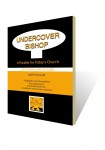
Join Bishop Ruby Kinisa as she visits small churches "under cover" to learn what people would never share if they knew they were talking to their bishop.
Undercover Bishop will always be available in PDF form on 2x2virtualchurch.com for FREE.
Print or Kindle copies are available on Amazon.com.
For bulk copies, please contact 2x2: creation@dca.net.
MISSION INSPIRATION OFFER
A visual and biblical guide to help congregations define their missions.
Contact Info
You can reach
Judy Gotwald,
the moderator of 2x2,
at
creation@dca.net
or 215 605 8774
Redeemer’s Prayer
We were all once strangers, the weakest, the outcasts, until someone came to our defense, included us, empowered us, reconciled us (1 Cor. 2; Eph. 2).
Be calm. Wait. Wait. Commit your cause to God. He will make it succeed. Look for Him a little at a time. Wait. Wait. But since this waiting seems long to the flesh and appears like death, the flesh always wavers. But keep faith. Patience will overcome wickedness.
—Martin Luther



 Businesses experienced the same challenges. They knocked on doors. They advertised. They gave things away. They sponsored ball teams. Some strategies worked for a while. Along came social media. At first businesses used the internet to plug themselves shamelessly. It didn’t work very well. Then they discovered that if they provided valuable information for free on the internet, people would start coming to them. It’s not unlike the hymn –They will know we are Christians by our love. Use the internet pulpit to show your love.
 Reaching out to the community is evangelism. Congregations no longer have to wait until Sunday morning to send their message. Every hour, day and night, is available for you to reach your audience. The more you offer, the larger your audience grows. The more you concentrate on the needs of your customers and what’s going on in their lives and in their communities, the more successful you will be. The take away message: stop talking about yourselves and talk about what is going on in your community.
 We analyze our site daily so that we can learn what works. Our little church site (only 7 months old) has an average of 75 new visits to our web site each week and has grown steadily overall every week since we began posting new information regularly. Our biggest week had 150 new visits. We have formed relationships with others involved in social media and Christian outreach. We are sharing ideas and laying the groundwork for new programs to answer the challenges which are so evident on our church visits.