Everyone in church is a member of one big happy family, right?
Church veterans know this isn’t true. Church conflict happens. And it’s a good thing, too. Generally, people fight about things that matter to them.
The Church goes to great lengths to hide conflict.
Church leaders begin by analyzing conflict. They look at the players (often excluding themselves) and classify them into “types.” This combatant is a “thinker.” The other is a “feeler.”
Oh, that explains it! Now the conflict should go away.
It doesn’t.
Then, the Church moves to Plan B. Ignore the conflict. Wait for it to go away. The Church is actually very good at Plan B. They often wait for decades.
The problem doesn’t go away.
The most important question to ask in church conflict is “Why do God-loving people care enough about an issue to fight?” Dig, dig, dig for the answer to this question.
Religion is about the hearts and souls of the faithful. When we invite people to join us in worship and community, we invite them with all their sensitivities. We ask them to live their faith and that means being willing to take a stand. Without this, every Christian may as well stay home.
When conflict erupts, embrace it. You have people who care. Look to their motivations. Why do they risk peace? Why do they care to come to church and face unpleasantness? Why not stay home with the multitude of people who don’t care? (Counterproductive as this is, it is often the chosen remedy.)
It’s your turn to care. Care about the people involved in the conflict. Caring will motivate leaders to ask the right questions. Listening to answers increases their knowledge of their community, and they are better able to serve. Conflict serves a purpose!
Caring is more important than resolving the conflict. In the end, caring will resolve the conflict.
Simplicity is a sign of truth and a criterion of beauty. Complexity can be a way of hiding the truth.” — Helena Rubinstein
The message of Christianity is simple. God is love. Because God loves us, we are to love one another.
This simple message becomes obscure in the hands of theologians and church professionals. There is incentive to make it complicated. Church leadership has a very long tradition of cultivating mystery about their work.
Like many cloistered professions, the Church creates its own lingo. We know what we’re talking about. Why don’t you?
The difference is that our “business” is the message. We need to communicate clearly.
When we make our message obscure we defeat our purpose. It is no wonder that the “we” of the church is a shrinking number.
Let’s look at some of the hot buzzwords in the church today. (Warning! All words commonly used in the church are not actual words!)
Mission: Mission originally meant the act of sending. It has come to describe organizing for the propagation of faith. In that sense, it is a compelling word to Christians. Today, it is attached to almost every enterprise and is often the “hook” for fund-raising. Almost every solicitation for funds from any church-related institution has this word displayed prominently. People are far more likely to give to a “Mission Fund” then to sacrifice for the day-to-day operating expenses of bureaucracies—which is where the money can go. And so we have the Synod Mission Fund, the Seminary Mission Fund and the churchwide Mission Fund. The better to attract dollars. Congregations! Hurry! Start your own mission fund and get your piece of the pie!
Missional: This is an attempt to make mission an adjective so the word “mission” can be used more often. Coming soon: more non-words like “missioning.”
Discernment: This is the act of figuring things out. Discernment seems more intentional and focused. It is used often by church leaders and denominations. They spend a great deal of time trying to figure things out. When they can’t, they write about discernment and it seems like they have accomplished something or are about to accomplish something truly great. Results of discernment are not discussed nearly as often as the acts of discernment. Very few people actually recall the discernment process or a discernment meeting. They were probably busy trying to figure things out while someone else did the discerning.
Viability: Church leaders love to talk about viability — the ability to stay alive. They usually focus on other people’s viability and not their own.
Transform: This has been a church catch word for a while. The word “change” was just too scary. Nobody wanted to be “changed” by church leaders. They are not standing in line to be “transformed” either, but it sounds better. It is never quite clear what the goal of church transformation is or when transformation actually occurs, but we are all working at it.
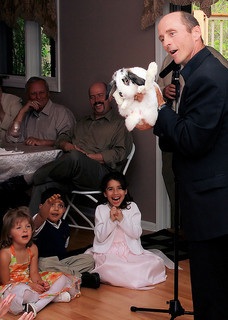
Transformational Ministry: This is a much talked about but seldom seen phenomenon. Often, it has little to do with transformation or ministry. It has more to do with economic viability (see above). Congregations can transform greatly but go unrecognized until they can contribute more to the denomination or hire more professional help. If you are really good at transforming no one will notice. It is like a magic act. The rabbit appears and then it disappears. But what happened to the rabbit when it disappeared? It doesn’t matter to the church as long as the act keeps playing and it can be chalked up as transformational ministry.
Thus ends today’s vocabulary review. Do you have a favorite church buzzword?
2×2 recommends signing up for this five-part workshop on business blogging. Don’t let the word “business” scare you off. Blogging is blogging and the leader of this workshop understands and explains it well. You can easily apply what you learn to evangelism.
The five-session workshop begins July 10. All sessions are recorded for replay and transcripts provided, so you don’t have participate live.
You can get in for 50%-off until this Thursday. This is a step-by-step course designed to help your business quickly implement effective blogging techniques, attract great customers and gain a unique competitive advantage.
And it’s fully online!
Your instructor is Michael Stelzner, the founder of one of the world’s largest business blogs: Social Media Examiner and author of the book Launch.
WANT TO KNOW MORE?
This workshop is a live systematic study course where each session builds on the previous one. This allows you to master a discipline under the guidance of a single instructor.
And the cool part: The workshop is very affordable!
Here’s what Blogging Fundamentals for Business will cover:
* Blogging strategy
* Creating great content
* Blogging metrics and technology * Launching (or relaunching) your blog * Blog promotion tactics
Remember, you can get in at half price if you register by this Thursday June 7th.
During the month of May in 2011, 2×2 had 34 visitors to our three-month old web site. This May we surpassed all previous records with more than a 1000 visitors in May. The web site now has 86 subscribers/followers who receive posts by email. In addition, a growing average come to the site daily. That number is currently more than 40. Combining subscribers and daily visitors, 120 readers visit 2×2 each day or more than 800 every week. Except for the fact that we are excluded from Lutheran fellowship, Redeemer (2×2’s sponsor) is one of the largest Lutheran ministries in SEPA territory.
Gospel for this Sunday (June 3, 2012). John 3:1-17
“The wind blows where it chooses, and you hear the sound of it, but you do not know where it comes from or where it goes. So it is with everyone who is born of the Spirit.”
Object: With children, precut a paper pinwheel and pin it to a straw. With adults, plug in an electric fan.
Talking points: Wind is a wonder. On a hot summer day, we turn our faces toward the wind for relief. Come winter, we shield our faces behind our mufflers. We know there is power in the wind and we try to harness it. We try to create comfort in our environment by adding air conditioning or directing fans. We build windmills on top of our hills to channel its power. Now and then, when storms blast and break the limbs of our trees or tear off the roofs of our firmly constructed homes, we are reminded that the wind is more powerful than we are.
Wind is a challenge to us. There is little we can do to control it — but still we try! “So it is with everyone born of the Spirit.”
Nicodemus joined Jesus in the night on the roof garden, just trying to make sense of things. He was an old man, a respected authority on scripture. New ideas were turning his world upside down like a tornado. The rooftop garden was a good meeting place, away from public scrutiny. But in the hot Palestine night, it was probably a place where Jesus hoped Nicodemus would feel the gentle—or not-so-gentle—breeze of the Holy Spirit.
In the church, we call it a “call.” It is really a sort of contract. Sometimes there is a bit of mystery to the process as a pastoral candidate describes the moment he or she decided to enter the ministry. That is rarely part of the laity’s call process, but a heart-to-heart with most hard-working lay members will reveal they, too, feel a sense of call that should not be taken lightly.
There is a difference in a clergy call and lay member’s call. It has to do with priorities or needs. The two are often in opposition.
This is not scientific, but here is a table that compares a professional church worker’s priority of needs and a lay member’s. The order will, no doubt, vary from circumstance to circumstance, but generally this chart represents the differing priorities.
The qualities are similar—almost the same—but the order of priority is often nearly reversed. Is it any surprise that conflict often results!
To make matters more difficult, in church work, it is often the case that neither side operates with concern for the other.
“I don’t understand why a person with a college-education has trouble finding work,” the older pastor commented after encountering a middle-aged parishioner, struggling with a mid-life job search.
The Church may be the last organization on earth to understand the changes facing the modern work force.
The Church, entrenched in the past, is dealing with the same problems with less success.
For countless decades or even centuries, mid-life was the pinnacle of a skilled worker’s career. Knowledge and experience positioned them as authorities. They commanded handsome wages. Life was good and the retirement years were looking sweet.
Today’s middle-aged, college-educated, skilled workers face a different world. Their skills are less valued. Newer skills of the connected age are not difficult to master, but they take time, effort and a continuing investment. Unlike youth, who can set aside the demands of independent living for four to eight years, the middle-aged workers are retooling while caring for teenagers, aging parents and still paying mortgages. Retirement is far less certain.
How does this affect the world of Church?
The Church still honors the system of hierarchy to some degree — even if they don’t call it “hierarchy.”
The people currently elected or appointed to leadership positions earned their credentials the traditional way. Their positions are less market-driven. It has been enough in many cases to foster a reputation among a very narrow group of similarly trained and credentialed colleagues. They have been able to avoid the demands of the rest of the world — but not without consequence.
Change is every bit as imperative, but can be avoided until situations are dire with no damage to reputation. There are plenty of places to deflect blame for poor performance (economy, demographics, media, culture, lay people).
The great influx of second-career clergy may be adding candidates to the clergy roster who find the ever-changing demands of the secular world to be daunting. A major role of hierarchy is to keep the pool of available leaders active in ministry, regardless of their skills. Bottom line: the Church has incentive to stay the same to complement the skill sets of leadership–most of whom have very similar training and experience.
Sustaining clergy is a purpose of hierarchy, although it is rarely presented that way. Hierarchies want the available jobs to match the skills of available clergy. The Church is going to have to do a good bit of wiggling to loosen that stick from the mud!
This creates a division in expectations of laity and clergy. Laity, who must change or perish in their secular lives, grow impatient with clergy leaders, who roll out programs based on ministry models that used to work. The people at the top, most likely well into middle age, are disconnected from the lives of the laity. Empathy has not been the Church’s strong suit, especially since there is a LOT less money to work with.
Survival becomes the standard for success. Laity are not flocking to sacrifice for an organization in survival mode–especially one that threatens the local expression of faith with the strong arm of ecclesiastic power.
Survival standards are used to judge congregations. “We just don’t see how you can survive,” they are likely to say, even as they are dealing with the same or even more severe challenges.
There are ways to survive. There are ways to thrive. They are ways to reach out. But they will require new methods, new technology, new vision, a respect for younger blood and lay talents and lifelong learning for Church leaders. Church leaders cannot ask congregations to make changes if they, themselves, are unable to change.
Laity are pretty busy making changes in their own lives.
Congregations are often criticized by others in the Church as being “unwilling to change.”
The need for change is universal. It applies to small congregations, medium congregations, large congregations, clergy and hierarchy. It applies to groups and individuals.
It is a criticism that is hard to refute. After all, it applies to EVERYONE. Change of some sort is always desirable, so it becomes a card to play to achieve ulterior motives.
The ability to embrace change is going to become the saving quality of every congregation–even those that seem to be ministering comfortably. Unrelenting change is going to be the norm.
When confronted with the need to change, congregations must take steps to make sure that their interests and ministries are respected.
Ask for change to be defined.
What are the desired goals? (It is easy to say you need more members and more income. It is always true.) Demand clear goals.
Ask what help is available? Change is not likely to happen without something added to the ministry mix.
Do the congregation and pastor need training? Is a necessary skill missing? If your neighborhood is changing, you may need help with culture and language differences. If you want to serve youth, you may need to find help with youth ministry skills.
Does the demand for change have a timetable that is realistic?
Is there a plan? Was the plan created by the congregation or mandated?
Is the congregation on board with the plan?
Creating an environment for change is a group effort. It will not happen by edict, nor will it happen in an atmosphere characterized by superiority expressed in criticism.
Change takes time, patience, tolerance and most of all love.
The vista as we sit in our deck chairs overlooking Lake Erie even on this beautiful May day is a study in gray. The water and sky are almost the same color with the horizon line barely visible.
Behind us is a beautiful home with well-manicured, terraced gardens in full spring bloom. But still we sit looking at the gray horizon.
Water is a magnet drawing our attention. No wonder it is such an important part of the Christian message.
The foundational message from God is simple. God loves us!
With this message, Christians are sent out into the world (2×2) to spread the Good News of God’s Love.
Congregations dedicated to outreach take this message seriously and revolve activity around it. All are welcome. Come as you are. Embrace God. Embrace us.
But from the moment the hook touches our eager lips, the message begins to change. You didn’t expect all this love to be free, did you?
More is expected of the new Christian. This is biblical to some degree. We love because God first loved us.
Some of it is pure greed. Newcomers to church will sense it. Some will dive in and become part of church culture. Some will lurk, testing the water no deeper than than their knees. Some will run to shore and keep running, the dollar sign on their foreheads no longer visible.
It is a balancing act for any congregation. What exactly is expected of lay church members? How do we grow involvement without crumbling the foundation of new faith?
It helps to understand lay thinking.
People join church because of family tradition.
People join church to feel part of community.
People join church to know God.
People join church to feel loved and to grow in their expression of love.
People join church to feel better about themselves and their personal failings.
No one joins a church to take on enormous existing debt.
No one joins a church looking to be subject to authority they barely know.
To welcome people openly with love, waiting to begin demands until they are settled in the pew, is a bait and switch. It is what keeps people away from worship and Christian community.
It is something for congregations to think about as they plan outreach, stewardship and new member programs. Are we ministering to them or hitching our lifeline to them?
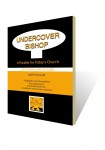
Join Bishop Ruby Kinisa as she visits small churches "under cover" to learn what people would never share if they knew they were talking to their bishop.
Undercover Bishop will always be available in PDF form on 2x2virtualchurch.com for FREE.
Print or Kindle copies are available on Amazon.com.
For bulk copies, please contact 2x2: creation@dca.net.
MISSION INSPIRATION OFFER
A visual and biblical guide to help congregations define their missions.
Contact Info
You can reach
Judy Gotwald,
the moderator of 2x2,
at
creation@dca.net
or 215 605 8774
Redeemer’s Prayer
We were all once strangers, the weakest, the outcasts, until someone came to our defense, included us, empowered us, reconciled us (1 Cor. 2; Eph. 2).
Be calm. Wait. Wait. Commit your cause to God. He will make it succeed. Look for Him a little at a time. Wait. Wait. But since this waiting seems long to the flesh and appears like death, the flesh always wavers. But keep faith. Patience will overcome wickedness.
—Martin Luther