See the countdown box to the right. 2×2 Foundation, which grew from Redeemer’s ministry, is counting the days to the third anniversary of the Southeastern Pennsylvania Synod of the Evangelical Lutheran Church in America’s excommunication of all Lutherans in East Falls so that they could take our property and assets as their own.
We are marking the occasion with the issuance of our annual report which will include a report of our 50 visits to other SEPA churches.
Nine months after they locked our doors, SEPA’s Synod Council, with no constitutional authority or any contact with Redeemer members, voted to officially close our congregation. We found out a year later when we Googled our name. SEPA’s idea of working with us! Perhaps all churches should Google their names to see if they are open!
Why these actions do not outrage SEPA Lutherans passes all understanding. The Gospel is totally abandoned when the subject of Redeemer comes up.
‘Truly, I say to you, as you did it to one of the least of these my brothers, you did it to me.’ — Matthew 25:40
Redeemer is not closed. Redeemer is locked out of God’s House by SEPA Synod.
We look forward to sharing our annual report three weeks from today.
Here’s another answer to the question “Why don’t churches blog?”
Church leaders don’t understand the reach and impact of the internet or the new definition of community.
Congregations, by tradition, are geographically bound. For several decades, congregations which had support from people who lived some distance from the church building were criticized. Membership was considered “scattered.” The regional or centralized church didn’t care about this as long as offerings were flowing, but if there were any signs of fiscal trouble, a “scattered” congregation was in trouble with its judicatory.
Geography is no longer as important as it once was. There are definite benefits to physical community, but it is not the sole criterion.
Community is a group of people with common interests. People, today, are discovering people with common interests all over the world. Just because this was not possible from 35 A.D. to 1985 A.D. doesn’t mean it has no value in 2012 A.D.
Recognizing that the Church and its sense of community has changed WILL redefine Church and its structure of support and service.
2×2 is on the frontline exploring this new definition of Church. We are learning every day. Our effort, barely 18 months old, has taken our ministry to places we never imagined.
Our regional office considers us “scattered and diminished” and worthless.
Scattered? Not when they made this claim, but today, maybe. But now it doesn’t matter!
Diminished, not at all. 2×2 (Redeemer) is reaching more people every week than it ever reached on a weekly basis at any time in its history. We can prove it!
Some contacts are fickle accidents. Others are developing into true friendships. That’s really not so different than the neighborhood church that reaches many visitors with only a small percentage actually joining.
We made all of these connections by blogging daily on diverse subjects, analyzing the wealth of online data, and producing content that answered the needs revealed in search engine data.
We did it on a shoestring budget — less than $100 per year. We followed our own members’ interests and talents.
We’ve only just begun. We’re here to help and serve.
Contact us if you need help developing an online ministry.
The Alban Roundtable discussion this week presents cautionary tales on what can go awry when using email to communicate.
Comments so far have been: We know, we know. But this is the world we live in.
They are right. If people are going to email, there is nothing you can do to stop them. You CAN, however, provide good content to encourage reasonable and helpful online dialog.
Create a church blog.
2×2 advocates the development of church blogs as a less emotionally charged way of promoting online discussion. Blogs invite participation. Thoughtful posts will result in thoughtful comments—moreso than on Facebook and Twitter. Blogs allow you to moderate comments, but generally we recommend that you moderate the first comment only, simply as a way of verifying that the contributor is not a spammer. Access to the online discussion must be fairly free. If you start editing or rejecting comments, your blog will be seen as the voice of the favored in the church.
Establish guidelines for your commenters. People will cooperate. If you feel you must edit a comment, you can tell the contributor (offline) why it violates your community rules.
There are many advantages to blogs. Some you can anticipate. We’ve listed some above.
Here are Mark’s insights as they have applied to our church blog . . . and can apply to your church blog as well.
Blogging heals
Redeemer, the sponsor of the 2×2, is a congregation experiencing ongoing rejection and bullying within the Church. It’s painful, and the Church has been unresponsive—hoping we would just roll over and die—even five years after that tactic has proven ineffective!
Blogging has given us a voice which is healing to our community. It has given us reach and it has validated our ministry (to other Christians if not to our nearest neighbors). We know we can still fulfill our “missional purpose.”
Blogging connects
This has been the most amazing benefit of our blog. We have connected with other Lutherans, other denominations, other religious institutions and ministry efforts all over the world. We have come to know many by name and hear from several daily. Some have been helpful to us. We’ve been helpful others as well. We have invitations to visit in Asia and Africa!
Blogging defines
Where does the church stand on issues? Often we allow church experts to draft statements about what we believe, but let’s face it. They are rarely read or used more than a month after they are published.
Why do we allow others to decide what we think? In the past, there was little choice, but dialog online can help congregations participate in issues and respond at the local level. The official response can be helpful but it shouldn’t replace our own consciences.
When you take an issue you aren’t quite sure about and start to write, you can begin to sort out your thoughts and realize what you believe. Sometimes it surprises you!
2×2 posts some ideas, knowing they are not fully defined. Sometimes the ones we think are most nebulous start to get responses — often by email—thanking us for our position. We often learn that others are struggling with the same issues. They add a penny or two to the dialog—which we incorporate in future posts.
Blogging teaches
Mark Schaefer points out that his blog opens his eyes and teaches him. 2×2 says “ditto!”.
Blogging inspires
2×2 looks for messages that inspire and includes them in our editorial mix. We often get emails thanking us and telling us how they intend to use the information in their ministry.
These are five things every church needs. Why aren’t we doing it more?
We have one answer to this question! Tomorrow’s post.
Today is Labor Day. We are celebrating the American worker.
Recent years have seen a lot of change within the American workforce. Some once common jobs no longer exist. Many of the specialty niches have been replaced by technology.
Similarly, some of the movements that helped create the concept of Labor Day are challenged. Unions must weigh their actions or risk rubbing a troubled society the wrong way.
The jobs involved in ministry haven’t changed much, but then change comes slowly in the Church. Maybe the job descriptions need to change.
Does every church need a pastor?
Does every church need a building?
Does every church need an organist? Does every church have an organ?
Do we train our pastors to do diverse ministry tasks or do we teach specialty ministries (youth pastors, interim pastors, country pastors, urban pastors, etc.?)
The formula most parishes follow today is the same formula used for the last 100 years. Call a full-time pastor. Add special skills only as the budget can afford to add skills. Ministry needs are neglected until churches can afford to hire personnel to answer the need. Often that never happens. Needs go unaddressed. Ministries fail.
Unlike the commercial market place which strives to identify needs and fill them, the Church keeps doing things the same way, hoping to one day have resources to address the needs that are staring them in the face today.
The Church is relying on volunteers at a time when few hands are raised. We continue to hire staff as if they will have ready help from volunteers.
On this Labor Day, churches should take a fresh look at what skills they need to accomplish their goals and stop putting all their mission dollars into one staff member.
It is poor stewardship to allocate the majority of resources to filling positions that are statistically unproductive.
The world of education is on the threshold of impressive innovation made possible by exploiting the capabilities of the internet and technology.
While hundreds of educators study educational methods and struggle to find new and better classroom practices, the Kahn Academy, a free online learning system provided to anyone with internet access, grew out of one man’s attempt to help a young cousin with math homework. It attracted the backing of Bill Gates and the attention of CBS’s 60 Minutes.
Religion, too, is in dire need of transformation. The need has been largely unanswered for decades, despite intense study among clergy.
The call for “transformation” is at least a decade old with little success.
The economy is causing small churches to focus on their own needs, sending less of their offerings to regional or central body. If something does not change, the regional and central church leaders will face extinction—but they don’t intend to be the first to go!
Church leaders are lost.
The Kahn Academy allows for a restructured classroom, making more teachers available to help more students. It is successfully restructuring the traditional classroom for a new era in education.
Google’s Eric Schmidt commented on Kahn Academy:
Many, many people think they are doing something new but they are not really changing the approach. Innovation never comes from the established institutions. It’s always a graduate student or a crazy person or somebody with a great vision.
We suspect that this is the big hiccup in transforming the church.
Church hierarchy is calling for transformation with no vision for change and an unwillingness to allow change without institutional oversight.
Change in the church is going to happen on the front line, where one or a few faithful people, with little loyalty to old ways, prayerfully try to solve problems.
Many small churches are the victims of regional leadership practicing what they call “triage.” Triage is a euphemism for neglect.
In some cases, congregations have had little or no leadership for a decade.
Left alone, dedicated lay people are free to experiment. They are not restricted by seminary education. They look for answers outside the usual parameters. Such small churches are ripe for change.
They face a major obstacle. The institutional church will be ready to step in and rein in “errant” lay workers. They will restore the old order and assign an approved pastor to help the congregation draft a stale, treacly mission statement—or they will flex their muscles and demand closure.
Redeemer was a small congregation engaged in such experimentation—and experiencing success. Our regional body, desperate for dollars, took the muscle-flexing route.
We are still experimenting with no support of any regional body . . . and still experiencing success.
Redeemer has visited 50 other congregations and we’ve seen similar lively efforts in small congregations. There is often a scent of fear hobbling their efforts. Will the regional body approve?
And that’s why transformation in the Church isn’t happening. God is trying to do something new . . . but the hierarchy won’t let anything happen that they can’t control and take credit for.
It’s the first Sunday of the month, the week Redeemer members pass our locked church to worship together in a community theater and gather across the street in a neighborhood bar afterwards for fellowship. The bar even added us to their calendar. (God is doing something new!)
We had many things to celebrate and give thanks for today. Two of our members were awarded good jobs and one is starting a business. We were particularly grateful that one of the retired pastors who worships with us regularly was back with us after a four-month rehabilitation after surgery.
We enjoy having our own worship—singing the hymns we choose, praying our own prayers, enjoying our own fellowship. We also enjoy our Ambassador visits on the other Sundays of the month. But there is nothing like being at home.
We know that the only reason to lock our people out our church was to destroy our community. Lesson to church hierarchies: Find another way!
We were reminded in today’s sermon of an ongoing theme of our Australian pastor — that church is not about what we “get out of it.” It is about God and His relationship with us and our response to His love.
There isn’t a church in East Falls that isn’t challenged. Some of the challenges come from the religious apathy of the community. We can’t blame them to some extent. It’s rather dangerous to be a Christian (or at least a Lutheran) in East Falls.
The greatest challenge is from the Church itself, who values property above community. It is too expensive to operate religious schools. Send the kids elsewhere. Rent the buildings.
The people who invested their time and offerings in Redeemer and St. Bridget’s (and perhaps a few other church communities before them) have had their gifts squandered by outside interests. Fallsers gave to contribute to their community. Their gifts were confiscated or devalued by people who thought they had better uses for our resources but haven’t a clue how to serve East Falls.
If only the courts could hand out consciences as easily as property!
There are reports that the Southeastern Pennsylvania Synod of the Evangelical Lutheran Church in America is negotiating the use of Redeemer Church with community leaders. SEPA spent no time considering the use of Redeemer Church with the people who built the church — the Lutherans of East Falls. They continue their attacks on our members in the courts. That should give the people of East Falls some idea of the character of the people with whom they are negotiating. East Falls beware!
At the heart of SEPA’s problems in East Falls is loss of mission — or to use church-speak — the loss of “missional focus.”
If SEPA cares, they should note: Redeemer is still a worshiping community.
Talk to us! You have a better chance of serving East Falls with the Lutherans of East Falls than without us.
As for the excommunicated members of Redeemer, we will serve the Lord.
The patriarchs and matriarchs who populate the pages of today’s Old Testament had a very personal relationship with God. Communication was anything but one way. They argued with God and did their share of ranting. They felt confident enough in dialog to attempt to make deals. They praised God and laid their sorrows and shortcomings at his feet. The result was a lot of creative energy. Something worth writing and remembering. Compare the Old Testament record with a typical congregational history today, which usually details a list of pastors and building projects.
Jesus continued that relationship in his discourse with the disciples and the growing tribe of followers. Jesus gave God a face, making it still easier for people to engage with God.
God wants to be part of our lives. The Bible encourages us to be in regular conversation.
A pastor in one of our recent Ambassador visits exhorted people not to go to God with their little problems. Solve them yourself and save God for the big things was her message. That’s not a limitation placed on us by God. God wants us to feel free to turn to him with matters big and small, joyful and painful.
God is big enough to handle everything.
The thinking that God needs a gatekeeper to handle our needs has fueled the ego of Church leadership through the centuries. It creates an illusion of power. Church leaders have God’s ear.
Church leaders speak; people listen.
This makes sense only among managers—not leaders.
This can change. The internet returns the voice to the people.
Even the pope cannot expect to make pronouncements that are met with silent obedience. Recently, the long arm of the Vatican reached across the ocean to slap American nuns on the wrist for not doing more to enforce Church teachings on contraception and abortion. Their response was something on the order of: Sorry, you’ve got us all wrong. We can’t be all things to the Catholic church. We know what our mission is and we aim to follow it.
Such cheekiness would have been unheard of decades and centuries ago. Today? It’s just the way it is going to be.
This will make the Church far more effective — if not powerful.
The old system is unwieldy. A church leader makes a pronouncement which probably must be repeated for years before the message hits home. Church members may ponder it. They may go home and do nothing about it. Action will probably result when something becomes dire, The Church does good, to be sure but in many areas, social action in the Church lags years behind actual need.
Today, no Church leader can expect to lead from the pulpit without being questioned. In fact, we should take a lesson from the Bible and encourage religious dialog.
God wants us to be involved. Our ears and voice is where that begins.
Today, laiity have equal voice. When they learn to use it — Watch out, world!
Remember when things actually happened at political conventions and networks bragged about “gavel to gavel” coverage.
Today the political events are well-orchestrated ads. The platform is handed to us on a silver plate. The rousing speeches are timed to fit one hour of commercial TV: 10 Eastern, 9 Central, 8 Mountain and 7 Pacific. Hawaii and Alaska, fend for yourselves!
It makes us voters feel less involved. Apathy dilutes our political consciences until something stirs a movement like the Tea Party or Occupy Wall Street.
Church government is running parallel to politics of the neat and tidy. Annual regional assemblies once included open discussion and debate on issues. Motions regularly came from the floor. Attending an Assembly was a chance to make a difference.
Today, the Assemblies are orchestrated to achieve desired results. Worship takes a good bit of the business time. Reports are upbeat. Complicated issues are allotted as little as 20 minutes for presentation, discussion is timed and limited and debate doesn’t exist at all.
Decisions, based on little exploration, become binding.
The effort to include as many as possible in church politics sounds noble. In effect, it has welcomed voters who have no background to make church decisions and there is less attempt to prepare them for the responsibility. They are welcomed partly because they can be used.
The vetting of church leaders is done rather privately. Who are the people elected to Synod Council? Names are presented to voters with scant bios. They are never really known to the people they represent. Their knowledge of the full church is often only what they’ve been told by synod leadership or the pastor they know best, all of whom have a vested interests. A good third of the votes attending a Church Assembly have a vested interest in the votes. Pastors rely on their relationships with church leaders for their jobs.
There are few qualifications for lay delegates outside of membership. Guidelines are a list of “political correctness” that defies logic. Congregations must send one man and one woman. There is an allowance for youth representatives and some congregations are allotted additional votes because they speak a different language or represent a racial or ethnic minority. Beyond this, delegates can have a lot of experience in church or practically none!
Now what if a congregation has mostly women (not uncommon), mostly old (not uncommon) and the men at church have no interest in taking off work for a synod assembly (not uncommon). That church will be underrepresented. The stated goal of hierarchy — to be inclusive — is actually excluding the voice of many congregations.
There is a lot going wrong in church government today. The power structure likes it that way. This begins as a desire for efficiency. But efficiency soon becomes expediency: How can church leaders get people to vote a predetermined way in the quickest fashion—while appearing to be inclusive?
The result: people feel like obstacles, not children of God who serve and need to be served and who represent even more people who are counting on very few to make decisions in the interest of the Gospel . . . not the interests of professional leaders or the largest congregations.
If churches want to reach millions of independent-minded young Americans they should learn a thing or two from craft brewers. . . . It’s time, he said, for “craft churches” that reach niche audiences.
This is an astute observation. Small churches have been serving niches for some time.
Our Ambassador visits reveal that most churches, large or small, serve a niche, but probably with little intent!
The largest church we visited (non-Lutheran and twice the attendance of the largest Lutheran church we visited) was a congregation of 25-35-year-olds.
Birds of a feather . . .
Small churches know their niche. Any intention of being all things to all people, though tempting, is out of reach. Even if people wanted that kind of ministry, (and most mission statements sound like they do!), finding leadership is daunting.
Church leaders often view small churches as failures—undesirable places for pastors to serve. Part of this is economics. All churches must rise to the same budget expectations, which in the modern era have priced many communities out of the faith business. Pastors assigned to small churches often view their role as care-taking, never bothering with outreach. Some even use the offensive term “hospice ministry.”
Perhaps it’s time to seriously examine the economics of church.
People will make their church home where they can see their offerings and efforts at work. They will neither participate nor attend a church where they do not feel fully welcome.
We at Redeemer know the difference between being welcome to attend church and being welcome to participate. Our bishop made it clear that we are not welcome to participate in SEPA Synod. She seized our property and pledged to close our church and reopen it under new leadership. She wrote to us that current members could attend this new, improved Lutheran church but former members would not be permitted to participate. She unilaterally denied us vote or voice. When we started visiting churches she sent a letter to pastors warning them!
How’s that for a welcome statement!
Redeemer was welcoming East African immigrants who were moving into our community—not just to use our building, which is the more common outreach approach, but to join their traditions with ours. We saw our unique niche ministry as adding to the mosaic of the greater church.
But SEPA was determined that one population had to die before a new population could be fully welcomed. As Bishop Burkat said, “White Redeemer must be allowed to die, black Redeemer . . . we can put them anywhere.” Control of assets was the objective.
Religion is not supposed to be a spectator sport.
Part of the problem with niche ministries is that few pastors are trained to serve niche populations.
Defining a niche (while recognizing the likelihood that niches will change every decade or so) may not be such a bad idea. It will take decades to recognize and train leaders to actively serve niche ministries and not view them as “hospice” assignments.
Another problem with niche ministries is that the “niches” that are most in need (the ones the Bible talks about), often can’t support them.
The true mission of the church is defeated by cost—at least with today’s budget and funding expectations.
Meanwhile, rejected and criticized by our denomination, Redeemer has created a niche ministry. You are visiting it now. Today, two months into our third year, we are reaching more people every week than the largest church in our denomination’s local region. We are just getting started.
Why do church people care enough to get up every Sunday morning, dress better than usual, fuss to get the children and teens ready, leave their homes greeting their neighbors jogging by or walking their dogs, and drive their cars—passing diners and big box stores with full parking lots—to come to church.
Why, with all the demands on their lives at home and at work, do church members dare upon occasion to challenge church leaders?
The answers to these questions were probably taught to them in Sunday School and nurtured in their homes. Church leaders today are able to take advantage of the fact that fewer and fewer of the few people in the pew have a passionate religious upbringing.
Church leaders can take advantage, playing to the common denominator, risking church division to achieve their goals. When disagreement turns to conflict, leaders, quick to take all resistance personally, often resort to labeling church members. Members are resistant to change, ignorant and incompetent. They are incapable of leadership and not very good at following either. Members are dehumanized with terms such as “alligator” to describe lay people who oppose clergy. Church members are quickly considered expendable.
The “discernment” process in the church is widely cited, but rarely practiced. It would ask questions.
Why do members care enough to challenge leadership?
Why are members willing to risk peace in the congregation and in their personal lives to advocate against an idea?
The answers to church conflict are the answers to these questions.
But they are rarely asked.
Also not considered: If members don’t care enough to stand up for what they believe, why does the Church crave their benign attendance? Or maybe they don’t!
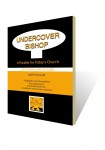
Join Bishop Ruby Kinisa as she visits small churches "under cover" to learn what people would never share if they knew they were talking to their bishop.
Undercover Bishop will always be available in PDF form on 2x2virtualchurch.com for FREE.
Print or Kindle copies are available on Amazon.com.
For bulk copies, please contact 2x2: creation@dca.net.
MISSION INSPIRATION OFFER
A visual and biblical guide to help congregations define their missions.
Contact Info
You can reach
Judy Gotwald,
the moderator of 2x2,
at
creation@dca.net
or 215 605 8774
Redeemer’s Prayer
We were all once strangers, the weakest, the outcasts, until someone came to our defense, included us, empowered us, reconciled us (1 Cor. 2; Eph. 2).
Be calm. Wait. Wait. Commit your cause to God. He will make it succeed. Look for Him a little at a time. Wait. Wait. But since this waiting seems long to the flesh and appears like death, the flesh always wavers. But keep faith. Patience will overcome wickedness.
—Martin Luther



 See the countdown box to the right. 2×2 Foundation, which grew from Redeemer’s ministry, is counting the days to the third anniversary of the Southeastern Pennsylvania Synod of the Evangelical Lutheran Church in America’s excommunication of all Lutherans in East Falls so that they could take our property and assets as their own.