We never set out to be experts in object lessons, although we were major contributors to a site specializing in children’s sermons before we (and our children) were evicted from our church.
Strange things can happen on the internet. Last November we visited a small church in Fort Washington, Pa. We wrote about the pastor delivering an object lesson in a church where there were no children present. It seemed to be more popular with adults than such sermons are with children.
That post, now about nine months old, still gets daily search engine traffic. In response to this interest, we have started to post an object lesson corresponding to the lectionary readings for the upcoming Sunday. We’ve posted about six so far and aim to try to add a new post featuring Adult Object Lessons each Tuesday.
Although we use an object (most of the time) sometimes we just present ideas for interactive lessons with adults. Many can be adapted for use with both children and adults—sometimes encouraging the age extremes to engage with one another.
We leave most of the theological interpretation to theologians. We just make some suggestions on how the topic might be handled.
We’re not quite sure what we are getting into or how much discipline it will take, but we’ll make the effort. Hope it helps!
This Sunday’s scripture readings are the climax to a series of readings centered on the sixth chapter of John. For several weeks, we have followed the gospel writer’s narrative as the tension builds.
A lot has happened. Sick have been healed. Multitudes have been fed. Much preaching and teaching has taken place.
Jesus has returned to the city from the Galilean “suburbs” and is now speaking from the temple in Capernaum. He, like Joshua, is asking his followers to make a choice.
The end of Chapter 6 is paired with the reading from Joshua where the successor to Moses stands on the ground made holy by the patriarch Abram and defines the choice before them. Worship the Gods of their pagan neighbors or worship the God of Israel who led them out of captivity.
Write the word “BELIEVE” on two pieces of paper. Fold the papers so that they fit in your closed hand. Put one in each of your hands and hold them out. Ask a member of your congregation to choose one.
Of course, as the paper is unfolded, the word BELIEVE will appear. Talk about what it means to believe. It is an order, in one sense. Or it can be interpreted as a creed or statement of fact.
Point to Peter’s creed at the end of the Gospel. Point out that Peter’s statement of faith is made as many were beginning to desert the cause!
At the end of your talk. Reveal that the other hand holds the same message. The point is that we all choose to BELIEVE something. We can’t avoid making a choice. We will face repeated temptations to stray. We can stand with Peter and believe in God or we can flee with the others and believe in a god of convenience.
What we believe and who we follow is our decision. It’s a life-changing decision that we will be tempted to abandon.
Close with Joshua’s quote. “As for me and my house, we will serve the Lord.”
Today’s object lesson is a puzzle. Print the empty grid in the bulletin with the following list of Words.
TWO
FISHES
FIVE
LOAVES
FATHER
BREAD
OF
LIFE
ETERNAL
SPIRIT
BLOOD
FLESH
SON OF MAN
SPIRIT
Say something along these lines.
In your bulletin is a list of words. They are all part of the story we’ve been reading from Chapter 6 of the Book of John for the last few weeks. There is a crossword grid printed in the bulletin. While I talk to you this morning, I invite you to fit the words into the grid.
It’s a puzzle—a game.
And that’s what has been happening in our Gospel lesson for the last few weeks.
Jesus has been playing a sort of game with his disciples—a teaching game—trying to get his disciples and other followers thinking. He knows what he is up to. The scripture notes this from the start when Philip first posed the immediate problem facing them—feeding five thousand hungry people with five small loaves of bread and five fishes.
Oh, the people are hungry, are they? Well, where do you suggest we buy them food?
From that point on the whole chapter is a puzzle with lots of pieces to put together. Jesus knows the answers and he knows that the disciples aren’t yet on the same page with Him. He throws them clues left and right, accented with a touch of the supernatural here and there.
He performs the miraculous feeding. This becomes the metaphor for His object lesson. But that’s just the beginning. Strange happenings abound.
He tries to get away. The disciples leave Him behind. He appears on the water. The boat reaches its destination the minute He climbs on board. Crowds keep searching for Him. When they find Him, He keeps going back to the food metaphor.
I am the Bread of Life.
Then He starts talking about being the Son of Man and then about the Father who sent Him. Talk of the Bread of Life turns to talk of flesh and blood. A true puzzle.
During the long story, the action moves from the hillside to the desert to the sea and the opposite shore and ends with Jesus continuing the story from the temple in Capernaum.
Point out that we read this story today with the benefit of knowing what is about to happen—the Last Supper, the Betrayal, the Crucifixion and the Resurrection. The puzzle solvers of Galilee were truly perplexed. A good number threw up their hands and walked away.
The chapter ends with Peter’s answer to the puzzle. As some of Jesus’ followers are fleeing, he states a simple creed. We repeat this regularly in our worship services
“Lord, to whom shall we go? You have the words of eternal life. We have come to believe and to know that you are the Holy One of God.”
That was Peter’s answer to the puzzle. You might have the congregation repeat these words.
This week’s object is a potato chip (or perhaps a peanut).
Eat one yourself and start to take another. Stop yourself.
If your group is small, you might put some chips or peanuts in a bowl and pass them around the congregation with the admonition that they eat just one and stop, just as you did.
Play off the well known advertising tagline (Lays), “Betcha can’t eat just one.”
Compare this human craving for more of a good thing to what was happening along the Sea of Galilee in the last few Gospel lessons.
It started with the miraculous feeding of the multitude with five loaves and two fish.
The similarities to a key story of the crowd’s heritage is not lost. The people were familiar with God sending miraculous food supplies in various Old Testament stories. In the most memorable, God sent manna from heaven in adequate, if not abundant, supply and saved them from starvation.
That they had just witnessed a similar miracle had the impact of a gold rush. Jesus, the man who had grown up near them in Nazareth, could feed them for the rest of their lives! Who would have thought!?
The frantic fans followed Jesus along the shore line, hopping into boats — any way to stay close to the miracle worker. Following Jesus could change their lives forever. “Count me in!” they might have been crying.
Jesus had their attention and he knew it. Now was the time to introduce a new concept.
He continued to teach more than preach.
Aha! You like the bread I gave you. What’s that? You want more! Try this idea on for size. “I am the Bread of Life.”
Jesus stretches the minds of his new fan club. They can have a piece of the Bread of Life.
It was not clear what Jesus meant. It is debated even today. But one thing is clear: To participate any further in this miracle, they must make a connection with the Father if they want the sustenance of the Bread of Life.
Look down at the bowl of chips or nuts. Ask: Are you ready for some more? What are you willing to do?
Your object is an umbrella. As you begin to preach your object lesson. Open the umbrella. You might sit down and pause for a moment with the open umbrella. You might walk around the sanctuary a bit with the umbrella.
If you live in an area experiencing drought, engage members of the congregation in talk about the weather and how it is affecting them. Are they complaining? Are they praying for rain?
Point out that if they are praying for rain and they trust God, they ought to be carrying an umbrella wherever they go.
The umbrella, in this case, is the symbol of trust.
God WILL provide. It is our job to trust and accept His help!
Point to the Old Testament lesson for the day — the story of how God provided his discontented people with manna in the morning and quail in the evening.
There is more to this story, some of it told in Numbers, chapter 11. The full narrative includes the account of God’s anger and Moses’ angry exasperation with the people he is trying to lead. Getting people to trust God isn’t easy!
But the lesson today is about God providing faithfully for his people, even when they don’t seem to deserve it.
That may be enough for today’s object lesson.
There is more to the lessons for the day. Jesus relies on common knowledge of this story, refreshed by his recent miraculous feeding of the multitude with bread and fish, and extending the metaphor to his own purpose on earth. He is the Bread of Life.
He is playing with them a bit in his teaching style just as you are playing with the congregation in walking about with an umbrella in church.
People are no different today than in Moses’s or Jesus’ time. We want assurance that our physical needs will be met. You’ll pray for many of them later in the service.
Do we truly trust that God will answer our prayers?
The Gospel story of Jesus Feeding the Multitude is a lot about numbers.
Use your fingers as your objects and start counting. Or for a modern flair, use a calculator.
The boy had five barley loaves and two fish.
There were 5000 in the crowd.
When all had eaten their fill, the disciples gathered 12 baskets of leftovers.
Numerologists will read special meaning into these passages.
Five barley loaves (five=grace)
Two fish (two=witness)
for a total of seven (seven=perfection)
Twelve is the number of governance. (12 tribes, 12 disciples)
The story—at least for us today—is less about numbers and more about miracles.
The audience that day would have known the Old Testament story that is paired with this gospel. Elisha gives the orders in this story. People are fed. Food is leftover. It was no less newsworthy because this miracle fed only 100.
The New Testament narrative is meant to leave no doubt. Jesus can perform miracles—miracles that surpass Elisha’s and also surpass our expectations and satisfy our desires. Elaborate on this.
If you are celebrating Communion, do a quick calculation of how many might come to the altar a bit later in the service. Estimate the number that might be coming to other altars in other churches in your neighborhood and beyond at the same time. Add this number to the Bible’s 5000 and sense an ongong miracle.
Touch is important in our lives right from the start.
New parents react instinctively when their child breathes its first breath. They swoop their newborn into a loving embrace.
Touch continues to be among the most powerful senses.
Here is a video of how the sense of touch is immediately embraced by very young children. It shows a baby, barely old enough to walk, looking at a magazine. This child approaches the magazine as if it were an iPad, touching the images waiting in vain for a response.
The common form of greeting and agreement, the handshake, grows from our need to touch. In ancient days the outreached hand was a way of saying, “Look, I am not armed. I am your friend.”
The power of touch is central to this story in Mark.
The apostles (sounds like there was a good number of them) have returned from their 2×2 mission trips. It’s time for debriefing! They attempt to hold a retreat.
A couple of weeks ago, the Gospel was about one woman who stole Jesus’ healing power by touching his garment with faith. Jesus responded.
Now the word is out. People far and wide have heard about Jesus.
Everyone is clamoring to touch Jesus. They are carrying their ailing loved ones across the rocky, hilly countryside to get near enough to Jesus to touch him.
Touch is important in our world. Sometimes, when words fail, a hand on the shoulder or a sudden embrace comes to our rescue.
We find comfort in a kind touch. We are repulsed when the sense of touch is abused.
We long to be touched, to be connected to one another, to be connected to God. Think about that today as we pass the peace. When we touch someone, it should mean something.
Amos 7:7-15, Psalm 85 verses 8-13 and Mark 6:14-29
Today’s theme is all about judgment.
In the Amos story, the Lord appears to the reluctant prophet Amos with a plumb line. This would have been a common household tool at a time when people built their own houses and fences. In this passage, the plumb line is symbolic of judgment. The Lord intends to make sure his people measure up. Amos is sent off on a plumb line mission. (Talk about object lessons for adults!)
The Gospel story for today is the execution of John the Baptist, performed against the better judgment of Herod. His dilemma: do the right thing and break a bad promise or live up to conniving expectations and deflect potential criticism for not keeping his word.
For an object lesson today, use a modern tool that symbolizes people’s fear of being judged. Carry a clip board with a piece of paper and a pencil. Walk up to a willing member or two and engage them in idle chatter. (Warn them beforehand.) Ask about their work? How’s the family? While you talk, pretend to take notes or be checking boxes.
After two or three casual interviews. Return to your preaching location and engage members in a conversation about how they felt having a conversation with someone who was taking notes and in effect grading them.
Tie their answers to the Old Testament story of Amos and the role he has been assigned—to go among God’s people and prophesy in order to keep them on the straight and narrow.
Follow up the story with today’s Psalm (85:8-13). It, too, is about judgment, but it stresses restoring our relationship with God. Bring them back to the plumb line. The walls will be rebuilt. This time they will be built on a foundation of forgiveness.
Mark 6:1-13 reveals the part of mission work with which we are all fear: REJECTION.
The passage begins with Jesus receiving criticism from those who knew him best, his neighbors. Jesus was not unaffected. He had a hard time doing more than a few healing miracles among his own people. It ends with Jesus sending the disciples out into the same hostile world. They are to go 2×2. They are to carry nothing but a walking stick.
The plan is not very inviting. Few today would accept such a call. It would be considered economically unfeasible.
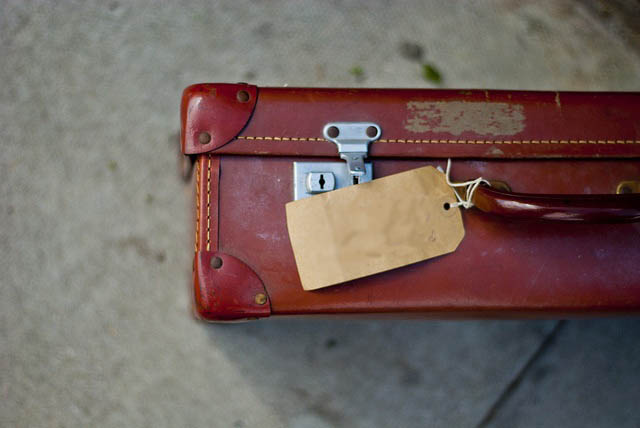
Use a small suitcase or sports bag. Pack it with a few travel essentials: razor/toiletries, extra set of clothes, bottle of water, a couple of power bars, a wallet with money.
Talk about going on a mission trip. Read Jesus instructions from verses 8 and 9.
Slowly unpack the suitcase or duffel as you read the list of forbidden items from scripture. Soon your bag will be empty.
Talk about Jesus sending the disciples out to do his work with nothing but a staff to lean on. Ask church members why He might have taken this approach. What would be the benefits or impediments? Give them time to think about this.
Finish the sermon by latching or zipping up the empty bag and taking a quick walk around the sanctuary greeting a few people with a paraphrase of the scripture verse from the accompanying Epistle lesson: 2 Corinthians 12:2-10.
This week’s Old Testament lesson is one of the most enduring stories in the Bible. David, a peon in King Saul’s kingdom, takes on Goliath, the huge and well-equipped leader of the Philistine Army.
We all know the story but it never hurts to re-read it. Ever notice how much detail the writer includes about Goliath’s weapons and armor? There is no room for doubt. Goliath was the superior leader in every way. This is followed by a rare comic description of the boy, David, stumbling through the palace, trying to walk a straight line while wearing the armor King Saul has provided.
We all know the story and the outcome. Little David rushes unprotected into battle and slays Goliath with a homemade sling and a pebble picked up from the wadi.
We know that David’s victory catapults him to a prestigious position in Saul’s court that eventually sends Saul into a jealous, mad rage. We know the side story of David’s fast friendship with Saul’s son, Jonathan.
The story endures because we can all empathize. Everyone knows how it feels to face a foe that is larger, better funded, more powerful and attractive to followers. Little children stand before parents, teachers and the many authorities they encounter. They are weak and defenseless. They understand David.
Adults can empathize. They’ve stood before bosses who hold the purse strings and offer security —the more you follow their leadership, the greater likelihood of security.
Athletes know the feeling of facing with dread an opponent of stronger repute.
We all understand the story of David and Goliath.
Especially, we little churches. We — and our members — face the unchecked power of the bigger Church. When positions of power are abused, the result is bullying. The Church is not immune.
Things are changing. Young men in Philadelphia are challenging the Church hierarchy in Philadelphia that looked the other way as Church leaders abused their power. It took decades to muster courage and their fears were realistic.
And then there is little Redeemer, facing the Evangelical Lutheran Church in America, which stripped them of their property and endowment, and shut the door on their individual participation in the denomination. They’ve fought back while others in the Church have watched from positions of safety.
It’s a different kind of battle. One little pebble is not likely to end this conflict. More than five years after the opening volley, Redeemer is still alive, fulfilling its “missional” purpose and fighting with no war chest or armor — only a web site to speak for them and trust in God.
Will it ever end? Pride, power and a disregard for purpose are the Goliath that stands in the way.
OBJECT LESSON:
Illustrate Saul preparing David for battle. Ask a small child to stand before the congregation. Prepare the child beforehand. Make sure you choose a child who can participate without harming his or her self-image.
Start to dress the child with sports gear (hockey of football) until it becomes apparent that the child can barely move, much less play a sport. Then start to take the gear away. Ask the child how he or she feels without the “armor.” Draw the comparisons to David. Take your pastoral message from there.
Join Bishop Ruby Kinisa as she visits small churches "under cover" to learn what people would never share if they knew they were talking to their bishop.
Undercover Bishop will always be available in PDF form on 2x2virtualchurch.com for FREE.
Print or Kindle copies are available on Amazon.com.
For bulk copies, please contact 2x2: creation@dca.net.
MISSION INSPIRATION OFFER
A visual and biblical guide to help congregations define their missions.
Contact Info
You can reach
Judy Gotwald,
the moderator of 2x2,
at
creation@dca.net
or 215 605 8774
Redeemer’s Prayer
We were all once strangers, the weakest, the outcasts, until someone came to our defense, included us, empowered us, reconciled us (1 Cor. 2; Eph. 2).
Be calm. Wait. Wait. Commit your cause to God. He will make it succeed. Look for Him a little at a time. Wait. Wait. But since this waiting seems long to the flesh and appears like death, the flesh always wavers. But keep faith. Patience will overcome wickedness.
—Martin Luther



 We never set out to be experts in object lessons, although we were major contributors to a site specializing in children’s sermons before we (and our children) were evicted from our church.