When you believe your customers have no real choice, either because they’ve signed a long-term contract, or the technology locks them in, or they’re stranded in Fargo with no other options, you’re likely to drift away from delighting them.
When you believe that people are stuck in their seats, it’s not essential, it seems, to keep cajoling them to stay there.
And while you might be correct that this particular customer is locked in, it doesn’t mean she doesn’t have friends, colleagues or a blog.
Word of mouth and recommendations don’t come with a lock-in feature. Generations change, and if you’re here for the long haul, there is no lock in.
Seth’s words complement our posts on replication and mission by the book. The replication process, touted by regional bodies as innovative, is really just a last-ditch effort to recreate ministry models that are failing at a slower rate in other neighborhoods.
Of course, the failure is first assigned to the laity. There is something wrong with them that can’t be fixed.
Shutting churches down and reopening them in the same form with different people in the pews and pulpit is actually an admission that professional leadership has failed. “Let’s let the people who have failed to lead for decades take control. They must know what they are doing,” is flawed church-think.
Healing (reconciliation) is too much work.
The Church doesn’t understand how neighborhoods work.
Links to the past don’t disappear because the Church held a service proclaiming their demise.
Go ahead and change the name. You can bet the neighborhood will call it Old Trinity or Old St. John’s for decades.
The Church is creating terrible word-of-mouth ministry — the kind of ministry tactic that spread the Gospel to the farthest reaches of the known world within a century or two back when there was no other way to reach people.
The lasting impression the leaders of the ELCA (its greedy bishops and spineless clergy) create in the neighborhoods where they swoop in, lock doors, confiscate assets and punish their life-long supporters with lawsuits is not a billboard for the road to Christ.
Here’s what the neighborhoods think when they pass the locked doors every day.
The Lutheran Church—ahh, yes. They’re the ones who sue their members and threaten their livelihoods and exclude them from participation with other congregations.
The next thought is not going to be
“Let’s join.”
Listen to Seth. Just because we are locked in—or locked out as has become the new ELCA’s protocol—doesn’t mean we don’t have friends, colleagues, neighbors and a blog.
The ELCA way makes sense only to clergy who believe in their own isolated power. When you include the people of the church — the ones who put money in the offering plate each week, the ones who sacrificed a productive lot to build a building, the ones who show up every Sunday for decades, teaching and singing and serving — then it is wanton foolishness.
Remember, the WAY that is taught to us within the walls of the church includes standing up for what we believe.
Last night was Christmas Eve and the doors to our church were locked by the Southeastern Synod of the Evangelical Lutheran Church in America.
O Holy Night! Love and Joy Come to You. Let earth receive her King. Noble words were being sung in other SEPA Lutheran sanctuaries.
We gathered around the soup pot as we so often do at Redeemer. (Still)
The ladies of Redeemer once supported our ministry with monthly soup sales. A rich beef vegetable soup was produced in Redeemer’s kitchen which we were renovating so we could cook more soup.
Redeemer lives as long as those soup recipes live. Last night I enjoyed Lutheran soup for 25th Christmas Eve.
On 21 of those Christmas Eves, we also went to church.
God and sinners reconciled.
We’ll gather again this morning for Christmas breakfast. But not in our church.
We’ll be back in church on Christmas Eve when the hymns people sing actually mean something.
Meanwhile, I suggested we change the name of the soup. Lutheran Soup just doesn’t sound good anymore.
During the six years of Bishop Almquist’s term, during which SEPA was all but absent in its relationship with Redeemer, the Rev. Claire Burkat was making a name for herself as an assistant to the bishop.
She had a success of which she was particularly proud. She worked with a failing church and devised a plan. Synod would close the church with its aging members’ cooperation and reopen it weeks later with a new name.
In 2006 in her early days as bishop, Bishop Burkat came to Redeemer eager to replicate the experience which had been so successful (by her reports) before her election. In truth, it was too soon to tell if the mission strategy was actually successful. There were no statistics to support whether or not it was a good idea.
We have checked the current statistics of this congregation. They are not impressive. Membership seems to be under 50. About half the statistics of Redeemer in 2007.
Nevertheless in 2006, the experiment was touted as a promising innovation. Bishop Burkat was eager to replicate it and add another “success” to her résurmé.
The problem was Redeemer was not at all like the congregation that had agreed to pioneer this technique.
Remember, SEPA had walked away from Redeemer six years before and their memory was that the congregation consisted of a dozen old ladies. Their waiting game strategy should have been ripe for implementation, in Bishop Burkat’s view.
Things had changed at Redeemer. The elderly members who had met with Bishop Almquist had in fact gone to their heavenly reward. But there were now three times as many Redeemer members as when Bishop Almquist had released us from synodical administration—and that would soon double. Our members were mostly young families, most of whom had joined within the last ten years. Many were Tanzanian immigrants, but there were other new ethnic backgrounds new to Redeemer’s membership as well. Bishop Burkat even suggested removing the Tanzanian members to create statistics to justify the strong-arm tactics she planned to implement. Some had been members for a decade, some had been born into our community. This was (and is) insulting to Redeemer’s Tanzanian members as it should be to every Lutheran. As one young Tanzanian member noted at the time: SEPA is big on ministry to the Tanzanians — as long as we stay in Tanzania. (The statistics presented to Synod Assembly by the trustees excluded the Tanzanian members.)
Redeemer’s interest in working with SEPA was to build on its success. SEPA wasn’t listening. They knew best.
Closing Redeemer and reopening it under a new name was the only plan they would consider. Why?Their way gave them control of the congregation’s assets.
Here we go again! Mutual discernment at work!
Bishop Burkat made this proposal. She would close the church down, have a grand closing ceremony, and reopen it a few weeks later. Renaming the church was key to this strategy. There should be no confusion that the old church was dead and gone. The new name had to meet with her approval. Oh, and the current members would not be permitted any leadership roles. From where the new leaders were to suddenly emerge to take control of our ministry was not made clear. Meanwhile, Synod would reign with no one to answer to — hardly the Lutheran way.
Of course, this was offensive to a congregation that had worked hard to recover from the mess created by Bishop Almquist — and was succeeding.
The first proposal was the church should close for two weeks. That became six months by the time they saw us in court.
Well, in 2009, Bishop Burkat finally got her way and has control of Redeemer’s property. It has been locked to Redeemer and the community for three and a half years.
Redeemer remains active through 2×2 Foundation, waiting for the day that the Lutherans of SEPA recognize that maybe, just maybe, they were part of a big mistake.
The strategy of replicating one success in a different neighborhood has been disastrous for both East Falls and SEPA. Redeemer bears the popular blame, but SEPA with its selfish policies is responsible. Bishop Burkat defends her actions, citing the process of mutual discernment.
Once again, the definition of mutual discernment is “comply or goodbye.“
2×2’s previous post addressed how the interests of a regional body can hinder mission. Here’s an historical example.
The Southeastern Pennsylvania Synod (SEPA) of the Evangelical Lutheran Church in America (ELCA) and its relationship with Redeemer, East Falls, provides many interesting illustrations of how the structure of the ELCA, intended for good, actually impedes creative ministry.
Its attempt to structure itself interdependently quickly becomes crippled by the reality that the regional body is dependent on congregations funding its budget, heavy with salary obligations and an expensive, outdated infrastructure. Meanwhile, congregations must meet their own budgets and support the regional and national bodies.
Years of hard work and “mutual discernment”
Bishop Burkat talks of years of working with our congregation under her leadership and that of her predecessor. She calls the process “mutual discernment.”
Sounds good. Only it didn’t happen quite that way.
There were more years of neglect than of working together.
There were so many hidden agendas that mutual discernment was impossible.
Attempts to ignore the wishes of the congregation were routine.
With interdependence comes the jockeying of self-interest. Congregations may be unaware that the synod has self-interests. They may assume that the synod has their interests at heart.
Meanwhile, the regional body expects the unquestioning deference of congregations.
Mutual Discernment at Work
Redeemer was always a small but self-sufficient congregation. SEPA did not support Redeemer financially as many people have been led to believe. It was the other way around.
When the ELCA was created in the late 1980s, Redeemer had a part-time pastor who also worked in the Synod offices. Redeemer was seen as not likely to ever support a full-time ministry. Any part-time pastor filled the bill in their eyes—a pulse was the primary qualification. They were marking time.
Then Redeemer received a $300,000 endowment. Suddenly, there was an interest in Redeemer. Pastor Wm deHeyman left the synod offices to work more fully with Redeemer. He served Redeemer 11 years. (Synod represents that Redeemer had just short-term pastors. Not true. His predecessor served 7 years.)
Wm deHeyman retired in 1996. His last years were difficult and factions had formed with some rallying around the pastor.
Redeemer looked forward to a new start.
Bishop Roy Almquist proposed that the congregation call one of his staff members, Rev. Robert Matthias, for an 18-month term call as an interim pastor.
Redeemer cooperated whole-heartedly.
This was a tumultuous time at Redeemer for other reasons. There was a series of personal tragedies that impacted congregational life. A tragic death of one family’s child. Another family was wracked with grief when its youngest child was paralyzed in an accidental shooting. A third child and family faced serious issues. The families of four council members were in crisis. During this time, a newer member volunteered to help with the financial books as the treasurer was one of the affected parents. It was soon discovered that the volunteer was embezzling money. The crime was noticed and rectified quickly—within months—but it added to the congregation’s sadness. This incident is sometimes used today to justify SEPA’s interest in Redeemer, but at the time they took no action that indicated they had concern that Redeemer could not rectify this on its own.
What was SEPA’s response in the face of unusual tragic circumstances in a small congregation?
They walked away and left the congregation with no pastor for nearly a year.
Three months into the 18-month term call agreement, Bishop Almquist returned to Redeemer and asked to break the call contract. He had an assignment for Pastor Matthias in Bucks County.
Redeemer cooperated even though it meant its investment in Pastor Matthias was wasted. Naturally, the congregation was hurt. Why was Bucks County more important than the promise SEPA had made with Redeemer?
During this year, Assistant to the Bishop Sue Ericsson was meeting with the council unbeknownst to the congregation. She encouraged the council (half of whom were in personal crisis) to convince the congregation to close. A plan was drafted. If the congregation did not go along, the congregation council would submit resignations providing grounds for SEPA to take over. Mutual discernment was being dictated behind the scenes.
The congregation’s annual meeting, usually held in February, was announced for January.
Three guests were introduced, Pastor Matthias, Gordon Simmons and Rodney Kopp.
Some reports were made. At the point when the budget should have been presented, the congregation council submitted the resolution to close (drafted by synod). This had not been discussed in the congregation who thought they were holding a routine annual meeting. They voted to table the resolution for further study—a reasonable response. A congregation should study an important issue before voting!
On cue, council members placed letters of resignation (drafted by synod) on the table. They were swooped up by Pastor Matthias who announced the meeting was over and the congregation was under synodical administration. While Pastors Simmons and Kopp spoke to angry congregation members who were feeling ambushed (Pastor Kopp used the term “blind-sided”), Pastor Matthias left with the letters of resignation and the church books.
Pastor Mathias was known at the local bank. He and a former Redeemer treasurer visited the bank the next day and conveyed $90,000 to SEPA. SEPA asked our tenants to send payments to them. Mutual discernmentincluded trickery.
But paying the bills was the extent of synodical administration. Redeemer kept its offerings and there was significant money in savings available to the congregation. Activities at the church continued to be run by the congregation.
The congregation felt betrayed by their council and SEPA. The members who resigned ended up leaving, some after long years at Redeemer. SEPA had used them at a time when they were vulnerable.
SEPA refused to share the letters of resignation. We learned three council members had not resigned. Two pastors helped the congregation appoint members to fill vacant seats as is allowed in the constitution. Redeemer’s council continued to meet and run the daily affairs of the church and plan its own worship and mission which included an ambitious summer program, totally lay led.
Redeemer protested the synodical administration for a year.
Several supply pastors led worship, including Rev. Harvey Davis. Our first Tanzanian members joined during this time. Bishop Almquist at last released the synodical administration. But he did not return the money for an additional year. At last, SEPA returned about $82,000, keeping some to cover their legal expenses. The fact that they were able to pay the congregation’s bills without depleting the $90,000 in two years, proves that the congregation was financially viable.
When the synodical administration was lifted, Bishop Almquist asked the congregation to call Rev. Jesse Brown. He was the only candidate presented. Bishop Almquist suggested a one-year term call.
Redeemer cooperated.
Things were fine with Pastor Brown, but at the end of the year he announced that he wanted to cut his hours to just ten per week, the minimum needed for him to retain his ordination credentials.
Redeemer did not wish to regularize a call with a pastor who wanted to provide minimal service. Redeemer agreed to extend the term call, but Bishop Almquist insisted it be regularized—or there would be no pastor for a very long time. Mutual discernment included threats.
Why was this a deal-breaker?
What’s the difference between a term call and a regularized call?
A regularized call can be ended by the pastor at any time with 30 days notice, but if the congregation wants to make a change, they must muster a two-thirds vote against a pastor. This can be very divisive, especially when a pastor is liked—as was Pastor Brown. Redeemer’s concern was his minimal level of commitment and what that meant to Redeemer’s ability to grow in mission. For Redeemer’s lay leaders, it was not enough that a pastor was “liked.” The congregation had to make progress. Redeemer’s leaders were looking wisely into their future. A regularized call would become problematic if Pastor Brown’s outside interests minimized the effect of his ten hours per week. Locking into a regularized call under these circumstances was not in the interest of the congregation, no matter how much the pastor was liked by individual members. In fact, it was likely to be a greater issue if the pastor was liked. The congregation’s leaders would be frustrated with lack of mission progress, while the more minimally committed members of the voting congregation were content. Redeemer was being forced to make a foolish decision that was predicated on the synod’s dismal vision for the congregation, which happened to have a healthy endowment, while they were operating with a deficit.
The congregation council rejected the synod’s proposal. Bishop Almquist asked for a second vote overseen by a staff person. That vote failed, too. Bishop Almquist deemed that the congregation should vote on the call — never explaining the wisdom of asking the congregation to vote for something the church council was against. That vote failed too.
If the vote hadn’t failed, it would have strained relationships between the council and the congregation. This was pointed out to Bishop Almquist, but he insisted on taking the issue to the congregation anyway. He was interested only in getting the vote that served his purpose—finding a call for Jesse Brown.
Bishop Almquist kept his promise. Synod ignored Redeemer for Bishop Almquist’s entire second term.
The congregation worked with Pastor Harvey Davis for three years until the pastor needed to retire. He was influential in attracting several young couples with diverse ethnic backgrounds and our Tanzanian membership continued to grow. Redeemer was becoming multicultural and was making significant innovations successfully. The ministry showed promise despite synodical neglect.
Let’s look a the motivations behind this history that is so often referenced as reason for Bishop Burkat’s actions a decade later.
Why was it important to SEPA that Redeemer’s call be regularized? Term calls are a constitutional option.
The synod’s interest in a regularized call solved some of its problems.
Pastor Brown could retain his status as an ordained pastor while he ran for public office and operated his own business on the side.
His minimal service would solve SEPA’s problem of staffing Redeemer.
Redeemer’s mission and interests were not really considered.
SEPA’s view of Redeemer was that its elderly population would die within 10 years. Minimal ministry would speed the process along. This thinking takes on signficant importance when the targeted congregation has assets and the regional body is operating with deficits. The regularized call gave SEPA more control over Redeemer and the fate it was tacitly seeking.
Declaring synodical administration gave them access to congregational assets.
After SEPA returned Redeemer’s assets, Bishop Almquist issued an appeal letter to all congregations for almost exactly the amount of money returned to Redeemer.
Redeemer had supplied SEPA with an interest-free loan.
Synodical administration had been used as a tool to benefit SEPA. Mission in East Falls was never the objective.
Lasting damage was done to Redeemer. Gossip created an unjustified cloud that hangs over East Falls to this day.
At all times in this conflict, Redeemer cooperated when it was reasonable to do so. It showed initiative, flexibility, and a willingness to accept change — all the things regional bodies look for when striving for transformation. But the congregation knew that Bishop Almquist’s insistence on a regularized call was not in the congregation’s interest.
Redeemer was consistently making choices that pointed them toward new and innovative ministry. SEPA was prescribing solutions that would benefit SEPA.
There are such things, you know. Mission Manuals. They tell us exactly how to start a church or revive a faltering ministry.
Frequently, mission is all about replication. We try to do the same thing that worked so well, perhaps just a few years ago, but in a different place.
We follow flagship ministries that succeed because of unique vision and herculean passion and try to pull off the same success with no unique vision and the part-time commitment of clergy.
At times we go so far as to attempt to import people into neighborhoods. That early “manufactured” success can be measured. It might attract the regional body’s interest and their investment (coin, time, or talent). Perhaps the statistics will attract some unsuspecting part-time pastor!
Why do we try to replicate—and call it innovation?
There is comfort in routine.
We know how to measure routines.
We know what to measure in our routines.
We already have the training to do things the old way and the training to do things in new ways might not exist.
Who doesn’t like a roadmap?
Neighborhoods are not the same. In decades past, there may have been more similarity and more stability within a geographic era. Church mission concepts are geared to such commonalities.
But neighborhoods vary greatly these days. Change used to be generational. Now it can be expected, especially in urban neighborhoods, within five years.
Look at Philadelphia. There are whole neighborhoods where virtually everyone is in their mid-twenties to mid-thirties with just a few toddlers in tow (Fairmount). There are ethnic neighborhoods that are shifting ethnicity (South Philadelphia, once heavily Italian, is now the home of Southeast Asian immigrants). There are collegiate neighborhoods (West Philadelphia). There are neighborhoods that are very mixed racially, economically, and socially (East Falls).
No amount of forcing will make neighborhoods stay the same. Congregations must learn this. So must professional leaders. We must also learn that a successful replication may have a life of only five years — if ongoing changes are not recognized as part of the mission model.
The act of replicating means that a great deal of energy and resources are devoted to recreating the same model. By the time all of the pieces are in place and showing the first signs of stability (if not progress) there are few resources or energy for initiative. Congregations may be locked into the leadership that brought them thus far but will not be able to take them into the Promised Land.
So how can the church foster innovation when so much thinking and resources are designed to protect the status quo or the initial investment?
If we want innovative ministries. we must stop measuring old statistics. New ministries can’t live up to them. But they CAN forge new ground and show impressive advances.
The day will come when you can apply the old measuring tools. But, if you wait for the old measurements to be in place before you innovate, nothing new will happen.
We can illustrate many of these points by looking at the recent history (15 years and counting) of the Southeastern Pennsylvania Synod (SEPA) of the Evangelical Lutheran Church in America (ELCA)’s attempts to do ministry with the people of East Falls. We’ll publish these separately. They are worth looking at if not for Redeemer’s sake (which would be welcome) but to learn what doesn’t work in the single-minded quest for transformation. There are many lessons to be learned from this one, largely misunderstood, ministry.
Many innovators seek to leapfrog over existing solutions, essentially hoping to win by playing the innovation game better. Disruptors win by playing the innovation game differently. [emphasis in original] Disruptions are all about trade-offs. Disruptions typically do offer lower performance along dimensions that historically mattered to mainstream customers. They aren’t bad along these dimensions; they are good enough. But they more than make up for that — in the eyes of their customers — by offering better performance along different dimensions.
This is very applicable to church life. Congregations are bombarded with demands to transform. We are competing to reach a standard that no one has measured. The drama sets congregation against congregation as they vie for attention from their regional body in access to professional services and standing. Transform becomes conform.
Concentrating on growing can be frustrating. It can discourage people who never joined church to work to reach other people’s goals. New members need time to settle and mature.
Sometimes churches are exactly the right size. They can afford their pastor. They can maintain their building. People know each other and are sensitive to one another and their community. They work well together and are confident enough in their sense of mission to welcome new people.
So why can’t we accept congregations the way they are? Is the push to grow important to the mission of the church or is it important to maintaining the three budgets each congregation is expected to support (their own, and those of the regional body and national entity)?
Churches will grow if they are growing for the right reasons. Their way of achieving their mission may not suit church professionals, but it may be good enough—at the moment. It may be great.
Redeemer was good enough. Redeemer was great at what it was doing in mission work — which no one else was doing quite the same way. We were not replicating a model foisted on us from above but we were innovating in ways from which others could learn and which we could afford and had the talent to support.
We don’t know what would have made the Southeastern Pennsylvania Synod of the Evangelical Lutheran Church in America happy.
We had grown five-fold since Bishop Almquist’s interference in our ministry in the late 1990s. SEPA didn’t know that because SEPA ignored us for a decade. When faced with the facts, they simply refused to count the new members. “White Redeemer must be allowed to die. Black Redeemer — we can put them anywhere.” (Bishop Burkat)
We had achieved diversity, a stated goal of SEPA.
Our members spanned the age ranges and was no longer top heavy with older Christians.
We had several pastors interested in working with us.
We had some money in reserve.
We had lay leaders with diverse talents that complemented those of professional leaders.
We had a ministry plan that had the potential to create ongoing revenue.
We were and are good enough. We might even be great.
But recognizing Redeemer’s unique ministry didn’t meet SEPA’s agenda. They needed us to fail so they could justify taking our property (which their Articles of Incorporation forbid, but who cares).
So they quickly, in a blink of an eye, acknowledged our success but followed it with criticism for not achieving it under their direction. (They were AWOL.)
Since they kicked us out of the ELCA, we’ve visited 52 congregations. We know our ministry is just as active and effective as those who sat in judgement over us. And it is unique. We don’t have a food pantry. We don’t sign up for every charity run. Our kids don’t go to Synod youth events. But we do support ministries in other countries. All our kids and families had an opportunity to attend church camp. We have developed a social media ministry which reaches 1500 people a month. We’ve made a project of connecting with other Lutheran congregations. We have fought to maintain congregational polity, which will someday benefit every other SEPA congregation. We continue to meet for worship and ministry weekly.
If we had tried to be like bigger churches we would not have been able to accomplish the things we did. We did our own thing with our own resources and remained true to our mission. If we had concentrated on emulating bigger congregations we would have failed. All of our resources would have been spent keeping up with the St. Joneses. We found areas of ministry in which we could excel and make a difference.
We were good enough, we like to think, to be welcome in God’s house.
We were not good enough, we know, to be welcome in the ELCA.
The work of Scott D. Anthony, Mark W. Johnson, Joseph V. Sinfield and Elizabeth J. Altman proposes three principles that characterize disruptive growth. They cite businesses that found a way to thrive when the trends and statistics were discouraging.
We think these theories point to the missing ingredient in the Church’s long and ineffective quest to transform. Here are the three principles which, if followed, lead to growth.
Serving “overshot customers” or totally new consumers
Noting that “good enough” can be great
Doing what the natural competitors consider unattractive or uninteresting
Let’s look at each of these as they might apply to the Church. We’ll use our own ministry as an example. Today we will look at Principle 1.
Serving “overshot customers” or totally new consumers
What does this mean in the world of Church? The study elaborates:
A truly disruptive strategy is unlikely to find success in a current market. Making that disruptive solution good enough for current customers often requires heavy investment to fix performance limitations. Those investments can snuff out the disruptive essence of the new solution. Furthermore, bringing the solution to established markets means following established approaches, which can blind companies to the new potential inherent in the disruptive model.
This is a description of the current situation facing thousands of mainline congregations today. The Church cannot transform without the support of the current membership. The Church frequently opts to discourage current members hoping for better luck and more influence with pews full of newby Christians. They are hoping that they will buy in, ask few questions and give money to support the way things are already being done. In so doing, they are wasting the investment they made when they nurtured and educated the existing members.
This is not insignificant. The current membership with knowledge of the church and its traditions is the most likely source of both sweat and financial equity. The Church is shooting itself in the foot (not to mention missing the point of Christianity) when it undervalues its current members.
The Church has its established approaches.
Thick manuals on how to minister to churches in transition. (We’ve read them.)
Book after book sitting on the shelves behind the pastor’s desk. (We read many of them.)
Changes in constitutions to give the hierarchies powers to force their ministry ideas on congregations.
In all this effort to follow accepted or conventional ministry techniques, the Church is eroding their foundation and missing opportunities that are begging for unconventional attention.
The second part of the above quote is equally important: while we are following the conventions of church building we are blinding our eyes to new possibilities — new potential.
How the Redeemer/SEPA conflict validates this principle
The Redeemer situation illustrates this principle. Redeemer members were following the Disruptive Innovation techniques, serving a neighborhood which church analysts had determined was “overshot” and totally new populations. We had never heard the term at the time.
One of the few pastors who have openly addressed the Redeemer issue (retired, of course) justified the Synod Assembly vote with a point that was never raised in either the Synod’s presentation or Redeemer’s allotted few minutes.
“There are too many churches in East Falls anyway. What do we need with a church there?”
(Let’s forget for now that under Lutheran polity this isn’t his or the Assembly’s choice.)
This is not true, the people of East Falls are largely unchurched—not over-churched.
East Falls has
a Roman Catholic Church
a Presbyterian Church
an Episcopal Church
Redeemer with its locked doors but open hearts
The Roman Catholic Church is reeling from its own conflict with its hierarchy. The hierarchy, ever attentive to their own fiscal challenges, closed St. Bridget’s relatively successful school in an attempt to bolster the numbers at a school a couple of miles away that was failing despite the diocese’s investment in renovation. (Now both schools are closed. Great job, hierarchy!)
Five years ago, when SEPA’s attention turned to closing Redeemer, Falls Presbyterian Church had half the membership of Redeemer. Their denomination decided to support the congregation with a minister who has helped them make significant progress.
Five years ago, the Memorial Church of the Good Shepherd Episcopal Church was struggling, following the unexpected death of its pastor. They turned to then synod staff member, Claire Burkat. As a consultant, she determined that this congregation, located at the more affluent end of East Falls, with a location on a side street with no parking lot (a criticism she hurled at Redeemer) had ministry potential. While supporting the Episcopal congregation in East Falls, Bishop Burkat was soon plotting the downfall of the congregation in the same neighborhood that had supported her work for decades.
It should be noted that East Falls once had
a Methodist Church, which failed when its location became locked in the crowded streets of an old neighborhood
a Baptist Church, with similar challenges
a Congregational Church that closed more than 30 years ago
and a second Episcopal Church that did not survive a conflict with its bishop
There is a track record here of techniques that don’t work. Redeemer noticed and addressed its ministry challenges with them in mind.
So the neighborhood, in the analysis of church experts, was over-served but in reality it was “overshot,” a fertile field of “nonconsumers.” Prime ministry territory for Disruptive Innovation.
When the Southeastern Pennsylvania Synod of the Evangelical Church in America decided that this was the next church they could turn to as a solution to their fiscal problems, Redeemer had already taken significant and promising ministry steps. We were able to forge a new direction in part because SEPA Synod was following its guidelines of NOT HELPING churches they determined might die in TEN YEARS. An unbelievable philosophy that is documented.
Pastors were discouraged from serving here. In that void, the laity charted an unconventional but promising 2008 Redeemer Ministry Plan, which we are still following this plan today, with necessary adaptations, despite the fact that SEPA excludes us from church membership.
During the ten years that SEPA thought we were dying, Redeemer was reaching newcomers to the East Falls area—some with Lutheran roots, some without. They were different from Redeemer’s historic membership in that their roots were in East Africa as opposed to England, Scotland and Germany.
SEPA Synod and Bishop Burkat in particular looked at our membership list and criticized it. “A lot of these names look African.” She tried to remove our African members asking our pastor to take them with him to another congregation—choosing for them which church they should attend, something she would never dare try with white Lutherans. She never counted them — reporting to the Synod Assembly in 2009 that we had only 13 members. We had only 13 white members. We had 60 or more black members that SEPA refused to recognize. They were unconventional.
SEPA wanted to see a conventional ministry here, opting to follow the trend of three other denominations that failed following the same “tried and true” ministry strategies. Pastor Patricia Davenport made a presentation to East Falls Community Council last March, repeating “We want a Word and Sacrament church at that location.” Why they evicted the Word and Sacrament church that was there was not explained. Redeemer, if given half a chance, would be flourishing and paying the debts the Synod continues to fight over in court.
And we would be forging new ministry techniques that might help others.
2×2 records banner statistics as 2012 draws to a close
2×2 will soon enter its third year of online ministry. Very few churches are experimenting with content evangelism. This is new territory.
We have been forced into online ministry by the confiscation of our property and the abandonment of traditional leadership. Online numbers are the only thing we can measure. We don’t have property or a pastor to pay. We have few expenses outside of unending law suits.
This was an interesting week statistically. For the last five weeks or so we’ve been inching up to 400 readers per week. We got as high as 397 without breaking 400. We fluctuated a bit, week by week, with our monthly totals steadily climbing for the last six months. Our daily readership also climbed steadily during the latter part of 2012.
This week we broke the 400 mark—and the 500 mark—and the 600 mark. 604 readers visited 2×2 last week.
Keep in mind that Redeemer’s ability to fulfill its mission was the lame excuse offered to justify the Southeastern Pennsylvania Synod of the Evangelical Lutheran Church in America’s self-serving land grab. SEPA paraded false statistics before a Synod Assembly that was duped into taking foolish actions. Redeemer was allowed no say at the time (under questionable constitutionality)—by design.
Now we have independent statistics to prove our viability.
And a little church shall lead the way
2×2 is the focus of Redeemer’s mission. We pay daily attention to our blog’s statistics so we can do a better job. It’s not just a numbers game. We are forming real relationships with our readers all over the world. We are sharing freely what we are learning.
We look beyond the numbers to determine what the numbers represent. Online ministry is very measurable.
This week, an Ambassadors post early in the week attracted unusual attention, mostly on Monday but a little on Tuesday morning. By Tuesday afternoon, that interest had died. We expected the numbers to plummet to 20, 30 or 40 visits per day. They didn’t. By the end of the week, all the traffic was from the usual sources (people searching for ministry ideas), only at two or three times the previous week’s numbers.
Redeemer continues its dedication. We have numbers to back up our claims. Along with the statistics is evidence of Redeemer’s growing reach. We have readers all over the world. We may even lay claim to being one of the largest Lutheran churches within SEPA’s geographical area. But we are not limited by geography!
Imagine a different scenario than the one fostered by SEPA leadership
Imagine what we could be doing
if we had a place to meet for worship.
if we had a facility to hold workshops on the things we are learning.
if the pastor who had given us a five-year commitment hadn’t been chased off.
if our property were serving the community and earning income to satisfy existing debt and support even more outreach.
if we were free to monetize our site without interference.
if our members were not burdened or intimidated by lawsuits.
if we had a pastor to work with us and care about us.
And there’s the rub! It’s in that last bulleted item. The lay people of Redeemer now have more experience at this type of ministry than almost all ELCA pastors.
And so we are condemned and excluded. Not because we lack “missional” focus but because professional leaders, steeped in 19th and 20th century ministry models, don’t know how to work with us.
Who knows how long SEPA will keep Redemer’s doors locked until they feel they can totally control a ministry they never understood?
They have looked the other way as Grace, Roxborough, failed and their building and parsonage were sold to benefit SEPA. They allowed Epiphany, Upper Roxborough, to break its covenant with Redeemer and vote to close—assets going to SEPA. Only landlocked Bethany remains to serve several Philadelphia neighborhoods—East Falls, Wissahickon, Roxborough, and Manayunk.
A resurgence of ministry there without new focus is unlikely, but SEPA would rather watch traditional ministries struggle with an arrogant “we told you so” hanging in the air than help them to experiment beyond the experience of available leadership.
SEPA congregations and clergy look on with approval, touting the wisdom of its leaders, and protecting their own endangered territories.
Meanwhile, little, unrecognized Redeemer just keeps growing. Without property, without money, without professional leaders, Redeemer grows!
God is doing something new in East Falls.
When will SEPA and the ELCA perceive it?
Screen shot of Redeemer’s statistics toward the end of the December 2, 2012. We actually closed the day with 604 site visits — two more visited before the Cinderella hour.
On the first of the month, Redeemer always looks forward to holding our own worship service at the Old Academy Theater. The Ambassadors arrived still enthusiastic about our visit to St. John’s, Mayfair, last week. One of our Ambassadors enjoys the history and architecture of the churches we visit. She asked about the two cornerstones—one pre-Civil War and one from the mid-20th century. We discovered a connection we didn’t know we had. Our pastor, one of only a couple of SEPA/ELCA pastors not afraid to be seen in public with us, once served St. John’s back in the 1960s. (Yes, we have a pastor, in fact we have two who worship with us regularly!) He told us a bit of its history, how it used to be downtown and how the new church had been designed to showcase its beautiful German windows. He talked about how the educational wing was once filled with Sunday School students and how it had a friendly competition with St. Paul’s in Olney. Its membership then was more than 2000. Latest Trend reports have them holding their own in the 600s, with a little fluctuation, most recently reported at 695, a third of them worshiping members.
Every now and then a group of people, calling themselves a church, decides that they don’t want to be a church any more. They take a vote and decide to close. It’s sad, but they followed a prescribed procedure. Everyone can move on.
In the Lutheran church, a congregation gets to decide among themselves how to use their remaining assets to the glory of God. Standing on the sideline is the regional body or synod, desperately trying to find ways around their polity to guarantee that the wealth of the congregations goes their way.
To assure this, they have developed a new process. You won’t find it outlined in quite the way it is being implemented in any ELCA governing documents. (But that’s why we hire lawyers.)
It begins with a target painted figuratively in red on the church. This is followed by years of neglect, and knowing nods and glances among clergy when the name of the congregation comes up in Lutheran forums.
The next step is the lock out. They’ll be talk (with no specifics) of the heroic “efforts” that came between these two steps—as if God was at work and failed. Truth be told, the prescribed neglect is just that — neglect, and no effective help was ever intended or offered. This is the written advice of noted church leaders.
By this time, clergy have ceded their influence in the Church to lawyers. The Gospel is out the stained glass window with the law following. Separation of Church and State replaces the laws other people have to live by.
What is likely to follow is a legal battle pitting clergy with their loyalties to the bishop against laity whose loyalties are to their congregation and faith. It’s not supposed to be this way. We are supposed to be interdependent, working together as equals. This is the traditional Lutheran way.
2×2 grew from just such a debacle at Redeemer in East Falls, Philadelphia. We have 15 years of experience on our side.
We’ve heard of similar heavy-handed treatments from bishops in New England, Metropolitan New York and Slovak Zion Synods and there may be more. There are examples in other denominations, including an Episcopal Church in East Falls. (East Falls is a favorite target. It’s a nice, working class neighborhood with soaring property values. The value of our property has outgrown the value of our people.)
So what are the reasons behind these actions.
Some possibilities
The congregation cannot pay its bills.
The congregation cannot afford to pay clergy.
The congregation is heretical in its teachings.
(If the first two are a reality, the congregation is likely to know it and work together to solve the problem or close.)
Here are some other possibilities.
The regional body cannot pay its bills.
The regional body cannot afford its current staff.
The regional body is heretical in its teachings.
In this case, there is the need for a cover story to gain acceptance among church people who might find what is about to take place distasteful — if not sinful. In East Falls, the cover story was that SEPA Synod intended to close the congregation for six months and reopen it with new and improved Lutherans that wouldn’t ask questions.
Well, SEPA has owned the property by court order for going on four years and done nothing with it.
This was not the real plan. The people of East Falls knew it all along!
The primary question that needs to be asked and answered is “What is the goal of forcing churches to close?”
The goal is usually stated as “better stewardship of church resources” or as a synod representative told Redeemer members, “ministry in East Falls is not good use of the Lord’s money.”
If this is the goal, the results point to high-stakes failure.
The results of this mismanagement, from which clergy and congregations shield their eyes, are ungodly. They include:
broken relationships — within the church, among friends, within families—and with God (the definition of sin)
children wrenched from the first support system they encounter outside their families
elderly living their later years under legal attack from the church they served all their lives
disabled or non-drivers, who relied on the local church, totally disenfranchised
an economic pit that gets harder to crawl out of every day for both the regional body, haughtily asserting its power, and the remnants of the congregation they set out to destroy
a Gospel message, preached weekly, but acted upon rarely
The stated goal—better use of church resources—is no longer even mentioned. The goal has failed.
The evidence is that if stewardship of resources is the goal, it is a far better to work with congregations interdependently — as our constitutions state.
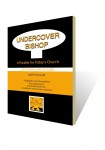
Join Bishop Ruby Kinisa as she visits small churches "under cover" to learn what people would never share if they knew they were talking to their bishop.
Undercover Bishop will always be available in PDF form on 2x2virtualchurch.com for FREE.
Print or Kindle copies are available on Amazon.com.
For bulk copies, please contact 2x2: creation@dca.net.
MISSION INSPIRATION OFFER
A visual and biblical guide to help congregations define their missions.
Contact Info
You can reach
Judy Gotwald,
the moderator of 2x2,
at
creation@dca.net
or 215 605 8774
Redeemer’s Prayer
We were all once strangers, the weakest, the outcasts, until someone came to our defense, included us, empowered us, reconciled us (1 Cor. 2; Eph. 2).
Be calm. Wait. Wait. Commit your cause to God. He will make it succeed. Look for Him a little at a time. Wait. Wait. But since this waiting seems long to the flesh and appears like death, the flesh always wavers. But keep faith. Patience will overcome wickedness.
—Martin Luther