4/7InkzHVUEQeEdU9vpc1tikzEhChrKmPfvXI-FSDBrBQ

Uncategorized

Addressing Failure in the Church

We learn from mistakes, right?

Not if we don’t admit them.

I thought about this a few days ago when I heard a pastor open his talk with “We belong to a denomination in decline.” I thought about this a few months ago when Thrivent, a fraternal financial savings arm of the Lutheran church, decided that they should reach beyond the Lutheran community to insure the foundation of their members’ savings. That’s a great spin for their aren’t enough Lutherans to keep us going!

I actually found both statements refreshing because they admit failure. That’s really hard.

Every congregation is proud — even if it might be suffering from low self-esteem. There is something in human nature that celebrates just being.

Sometimes our pride is merited. Sometimes, if we stop to analyze, we are proud of being pretty much the same as everyone else. Same play. Different actors. Different setting.

Regardless, it is great to share. The Church should do more of it. But we often start our boasting before the results are in. This is dangerous as there is also a tendency in the Church for congregations to jump on the wagon. We read of some initiative and we want to try it.

Sometimes church leaders are bragging before they learn that the initiative flopped.

I looked over some of the church “brag” sites. Our regional body has one—godisdoingsomethingnew.com.

It averages just a couple of entries a month. Most of the ideas are posted by pastors. Some of the ideas aren’t particularly new. Very few give any results.

  • How many people showed up for that first program?
  • How many people came back?
  • How remained involved after six months?
  • Were there measurable results of any kind?
  • Was it still in existence a year later?
  • Was it just something to boast about?

An example we found in our church visits was our visit to Spirit and Truth Worship Center in Yeadon, Pa. The bishop had boasted about this initiative to the point that she suggested it be a model for our church. We saw no comparison to the conditions she described that led to the regional body closing the existing church, transferring the property ownership, and reopening a few weeks later under “new” synodical administration.

The church was empty except for a praise band rehearsal on the day we visited. We double checked. We had the right time. We’ll assume there was some good reason. Our visit alone would prove nothing and can lead to really wrong ideas.

The published statistics were more revealing. The ELCA Trend reports reveal a much different picture than that presented to us by SEPA leadership. See the screen shot of the Yeadon statistics below. SEPA was using this experiement as a prototype for success before the statistics were in.

We discovered that while the early statistics for this ministry were impressive, within ten years, the numbers were in serious retreat! That part hadn’t been shared with us! As it ends up, there were good reasons beyond instinct to refuse to consider following this course.

This experiment may have been well worth the try. It may have worth boasting about. But using it as a model for other congregations has proved to be short-sighted.

Knowing what doesn’t work is just as important as what does work—and it takes years to determine the cause and longevity of success.

Periodically, 2×2 posts its statistics. Periodically we shift gears.

This summer, we are overhauling our entire website, using statistics to guide our way. In the end, we’ll share so that all small churches can learn from our experience — all of it — the good and the bad.

yeadonstat

SEPA Synod recommended Redeemer, East Falls, follow this prototype in 2006. Yeadon was a new experiment at the time. It looked promising! However, Redeemer recognized that the situation in East Falls was very different from that in Yeadon. Redeemer’s leaders rejected the idea, which upset SEPA leaders. But sometimes congregations are right. Statistics prove the prototype doesn’t work!


Do you have a plan for engaging visitors?

I was having breakfast this morning with a 2×2 reader in Michigan. She has been very active with 2×2, most recently organizing the relief effort for Pakistan—(which, by the way, will be an ongoing project).


She was looking over her email for news and commented that her church was aging and there is often news that another member died.


We had been talking earlier about “engagement.”The two thoughts started to come together. How do congregations engage with members and with prospective members? This is especially difficult for aging congregations, who have lost contact with the changing neighborhoods surrounding them.


Will changing the way we engage change the way we minister?


Our Ambassador visits to 80 congregations in the last few years were revealing. In most cases we entered the church, worshiped and left without anyone engaging us. People might have been friendly and said hello. Sometimes we were pointed to a guest book. Only once did any pastor write to us after we signed the guest book. That engagement ended with our response. We saw no intentional engagement plans as part of any evangelism effort.


It is the congregation’s job to keep the conversation going! If the ball is dropped, it is most likely our fault!


Engagement is so possible today on so many different levels. It could be transformational for any church.


In the business world, marketers use something called an Engagement Sequence. It details the exact steps they take to keep in conversation with people who show interest in their product or service. They know that it takes time to earn trust and confidence. The engagement sequence is designed to foster that relationship.


This was so much harder before the internet. But now churches can take advantage of this new capability.


The process is very intentional and can create multiple channels depending on the responses.


Prospect A shows interest in a product or service. They immediately get a first response which is followed with as many as 8 or more follow-ups spaced a few days or a week apart. Each response is triggered by the action taken by the recipient. The engagement sequence could divert an interested recipient to a different engagement track or keep them on their initial track. It all depends on the responses.


None of this is “engagement” is spam. The process is initiated and approved at every step by the recipient. If a prospect loses interest, they can opt out at any time. No harm. No foul. The art is in creating engagement that is helpful to the recipient — and isn’t that what mission is all about!


Does your church have an Engagement Sequence? Do you have a way of engaging with people who visit. What about online (which these days is the where people look when planning to visit)?


It is SO possible to engage with prospective members before they ever set food in church.

There is NO reason to wait for a second visit.


2×2 is starting to incorporate this tool as part of our summer reconstruction of our website. We’ll share what we are learning in future posts!

News from Pakistan

Pakistani Christians Take Huge Mission Step

We received thrilling news from our Christian friends in Pakistan this week.


You’ll remember that 2×2 sent a gift to the Pakistani Christians when one of their churches was bombed in September, killing hundreds and injuring more. It was our first outreach effort that we publicized on the 2×2 website. Readers in Michigan did the legwork in collecting clothes and even found a way to ship them at a reasonable cost. Others contributed money which covered the shipping and we were also able to send some cash.


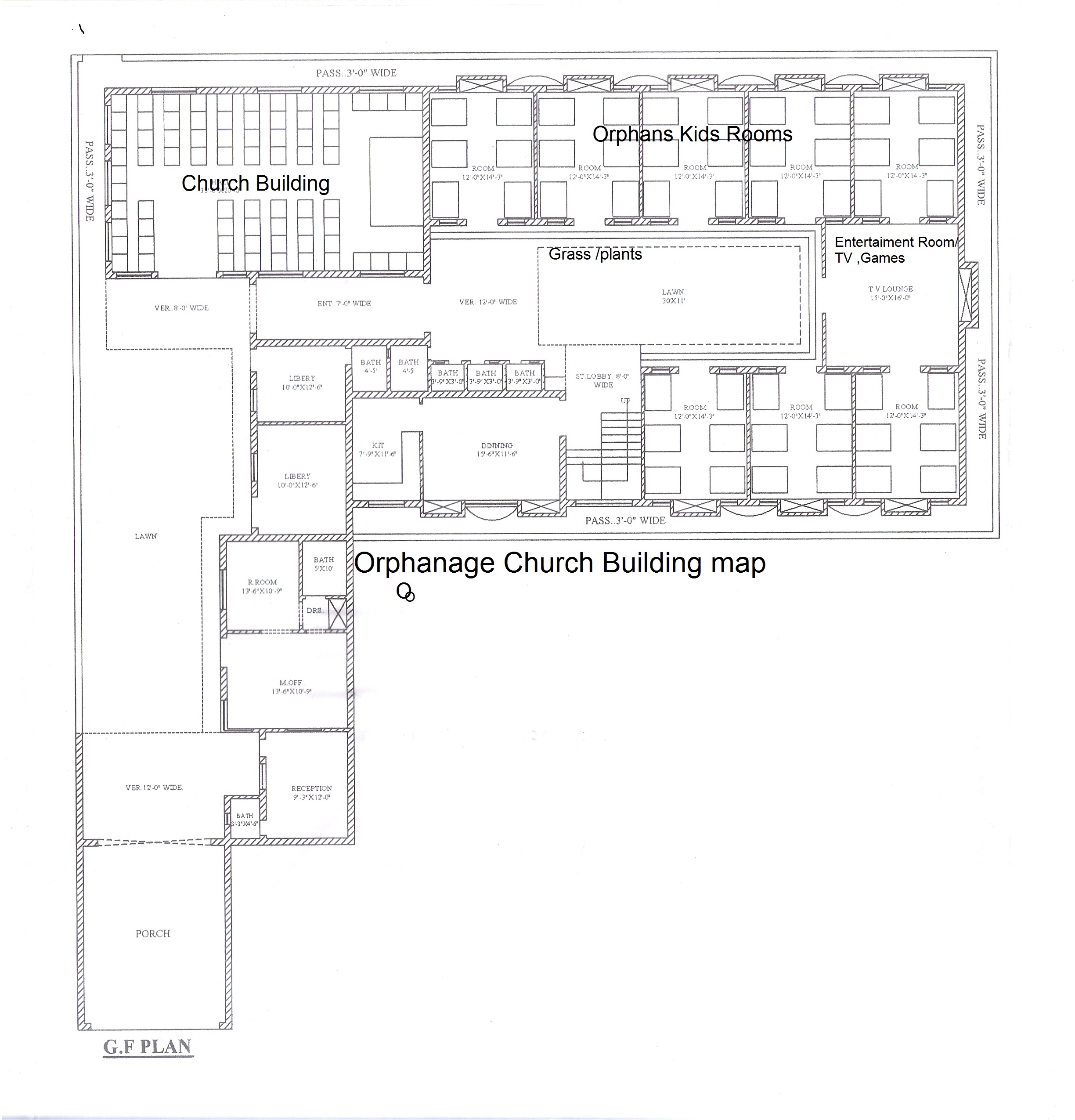
Today they sent news that they have been able to purchase land to build a home for Christian orphans—the first in Pakistan.


Their pastor reports that they received one large gift to make this possible.


This is an ambitious project in a region of the world where professing Christianity is hazardous. Their pastor regularly points out that Christians have always faced difficult challenges.


We wish we could do more and perhaps some day we will be able to!


Here are the photos. 100004085059369pizapw1402074039

Orphanage plans

The Horizontal Church: the Networked Church

shutterstock_102484949It Will Look Like A Tangled Mess
But It Will Be Hugely Effective

The Vertical Church, sometimes called organized religion, could draw a chart of its network. Some will be bold enough to start with a person. Others will recognize the true leader, Christ. In their network they are likely to have congregation members floating around a pastor and all of these floating around a regional leader of some sort and all these floating around a centralized authority of another sort. Neat. Tidy.


This had a purpose in the days when all of society was similarly structured.


This structure is increasingly being recognized as less necessary. The connections with the upper tiers of the network are no longer needed for communication, learning, budgeting, services, and maintaining doctrinal identity.


That last item is likely going to be used as the argument for continuing to rely on the Vertical Church. The authorities are the frontline guarding against the practice of cults, they will say. Actually, they aren’t. The only ammunition against cult-thinking is the nurturing of independent thought and the Vertical Church has a poor record in that regard.


The ease of communication today is in itself a protection against cult-thinking. The Vertical Church can no longer guarantee that news, information, music, publishing, leadership, or opinion-sharing will be filtered through their watchful eyes. They are as welcome as anyone to participate in online dialog but they won’t be able to stop any member, regardless of their theological pedigree, from analyzing, criticizing or initiating thought. So far church leaders are slow out of the gate when it comes to online dialog.


Our increasingly connected society will change the structure of the Church. The faithful will rally around those whose ideas resonate. Denominational lines will fall in the process.


In the Horizontal Church one member might consider himself to be a follower of a half dozen churches. One member might attend worship regularly but find the writings of an online pastor to be more inspirational. They might adopt the cause of a congregation on the other side of the globe. They might choose to divide their giving between many entities.


This is happening already. 2×2 is an example. Our subscribers are all over the world and from many denominations. We have not abandoned our Lutheran roots. But we reach beyond that.


This may be scary to denominational loyalists. But think. How do you reach all over the world if you vet every person you encounter—if all your associations are with the already like-minded?


Will there be false prophets? There always have been—even within the Vertical Church. But now they can be more easily outted.


There will be some turbulence as religious thinking shifts. There will be bruised egos and territorial disputes. This will help us to be intentional about the decisions we make as unfettered Christians in a wide world.


The Horizontal Church is really kind of exciting!

Happy Independence Day

The Horizontal Church

shutterstock_6988789How Competition Within the Church Is Self-Destructive

Vertical structure is competitive by nature. It is human nature to want to climb a ladder.


Aspiration breeds competition. Competitors are tempted to employ fear for their own advancement. We must all wear our game face all the time.


Employees weigh their financial and social security against using their freedoms. The higher you climb the more there is to lose if you express an unpopular opinion. Fear becomes a tool.


Vertical structure tempts people to think constantly of their place on the ladder. Collaboration is applauded but competition squeezes it out.

An organization established in collegiality can quickly become cut-throat. Vertical structure is self-destructive!


This applies to the vertically structured church. Congregations compete for the skills of professional leaders, laity compete for status, and clergy compete for fewer plum assignments.


The competition is all the tougher because of isolation. Most lay Christians know little of other congregations and exist in their own world—always cheerleading for their communities when there is interaction with other congregations.


Clergy exist as unchallenged leaders in these isolated communities. Woe to anyone that challenges. Clergy know very little about other congregations accept what they hear from other clergy. Often, this news is shared by disgruntled clergy. It is rarely positive.


There is also competition for dollars.


In simpler days, this worked. But vertical structure requires measurable growth for validation. The higher the position in the Vertical Church the more critical the need for visible, measurable success.


If a church is not entrepreneurially minded, there is only one source of money. The people in the pew.


Church members must fund their own congregation’s property, pastor, and other paid leaders. They must also fund the regional body and the national entity. And that’s not the end of their burden. They must fund social service agencies. This starts out with coming from the congregation’s support of the regional and national offices. But they can always use more resources and with the pooled money from many churches, they have the resources to do something about it.


The dollars that filter up to the regional bodies and their agencies and seminaries provide sufficient resources to fund professional development offices. It is their full-time job to approach the most affluent church members, encouraging them to contribute directly to them. Fund us now. Fund us in your wills.


Congregations, the foundational support of the entire church, can’t afford this expertise.


It’s a huge burden for every church of every size. The people who at one time would have naturally endowed their congregations are enticed to direct their wealth to the bigger entities who can afford to have someone keeping their cause in front of them and give them a more visible legacy in the process.


It is no wonder that congregations are struggling. And unethical leaders can use their position on the vertical church ladder to bolster their status and their pocketbooks. It happens. More and more.

In our next post, we’ll look at how the Horizontally Structured Church might change this.

Revisiting an Old Video

A Beautiful Video that Teaches the Nature of Mission

2×2 first featured this video in 2012. Although it is not about church, it aptly describes the hopes, frustrations and joys of any mission-driven church worker. Your leaders will relate!


It features Caine, a boy who has a clear sense of mission.


Caine’s mission is to help people have fun. The work is incredibly hard and promises no rewards.


His passion for his project is a God-send to his father who brings the 9-year-old to work with him during the summer. He gave the boy space, boxes, scissors, tape and freedom to use his imagination.


Caine taught himself the rest by observation.


See for yourself how Caine worked at mission with little help and what would be an overwhelming sense of futility for the less mission-driven. Note how Caine optimistically sticks to task, always working to improve what he offers — even when there are no takers.


This video is a primer for all Christians in mission. You might even share it with prospective members but start by sharing it with your leaders. Look for analogies and inspiration. Add their stories of mission to Caine’s.


My favorite scene is when the cash register drawer opens and hits the boy in the face. Now that describes church work!


In your congregational studies of mission, you might team this video with our ebook and slideshow, Mission Inspiration.

Caine’s Arcade from Nirvan Mullick on Vimeo.


Introducing the Horizontal Church

The church can only grow horizontallyThe First in A Series of Posts
that Explore How Congregations
Must Change to Meet the Modern World

The Church is frustrated. We know something isn’t working like it used to. We don’t quite know what is wrong.

We have many reactions to our weaknesses and failures.


Most of them are not constructive but protective. Dead end.


While 2×2 reconstructs our site for better delivery of hands-on resources, we’ll explore some of these topics.


We hope they spark some discussion in congregations.


Horizontal Thinking vs Vertical Thinking

The church is structured vertically. We can’t help ourselves. Our roots are in ancient thinking which is tribal and monarchical.


Tribal leaders—Abraham, Moses, Jacob. etc.


Under the tribe comes the family clans. Think the 12 tribes of Jacob—all named after men.


We then enter the monarchical stage of thinking. King Saul, King David, Christ the King.


It was natural to continue that thinking as Christianity spread. We still live in a vertical world. It’s tilting, for sure. But there are still despots and kings and queens and plenty of people who wouldn’t mind playing that role, whether or not they are good at it. They are slowly losing power, but there is still something in our society that remembers them fondly. Even American children who know only the Disneyworld Castle play dress-up with crowns and tiaras.


Democratic republics are still a relatively new concept—we are proud of them, but we struggle. There is always a temptation to return to bigger government.


For the last 30 years change has accelerated. Younger generations will embrace this. In another 50 years people will not understand that it wasn’t always this way.


The horizontal church will embrace lateral thinking.


Power will shift from traditional authorities, wielding power over the needy masses, to the masses no longer needing the powerful’s help in achieving their goals. The powerful may not take to this well!


In the Church, that means the congregations will have less need for central authority and members will be active in congregations only to the extent that their dedication to membership complements their ideals—some of which will not be shaped by religion.


There will no longer be loyalty to group as a continuation of heritage or validation.


This may sound scary. But it shouldn’t.


Christianity laid the groundwork for this a long time ago. Christ empowered individuals. As he roamed about Palestine, Christ didn’t pay a call on the kings. At his “trial” he stood before them as a stranger.


In this series of posts, we will explore step by step, as we, along with thousands of other small congregations, find our way into the future.

PBS Features Philadelphia Churches in Danger of Closing

The Loss of A Church Is A Loss to the Neighborhood

PBS’s Religion and Ethics ran a 10-minute report on the future of many city churches. It focuses on our home town—Philadelphia. It addresses a phenomenon that is playing out across the country.


One of the people interviewed is Bob Jaeger of Partners for Sacred Places. They help churches preserve their sacred space.


He says:  

I think it is fair to say that this is a national crisis. It really is a national crisis.

This short video barely begins to cover the topic of church closings.

“In Philadelphia alone, with an estimated eight hundred houses of worship, Jaeger estimates between one to two hundred churches are at risk of closing.”

The video attributes closings to shrinking congregations and shrinking budgets.


The root cause of church closings is much bigger than that. Whole denominations are in difficult financial straits.


Churches that could survive with creative leadership are dying because creative leadership is rare. The focus is on staying afloat—paying salaries, utilities, insurance, and here’s the big one—law suit settlements. Those law suits, often dealing with clergy misconduct, are not paid by the offending clergy but by fewer and fewer people in the pew. The law requires payment, but the law cannot force congregational giving—the only source of income for many denominations. Property—especially property with endowments attached—is the most liquid asset available.


The dire state of regional bodies skews their thinking and mission. Organizations established to assist ministry now seek to force church closures to assure their own survival. Ecclesiastic cannibalism.


We at Redeemer in the East Falls neighborhood of Philadelphia are very aware of the danger many congregations face. We have survived the most aggressive forced closure imaginable. We were obviously viable, so the strategy was to isolate the congregation, refuse to approve professional leadership—and when that didn’t work—attack the laity as a group and—just to make sure—attack the most trusted congregational lay leaders as individuals.


Bite the hand that feeds you.


Other churches may not realize that by standing quietly on the sidelines while this played out, they were selling out their own future. There but by the grace of God . . . .


The slightest weakness may attract the attention of a regional body. It will include plenty of pious pronouncements. “This is stewardship—preserving assets for mission.”

So don’t get into a conflict—no matter how justified it might be. Don’t start an initiative that may seem bold (cost money). Don’t borrow money to renovate your property before things get really bad. Don’t ask for denominational help. Just keep on doing what isn’t working as long as the money holds out.


Stay off the denominational radar!


The case of the Southeastern Pennsylvania Synod vs Redeemer, weakens the rights of congregations. These vary in different denominations. The courts are not likely to know the distinctions—or care. The courts ruled that they have no jurisdiction to enforce church constitutions. Unless a denomination enforces its own rules, it’s the Wild West of Religion. No sheriff in sight.


Our experience is that our denomination is unable to enforce its own rules. Two thirds of the people with a vote are unfamiliar with church law and the other third may not only be unfamiliar with church law but also owe their career trajectory to their relationship with the hierarchy.


Strong lay leadership, theoretically equal to clergy in Lutheran tradition, is feared or seen as somehow threatening. Silly.


Consequently, a provision of the Bill of Rights, (separation of church and state), meant to protect the practice of religion, can and is used by church leaders to sidestep their own rules to gain the property and assets of small congregations to benefit ministry in neighborhoods that are more demographically friendly—or more likely— to plug their own deficit budgets.


The churches of the suburbs are coming back to the city for what they left behind in the decades of white flight—property and endowments.


Jaeger notes:

“Unless they [congregations] do something creative and bold many of them will close or merge in the next ten, twenty years.”


“Creative and bold” do not come easily to church leadership. Mergers rarely work. Members of the church that is shuttered become unchurched. Their contributions of time talent and money are lost.


Denominational leadership is stumped. They don’t know how to minister in the urban neighborhoods that are increasingly mixed racially, ethnically, and economically. They want to become inclusive, but their entire structure is geared to “come and be like us” —no matter how many “Welcome” signs are posted.


Frequently, people making decisions about neighborhood ministries know nothing about the neighborhoods. They are following leaders without question.


They might learn from Jaeger’s advice:

“You may love the architecture. You may love the fact that it houses a concert or recital every month. You may love the fact that kids in your community go to day care. You may love the fact that homeless are sheltered there in the wintertime. You may not be a member but you can say this is a place that matters.”—Jaeger


Or if you prefer to quote scripture.

Be bold. Be strong.
For the Lord God is with you.


Big Changes Coming on 2×2

underconstructionOur subscribers may have noticed fewer 2×2 posts in the last couple of weeks.

Well, we are a small church and we are undertaking big changes. For the next TEN weeks we will be revising our site to make 2×2 resources easily available to more small church ministries. And so we expect content to suffer for a few weeks—all in the interest of great improvements.

We’ve invested in learning the latest techniques for using the web. If you are into technology you know that it is constantly changing. That’s one of the reasons churches have a hard time keeping up.

2×2 has more than 1000 posts sitting on our site in blog form. They consist of

  • several series on implementing social media
  • several series on branding, marketing and evangelism
  • weekly object lessons for adults
  • weekly slideshows for use in worship
  • religious art history
  • easy but interesting worship ideas for small churches with little professional leadership
  • commentary on state of the church from the lay point of view


We’ll categorize the material and revise the navigation for ease of use.

We will also implement the latest social media strategies and share the process and results so that any church can learn to use the internet to spread The Word.

So, here’s our thank you to faithful readers and our request for patience.

We’re excited!

We look forward to getting back to mission of sharing content to inspire the ministries of the smallest churches.

Worship locally. Serve globally.