Redeemer will gather this evening to celebrate Thanksgiving.
We often celebrated together as many of our members were immigrants new to the holiday and others lived alone.
We have no church in which to gather to worship and celebrate, but we will gather around the bread and wine—and the turkey.
We are thankful for our community and the unique ministry that our circumstances nurtured.
We are thankful that none of our members lost their homes as was a very real possibility during the legal battles this year.
We are thankful that our neighborhood continues to recognize our community despite every attempt to eliminate our heritage for synodical gain.
We are thankful for the support of our friends (none of them ELCA) who stood with us in court and bore some of the financial burden even though they had no horse in the race. There are some incredible stories we will share someday. They are recorded for now in our hearts.
We are thankful for the blessings of our spiritual community that our members continue to foster, each in his or her own way. Some members share devotional booklets. Some care for the infirm. Some lead Bible studies. Some maintain a presence within the ELCA, however unwelcome. Some build bridges in the community. Some raise funds. Some facilitate charitable work. Some preach and teach. Each supports the others.
We are thankful for the life of one of our most stalwart members whose faithful support and quiet encouragement is sorely missed this Thanksgiving as she has joined the saints in heaven.
We are thankful to a God who has given us these blessings. We pray that the message of love he sent to us through his Son is never neglected and that one day His Church will practice inclusion, diversity, forgiveness, reconciliation and peace—not just preach it.
This is part 2 of yesterday’s post about Malcolm Gladwell’s new book, David and Goliath: Underdogs, Misfits and the Art of Battling Giants.
Yesterday, we pointed to Gladwell’s observation that true innovation comes from the Davids who fight established practices and wisdom. We promised examples from our experience today.
The post by Sarai Rice answers a frequently asked question. What are the emerging trends in the church?
Here are her answers with our corroborating experience.
1. A congregation’s identity does not equal its building.
Lutherans teach “the church is not a building.” This is not the only thing we teach that we do not believe!
Buildings are tools for ministry. Their financial demands can also impede ministry.
Our denomination desperately uses property as a weapon. Give to the regional body the way we expect you to give, or we will take your building off your hands.
This is in total violation of Lutheran polity. However, it is hoped that congregations will lack the will to fight.
People don’t go to church to fight, however righteous. Most Davids flee at the sign of trouble.
Our property was modest but had appreciated in an upscale Philadelphia neighborhood. That should be good news for the congregation. We had equity.
We planned a renovation project that would put our educational building to work in mission and which would provide a healthy income to support ministry.
But our equity was coveted by our denomination — not to benefit the neighborhood that provided it but to benefit SEPA Synod and its recurring budget shortfalls — (still a problem by the way).
Without our property, Redeemer was expected to disappear. Easy pickings.
Taking our building was supposed to be the nail in our coffin.
But Redeemer turned to home churches and after a year reached an agreement with a neighborhood ally for rent-free space. This had the benefit of strengthening our neighborhood ties.
We took our ministry online and learned a great deal about a medium that all churches should use, but almost none are. While our own doors are locked to us, doors opened all over the world.
With our experience in this new realm of ministry we would be in very good shape to conduct our own ministry in our own building for the benefit of the whole denomination.
But Goliath knows best.
We would add a Part B to this point.
A congregation’s identity does not equal its pastor.
This is somewhat covered in Rice’s next point.
2. Pastor does not equal a full-time position.
SEPA Synod seemed to be unable to work with our congregation without a pastor of their choosing in control. This too goes against Lutheran polity. The congregation is supposed to be part of the call process, but small churches are often given few or poor choices.
This expectation drains ministry. Valuable resources are spent on professional help who have little invested in the actual work.
Redeemer was told in 2000 that we had to accept the pastor SEPA wanted us to call or there would be no pastor for a very long time. The pastor they were recommending was upfront. He wanted to provide minimal service—just ten hours per week, just enough to keep his ordination status and benefits active. He would be happy. SEPA would be happy. Under the rules of a regularized call, Redeemer would be endlessly obligated with no promise of benefit.
Wisely, Redeemer turned down this ultimatum. But SEPA required THREE divisive votes before they stepped away from their demand. SEPA walked away. We were supposed to wither on the vine. Bishop Almquist even said, “In ten years, you will die a natural death.”
We found qualified pastors on our own and managed to grow.
In 2007, we presented a resolution to call one of them. We had worked well together for seven months. He had overseen the acceptance of 49 new members. Bishop Claire Burkat did not respond to our resolution. She met privately with the pastor and he never set foot in our church again.
3. Resourcing happens via drop-down menus rather than denominational staff.
The internet is a treasure that can be used by anyone. “Even small congregations in remote communities know how to use search engines for everything from conflict management to curriculum choices,” Rice writes.
In other words, congregations don’t need to allocate great resources for help from the regional body. Regional bodies can and should downsize. This goes against our bigger is better thinking.
4. Group participation does not equal my congregation’s group.
Church members are loyal but not exclusive. Shunned by our own denomination Redeemer formed relations around the world. The amazing thing is that they have become intertwined. Denomination is never discussed.
Pakistan, Kenya, Sweden, Nigeria, Michigan, Pennsylvania and Boston have worked together in amazing ministry because they met us via our website. (None, except perhaps Redeemer, is ELCA!).
5. Worship does not equal Sunday morning.
Redeemer often meets on Sunday morning, but we also find reason to meet during the week.
6. Small groups and faith formation does not equal Sunday School in church buildings.
Redeemer follows the “meetup” concept. We have no place of our own but meet in homes, restaurants, trips, and theaters—even occasional bars.
7. Active membership does not equal weekly attendance.
Redeemer members stay in touch. We don’t have a church in which to take attendance, but we know that we have nearly 1000 people who read our website every week and participate in our various outreach endeavors. Our reach is broader than any other church in SEPA Synod that has a building.
We would add an eighth point to Sarai Rice’s observations.
8. Income does not equal offering plate.
Redeemer found ourselves suddenly with no church in which to worship and no offering plate to pass. Without a building or a pastor, we had little need to take offerings. But there were these pesky lawsuits (funded against us with our own money!). SEPA also threatened our members’ personal property. Money remained an issue. This is leading us down a new road to self-sufficiency. There is great promise in funding Lutheran ministry in East Falls with a combination of our school and a mission outreach with entrepreneurial potential. We’ve laid good groundwork!
Should SEPA ever rightfully return East Falls property to East Falls Lutherans, they would soon have a viable flagship church where they have created strife.
First, here is a video made by the Episcopal Church about the situation in Pakistan.
Second, know that 2×2 has already sent some monetary relief. 2×2 readers in Michigan have responded to our request for help. Boxes of winter clothing and blankets are shipping.
The bombing of a church filled with 250 worshipers left more than 80 dead and 150 wounded. A second bombing, a week later, killed another 40 and added to the injured list. This has created warlike conditions for the Christian community, leaving many orphans and seriously injured.
2×2 has corresponded with the Pakistani church for nearly two years. Our friendship has provided a conduit for helping.
There has been little mention in the Church of this horrific event. It has the makings of a new Holocaust, especially if the western Church does not respond.
Imagine it happening here.
Failure to respond now, makes it likely . . . someday.
This is one of the many situations where offering to pray just isn’t enough.
If you’d like to help but don’t know how, please contact us. We can put you in touch with Pakistani church leaders.
Today’s object is a song that most people in your congregation will know if they grew up or reared children anywhere between 1960 and the 1997. That should cover most of your congregation!
It is a song designed to be annoying and therefore it is great fun for children. It was featured on popular children’s shows. Ask your adults to remember the thrill of annoying their parents.
You see, This Is the Song that Never Ends. It just goes on and on my friends. Some people started singing it not knowing what it was. And they’ll continue singing it forever just because. This is the Song that Never Ends . . . .
Which brings us to Christ the King Sunday.
This Sunday is the last Sunday of the Church year. It brings us as God’s people to a predictable end.
Jesus suffers and dies. Jesus the King of the Jews.
But is this really the end?
Let’s look at each of today’s lessons.
We start with Jeremiah’s admonition to religious leaders who create separation among the people who live under their authority. (Hmm!)
We move on to the poignant cry for help in Psalm 46 that ends with the quiet reassurance. “Be still and know that I am God.”
The letter to the Colossians promises strength at the same time that it warns of suffering.
And then we read the wrenching story of Jesus on the cross. His parting words are words of acceptance and love for those who are dying with him—and for those who are killing them.
Jesus leaves none of them without hope. God will be there for them. Promise.
Each passage is a story of strength found in starting over, trying again, figuring out where we went wrong, returning to the source of all our strength, and the assurance that God will be there to guide us.
It’s the end of the Church Year.
But come back next week. We’ll start all over again.
Assure your congregation that one of God’s promises is redemption. That means there is always a second chance—a chance to make things right with God and with one another.
Have fun with your congregation. Sing The Song that Never Ends. If you can manage, segue into a hymn that reinforces the theme of today’s message: We will find strength in God’s acceptance and redeeming love over and over again.
Just As I Am, Without One Plea would work.
Just as I am, without one plea,
but that thy blood was shed for me,
and that thou bidst me come to thee,
O Lamb of God, I come, I come.
Just as I am, and waiting not
to rid my soul of one dark blot,
to thee whose blood can cleanse each spot,
O Lamb of God, I come, I come.
Just as I am, though tossed about
with many a conflict, many a doubt,
fightings and fears within, without,
O Lamb of God, I come, I come.
Just as I am, poor, wretched, blind;
sight, riches, healing of the mind,
yea, all I need in thee to find,
O Lamb of God, I come, I come.
Just as I am, thou wilt receive,
wilt welcome, pardon, cleanse, relieve;
because thy promise I believe,
O Lamb of God, I come, I come.
Just as I am, thy love unknown
hath broken every barrier down;
now, to be thine, yea thine alone,
O Lamb of God, I come, I come.
In the bulb there is a flower; in the seed, an apple tree;
In cocoons, a hidden promise: butterflies will soon be free!
In the cold and snow of winter there’s a spring that waits to be,
Unrevealed until its season, something God alone can see.
There’s a song in every silence, seeking word and melody;
There’s a dawn in every darkness, bringing hope to you and me.
From the past will come the future; what it holds, a mystery,
Unrevealed until its season, something God alone can see.
In our end is our beginning; in our time, infinity;
In our doubt there is believing; in our life, eternity,
In our death, a resurrection; at the last, a victory,
Unrevealed until its season, something God alone can see.
In Search of a Better Vacuum Cleaner In Search of a Better Church
Gotta love those vacuum cleaner commercials.
The spokesmen are usually just that—men. I can’t speak for the whole world, but in my little corner, it’s the woman who mans the vacuum.
This woman has a long, mostly “hate affair” with vacuum cleaners. I wanted one desperately when I was five years old. It seemed to be my calling.
I got a pretty pink one for Christmas. My toy vacuum cleaner actually worked just like those silent ones used in restaurants. But as I came of age, I came to realize that real vacuum cleaners are fraught with design flaws—maybe because they are designed by men. The fancier they got, the more problems.
One brand makes sure you know that their namesake patented the technology. He’ll benefit from every sale for a few decades. His vacuums cost twice what other vacuums cost.
Designer engineers may test the suction technology, but do they use their vacuums every day? Do they know that the power of the suction isn’t everything? Do they lug them up and down stairs? Do they spend most of their vacuuming time knocking into furniture and wrestling with the power cord?
Come to think, what happened to the power cord?
Have you noticed the vacuum cleaners being pushed around by men in those TV commercials don’t have any power cords? Look! They swivel. They roll. What fun! They have no power cords. I want one of those!
Power cords create half the work.
Cords too long get in the way and get sucked into the machine. They wrap themselves around table legs and threaten to topple floor lamps. You try to get the cord off the floor and swing it across your shoulder. Now it is knocking things off tables.
Cords too short and they are a pain. Just when you think you’re nearly done, the power cord reaches its limit. You must stop and search for a new power source.
Canister vacuums are hard to find these days. Never a good idea. Push with one hand. Pull with the other. The original “pushmepullyou.”
I’m waiting for the day when a vacuum cleaner is designed by the people who actually use them. When that day comes, they will be wireless (just like power tools sold to men). They will not require the user to take them apart and clean the filters after each use. Whose idea is that, anyway? They will be low to the ground for reaching the dustiest place in the house. Do you guys know where that is? (Under the beds.) They will have settings that don’t require you to hoist the cleaner to the kitchen counter to read them. The hose will not fall out every three minutes. The attachments will be easy to use and won’t store where they add to the weight of using the cleaner.
And what does this have to do with church?
Church is an attractive concept that has gone awry in the hands of those with “patent” interests. Some day the church will be designed by the people who actually worship and volunteer their services. We’ll stop pretending power cords don’t exist in the perfect world we imagine. And then those power cords will be replaced with internal power sources that actually accomplish something!
On one hand, you can’t blame them. Blogging has only been popular for a short decade. Pastors aren’t trained that way and neither are most teachers of pastors.
On the other hand, blogging embraces new tools that could revive an ancient and failing medium. It deserves attention.
Sermons have a built-in schedule. The deadline is Sunday. Some pastors plan ahead. Others ponder until Saturday night. This weekly discipline belongs to a bygone era. Fewer people attend church. Many aren’t listening. They are taking time from modern lives in which many communicators are vying for their attention. Consequently, the once-a-week sermon is failing to communicate.
Nevertheless, it eats up a healthy chunk of every congregation’s budget.
Why aren’t more preachers excited by the new possibilities to reach the world with the Good News?
Great preachers of the past would have jumped at using technology!
Consider Martin Luther. He wrote prolifically. He was effective because his writing coincided with the invention of the printing press.
The discipline of daily writing combined with today’s marvelous ability to reach individuals, if practiced religiously, could reach vast new audiences.
It is likely to breathe new life into old scripture.
Blogging makes you think.
Thinking leads to questions and the pursuit of answers.
Writers tend to be careful with their words.
Blogging every day makes you think of things from different viewpoints.
Some of those viewpoints will consider the lives of the people you hope to reach.
This will happen because preachers will run out of material if they don’t think outside their sanctuary.
I’ve been writing here for nearly three years. It was a challenge at first. I didn’t start blogging daily until I’d posted once or twice a week for four or five months.
When I started posting daily, things started happening. The audience started to grow and so did my discipline. Blogging on behalf of my church became the cornerstone of Redeemer’s new ministry. We are still stretching and experimenting and we are doing it with NO budget.
Blogging differs from preaching in one big way. It is two-way. People can engage. They can contribute. They share links. Sometimes they comment online. More often they call or email. Dialogue is good!
But dialogue in the church tends to be one-sided.
The ability to reach people who can respond makes you think about how the words you say or write will resonate with readers. Blogging preachers will start looking for new ways to communicate.
Example from 2×2’s experience:
The highest traffic post on 2×2 is an old post about mission statements. It never fails to have a few reads every day! This is a “hot” topic.
Last week, 2×2 re-purposed this post with a Powerpoint presentation to provide a tool for churches discussing mission statements. It was posted late last week and has been downloaded 100 times so far and has been embedded in 59 other websites! That’s hardly viral. But consider the size of Redeemer and our mission. Our blog reaches more people each week than attend the services of any other church in SEPA Synod.
Blogging is a powerful tool for preachers who care about the impact of their words.
So why are church websites so dry? Why do preachers do little more than post their Sunday sermons (if that)? Do they follow the traffic statistics to see if this is effective or do they just keep doing it?
Few people go to the internet to read 20-minute sermons.
They DO go to the internet for inspiration, however.
Most attend the internet every day—not just on Sunday.
When they are inspired, it is so easy for them to hit a button and share with dozens more.
The ELCA has a unique structure. The foundation (with Christ as cornerstone) is the local congregation. The local congregation is somewhat autonomous as long as it remains faithful to doctrine.
Then there is the regional body. It exists to serve the local congregations.
Lutheran structure is not supposed to be hierarchical. That’s one reason (up until the ELCA) Lutheran leaders were called presidents and not bishops — and clergy are addressed as Pastor (shepherd) more often than Reverend and never as Father.
The entire structure is funded by congregations.
Bottom up — not top down!
Bottom to top funding has created a dependence manifested in a sense of entitlement. The synods and national church want their allowance—even though no congregation is required to support them! This is reinforced by popular awareness of more hierarchical structures of the Roman Catholic and Episcopal Churches.
Maintaining the strength of congregations was once so important that synods were constitutionally forbidden to own property. Their role was to facilitate and serve, not to accumulate wealth and influence or to manage neighborhood ministry. These were temptations that early church leaders wisely guarded against.
The model constitution presented to ELCA congregations in 1987 and 1988 preserved this relationship. Individual congregational property could not be touched by regional offices or national offices without the consent of the congregation. Bylaws have tweaked away at this, but it is preserved in the founding Articles of Incorporation, which no one bothers to read, but which are legally the dominant documents.
The road to self-destruction
Constitutional changes made for convenience have put us on a road to self-destruction. The hierarchy, meant to serve, is using pooled resources for its own benefit above that of the congregations.
The regional and national church and their agencies have used offerings sent from the local churches to hire professional development staff. Most church agencies have someone paid to ask for money. They wine and dine wealthier Lutherans with promises to maximize their estate gifts for the betterment of mission. The reward: publicity and recognition. Perhaps a room in a seminary will bear their names for a few hundred years.
So much more enticing than a pew or window!
The national expression looks for estate gifts. So does the regional church. So do the seminaries, camps and social service agencies. With our pooled offerings, they can afford the websites, printed resources and personnel to pull this off.
Few congregations can compete individually with the offices they jointly fund.
Congregations can no longer expect estate giving.
It doesn’t help when regional synods exercise their own form of eminent domain and seize congregational assets when money runs low. They bet that local members don’t have the resources or the will to fight them and their pooled resources. They also correctly assume that a sufficient number of Lutherans are unaware of the polity of their faith. Any congregation that protests goes up against a national and regional legal team—funded by the offerings of the congregations but acting almost exclusively on behalf of the national and regional expressions. Volunteers vs professionals paid with the offerings of the volunteers!
In other words, they can get away with it.
Secular courts want no part of sorting this out.
Consequently, congregations are not likely to get estate gifts from members when donors can’t be sure their gifts are going where they wish. The weekly offering plate suffers. This hurts the whole church. Lutheran structure relies on the strength of local congregations.
All those gifts raised by professional fund-raisers won’t be worth much at the current rate of congregational failure. This is starting to become evident. Seminaries are struggling to find students. Career pastors are becoming rare as second-career and part-timers grow in numbers. Lutheran social service agencies abandon their mission message to court government funding. Everyone wants a piece of a smaller pie!
Redeemer received an estate gift of more than $300,000 in 1988 just as the ELCA was forming. It had benefited from many membership estate gifts over the years but this major gift gave us new security and mission promise. Unfortunately, it was eyed by other Lutherans from the get-go—first by a Lutheran retirement home. Paul’s Run claimed our member’s money even though our member never moved in. Ten years later Bishop Almquist took $90,000 from our bank account without our knowledge or consent. Redeemer had to defend its rights repeatedly—which was never fair.
This strained relationship gave Bishop Burkat the notion that she should try again. She couldn’t move fast enough. SEPA was within $75,000 of depleting every available resource. Little Redeemer had more money than SEPA.
Redeemer’s experience is mirrored in other synods with mixed results.
One congregation attempted to talk with their synod. They were told that the synod could not engage in conversation when there was a possibility that things might end up in court.
So much for mutual discernment!
Every hierarchical win is a Lutheran loss. The structure that is supposed to be our strength has everyone looking out for themselves.
Take a look at your congregational memorial giving. How has it changed in the last 25 years of ELCA governance? What can you do about it?
Redeemer is working at creating a ministry platform that will rely on mission success and not on offerings.
Today’s object is a Chia pet—you know the Christmas commercials for the terracotta figures that when watered quickly sprout chia plants. They come in several models — everything from puppies that look like sheep to Ninja Turtles, Mickey Mouse and even President Obama. They are inexpensive novelty gifts.
Chia is an interesting plant. It is native to Mexico and grown commercially throughout South America. It is rich in good things like protein, fiber, calcium, phosphorus, and manganese and low in bad things like fat and sodium. It may help control hunger and blood pressure.
But none of this has anything to do with why we hear the commercials at Christmas time and buy the planters for fun gifts.
It’s all about watching plants suddenly growing and blossoming from seemingly nowhere. Frequently all the good that can come from chia seeds is lost on us.
Make this point and then reread today’s Old Testament lesson.
The wilderness and the dry land shall be glad, the desert shall rejoice and blossom; like the crocus it shall blossom abundantly, and rejoice with joy and singing. The glory of Lebanon shall be given to it, the majesty of Carmel and Sharon. They shall see the glory of the LORD, the majesty of our God. Strengthen the weak hands, and make firm the feeble knees.
Chia plants are not such a far-fetched Advent gift after all!
2×2’s most popular post is a list of Bible verses to help churches drafting mission statements. This post is now available in the form of a Powerpoint presentation for use with congregational groups.
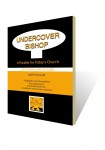
Join Bishop Ruby Kinisa as she visits small churches "under cover" to learn what people would never share if they knew they were talking to their bishop.
Undercover Bishop will always be available in PDF form on 2x2virtualchurch.com for FREE.
Print or Kindle copies are available on Amazon.com.
For bulk copies, please contact 2x2: creation@dca.net.
MISSION INSPIRATION OFFER
A visual and biblical guide to help congregations define their missions.
Contact Info
You can reach
Judy Gotwald,
the moderator of 2x2,
at
creation@dca.net
or 215 605 8774
Redeemer’s Prayer
We were all once strangers, the weakest, the outcasts, until someone came to our defense, included us, empowered us, reconciled us (1 Cor. 2; Eph. 2).
Be calm. Wait. Wait. Commit your cause to God. He will make it succeed. Look for Him a little at a time. Wait. Wait. But since this waiting seems long to the flesh and appears like death, the flesh always wavers. But keep faith. Patience will overcome wickedness.
—Martin Luther