4/7InkzHVUEQeEdU9vpc1tikzEhChrKmPfvXI-FSDBrBQ

Uncategorized

Social Media Will Guide the Church of the Future

2x2CategoryBarSMSocial Media Is a Game Changer for Churches
…and that’s a good thing.

It’s not easy to understand the Social Media Revolution. Everyone is trying to figure out how it applies to them.

Let’s look first at the business world — something everyone interacts with.

Every business covering every life need from cradle to grave is exploring social media. One of the leading speakers on the topics gained his expertise promoting his swimming pool business.

Most businesses know they must have an interactive online presence if they want to stand out.

Most churches are making no effort whatsoever to enter the lives of the people who populate the modern world.

Let’s look at what businesses are learning and apply it to church mission.

At first businesses tried to lure customers by “hanging out” like buddies.

The hoped for benefit was to create loyalty, buzz and awareness of their expertise which would translate to success and dollars.

The reality is that no one is really going to spend a ton of time hanging out with every business they interact with.

If they visit a social media site they probably fit into certain categories.

Churches, look closely at this list and consider how each might apply to church life. It will help you develop a content strategy (mission strategy).

People who engage in Social Media are seekers. They find your website for a personal reason:

  • They have a specific question. Something made them think you might have the answer.
  • They are curious. Some experience sparked their interest and they want to know more.
  • They have a problem that needs to be solved.
  • They have a passionate cause and are looking for like-minded people.
  • They have had an experience with your product or service (good or bad) and feel a need to share with others.
  • Something is missing in their lives. They may not know what it is.
  • They stumbled upon your site serendipitously and an interest was sparked.
  • They found something entertaining.

If  you want readers to make visiting your site a habit you must engage them by meeting one of these needs, especially if you want to engage readers to a point that they take  action. That’s what evangelism is all about.

Yes, it is likely to cost some money to find the talent to devote to this. Done correctly it is guaranteed they will work as hard as any pastor, organist or sexton. Online communicators are pivotal to the emerging church.

Relating Social Media to Ministry 

Let’s explore each item on the above list.

  • They have a specific question—something made them think you might have the answer.

Seekers have questions. If your church regularly provides answers, your site will attract an audience. You could create a one-time Frequently Asked Questions page and let it sit there OR you could regularly engage your audience in finding answers themselves (the better educational technique).

  • They are curious. Some experience sparked their interest and they want to know more.

You can provide a service to readers by building links to information in your field. Often this translates into providing a link to the regional body or national church entity. That’s probably not what curious web surfers are looking for.

2×2 regularly provides a collection of art that might supplement a congregation’s understanding of scripture. We provide links to sites that will help them learn more about religious art. This feature is starting to draw some traffic from search engines.

  • They have a problem that needs to be solved.

Churches serve individuals. Individuals come with needs and problems. How can your website address this need? It may be a daily spiritual reading. It may be a directory of your members with their skills and experts attached (your own little LinkedIn). Your congregation will become known as more than Sunday morning church-goers. They will be recognized for their skills, talents and willingness to become involved in their communities.

Churches serve communities. Communities have problems. Identify your community’s challenges and address them regularly. Members of your community with an interest in the same problems will find your site.

2×2 found that people are looking for object lessons. We were familiar with a site that catalogs object lessons for children. We found our own niche: object lessons for adult learners. About 600 people per week find our site when they are searching for object lessons for either adults or kids. We fill a need and are opening a relatively unexplored teaching tool for whole congregations. We target the adults but keep the whole congregation in mind with our tips. 

Another church found that families with an autistic member felt shut out by society, including the church. They developed a church curriculum to embrace this need.

  • They have a passionate cause and are looking for like-minded people.

2×2 has a passion for small church (neighborhood) ministry which is being gulped up by corporate church economics. We write about this topic regularly.

  • They have had an experience with your product or service (good or bad) and feel a need to share with others.

Churches love to talk about the good. No problem understanding this need. But dealing with the bad (they like to call it “baggage”) is not their strength. The Church tends to pigeonhole all but the most exuberant emotions.

The standard solution for disgruntled Christians is facilitate their becoming unchurched. The Church is happy that way. They’ve avoided unpleasantness  by sacrificing their mission. Forgiveness, reconciliation, etc. are easier to talk about than to engage in.

The Church that is emerging in the Social Media Revolution will have to start handling the whole person. They will no longer be able to avoid the baggage or assign it to short-term scapegoats to deal with. The disgruntled now have a place to go.

Business is learning that it is a big mistake to not work with their critics. Will the Church learn from their experience?

  • Something is missing in their lives. They may not know what it is.

People love to share when they are happy and when they are angry. Webmasters love happy people. We figure out how to handle angry people. But there are a lot of lost emotions. People are less willing to share when they are sad and lonely and hurting. But this is when they need other people (the Church) the most.

Here’s an emotional niche the church must fill. Online is a good place to start.

  • They stumbled upon your site serendipitously and an interest was sparked.

People talk. Talk leads to questions. Answers to questions these days are frequently found by googling. If you can anticipate questions and provide the answers, curious people will find you.

People looking to expand their experience or interest will find you if you let them know that you have people who share the same interests. Churches already do this when seeking musical talent. What if they put the same interest into finding and nurturing other talents.

Example 1: One church our Ambassadors visited had a passion for serving people dealing with cancer. They developed resources for patients and caregivers and families affected by this decease. They haven’t done this, but if they put those resources online, people would begin to view them as partners on a difficult journey.

Example 2: Another church realized that economic development was important in their community. They offered classes and even small loans to help small businesses. They built a relationship with a nearby business school. The networking could help the church grow—if they are online.

In these examples someone googling “cancer” might find your site. Likewise, someone googling “business education” might find your site.

As Google localizes their algorithms, this will become even more valuable for churches! Local needs will be easier to identify and fill. You will come up online as the answer—if you addressed the need.

Get started! Start answering the first concerns on the list and watch people find your site serendipitously.

  • They want to be entertained.

Everyone likes to have fun. Everyone appreciates beauty. Address these basic human qualities online. Post cartoons. Take a poll. Share a video. Ask questions. Engage!

Social Media Is A Game Changer

The Church often views Social Media Ministry as something to be added to what they already do. In fact, the use of Social Media will change everything about how we “do” church as we move into the digital future. There will be less guessing about how to reach people. You will know your community better and you will be prepared to serve your community better.

Social Media will guide your ministry. But only if you are online!


Ambassadors Visit Spirit and Truth, Yeadon

Spirit and Truth Lutheran ChurchA New Experience for the Ambassadors

Today, was our 73rd visit to a congregation of the Southeastern Pennsylvania Synod (SEPA) of the Evangelical Lutheran Church in America (ELCA).

Redeemer’s Ambassadors never know what to expect when we set out on our Sunday morning adventures.

We visited Worship in Spirit and Truth Lutheran Church or Worship Center (we’ve seen it listed both ways) in Yeadon (just outside of West Philadelphia). We found the doors were open, but the sanctuary was empty.

We had checked the web site before setting out. The service was listed for 10 am. We had run into a detour and were afraid that we were a little late. In fact, we were only two minutes late.

We could hear a praise band practicing and one of our ambassadors caught a glimpse of three musicians, but otherwise there was not a soul in sight.

We looked around the narthex for a few minutes. The sign on the narthex wall said WORSHIP 10 am. The Ambassadors took a quick vote and decided not to hang around waiting for the unknown. We were concerned that another ambassador was planning to come independently, but since he is never late, we soon set out. This morning would be a Fellowship Sunday.

On our way to the parking lot, we passed the pastor and his wife (at least they seemed to match photos from the web site). They were just arriving. We said hello. But there was no turning the Ambassadors around at this point. It was clear that worship was not going to begin anywhere near on time, and we are a restless bunch.

Last week, when we visited Redemption in NE Philadelphia, there had been an announced change in worship time that wasn’t on the web. We waited an hour for the service to begin, but we waited with other people. The pastor talked with us for a while and explained why there was a mix-up. This morning we had no idea what was going on.

We retired to our favorite local diner and discussed the gospel lesson of the lost sheep.

We were disappointed.

Spirit and Truth’s ministry interested us because their story was told to us when SEPA was trying to find a less messy way to acquire our property five or six years ago. We wanted to see their ministry for ourselves.

This is what we did in Yeadon, they said. The existing church (Trinity) had only a few old ladies left as members, they explained. The old ladies voted to close. We had a grand closing service to provide them closure. Then we reopened the church under a new name a few weeks later with new management—synod. They called the church a mission development church. Rev. Patricia Davenport (who was part of the Redeemer fiasco) canvassed the neighborhood for four or five years. SEPA rechartered the church in 2005 with 179 charter members. But the new charter would forever list the church as a church with mission roots (which we are guessing Trinity didn’t have). This is a bigger deal than it may seem. Read on.

For this strategy to work, it was explained, all memory and ties to the past must be severed. They make it sound likes this is to aid mission. It’s not. It’s about legally acquiring certain congregational property rights.

Spirit and Truth’s web site history begins: In 2000, the Trinity Lutheran Church of Yeadon, PA closed. That’s all folks. Trinity is history. Spirit and Truth rose from its ashes. The saints of Trinity would soon be forgotten.

This was the new flagship strategy of Bishop Burkat when she took office in 2006. Redeemer was to be the first of six churches to benefit from her innovative leadership—or so their lawyer stated in court.

This is why Spirit and Truth is sometimes called a Church and sometimes called a Worship Center.. Worship Centers are synod-controlled. Churches have rights. Unfortunately, those rights have been watered down (with muddy water) in recent years.

SEPA presented their sanitized intentions to the courts in 2009. They left out the part where they tipped their hand by trying to sell our property behind our backs in 2008.

Their plan included a stipulation that was not acceptable to Redeemer. None of the existing members could play a leadership role in the Church of the New Name. We could do no more than attend. We found no constitutional basis for disempowering local leadership and no reason to go this route as we had plenty of existing and developing lay leadership. The proposal was, in our view, a way of gaining control of our property by getting influential church members out of the way and scaring marginal members and pastors into submission.

There are three problems with this strategy.

Problem 1

There is no evidence that the strategy works. While Spirit and Truth grew for a few years under Rev. Patricia Davenport’s leadership, it has been in significant decline since she left in November 2007. Within three years of her departure their average attendance was less than half what it was in 2008 (and statistics were not reported in two of those years). Their statistics had dropped below their charter membership just a few years before. It was during these years that the great Yeadon experiment was starting to fail that Pastor Davenport and Bishop Burkat were trying to take Redeemer down the same road.

If leadership is dependent on clergy, then consistent leadership seems to be pivotal to success. There are no guarantees in today’s church that mission-capable pastors are going to be available long-term. Therefore, relying on clergy to be the sole provider of mission leadership is foolish.

Spirit and Truth’s ELCA Trend Report has current membership at 136 with average attendance of 35, but if you add up the itemized membership column, the membership comes out to only 70—about 12% smaller than Redeemer. Redeemer’s cash and property assets were more than four times theirs. Yet they got to vote on our property. We didn’t.

Thirteen years have passed since SEPA tested this new strategy.

Looks like Redeemer was smart to be wary.

Problem 2

Redeemer was not anything like Trinity in Yeadon, the predecessor of Spirit and Truth. Their members agreed to the arrangement. We were given no choice.

Our membership was statistically young. Only three or four of our 82 members were over 70 (just over). While Bishop Almquist waited six years (2000-2006) for our older members to die, we had actually become a young church. In 2007 the new members led a membership drive which resulted in 49 new members. Most of our newer members were young families and with a good percentage of young unmarried people and young couples from a wide variety of backgrounds joining. We were growing quickly. No reason to act like we were failing when we weren’t.

We didn’t need a new entity with a new name and Synod-approved leaders. Synod did.

Problem 3

Many churches don’t realize this:

If you allow your congregation to be listed as a mission development church, you lose important constitutional rights.

  • The Synod gains rights to the property and disbursement of assets if you vote to close.
  • The congregation loses the right to withdraw from the Synod to join another Lutheran body with their property. EVER—even 100 years from now.

The Synod wants churches to have mission status—even for a short length of time—to constitutionally secure the property for their future enrichment.

This strategy puts the control of assets in their hands. It also puts success or failure in their hands—since they now control all aspects of ministry. That’s why SEPA needs knowledgeable lay people out of the way. That’s why Trinity, Yeadon, was encouraged to close and deed the property to Synod before new outreach began. SEPA needs old churches to close to gain rights to property. It has nothing to do with mission effectiveness being hindered by previous ministry or history. It’s about creating new entities to secure property ownership under mission status. All those new church members in Yeadon may not know that they no longer have the rights the old members in Yeadon had.

Very sneaky, indeed.

We can only wonder why the current residents of Yeadon are considered less able to run their own church than the previous demographic of Yeadon. Redeemer was dealing with a new demographic too. Our members, mostly from well-educated professionals from East Africa, were viewed as unable to manage their own affairs without synod’s help.

And all of this is why SEPA’s dealings with Redeemer have been secretive, underhanded, vindictive beyond reason and litigious. They don’t want people to really know what’s behind their “mission” strategies.

Redeemer has members well-versed in the church constitutions. We knew it was not in our ministry’s interest to give up our rights as Lutherans. SEPA was the only beneficiary of the plan.

SEPA would have to find another way to take possession of our property—and they did. But it has been an ugly unChristlike LOSE-LOSE situation. It is an embarrassment to our denomination.

The Ambassadors didn’t attend a worship service today. We don’t know what went awry.

One thing we know:

Redeemer leaders were always ready for worship at the appointed time.

We had visitors almost every week.

First impressions count.

Adult Object Lesson: Luke 15 (The “Lost” Parables)

puzzle

The Joy of Discovery

Today’s object is a picture puzzle. You might use one of the large floor puzzles designed for kids to aid in visibility. They can build the puzzle in the center aisle where some people might be able to help in the exercise.

It will be a simple project. There aren’t too many pieces. Ask a couple of people to work together to build the puzzle as you talk about today’s parables. You could draw your children into the lesson by asking them to build the puzzle, if you like.

It is interesting that we call the stories “lost” stories. How would it change our understanding if we start to refer to the stories as The Found Sheep, The Found Coin, and the Found Son? That proposition can be what you discuss as your volunteers put the puzzle together.

Of course, the puzzle is rigged. One piece will be missing. Perhaps you have it. Perhaps someone discovers it somewhere in the church. You can find a way to dramatize the joy when the puzzle is complete.

The joy of being made whole as members of God’s family is the point!

photo credit: Filip Federowicz (filu) via photopin cc

Ambassadors Visit Redemption, NE Philadelphia

RedemptionRedemption is Small But Big in Mission

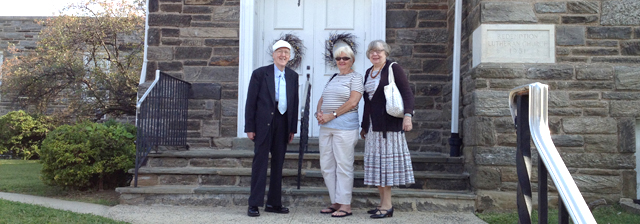
Four Redeemer Ambassadors visited this neighborhood congregation on Bustleton Ave. in NE Philadelphia. This was our 72nd visit to our sister SEPA congregations.

The congregation is in what the Southeastern Pennsylvania Synod calls “transition.” Their pastor of 17 years recently retired and they will be seeking a new pastor. SEPA requires congregations to go through a transition process before the search for a new pastor begins.

This congregation will not have one synod-assigned leader during this time. They will have two. Rev. Christian McMullen will lead the transition process. He explained that he will be visiting with the congregation at least once a month. The bridge pastor will be Rev. Ghislaine Cotnoir.

Two interims for a big job?

Probably not such a big job. The Ambassadors have never encountered a friendlier congregation or a more self-confident congregation. We were approached personally by at least a third of the 50-60 people present for worship. Each seemed to be comfortable as a member and church leader. During the service, when Pastor McMullen asked questions, many shouted out answers. There seems to be adequate lay leadership ready and willing to do the work of the church.

redemptionpaintingThey confidently refer to their lay leaders by title. One man introduced himself as Deacon John. Their newsletter identified several others by the title deacon. This is a common custom in nonLutheran denominations but rarely used in the ELCA.

They already seem to have a bead on who they are and what their ministry is all about. They are active participants, along with a Presbyterian congregation (who use the term deacon), in an after-school program called Turning Points. Youth (grades 6-12) can come to do homework or take classes in the arts or take part in social activities. They also have a pre-school.

Our pastor had supplied their pulpit twice in the last month and he told us he was impressed with their prayer ministry. He described it as specific, intentional and intensive. (We come from a strong prayer tradition, too.)

There were a couple of children and a few youth present for worship. All seemed comfortable with one another and with us as visitors.

Pastor McMullen changed the day’s scriptures from “take up your cross” to “I am the vine and you are branches.” He concentrated on the pruning metaphor. Seems to be popular as it was preached at the Churchwide Assembly in August, too. The church needs a little less sharpening of the pruning shears and a little more fertilizer!

He is not the first pastor we have heard talk about the transition process. Alarming congregations about “vulnerability” during transition seems to be part of the spiel. I lost track of the number of times the word was used in worship at their neighboring church, St. John’s. But the region has lost two churches in recent years, Calvary and Holy Spirit, so they are probably well aware of vulnerability.

He talked about his own experience in a synod that did not have interim pastors and the difficulty of dealing with “baggage.”

One of our Ambassadors was a career pastor. He was called to a small-town parish that was divided bitterly over a relocation question. He did not follow any interim. He walked into the fray. He spent the first few months visiting with every family in the church, making sure every voice was heard. He helped them build the new church and went on to serve about 30 years. No one did this for him. He earned the respect of the neighborhood by doing it himself. Good pastoral skills make dealing with baggage a lot easier. Today that parish, a small neighborhood church in 1965, is one of the largest and most influential churches in their region, supporting at least two pastors. No interim hand-holding. Just solid, unselfish, love-directed ministry.

We found Pastor McMullen’s explanation of the five-step transition process to be interesting. There was no such process between Redeemer and SEPA. No exploration of our past. No discussion of vision. No attempt at reconnecting with the greater church. SEPA used force and trickery from the get-go in achieving their goal in East Falls. The goal was to acquire our property and endowment funds. Getting rid of the owners was the tactic.

I had to laugh when Pastor McMullen advised the congregation to be honest with the synod. He said he had heard horror stories about the transition process when the congregations were not honest with the synod. I pointed out to him after worship that SEPA was anything but honest with us and that false impressions run rampant when pastors speak only to other pastors about the congregations they serve. There are always two sides. We have horror stories in abundance! (Not just our own.)

Pastor McMullen also talked about the importance of reconciliation. This is a concept no one in SEPA Synod seems to care about in their treatment of our congregation. They just want us gone!

I pointed him to our Ambassadors story in parable form. Undercover Bishop describes the transition process from the lay point of view.

But Pastor McMullen promises to be encouraging and supportive of the people of Redemption. We wish them all the best. We visited Immanuel, Norwood, just a few weeks ago, where he had served his first interim ministry about six years ago. They seem to be doing fine.

Redemption lacks a web site, which seems to be a frustration for some. We offered to help.

Today was the ELCA’s Day of Service to celebrate 25 years as the ELCA. We did not stay for their social and service project. They were doing some clean-up and some delivering of fliers in the neighborhood.

We enjoyed our visit with Redemption. Good work!

If Religious Education Was In Crisis Would Anyone Notice?

Are Seminaries In Touch with Today’s Church?

I read a blog post today about the alarming state of education in the field of marketing. Keep in mind that marketing and evangelism are very much alike.

It seems that the field of marketing is changing so fast that academia has not kept up. Tenured professors are teaching marketing the way it was ten and twenty years ago to students who no longer live in that world. Scratch that. They NEVER lived in that world.

Businesses are interviewing the top students and finding them wholly unprepared for real business challenges.

How did this happen?

The world of marketing began to change at a very fast pace within the last 15 years—too fast for the accrediting process to keep up.

It is quite possible that the Church faces the same problem. But it may take even longer to identify and fix it.

The Church is, after all, 2000 years old. We know what we are doing. Thank you very much.

But perhaps we face the same problems.

Keeping in Touch with the Neighborhood Church

Seminary faculties may be filled with professors who haven’t served a congregation during the most recent decades of change. The Church is ill-prepared to cope with the technological and economic challenges. They spend lots of time and resources analyzing but they use old measures. The outcomes predictably favor managerial thinking and not creative thinking.

Consequently, we may be teaching evangelism and pastoral methods that will not reach today’s communities, today’s Christians, or today’s unchurched.

If a congregation can’t find a pastor with the skills they need, what’s the usual advice? Change or close. There are few leadership candidates prepared to lead change. They, like most students, get where they are by complying with the institutions in which they are enrolled.

The type of change administrators are looking for may be impossible given the state of leadership. Managing churches (an expensive undertaking) usually means closing churches.

The people who are in closest touch with the changes in neighborhood churches are the people who serve on church councils and know what skills their churches need and how hard they are to find. They face modern challenges alone. Inadequate leadership drains resources and morale.

Lay leaders are not paid so their only horse in the race is their faith and passion. If they don’t accept the leadership presented to them by their regional body, they may be labeled as “difficult” or “resistant.” Neither are bad words but that is how they are perceived. More positive words might be “persevering,” “resourceful,” or “faithful.” They may simply be insisting on leadership skills that they need—but don’t exist.

Lay leaders struggle to keep up economically. The offering plate is the only recommended solution—and lots of people these days want a piece of that pie (including seminaries and regional bodies). Many lay leaders have developed  skills that those teaching in seminaries may not know exist.

The Marketing Answer

The marketing blogger applauded one university program that opened their marketing classes to business people. They make it easy for seasoned business people to return to school. They schedule classes so that business people can attend. They create a forum with young students and professionals that is resulting in what he claimed was the only program he could recommend as truly preparing students for the real world of marketing. He actually invited his readers to enroll in some classes at a discount!

Hmm!

What if seminaries made an effort to put students side by side with the lay leaders of the churches they will one day be serving.

This would differ from the usual field experience, which is under the tutelage of clergy.

Finding a more direct way to connect lay people with tomorrow’s leaders might help pastoral candidates learn before they have relationships to protect.

They might begin to see that many parishes are not dying from the most frequently cited reason—demographics. We just haven’t found ways to deal with changing demographics. (Isn’t this our mission?)

Congregations might, in reality, be dying from leadership that is not prepared for the work that needs to be done.

What If?

Putting seminarians and lay people together in this way is not a big “what if?” It wouldn’t be that hard to try.

  • Evening or weekend forums could have seminary students sitting next to lay church leaders and discussing the issues of local churches.
  • You want the congregational leaders from the trenches—not the accredited lay leaders who routinely serve on church boards and are part of the approved way of doing things.
  • You want small churches to be well represented. Most churches are small.
  • Some of the forums might actually be held in the small churches!

This dialog would occur on neutral ground. No one would be protecting sacred turf or answering to hierarchical authority. There would be no paycheck or career trajectory to consider.  Students and lay leaders would be discussing the real problems of today’s congregations.

And they might—together—find some solutions.

We might grow some new leadership all around—both clergy and lay!

What the Church needs (and needs desperately) is some new thinking. New thinking comes from new understanding.

Worth a try?

The Beleaguered Life of the Laity

It isn’t easy being a lay person in the church.

Sometimes we come to the church by birth and tradition. Sometimes we buy into the message having had little church background. Ultimately, it’s a life we choose. It doesn’t matter how we got here. Neither door warns us of what is in store. 

  • We will be relied upon to do much of the work with little recognition and no compensation.
  • We are expected to adapt to every changing leader, shelving our lay talents if necessary.
  • All our work and passion can be dashed at any moment by political forces in the church that consider neither the contributions of nor the consequences to the laity.
  • Our beliefs, fostered by passion, can be sorely tested.
  • At worst, we risk family, friends, social standing, profession and earthly possessions—while clergy carefully watch their compensation plans.

It’s exactly the life Jesus foretells in next Sunday’s scripture (Luke 14:25-33), but it isn’t what today’s church is selling.

There are few enough people in church today. Best to preach the happy life. Church membership is a rabbit’s foot.

In our Ambassadors 71 visits, we have spoken with countless lay people. They often share the same aura—a sense of  futility. They are stuck believing in a message that their leaders don’t really believe anymore. They continue to work and sacrifice and see little benefit to the communities they love. They are taken for granted. They face a very real and ugly possibility. Church leaders may be waiting for them to fail.

In one of our recent Ambassador visits, I spoke with a woman who admitted she was one of the old guard. She was genuinely happy to see some new life in their church but seemed resigned in her new role as bystander. She was clearly worn down. There was a sense that the new people, welcome as they were, mattered. She and her friends were has-beens.

As we left, I told her that we had visited dozens of churches and her church was as good as any of them. I was surprised at the look of gratitude that swept across her face. A cloud lifted—the cloud of living under a judging eye. She suddenly seemed happy and enthusiastic.

A little validation goes a long way.

Why don’t we work a bit harder at pumping up the real rank and file—not just the ones who gain status by attending church-wide functions but the ones who stay home and teach the Sunday School and sing in the choir and sweep the floors and fold the bulletins—the ones who live with the problems church leadership would sweep away.

The annual rallying cries at Synod Assemblies fail to recognize the basic problems most congregations are facing.

  • There are very few people in church under 40. Therefore, probably half our congregations will be facing serious problems of survival within 20 years.
  • The modern cost of living has outpaced many churches’ sources of income.
  • Most congregations can afford ministry but they cannot afford benevolence.
  • There is no infrastructure to welcome the diversity we seek.
  • The pool of pastors who are willing to commit to neighborhood ministry is very shallow.
  • Church life is slow to embrace or connect with the fast-changing world that lay people face every day.

The Church’s survival depends upon the lay people.

Jesus’ message—it was for us!

Adult Object Lesson: Luke 14: 25-33

blindfoldJesus Advises His Followers
It’s Going to Be Tough Going

If anyone thinks for a moment that following a Christian life is a recipe for happiness, think again.

Jesus is clear that He asks a great deal of those who follow Him. It’s not going to be easy.

This passage contains some harsh words. Jesus actually talks about hating your family!

This week’s object is a blindfold. (This week’s lesson could work with older children, too.)

Arrange in advance to have a volunteer from your congregation who is articulate. Have him or her wear a blindfold and try to follow you as you move around the chancel or part of the church—following nothing but your voice.

Ask him or her how it feels. Give them time to consider their experience. The answers might not come right away.

Perhaps they longed to grab hold of a family member or friend. Perhaps they longed to just sit down and find something they could do that might be easier. Perhaps they were tempted to peek. Perhaps they will describe how all their attention—every faculty—was focused on just one thing—following you.

That’s the kind of devotion Jesus expects of his followers. He wants no distractions—not family, not work, not studies or hobbies. None of the usual excuses. He wants us to be ready with every molecule of our existence to follow.

Pick up that cross.

photo credit: stars alive via photopin cc

Adult Object Lesson: Luke 14:1,7-14, Hebrews 13:1-8,15-16

candy dishThe Importance of Hospitality

Today’s object is a bowl of candy—mixed hard candies would be good.

Early in the service, (not close to communion), invite your congregation to come forward and choose a piece of candy. Engage them in conversation as they do. Comment on their choices or perhaps their reluctance to choose. Suggest what you might like. Respond when they say thank you. Someone might ask for two. Allow them. Share a story about the candy. Make sure everyone is satisfied.

You can just ask everyone to file forward or you can be creative and ask certain people to choose first. Just make whatever you do complement your message.

Use the experience to talk about hospitality.

Hospitality is the common theme of today’s lessons. In the Gospel, Jesus refers to the accepted protocol of honoring guests. Hebrews commends the practice of hospitality. Proverbs teaches the recipients of hospitality a lesson in grace.

As your congregation returns to their seats to enjoy their treat, talk to them about hospitality in today’s world and in ancient Israel.

Life was a bit different then. Travel could be dangerous and unpredictable. A crippled beast of burden, lack of water, an unexpected illness or accident, sudden changes in the weather—all could be life-threatening. Hospitality was expected.

But there is another reason for hospitality. It was entertaining. There were no newspapers, radios, or TVs. People worked at home and traveled rarely. The sight of a stranger on the horizon meant an evening of good conversation, news from far away. Perhaps they would be carrying exotic things.

There was something in it for everyone.

Ask your congregation what hospitality means to them today and how they might feel if a stranger knocked on their door expecting a meal and lodging.

Meals are a common setting in scripture, culminating in the ritual that commemorates the Last Supper and Jesus’ sacrifice.

Talk about what Jesus and the disciples learned around the dinner or banquet table, preaching on the hills of Galilee, and after the Resurrection—when Jesus shares a meal in Emmaus and cooks fish on the shore as he waits for the disciples to anchor their fishing boat. Remind them of meals with tax collectors, the wedding feast in Cana, the visits with his friends in Bethany, and the hospitality he enjoyed on occasion with richer friends.

Talk about your own meal experiences. The family dinner (or the parish dinner) is where we learn to work together. The home table is where we learn manners and to carry a conversation. We learn how to treat guests. The church can be a place to learn these things, too.

There is a scene in the classic movie, To Kill a Mockingbird, where the Finch Family sits down to eat together. A young friend of Scout’s, a boy from less fortunate circumstances, is invited to join them. The boy is overwhelmed by the feast put before him. Scout responds in critical amazement as he pours a pitcher of syrup over his food. She is stopped by her father and the housekeeper and deeply embarrassed.

A similar scene might be repeated in our families as our children learn how to treat guests.

  • How do we treat the strangers in our midst? Are they made truly welcome? Truly valued? Truly equal at the table? At the Eucharist?
  • Do we engage them in conversation, eager for news from other places? Do we make our church homes places they will feel comfortable returning to?
  • Do we seek only members who can contribute or who are like us? Do we welcome those who cannot contribute in the ways we expect?
  • What might we learn from our visitors?

Hospitality must be modeled. You just did this with you candy exercise!

In practicing hospitality we are modeling godly behavior. Are we doing a good job?

photo credit: Bill on Capitol Hill via photopin cc

The Lord’s Prayer in Song

No Wonder It’s an East Falls Tradition!

We’re sharing a link today.

The version of the Lord’s Prayer that is often sung today was written too late (1935) to receive a stamp of approval by many in the church. It became popular. Popular is somehow seen as ungodly—a dangerous place to lead the common parishioner.

Yet, the Lord’s Prayer in music never fails to stir the heart and take the words so easily repeated by mindless memory to new heights.

Here is a link that explores the Lord’s Prayer in music that we hope you will enjoy.

  • There is a traditional singing of the Malotte version by British artist, Charlotte Church.
  • A second offering explores the Lord’s Prayer musically, in different languages, and visually.
  • A third was published in the United Kingdom at the time of the Millennium. It topped the British charts, although some stations refused to air it—too religious and Christmas was over! It uses the tune of Old Lang Syne.
  • My favorite appeals to my love of guitar music. It’s the fourth video on this site by Doyle Dykes. Again, it’s the Malotte version. Love those harmonics near the end!

And guess what! Albert Hay Malotte, the composer, was a member of St. James the Less Episcopal Church in EAST FALLS!

They were treated badly by their diocese, too! The riches of East Falls are coveted by many!

Transforming Trends in the Church-5

longtailTREND 5
The Long Tail

Huh? What’s the Long Tail?

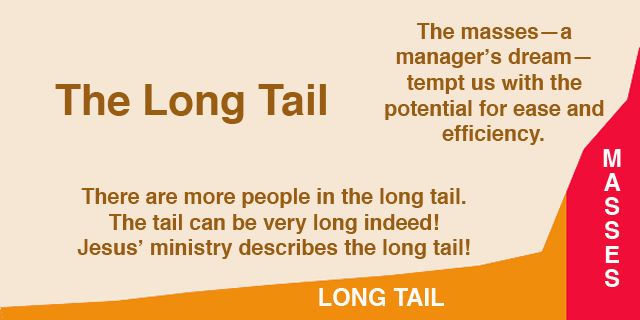
This is a term familiar to marketers. It refers to niche marketing. Major retailers are generally interested in selling lots of just a few products. The emphasis is on creating products that will appeal to everyone.

This traditional business model is why it was hard to get a book published. Publishers wanted to make sure it was worth printing 100,000 copies minimally. If your interest was canoeing in Nepal or the life-cycle of spiders, you were out of luck!

The internet has made it possible for products that appeal to smaller audiences to be profitable, too. In fact, there is great potential in recognizing the people who go against the mainstream. It is a numbers game. There are an awful lot of people in the world!

The result in the publishing world, with which I am most familiar, has been an exciting explosion of new titles.

What does this mean for Church?

Actually, the Church is the original long-tail marketer. They’ve just forgotten it! Click to Tweet.

Jesus’ approach to ministry describes the long tail. Seek and serve the marginal members of society—everyone from the rich man and educated Nicodemus—to the dead, infirm, and dying—to the women and children with no status—to the foreigners.

As the Church grew, every neighborhood was a “niche.” But today, the Church is abandoning its strength, hoping for economic strength in size.

This may be a long-term disaster.

Large churches are not filling the gap of the abandoned small faith communities. A few are growing slowly but most are in decline. People like to worship with people they know. Being part of a crowd may be fiscally desirable, but faith doesn’t work that way. Most churches will continue with memberships hovering between 100 and 300 ( a third of them active) until the Church abandons them. That’s the way it’s always been and it follows the findings of sociology that it’s the way it will always be.

We already know the small church works well—perhaps even best. The challenge to the Church is to keep small churches viable and in keeping with their expectations. This requires entrepreneurial thinking which is not prevalent in the Church.

Churches like to do things the same way (while preaching transformation). They have an expensive infrastructure that resists change and requires size.

The concept can even be seen in their approach to mission.

Redeemer’s membership was always an immigrant population. Early members were western European. The immigrants of recent years represented five continents. Many from East Africa found their way to our door. We welcomed them and they were part of a truly transforming ministry.

The Synod, on the other hand, had a different vision for us. The older immigrants and their descendants had to die. (They waited eight years for this to happen at one point in our history—2000-2008). But new members came along. Their plan was not working.

Their pronouncement: White Redeemer must be allowed to die. Black Redeemer . . . we can put them anywhere.

Actually, SEPA had a vision for a Pan-African church. Something big. Something to boast about. Something that could exist without bothering white Lutherans.

africa-truesizeA Pan-African Church! When you realize the size of Africa, the concept is ridiculous. Africa is a BIG place, with varied customs and cultures. Our African members were amused at the idea. “They don’t speak our language in Zimbabwe!”

This is nothing new. Chestnut Hill, Mt. Airy, Germantown, Roxborough, Manayunk and East Falls look so close on the map. The managerial temptation is to try to unite them for efficiency and cost-savings. Four church closings in this area have not bolstered the memberships of the other churches. (Advent in Mt. Airy, Grace and Epiphany in Roxborough and the seizing of land in East Falls). (Shh! The doors may be locked, but we are still open!)

Urban people know their neighborhoods are distinct. So, too, are their ministries.

With size and managerial motives (among others, we suspect), SEPA Synod orchestrated the closing of our growing viable community congregation. Their plan (never discussed with our leaders) was to set our white members free to fend for ourselves (excommunicate us) and assign our black members to another site. Result: 82 Lutherans locked out. A squandering of new blood!)

Unfortunately, when you close churches in the neighborhoods where immigrants live, you take the resources that would serve them. Everyone in the neighborhood loses and the takers of the property get only a short-term advantage as they quickly spend the assets the communities developed over a century.

The future of the Church may be in rediscovering its past. The trick will be finding a way to make Long Tail Evangelism fiscally viable. The more active and inviting the ministry, the more realistic this will be.

Redeemer was well on our way to implementing a plan which would be supporting the congregation today with ample dollars to spare.  We saw ourselves serving several niches and felt uniquely qualified for this type of ministry.

If the Church is to be successful in recognizing the benefits of Long Tail Evangelism, they must help congregations explore the use of their assets for ministry, not seize them for their own financial fix.

The result is long-term loss to faith, community and potential.

Perhaps it is time we return to Jesus’ approach. Love that long tail.