The Church tends to think of itself within narrow economic confines.
Church professionals will busy themselves with all things mission-related.
Laity will generously give money to them…and work hard, too!
The model is failing.
Small churches face the most pressing problems. We suspect that they hold some answers for changing things but are rarely given the opportunity to explore solutions. It is too tempting to just close them and rake in their assets.
Large church numbers are down too. Status quo must be the mission goal, because that is about the best you can find when reviewing parish reports—even in big flagship churches! A church boasting of 7000 members is likely to see only 10% at worship.
The temptation is to keep this age-old economic model going as long as possible.
Beg for money from people—be they dead or alive.
Build endowments that must be protected as a legacy for the hierarchy and not spent (or as synod’s tend to say, squandered) by the congregations that provide it.
As the smallest churches begin to fail, modify denominational polity to ensure congregational assets are churned into the greater church, whether or not the donors of the wealth agree.
Call the acquired assets The Mission Fund. Use it to help the hierarchy survive.
This is the current state of the Southeastern Pennsylvania Synod (SEPA)of the Evangelical Lutheran Church in America (ELCA). They are camouflaging a crisis. The only remedies we see being presented as we travel from church to church is more of the same. Commitment Sundays. Stewardship Sundays. It’s surprising how many of these we have encountered in our random visits. Lots of talk about finding the money to keep doing things the same way.
Churches continue to struggle.
And yet we keep trying to do things the same way—making the same mistakes over and over.
Reality must be faced. Money for mission and growth is not going to come from the offering plate. There are simply too many worthy causes demanding members’ expendable income and some of them have the force of law behind them.
If congregations are to survive they must start thinking entrepreneurially. The resources at hand must be viewed as money-producing assets for the benefit of the congregations — not the synods! Mission must be the priority. Existing assets must be used accordingly—to ensure that the activities of the Church help fund the mission of the Church.
This may sound like new territory. It is not. Monks have long-supported their mission and lifestyle with entrepreneurial enterprises.
If we are going to grow in mission in new ways, we must be willing to make new mistakes. Risk is necessary when the dependable model is failing. Otherwise we are fending off failure.
Why is progress so difficult?
The steps that need to be taken are unlikely as long as we rely on leadership from hierarchy that depends on churches failing for their survival.
The Ambassadors were out in unusual force yesterday visiting Trinity, Lansdale, one of the largest congregations in the Southeastern Pennsylvania Synod (SEPA) of the Evangelical Lutheran Church in America (ELCA). It was our 54th visit to a SEPA congregation.
It’s been a rough few days for Redeemer. Yesterday, Saturday, January 5, was particularly difficult.
At least a quarter of the people gathered in the large sanctuary on this cold Saturday afternoon claim Lutheran roots firmly planted in Redeemer, East Falls.
Tragically, the infant we gathered to remember and lay to rest was one of our family. Families at Redeemer have always been intricately interconnected. Remarkably, this has remained true even as we grow to become more diverse. One Redeemer member cannot itch without another scratching.
Indeed, we have a goodly heritage.
Part of the beautiful service was thanksgiving for baptism.
Our Jude was baptized as he was coming into the world. His chances for survival were known to be slim. When his parents learned early on that he was not likely to survive birth, they named him. His name breathed life into him. Jude Michael Boeh belonged.
I am privileged to know the family of both sides of one set of Jude’s grandparents. Many of the names bandied about in the narthex as the family gathered came alive again. Remember Clarence and George, Vicki, Tom, Emma and Jacob?
I wasn’t born into Redeemer, but I remember them well. It was good to hear their names again and to pass their stories on to the younger members of the family. Some belonged to Redeemer and some to the Presbyterian church across the street. But that was a formality. Redeemer members worshiped at Redeemer in the morning and attended services with their Presbyterian neighbors afterwards. Dual citizenship.
Jude’s mother, born Elizabeth Leach, gave a moving tribute to his short life and its powerful force.
Jude was named for the patron saint of lost causes. His life was a tribute to the value of any life-affirming cause, even one that appears to be facing hopeless odds.
We are so proud of his family, especially his mother whom we watched grow up at many Redeemer services and events.
Redeemer, East Falls, and Trinity, Lansdale, are worlds apart. Trinity’s narthex is about the size of Redeemer’s sanctuary. But it doesn’t matter how large a sanctuary is. A lot of good can come out of both large and small churches. As the history we read on the walls of Trinity attest, churches start small. Some grow in size. Some grow in spirit. All have worth.
As I participated in the memorial service for my step great-grandson, I thought of my late husband.
Jude’s great-grandfather, Andrew Leach, was the first baby baptized in Redeemer in 1909. Jude’s grandfather and many of his aunts and uncles of varying generations were also baptized at Redeemer.
He would have been proud of the courage his grandchildren displayed in their compassionate, faithful, heart-wrenching choices. Their willingness to share their heartbreak is a gift.
Jude’s great-grandfather was the heart and soul of Redeemer, devout in practical ways. He managed the church finances and was responsible for protecting and growing the endowment that tempted SEPA from the day of his death. He was universally respected in the church and community and set the tone of what could be called Redeemer’s personality.
He not only managed the church as a business but he had a superb voice, a legacy passed on to many family members. He was never so proud that he wouldn’t clean the sidewalks and scrub floors. His interest in the community made Redeemer the common meeting place for many community groups. When it came to Redeemer, there was no nonsense.
His great granddaughter, Hazel, (Jude’s older sister) was born shortly after Andy’s death. Hazel, at 14, shared with poise a heartfelt testimony of how her journey with her sister, mom, stepdad and baby Jude had awakened her faith. She reminded me of her great-grandmother.
Gertrude Trommer Leach was a member of the Sunday School class I taught at Redeemer. She worked hard with the ladies group, sang in the choir and played the piano. She was a deeply spiritual child of God, a true matriarchal cornerstone. Easy-going and loving, when she occasionally stood her ground, she was a force to be reckoned with.
Andrew’s youngest son, Nathaniel, is still a member of Redeemer. He was seated next to me in the sanctuary, singing with his father’s voice as we remembered Jude. I was reminded of his biblical namesake. Nathaniel in the Bible asks rather flippantly upon learning of Jesus of Nazareth, “Can any good come out of Nazareth?”
Is there any good to be found in trying circumstances, in facing difficult odds?
People of faith must answer yes.
Sometimes you have to dig through a lot of grime. Sometimes you have to wipe away the tears. Sometimes you have to struggle to get up in the morning. Often we have to withstand hurtful gossip and defend against questionable, self-serving advice. But there is value wherever there is life.
Jesus loves us. The Bible tells us so.
The service was beautiful, but as Sunday quickly rolled around, it would have been a comfort to many of the mourners to sit in the pews so familiar to our family, to kneel at the altar where our families knelt together for generations, to pass the font where five generations have been baptized, to shed a tear in our own sacred space—now desecrated with fighting that should have been resolved with love within the Christian family long ago, and to embrace other members of Redeemer who live in fear beyond their control. It would be a comfort to have some sense that in the community of God we have worth beyond the value of our assets.
Redeemer members continue to meet, worship and serve—and grow.
Faith gives us no choice. Affirming life is a part of our legacy.
Jude. The patron saint of lost causes.
Is there really such a thing for people of faith? Sometimes we just don’t know what the real cause is!
The name Jude, by the way, means PRAISE! That’s how I will remember Jude. With praise.
God bless our Jude. God bless Jude’s family. God bless the Christian legacy that brought us all together in the sanctuary in Trinity, Lansdale, on January 5, 2013.
The Evangelical Lutheran Church in America is celebrating 25 years! They are clearly proud.
The merger that created the ELCA has not been particularly successful, although you won’t hear that from the remaining members.
There has been a mass exodus. It’s hard to find the statistics. Early in 2012, the number was more than 700. I’ve heard it has surpassed 1000.
Redeemer tried to leave. Not for the same reasons as many of the recently departing. We just saw no future in the ELCA for our small congregation. Our regional body was struggling to survive economically and cannibalizing its member churches to pay for its expensive infrastructure. Our regional body wasn’t about to let us go with our property and assets, which they had coveted for almost all of the 25 years of their existence. The Synod Council, with no constitutional authority, voted to close Redeemer in June of 2010. We found out a year late when we googled our name and came across SEPA’s minutes. They never even told us! The national office asked no questions. We are gone from the ELCA records by decree. Presumably we have the right to appeal this 2010 decision. Hard to appeal when they never tell you what they are doing! Just for the record—we are not waiving this right!
The ELCA is a big organization, probably too big. The atmosphere differs from synod to synod. The size and style of governance differs.
The ELCA is proud of being big. They are stuck in old thinking that bigger is better. Bigger is more powerful. Bigger gives them status and clout. Big gives them control of more resources. None of this is true in the emerging digitally-connected world, but old ideas die hard.
SEPA has one of the largest regional staffs in the ELCA, along with Metropolitan New York. Both have been pursuing the strategy of closing churches and claiming congregational properties and assets against the promises made to congregations in the founding documents of the ELCA.
SEPA has a high percentage of congregations under direct synodical control of some form or another. There are mission developers, bridge pastors, and interim pastors which report to synod. They boast of their pool of interim pastors who are never asked to make a long-term commitment to a parish, so there must always be a pool of churches without pastors so that they have places to serve. This is a good idea?
When a high percentage of the clergy answer directly to the bishop, it influences the decision-making process at the Annual Assembly.
Lutherans used to operate with a knowledgeable and involved laity. The ELCA’s rules, designed to promote inclusion, have created voting blocks of special interests, including people who have little knowledge of the greater church.
The professed idea is to give voice to all Lutherans, including those new to the denomination—a worthy goal but with problems the ELCA never envisioned.
Clergy can be any gender, age or race. We presume they have knowledge of Lutheran law, but we’ve learned this is not guaranteed by any means..
The laity have to fit a set criteria for age, genitalia, race, ethnicity, and language. This often leaves the most knowledgeable and experienced lay people without a voice. For example, a congregation with a predominant membership of women must come up with a male representative. Physical credentials outweigh his capabilities. Therefore, critical decisions are made by clergy with a decided self-interest and lay people with a fragile knowledge base. With the death of adult education in the church and minimal time spent by our children in Sunday School or church, the knowledge base is getting weaker and weaker. This is at the heart of many problems facing the ELCA.
Down-sizing has been the watchword for much of the denomination’s short history, especially in the regional bodies that are top heavy with administrative staff.
Seizure of small congregations’ properties has been a strategy to ward off budget problems. With brazen confidence that this could go on for many more years without question, SEPA’s Annual Assembly approved large deficit budgets year after year, only recently passing a balanced budget for the first time since SEPA was formed. Except for Redeemer’s challenge, they might still be targeting small congregations as they stated in court was their plan.
Meanwhile, the national office eliminated about 60 positions.
Lutherans just aren’t supporting hierarchy like they used to.
The reality of the emerging world is that hierarchies have less reason to exist and may actually impede the work of the church. The money collected by congregations is more effectively spent at home. Congregations know this.
Hierarchies used to control and fund mission outreach. Congregations can work directly with mission churches of their choice these days.
Hierarchies used to control social service agencies. Many of these have independent or government funding these days and have lost their religious connection for any purpose save funding. They also have easy direct access to their supporters. They don’t need the hierarchy anymore.
Hierarchies used to control publishing and curriculum. Congregations are finding less expensive alternatives with the explosion of self-publishing and online availability of resources they used to have to send away for.
Hierarchies used to control seminary education. They still do, but finding candidates has become a challenge. A recent class of the Lutheran Theological Seminary in Philadelphia had only nine members.
Hierarchies used to control the interpretation of doctrine. Boy, did that backfire on them two years ago when an unpopular interpretation sparked the recent mass departure.
The ELCA is a mess. Its interdependent structure allows its leaders to shirk responsibility. The power of checks and balances is given to the Synod Assemblies—which we’ve just shown is comprised of self-interested clergy and a laity with a weakening knowledge base.
The highest church leaders neglect to take stands or become involved in the problems members bring to them. No waves will be made on their watch, even if there are 1000 fewer ships. To switch analogies—we are all on our own in this Wild West denomination. (We could go back to sea analogy. There is a lot of piracy going on.)
Lutherans need a Reformation.
There’s the cue for a Broadway parody: We need a Reformation. Right this very minute. . . .
Maybe a retrospective of the last 25 years will point this out.
The question is: Will the ELCA last another 25 years?
Bishop Claire Burkat of the Southeastern Pennsylvania Synod (SEPA) of the Evangelical Lutheran Church in America (ELCA) has frequently criticized Redeemer for “resisting” her leadership. With scant detail, she seeks to create the illusion of a renegade congregation that must be reined in for benefit of the whole Church. Her mission is easily accomplished in a synod where the rank and file is passive.
In her words, she sensed “resistance”—a definite taboo in her leadership style—but definitely allowed within the church’s democratic processes and under the beliefs of our faith.
In another tirade Redeemer was “adversarial.”
Adversarial. Resistant. Not bad words. By definition, nothing for Redeemer to be ashamed of — except by innuendo and the surety within the ELCA that no one will investigate.
Redeemer was placed in an adversarial position by unreasonable and unconscionable behavior of a bishop who uses name-calling to disguise self-interest.
Congregational leaders should stand up for the people they lead (be adversaries) and resist selfish outside agendas.
If congregational leaders are not permitted to represent their congregation’s interests, they serve no purpose. This may be the problem in SEPA and the ELCA. Its governing structure is ineffective.
If you read the three illustrations we recently posted about SEPA’s concept of mutual discernment, you will notice that Redeemer was very cooperative whenever SEPA leadership asked them to do anything that made sense and would further their mission efforts. Redeemer often sacrificed self-interest in its cooperation.
Redeemer resisted when the congregation was asked to do things which would endanger their ministry.
Redeemer cooperated with Bishop Almquist’s proposal to call Pastor Matthias for 18 months. Bishop Almquist broke the call agreement three months later.
Redeemer cooperated with Bishop Almquist when he declared synodical administration. Redeemer resisted within Lutheran rules but worked with Bishop Almquist and the trustees, bringing the matter to peaceful resolution within a year. Redeemer resisted when he failed to return our money upon the release of synodical administration for an additional year.
Redeemer agreed to accept the only pastor Bishop Almquist offered. Redeemer resisted locking in to a term call when the pastor announced his intentions to provide only the barest amount of service. Redeemer supported a term call, which Bishop Almquist refused to consider.
Redeemer cooperated when we were approached to help Epiphany when its building was condemned. We worked in good faith for 18 months. Redeemer was not given the opportunity to resist when SEPA began working with Epiphany in secret to close down their ministry, without considering the covenant made with Redeemer.
Most of the attention of the covenant for the first year was on settling Epiphany’s pressing problems. As soon as the covenant began to show some promise of benefitting Redeemer—the covenant was broken with all benefits to SEPA. Redeemer did not protest the inequity, but we felt used.
Redeemer cooperated for an additional six months, allowing both Epiphany and synod ready and rent-free access to our property. Less than a year later synod tried to lock us out!
Redeemer brought our successful outreach ministry to local East African immigrants to the attention of Bishop Burkat. She told us we were not allowed to do outreach ministry and refused to recognize our East African members—some of whom had been members for a decade.
Redeemer met with the trustees in good faith and shared our ministry plan with both them and Bishop Burkat, unaware in the beginning that the trustees had lied to us for five months. We learned from a synod staff member that Bishop Burkat never intended to give Redeemer’s ministry consideration.
Redeemer followed ELCA and SEPA constitutions, asking to withdraw from the ELCA, which clearly was not serving the congregation.SEPA resisted, refusing to allow Redeemer the 90 days of negotiation called for in the constitution.
Many of the continuing travesties of this sad and horrific chapter in SEPA’s history—that everyone just wishes away—would not have happened had SEPA worked with Redeemer. That’s the subject of another post.
Bishop Claire Burkat justifies her actions in East Falls, citing a process of mutual discernment that she suggests was long and involved, having spanned both her term and that of Bishop Almquist.
We’ve provided two illustrations of how the mutual discernment (1 and 2) process excluded the members of Redeemer.
Here’s a third illustration. In this case Redeemer was not only never consulted, we were totally unaware that another congregation was engaged with the bishop in discussions that affected Redeemer’s future and property.
In 2005, Redeemer was approached to help a neighboring congregation, Epiphany in Upper Roxborough, more than two miles away.
Epiphany had to vacate their building. It had been condemned because of termite damage. They had been sharing space unhappily with a neighboring Episcopal Church. Rev. Timothy Muse, their mission developer pastor, was a member of SEPA Synod Council.
We agreed to work with Epiphany and jointly drafted a covenant that we hoped would lead to the merger of our two congregations within a few years. We were careful to put no timetable on the covenant. We wanted both groups to be confident of any decision to merge and such confidence could not be fostered with mandated deadlines.
The covenant called for Redeemer to share Epiphany’s pastor. Epiphany would provide most of the salary. Redeemer contributed. Epiphany would have free access and use of Redeemer’s property, for which Redeemer would continue to bear the expenses. We would worship separately and consider joint worship on special occasions as a starting point.
This system worked well for 18 months. Our councils met together every other month. Individual councils and leaders occasionally met with Pastor Muse separately to discuss matters that involved only one of the congregations. (The trustees represented this period of time to Synod Assembly as if Redeemer’s council was not meeting and decisions were being made by a few in isolation. Not true. The minutes of meetings were kept by Epiphany’s secretary. They never asked for them.)
Redeemer bided time for the first year as Pastor Muse was admittedly preoccupied with Epiphany’s need to sell their condemned property. We were encouraged when the sale at last was completed with a benefit to Epiphany of about $600,000.
Epiphany expressed an interest in moving the merger ahead a bit more quickly. Redeemer was looking forward to a bit more of Pastor Muse’s attention. The worship committees met jointly during the summer to explore merging worship. We wanted to preserve the traditions of our East African members which we had incorporated into our worship for several years and we wanted consensus on decisions as Epiphany was not only larger in number but they had worked with Pastor Muse for much longer than Redeemer had. They had an advantage in their long-term relationship while we were just getting to know him.
We recognized that Epiphany had been through a lot with the loss of their building. Their lay leadership appeared to be much more dependent on Pastor Muse, while Redeemer who had not had a pastor for years, was used to lay leadership. We discussed this with Pastor Muse. He encouraged us. He said that Redeemer’s strong lay leadership was a gift to the covenant.
Redeemer drafted a proposal which we hoped would jumpstart working together. We presented it as a starting point. We modeled it on the proven success of two other ELCA congregations who had successfully shared a pastor and programming for many years. It called for even sharing of worship leadership, alternating Sundays, with joint planning of special events and one jointly planned service per month. We saw this as a honeymoon period that would help us grow to know and trust one another.
Pastor Muse reviewed our proposal. He mailed it to Epiphany members without our knowledge, although we would not have objected. Epiphany members mistakenly believed that Redeemer had sent it to them as an ultimatum for their acceptance, which was never Redeemer’s intent. There was a meeting to attempt to clear this up. Pastor Muse made it clear at this meeting that Redeemer did not know that he had mailed the proposal to Epiphany’s members.
It became clear at this meeting that Epiphany viewed Redeemer’s East African membership as not part of the merger. Conversation ended when we insisted our East African members were full members of Redeemer and their preferences for worship needed to be part of the discussion.
Pastor Muse suggested we let some time pass before we talk again.
Shortly thereafter Redeemer’s leaders received an email from Pastor Muse that Epiphany had voted to break the covenant and close. He would be gone within ten days (the constitution calls for 30 days notice).
Breaking the covenant was never discussed. We were given no opportunity to continue with Pastor Muse, whom everyone liked.
We learned that Pastor Muse and Epiphany’s president had met privately with Bishop Burkat.
Would it not be reasonable to assume that a bishop would encourage congregations in covenant to talk? Would it not be reasonable for synod, as leaders, to help facilitate such a meeting?
Redeemer was never part of any discussion about breaking the covenant.
Pastor Muse, true to his word, was gone in 10 days. He even left the Synod! Redeemer was abandoned.
Bishop Burkat would not meet with Redeemer until a year later and then only for a few minutes, promising to get back to us in three to five months. Eleven months of silence passed during which Redeemer drafted a mission plan and began to implement it with immediate success. Do the math. That’s nearly two years of non-involvement with Redeemer added to the six years of Bishop Almquist’s second term, during which he intentionally ignored our church. Claiming this is a time of heavy interaction and mutual discernment defies the truth.
What can explain this bizarre history?
SEPA’s recurring deficit budget is surely a consideration. SEPA needed money. It was easier to gain access to the congregation’s money by encouraging closure than to provide the services that would help a congregation grow and thereby foster long-term contributions.
All was going well until that $600,000 windfall from the sale of the property became a temptation.
The first sign of discontent from Epiphany brought encouragement to close — not to keep their ministry promises. And SEPA was to be the immediate beneficiary of $600,000.
Redeemer’s investment in the covenant—nearly two years of work down the drain! Epiphany’s covenant with Redeemer was broken with no consultation with Redeemer. NONE!
Synod, also with no conversation with Redeemer, allowed Epiphany six months to “wind down” their ministry. During these six months, Epiphany used Redeemer’s property as if it were their own — only now they were not contributing to the covenant any longer. Redeemer was left to coexist with Epiphany as non-contributing and somewhat hostile tenants.
Redeemer paid the freight for Bishop Burkat’s policies with Epiphany.
Even so, Redeemer cooperated without complaint.
Since we were not included in any discussions, we do not know exactly what transpired. But we’ve heard a few things since.
We learned during our Ambassador visits, that when Epiphany voted to close, they assumed they could allocate their assets to ministries and charities of their choice — which is Lutheran polity.
One ex-Epiphany member shared with us that Bishop Burkat had informed them after the vote was taken that SEPA would be the beneficiary of all but 5% of Epiphany’s assets. They were told this is an ELCA “rule.”
Synod’s Articles of Incorporation expressly forbid the Synod from conveying ANY congregational property without the consent of the congregation.
SEPA’s definition of “mutual discernment”: comply or good-bye.
When you believe your customers have no real choice, either because they’ve signed a long-term contract, or the technology locks them in, or they’re stranded in Fargo with no other options, you’re likely to drift away from delighting them.
When you believe that people are stuck in their seats, it’s not essential, it seems, to keep cajoling them to stay there.
And while you might be correct that this particular customer is locked in, it doesn’t mean she doesn’t have friends, colleagues or a blog.
Word of mouth and recommendations don’t come with a lock-in feature. Generations change, and if you’re here for the long haul, there is no lock in.
Seth’s words complement our posts on replication and mission by the book. The replication process, touted by regional bodies as innovative, is really just a last-ditch effort to recreate ministry models that are failing at a slower rate in other neighborhoods.
Of course, the failure is first assigned to the laity. There is something wrong with them that can’t be fixed.
Shutting churches down and reopening them in the same form with different people in the pews and pulpit is actually an admission that professional leadership has failed. “Let’s let the people who have failed to lead for decades take control. They must know what they are doing,” is flawed church-think.
Healing (reconciliation) is too much work.
The Church doesn’t understand how neighborhoods work.
Links to the past don’t disappear because the Church held a service proclaiming their demise.
Go ahead and change the name. You can bet the neighborhood will call it Old Trinity or Old St. John’s for decades.
The Church is creating terrible word-of-mouth ministry — the kind of ministry tactic that spread the Gospel to the farthest reaches of the known world within a century or two back when there was no other way to reach people.
The lasting impression the leaders of the ELCA (its greedy bishops and spineless clergy) create in the neighborhoods where they swoop in, lock doors, confiscate assets and punish their life-long supporters with lawsuits is not a billboard for the road to Christ.
Here’s what the neighborhoods think when they pass the locked doors every day.
The Lutheran Church—ahh, yes. They’re the ones who sue their members and threaten their livelihoods and exclude them from participation with other congregations.
The next thought is not going to be
“Let’s join.”
Listen to Seth. Just because we are locked in—or locked out as has become the new ELCA’s protocol—doesn’t mean we don’t have friends, colleagues, neighbors and a blog.
The ELCA way makes sense only to clergy who believe in their own isolated power. When you include the people of the church — the ones who put money in the offering plate each week, the ones who sacrificed a productive lot to build a building, the ones who show up every Sunday for decades, teaching and singing and serving — then it is wanton foolishness.
Remember, the WAY that is taught to us within the walls of the church includes standing up for what we believe.
1 Samuel 2:18-20, 26 • Psalm 148 • Colossians 3:12-17 • Luke 2:41-52
Today’s object is a GPS tracker.
This is an occasion to talk about trust in God’s plan for us.
Once upon a time, part of growing up was running free in the neighborhood or the nearby countryside. “Be home for dinner” was the only parental warning.
Fewer and fewer modern parents can remember the days when we didn’t know where our children were every minute of the day.
It was a mere ten years ago that cell phones became affordable and pocket-sized. Soon every caring parent was making sure their child had one — emergencies and safety were the parental excuses. But whatever the excuse, the tether between and child and parents is stronger today than ever. It might not be until the child is away in college that he or she finds the will and the power to ignore the phone call from Mom or Dad.
It is hard for today’s parents to imagine losing track of your child for three days or allowing a man of the temple to take charge of the welfare of a son as Hannah did in the Old Testament (especially a man who had as dismal a track record with his own sons as did Eli!).
We’ve lost the sense of trust in our religious bodies, in our communities and even in our children. Sadly the loss of trust has been earned in many cases.
Both the Old and New Testament stories for today’s readings demonstrate parental trust. Hannah and Mary relied on God’s intervention in their roles as mothers.
In the early church or medieval era it was not unusual for the first son and daughter in a large family to be relinquished to a monastery or nunnery. We are actually living in the tail end of that custom today.
What does that say to modern parents? How much do we trust our churches? How much do we trust God’s will in our lives?
Both Hannah and Mary were parents before God’s gift and sacrifice of his Son.
We don’t need a cell phone to talk to God. Do we think to use the direct connection allowed us?
Mary and Hannah were left to ponder similar questions.
During the six years of Bishop Almquist’s term, during which SEPA was all but absent in its relationship with Redeemer, the Rev. Claire Burkat was making a name for herself as an assistant to the bishop.
She had a success of which she was particularly proud. She worked with a failing church and devised a plan. Synod would close the church with its aging members’ cooperation and reopen it weeks later with a new name.
In 2006 in her early days as bishop, Bishop Burkat came to Redeemer eager to replicate the experience which had been so successful (by her reports) before her election. In truth, it was too soon to tell if the mission strategy was actually successful. There were no statistics to support whether or not it was a good idea.
We have checked the current statistics of this congregation. They are not impressive. Membership seems to be under 50. About half the statistics of Redeemer in 2007.
Nevertheless in 2006, the experiment was touted as a promising innovation. Bishop Burkat was eager to replicate it and add another “success” to her résurmé.
The problem was Redeemer was not at all like the congregation that had agreed to pioneer this technique.
Remember, SEPA had walked away from Redeemer six years before and their memory was that the congregation consisted of a dozen old ladies. Their waiting game strategy should have been ripe for implementation, in Bishop Burkat’s view.
Things had changed at Redeemer. The elderly members who had met with Bishop Almquist had in fact gone to their heavenly reward. But there were now three times as many Redeemer members as when Bishop Almquist had released us from synodical administration—and that would soon double. Our members were mostly young families, most of whom had joined within the last ten years. Many were Tanzanian immigrants, but there were other new ethnic backgrounds new to Redeemer’s membership as well. Bishop Burkat even suggested removing the Tanzanian members to create statistics to justify the strong-arm tactics she planned to implement. Some had been members for a decade, some had been born into our community. This was (and is) insulting to Redeemer’s Tanzanian members as it should be to every Lutheran. As one young Tanzanian member noted at the time: SEPA is big on ministry to the Tanzanians — as long as we stay in Tanzania. (The statistics presented to Synod Assembly by the trustees excluded the Tanzanian members.)
Redeemer’s interest in working with SEPA was to build on its success. SEPA wasn’t listening. They knew best.
Closing Redeemer and reopening it under a new name was the only plan they would consider. Why?Their way gave them control of the congregation’s assets.
Here we go again! Mutual discernment at work!
Bishop Burkat made this proposal. She would close the church down, have a grand closing ceremony, and reopen it a few weeks later. Renaming the church was key to this strategy. There should be no confusion that the old church was dead and gone. The new name had to meet with her approval. Oh, and the current members would not be permitted any leadership roles. From where the new leaders were to suddenly emerge to take control of our ministry was not made clear. Meanwhile, Synod would reign with no one to answer to — hardly the Lutheran way.
Of course, this was offensive to a congregation that had worked hard to recover from the mess created by Bishop Almquist — and was succeeding.
The first proposal was the church should close for two weeks. That became six months by the time they saw us in court.
Well, in 2009, Bishop Burkat finally got her way and has control of Redeemer’s property. It has been locked to Redeemer and the community for three and a half years.
Redeemer remains active through 2×2 Foundation, waiting for the day that the Lutherans of SEPA recognize that maybe, just maybe, they were part of a big mistake.
The strategy of replicating one success in a different neighborhood has been disastrous for both East Falls and SEPA. Redeemer bears the popular blame, but SEPA with its selfish policies is responsible. Bishop Burkat defends her actions, citing the process of mutual discernment.
Once again, the definition of mutual discernment is “comply or goodbye.“
2×2’s previous post addressed how the interests of a regional body can hinder mission. Here’s an historical example.
The Southeastern Pennsylvania Synod (SEPA) of the Evangelical Lutheran Church in America (ELCA) and its relationship with Redeemer, East Falls, provides many interesting illustrations of how the structure of the ELCA, intended for good, actually impedes creative ministry.
Its attempt to structure itself interdependently quickly becomes crippled by the reality that the regional body is dependent on congregations funding its budget, heavy with salary obligations and an expensive, outdated infrastructure. Meanwhile, congregations must meet their own budgets and support the regional and national bodies.
Years of hard work and “mutual discernment”
Bishop Burkat talks of years of working with our congregation under her leadership and that of her predecessor. She calls the process “mutual discernment.”
Sounds good. Only it didn’t happen quite that way.
There were more years of neglect than of working together.
There were so many hidden agendas that mutual discernment was impossible.
Attempts to ignore the wishes of the congregation were routine.
With interdependence comes the jockeying of self-interest. Congregations may be unaware that the synod has self-interests. They may assume that the synod has their interests at heart.
Meanwhile, the regional body expects the unquestioning deference of congregations.
Mutual Discernment at Work
Redeemer was always a small but self-sufficient congregation. SEPA did not support Redeemer financially as many people have been led to believe. It was the other way around.
When the ELCA was created in the late 1980s, Redeemer had a part-time pastor who also worked in the Synod offices. Redeemer was seen as not likely to ever support a full-time ministry. Any part-time pastor filled the bill in their eyes—a pulse was the primary qualification. They were marking time.
Then Redeemer received a $300,000 endowment. Suddenly, there was an interest in Redeemer. Pastor Wm deHeyman left the synod offices to work more fully with Redeemer. He served Redeemer 11 years. (Synod represents that Redeemer had just short-term pastors. Not true. His predecessor served 7 years.)
Wm deHeyman retired in 1996. His last years were difficult and factions had formed with some rallying around the pastor.
Redeemer looked forward to a new start.
Bishop Roy Almquist proposed that the congregation call one of his staff members, Rev. Robert Matthias, for an 18-month term call as an interim pastor.
Redeemer cooperated whole-heartedly.
This was a tumultuous time at Redeemer for other reasons. There was a series of personal tragedies that impacted congregational life. A tragic death of one family’s child. Another family was wracked with grief when its youngest child was paralyzed in an accidental shooting. A third child and family faced serious issues. The families of four council members were in crisis. During this time, a newer member volunteered to help with the financial books as the treasurer was one of the affected parents. It was soon discovered that the volunteer was embezzling money. The crime was noticed and rectified quickly—within months—but it added to the congregation’s sadness. This incident is sometimes used today to justify SEPA’s interest in Redeemer, but at the time they took no action that indicated they had concern that Redeemer could not rectify this on its own.
What was SEPA’s response in the face of unusual tragic circumstances in a small congregation?
They walked away and left the congregation with no pastor for nearly a year.
Three months into the 18-month term call agreement, Bishop Almquist returned to Redeemer and asked to break the call contract. He had an assignment for Pastor Matthias in Bucks County.
Redeemer cooperated even though it meant its investment in Pastor Matthias was wasted. Naturally, the congregation was hurt. Why was Bucks County more important than the promise SEPA had made with Redeemer?
During this year, Assistant to the Bishop Sue Ericsson was meeting with the council unbeknownst to the congregation. She encouraged the council (half of whom were in personal crisis) to convince the congregation to close. A plan was drafted. If the congregation did not go along, the congregation council would submit resignations providing grounds for SEPA to take over. Mutual discernment was being dictated behind the scenes.
The congregation’s annual meeting, usually held in February, was announced for January.
Three guests were introduced, Pastor Matthias, Gordon Simmons and Rodney Kopp.
Some reports were made. At the point when the budget should have been presented, the congregation council submitted the resolution to close (drafted by synod). This had not been discussed in the congregation who thought they were holding a routine annual meeting. They voted to table the resolution for further study—a reasonable response. A congregation should study an important issue before voting!
On cue, council members placed letters of resignation (drafted by synod) on the table. They were swooped up by Pastor Matthias who announced the meeting was over and the congregation was under synodical administration. While Pastors Simmons and Kopp spoke to angry congregation members who were feeling ambushed (Pastor Kopp used the term “blind-sided”), Pastor Matthias left with the letters of resignation and the church books.
Pastor Mathias was known at the local bank. He and a former Redeemer treasurer visited the bank the next day and conveyed $90,000 to SEPA. SEPA asked our tenants to send payments to them. Mutual discernmentincluded trickery.
But paying the bills was the extent of synodical administration. Redeemer kept its offerings and there was significant money in savings available to the congregation. Activities at the church continued to be run by the congregation.
The congregation felt betrayed by their council and SEPA. The members who resigned ended up leaving, some after long years at Redeemer. SEPA had used them at a time when they were vulnerable.
SEPA refused to share the letters of resignation. We learned three council members had not resigned. Two pastors helped the congregation appoint members to fill vacant seats as is allowed in the constitution. Redeemer’s council continued to meet and run the daily affairs of the church and plan its own worship and mission which included an ambitious summer program, totally lay led.
Redeemer protested the synodical administration for a year.
Several supply pastors led worship, including Rev. Harvey Davis. Our first Tanzanian members joined during this time. Bishop Almquist at last released the synodical administration. But he did not return the money for an additional year. At last, SEPA returned about $82,000, keeping some to cover their legal expenses. The fact that they were able to pay the congregation’s bills without depleting the $90,000 in two years, proves that the congregation was financially viable.
When the synodical administration was lifted, Bishop Almquist asked the congregation to call Rev. Jesse Brown. He was the only candidate presented. Bishop Almquist suggested a one-year term call.
Redeemer cooperated.
Things were fine with Pastor Brown, but at the end of the year he announced that he wanted to cut his hours to just ten per week, the minimum needed for him to retain his ordination credentials.
Redeemer did not wish to regularize a call with a pastor who wanted to provide minimal service. Redeemer agreed to extend the term call, but Bishop Almquist insisted it be regularized—or there would be no pastor for a very long time. Mutual discernment included threats.
Why was this a deal-breaker?
What’s the difference between a term call and a regularized call?
A regularized call can be ended by the pastor at any time with 30 days notice, but if the congregation wants to make a change, they must muster a two-thirds vote against a pastor. This can be very divisive, especially when a pastor is liked—as was Pastor Brown. Redeemer’s concern was his minimal level of commitment and what that meant to Redeemer’s ability to grow in mission. For Redeemer’s lay leaders, it was not enough that a pastor was “liked.” The congregation had to make progress. Redeemer’s leaders were looking wisely into their future. A regularized call would become problematic if Pastor Brown’s outside interests minimized the effect of his ten hours per week. Locking into a regularized call under these circumstances was not in the interest of the congregation, no matter how much the pastor was liked by individual members. In fact, it was likely to be a greater issue if the pastor was liked. The congregation’s leaders would be frustrated with lack of mission progress, while the more minimally committed members of the voting congregation were content. Redeemer was being forced to make a foolish decision that was predicated on the synod’s dismal vision for the congregation, which happened to have a healthy endowment, while they were operating with a deficit.
The congregation council rejected the synod’s proposal. Bishop Almquist asked for a second vote overseen by a staff person. That vote failed, too. Bishop Almquist deemed that the congregation should vote on the call — never explaining the wisdom of asking the congregation to vote for something the church council was against. That vote failed too.
If the vote hadn’t failed, it would have strained relationships between the council and the congregation. This was pointed out to Bishop Almquist, but he insisted on taking the issue to the congregation anyway. He was interested only in getting the vote that served his purpose—finding a call for Jesse Brown.
Bishop Almquist kept his promise. Synod ignored Redeemer for Bishop Almquist’s entire second term.
The congregation worked with Pastor Harvey Davis for three years until the pastor needed to retire. He was influential in attracting several young couples with diverse ethnic backgrounds and our Tanzanian membership continued to grow. Redeemer was becoming multicultural and was making significant innovations successfully. The ministry showed promise despite synodical neglect.
Let’s look a the motivations behind this history that is so often referenced as reason for Bishop Burkat’s actions a decade later.
Why was it important to SEPA that Redeemer’s call be regularized? Term calls are a constitutional option.
The synod’s interest in a regularized call solved some of its problems.
Pastor Brown could retain his status as an ordained pastor while he ran for public office and operated his own business on the side.
His minimal service would solve SEPA’s problem of staffing Redeemer.
Redeemer’s mission and interests were not really considered.
SEPA’s view of Redeemer was that its elderly population would die within 10 years. Minimal ministry would speed the process along. This thinking takes on signficant importance when the targeted congregation has assets and the regional body is operating with deficits. The regularized call gave SEPA more control over Redeemer and the fate it was tacitly seeking.
Declaring synodical administration gave them access to congregational assets.
After SEPA returned Redeemer’s assets, Bishop Almquist issued an appeal letter to all congregations for almost exactly the amount of money returned to Redeemer.
Redeemer had supplied SEPA with an interest-free loan.
Synodical administration had been used as a tool to benefit SEPA. Mission in East Falls was never the objective.
Lasting damage was done to Redeemer. Gossip created an unjustified cloud that hangs over East Falls to this day.
At all times in this conflict, Redeemer cooperated when it was reasonable to do so. It showed initiative, flexibility, and a willingness to accept change — all the things regional bodies look for when striving for transformation. But the congregation knew that Bishop Almquist’s insistence on a regularized call was not in the congregation’s interest.
Redeemer was consistently making choices that pointed them toward new and innovative ministry. SEPA was prescribing solutions that would benefit SEPA.
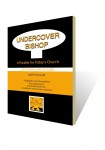
Join Bishop Ruby Kinisa as she visits small churches "under cover" to learn what people would never share if they knew they were talking to their bishop.
Undercover Bishop will always be available in PDF form on 2x2virtualchurch.com for FREE.
Print or Kindle copies are available on Amazon.com.
For bulk copies, please contact 2x2: creation@dca.net.
MISSION INSPIRATION OFFER
A visual and biblical guide to help congregations define their missions.
Contact Info
You can reach
Judy Gotwald,
the moderator of 2x2,
at
creation@dca.net
or 215 605 8774
Redeemer’s Prayer
We were all once strangers, the weakest, the outcasts, until someone came to our defense, included us, empowered us, reconciled us (1 Cor. 2; Eph. 2).
Be calm. Wait. Wait. Commit your cause to God. He will make it succeed. Look for Him a little at a time. Wait. Wait. But since this waiting seems long to the flesh and appears like death, the flesh always wavers. But keep faith. Patience will overcome wickedness.
—Martin Luther