Social Media is the greatest evangelism tool the Church fails to embrace.
It’s never a priority, so it never gets done.
If it is attempted, it is relegated to volunteers who follow their interests and skills in their available time. There is no plan or accountability. If your congregation has an especially skilled volunteer with dedication, you are lucky.
We live in the information age. It is time for churches to recognize that church communicators are people with valuable and specialized skills. They have the best potential to help congregations of any size to grow.
Communications has become a skilled specialty. Church communicators should be key members of any ministry team. Compensation should be considered. Otherwise, the work is likely to be inconsistent and potentially detrimental to ministry.
But churches are structured to pay pastors, organists, musicians, secretaries and sextons first. There is rarely money left for other skills—no matter how vital they have become as the world has changed.
In the day of the mimeograph or photocopier, communications was expected to be a skill set of the pastor with the assistance, perhaps, of the church secretary and maybe a committee that might meet once a month. Most communication took place before well-filled pews. It became the Church way because it was the ONLY way. Good-bye yesterday.
Communications today requires daily attention. This is good news!
The potential for Church Communicators to influence ministry has grown beyond exponentially.
It is beyond the skill set and/or time availability of most pastors. Without a plan or structure and only the expectations of volunteer efforts, effective communications mission work is unlikely. Congregations will wallow in unfulfilled potential.
A major mission of any congregation is to TELL THE STORY of Jesus and His love AND to tell THEIR STORY.
That requires planning and skill.
We’ll tell part of our Communications Story in the next few posts.
Yesterday’s post was no sooner launched than it drew four “likes.” An earlier post also drew a “like” in the same time frame, which was just few minutes. Thank you, readers.
But according to the site’s stats we had received only one visitor in that time frame. They couldn’t all be looking at the site on the same computer. The readers were in several time zones. Do the statistic elves hoard the numbers for delivery at one time? The fact that four of the “likes” were for a post that had just been published suggests not.
It is unlikely that the stats record fewer views than your site receives, although there may be some generic pings from scam mills. In general, your site is likely to have more readers than you realize.
Today’s Church exists amid a new and perplexing dichotomy.
Our world views bigger as better. Bigger means more money, more resources, more power. Better goes along for the ride.
This seems to go with the fundamental view of corporate church. It certainly goes with the traditional structure of church since the Middle Ages
The Church is not going to give up on this idea easily!
Within this bigness is a new power of the individual. Individuals do not have to be part of a big organization to fulfill needs which were once met ONLY through association with large organizations.
The FBI with all its state-of-the-art technology and the funding of the leading nation in the free world can be hacked by an adventurous school kid with no particular ill will, as easily as it can be hacked by an enemy.
Big brands with solid positioning in our culture can be challenged by a single new marketing concept. What is Woolworth worth today?
The same thing is happening in the Church. Those accustomed to being big and powerful are finding their secure position in society threatened by the small church and even perhaps by individuals.
Where do television preachers get their start? They rarely rise through the ranks of the organized church. They may have started out there but their ambitions outgrow church structure.
There was a time when it was difficult to exist outside denominational structure if you felt called to serve God.
No problem today. Raise some money. Get on TV. (Or write a blog!) The media of the day can make all the difference.
Soon they have created what modern business calls a “tribe.”
Nothing new here. Israel had its tribes. Moses had a tribe. Jesus had a tribe. Paul had a tribe.
The members of a modern evangelist’s tribe probably had roots in the traditional church, too. The difference today is that individuals within the tribe have more power. They can and will come and go from the traditional church. Meanwhile, they can pick and choose between involvement with multiple tribes. One tribe might interest them socially. Another culturally. Still another might be addressing a cause dear to their heart.
The Church must recognize this as it nurtures its own tribe. Your most loyal members are probably sharing their loyalties, time, talent and money.
They may attend worship (or not). They may serve on a charitable board or two. They pick and choose between the charities that do the best job of soliciting their help — usually on Sunday mornings.
There is no longer brand loyalty among Christians. People want to make a difference. If the Church cannot provide the diversity of opportunities to serve, there are plenty of organizations that will.
There is also individual power. A person can abandon the whole tribe mentality and go it alone and still be effective stewards of God’s gifts.
Mainline denominational churches can cry about this, fight and scheme for positioning, and grasp at what’s left of the old order.
Or they can fashion a ministry that attracts multiple “tribes.”
Hit the ball and point out that the ball returns to the paddle only to get a good swat.
In today’s Gospel, Jesus returns to his home. He is among the people who knew him as a boy. He is Joseph’s and Mary’s boy. Jesus, the carpenter. Their children had played with him. The town was filled with his carpentry handiwork.
But the word about his recent activities has them curious. The crowds gather to take a look at the hometown boy. Jesus has been curing the sick!
We are familiar with the return of the local youth who has gone off to make a name in sports or show business.
Naturally, the town likes to claim a small piece of glory for having nurtured the star.
That’s what is happening in today’s gospel story. Jesus, the miracle worker, is home!
Nazareth gathers at the temple where Jesus has just revealed that he is the fulfillment of Isaiah’s prophecy.
Things start out well enough. The people are astonished and proud.
Jesus himself poisons the crowd. He leads them on.
Jesus fails to play the expected role of humble hometown boy, acknowledging the support bestowed on him in his youth. In fact, he is anything but humble. He bypasses his local roots and claims the heritage of the prophets.
I suppose you think I’m going to save you just because I know you. Well, good neighbors, that’s not the way it is. Elijah fed only one widow. Elisha cured only one leper. Just because I can do miracles doesn’t mean I will do miracles.
Who does he think he is?
(Here you might borrow the imagery from the epistle lesson-1 Corinthians 13). Somebody grab a mirror and make him look at his face. Who do you see in the mirror? That’s right. You are Jesus OF NAZARETH. You are no different from any other Nazarene. Rein it in, Jesus. Remember your roots.
It’s hard to imagine how the hometown crowd turned so suddenly into a lynch mob, dragging the man they had watched grow up to the edge of a cliff, fully prepared to hurl him to his death.
As you tell the story you might demonstrate the mounting tension with the paddle, hitting the ball faster and harder each time the ball returns to its starting point.
Jesus has control of the situation start to finish. He knows that he is finished with his hometown. He knows what lies ahead. The edge of the cliff is no threat.
It is Epiphany, the season of revelation. That’s what this story is all about. Jesus has revealed to his closest neighbors that he is no longer—and never really was—of the world that reared him.
Make no mistake. He is meant for bigger things. Out of his way. He’s coming through.
2×2 has been friends in ministry with a church movement in Pakistan for a year or so, New Life Ministries. We’ve watched the passion of the leaders who travel into the countryside around the northern city of Faisalabad — an agricultural hub in this Moslem country near the border of India.
A few months ago they shared reports of the frightening unrest and the fear that gripped their families. We’ve heard how the children struggle for acceptance in the schools.
We’ve also heard of their brave celebrations, marching on Palm Sunday through the city streets, the house churches they are starting and the baptisms in the river.
Pastor Sarwar Sadiq writes to us now with their goal of creating 1000 new home churches this year. They need Bibles. They are looking for gifts of $13.50 to purchase hard-bound Bibles for the home churches.
More than that they need our prayers. Know that they have been powerful and loyal prayer partners with us. Here is a link to their web site where you can learn more abut them. www.nlfministries.weebly.com
AT&T Commercials Reveal the Thinking of Young People
AT&T is currently airing a series of commercials that feature a small group of children. They appear to be carefully chosen, boy/girl/boy/girl, some diversity and all comfortable with a camera recording their answers.
A moderator asks a question. The children give a few obvious answers but with the creative twists of youth and the voiceover concludes, “It’s not complicated.”
Most of the answers are just cute. A couple are more revealing.
In one, the children are asked about the difference between fast and slow. One boy answers with great empathy for a child his age.
What is slow?
My grandmother is slow.
Would you like it if she were fast?
I bet SHE would like it if she were fast.
Very poignant. Grandma should be proud.
Another shows the situation many students deal with daily, especially girls. The attention goes to the show off. Everyone else is shoved aside.
Which is better? Doing one thing or two things at the same time?
The children agree. Two is better.
One boy demonstrates with silly movements. All sit and watch as the moderator turns all attention to his antics.
I’ve never seen anything like it! he exclaims.
The girl sitting between them tries to attract his attention and starts to say, “Look! I can do it too.”
The moderator cuts her off turning all attention back to the silly boy. Analytically, the boy is contributing nothing. But he continues to get the attention.
The girl shrinks into the background and accepts the passive role assigned to her.
This commercial always makes me sad.
How often do we turn our attention to the show offs, with nothing to say, and ignore the contributions of the quieter members of our church or congregations?
Seth Godin speaks words of wisdom regarding possession and power.
Will SEPA publish these in their next newsletter?
It is very interesting that the Southeastern Pennsylvania Synod has discovered the blog of Seth Godin. 2×2 has long been a follower of Seth’s.
Seth thinks and Seth acts on his thoughts. He’s a good model for Christian leaders to emulate. He’s responsible for spurring a lot of change in the business world. It is not hard to apply his thinking to the world of church.
It’s actually not that easy to give something substantial away. That’s because accepting it means a change (in lifestyle, responsibility or worldview) of the person receiving it. It’s stressful.
Far more stressful, though, is taking something away. Once a person or an organization comes to believe that, “this is mine,” they erect a worldview around their possession of it. Taking it away instantly becomes personal, an act far greater than living without a privilege or object in the first place would be.
We care more about the change than the object or privilege itself.
This describes the conflict between Redeemer and East Falls to a T. SEPA took something that was not theirs and has ever since been protecting their newfound right. In the corporate world, it is likely the courts would have stopped them. They are not following their own governing rules. But they are protected from court scrutiny by the First Amendment. They can’t be touched except from within the church. Not likely when the strongest church leaders are busy protecting their status. This undefined chain of responsibility—protecting the clergy at the expense of the most vulnerable laity—is causing the ruin of the Roman Catholic clergy system. Lutherans aren’t far behind.
SEPA has adopted their worldview around “rights” not found in their founding documents—treating congregational properties as their own. Early on, they will attempt congregational votes but if the congregation does not vote the right way, they will declare synodical administration and do as they please. This very scenario happened twice in East Falls. Once with Bishop Almquist, who to his credit gave up the ruse a year later. Bishop Burkat picked up where he left off and made the SEPA worldview a personal vendetta.
Seth is one smart cookie.
SEPA, don’t pick and choose from Seth. If you are his disciple, present more of his advice.
By the way, a lot of good advice is in the Bible, too.
A newsletter from the Southeastern Pennsylvania Synod (SEPA) of the Evangelical Lutheran Church in America (ELCA) today begins with a quote from futuristic thinker, Seth Godin.
There is the mistake of overdoing the defense of the status quo, the error of investing too much time and energy in keeping things as they are.
And then there is the mistake made while inventing the future, the error of small experiments gone bad.
We are almost never hurt by the second kind of mistake and yet we persist in making the first kind, again and again.”
Words of wisdom. Except that SEPA has shown no inclination to follow them. Their decisions tend to be status quo-oriented at best—and remarkably retro overall.
Redeemer’s Ambassadors have visited 54 churches and we see the same ministry plan with few variations in most of them.
SEPA’s vision:
You will have a congregation led by a pastor which we will choose for you—but we will pretend it is your call —because that’s the church way.
You can worship any way you like, but if you aren’t celebrating communion weekly, you are just not with it.
Accepted worship innovations include drums and an audio-visual screen.
Your budget will maintain your building and pay for a pastor, organist, choir director, sexton and church secretary. If money allows, your next hires will be a youth or visitation pastor. That’s the church way. Employing clergy is your major missional purpose.
Your mission efforts will coordinate with our mission office (keeping us employed as well). Otherwise, any success will not count and your ministry will be judged as uncooperative
Your ministry will be supported by offerings from a dwindling number of supporters in a volatile economy. That’s the church way. Go ahead. Keep trying. We’ll wait a reasonable amount of time before we celebrate your failure. Pastoral help? Sorry, no one is available.
When at last our prediction of your poor ministry potential comes true, we will make sure any remaining assets benefit synod.
Redeemer’s members, most of whom are entrepreneurial in their private lives, determined that we had to have a different kind of ministry. We had worked with Synod’s plans for a decade. Some showed promise, but SEPA’s support for their own proposed ministry plans was self-serving and ephemeral. The interim pastor we agreed to call for 18 months was recalled by Bishop Almquist after three months. He was needed in Bucks County. The covenant we signed with Epiphany was broken with the support (and to the benefit) of SEPA.
Redeemer’s vision:
Relying on offerings will guarantee failure. Providing pastoral needs as a priority will deplete resources with no measurable benefit.
Serve the community with profit center ministries.
Use the educational building to operate a community day school (with religious instruction) which might also reach the neighboring public school. Projected revenue $6000 per month.
Invest the skills of members in ministry that would serve the immigrant community while generating income. Projected revenue $10,000 per month (anticipated to grow with experience).
Experiment with social media, sharing ideas and potentially creating an income stream. Projected revenue within two years ($1000 per month with much more potential).
So Redeemer set about reinventing its ministry. Redeemer presented a detailed plan to Bishop Burkat who never reviewed it with us before (or after) announcing her plans to close our church. No questions, no answers, no complaints, no discussion, no congregational vote — just a declaration of closure. SEPA had a six-figure deficit clouding its vision. Redeemer, on the other hand, was living within its means.
Redeemer was willing to take calculated risks with its own resources for the benefit of its own ministry. Redeemer asked nothing of SEPA except their approval of the pastor we hoped to work with and who was entirely qualified and agreeable to the plan. He disappeared after a private meeting with Bishop Burkat. He resurfaced with an interim call to good old Bucks County.
While reinventing our future, we were willing to make mistakes along the way and planned for careful monitoring to maximize success. We set about our new ministry by rallying the support of members, involving them in the planning and shaping of their own ministry.
Outsiders, with no interest in our assets, have commented that we were doing a pretty good job. (Some of them were Lutheran!)
But status quo SEPA, facing its own murky future, decided that they had better plans for Redeemer’s assets. And so there has been no SEPA-sponsored ministry in East Falls in four years—Redeemer’s assets serving no ministry purpose. A legacy of distrust growing daily.
Meanwhile, Redeemer continues as much of its ministry as we can, under hateful conditions, while SEPA uses our resources to sue us.
If only SEPA had come across Seth’s words of wisdom before they fouled the baptismal waters in East Falls.
Looking for Success in the Wrong Places
As it struggles, the Church tends to misidentify success. They look at the largest dozen or so churches that attract larger numbers. They can still afford a few pastors and a staff. Careful analysis will show that the larger churches are also struggling. It just isn’t as noticeable. So their “success” is emulated.
We are emulating failure.
The Small Churches and Laity Are Pivotal to Change
Small churches are keenly aware that complacency endangers ministry. Most small churches have strong lay leadership. Synod shows no interest in serving them. It’s a waiting game. A death watch.
If SEPA Synod is sincere in wanting to foster innovation, they must turn to their smallest congregations and work WITH them.
Here’s why the laity are key to innovation.
Lay people do not rely on the approval of hierarchy for their career trajectory. They are more likely to take innovative risks.
Lay people tend to circulate among other churches, religions and denominations — fodder for creative ideas.
Lay people are dedicated to the church and the neighborhoods where they live. They have no plans to move on to a bigger church in seven years.
Lay people provide the funds that support ministry. They care about how THEIR offerings are spent.
Lay people collectively bring the wisdom of many disciplines to the Church. Clergy get similar training in whatever seminary they choose.
Lay people serve with no expectations of reward or credit.
We celebrated Epiphany last week. The season of revelation of Christ as Messiah is short this year.
Just four weeks from now we will embark upon the season of Lent.
In our analytics of our website, we noticed that beginning on Christmas Day, our readers were searching for resources for Easter. So we are going to try to provide some resources to help with Easter’s prelude—that mixed-up season of Lent.
Lent is confusing. It is the season of repentance. Didn’t we just go through this a few weeks ago in Advent?
It is also a season of mixed messages. Centuries of tradition have become muddled with modern sensibilities.
Ash Wednesday has always been a puzzle. We routinely read the passage from Matthew which tells us repeatedly to NOT make a show of our repentance and NOT distort our appearance. Then we defy the gospel we have just read and make a show of our repentance and distort our appearance.
Then some well-intentioned theologian came up with the concept of “burying or sealing the Alleluias”—banning the utterance of the traditional word of praise during the season of Lent. This flies in the face of the fact that Lent is structured to observe 40 days of repentance (modeled from Christ’s 40 days in the wilderness) and those 40 days EXCLUDE Sundays. There are NO Sundays in Lent. Every Sunday is reserved for a celebration of Easter. Alleluia!
We never sealed the Alleluias at Redeemer. The custom was unknown to us until we shared a pastor with a neighboring congregation. Their pastor surprised us when he announced during the service that the Alleluias were now sealed.
Our worship service for the next Sunday had already been planned and it was to feature an adaptation of Leonard Cohen’s mournful song Hallelujah—which repeats the Hebrew version of Alleluia countless times in a way entirely appropriate for Lent. (Rules tend to hamper creativity!)
Except for the fact that this was preplanned it would have given the impression that we were defying our pastor, which was in no way our intent. We tabled our plans for a year.
The pastor apologized for making the assumption that this was our custom. No conflict resulted.
But every year since, we have used this song, which retells the story of Christ’s temptation. Here’s a link.
2×2 is nearing its second anniversary from the date of launch (February 2, 2011).
Can a small church blog make an impact?
Church blogs are a bit different from other forms of social media where the aim is often engagement. People don’t tend to engage in public forums in matters of faith. If we measured our impact by comments and likes, we’d be tempted to say no. Very little impact. Just over 100 comments in two years.
2×2 has learned that people don’t tend to respond ONLINE. We get many emails from readers that are not part of the public discussion. And that’s OK. We have not followed the engagement star.
Our first year was spent learning. 2012 was the year that the launch actually took hold. We started posting daily in mid-summer of 2011. It wasn’t until the end of 2011 that we saw any encouraging statistics. 2012, however, was a year of steady growth that is beginning to display exponential potential.
Redeemer, through 2×2, now reaches more people each week with the message of Christ than do the largest congregations in the Southeastern Pennsylvania Synod (who claims we are too small to fulfill our missional purpose).
What Draws Readers to a Church Blog?
It is not pictures of your sanctuary and activities or messages from your pastor—all the standard stuff on most church websites.
Readers (seekers) are drawn by helpful content.
Our goal for 2012 is to develop more helpful content.
Last Easter we posted a play that Redeemer had created and performed in 2008, when we still had a sanctuary in which to practice our faith. Beginning on Christmas Day 2012, this play, offered for free to our readers, has drawn about 50 readers and downloads per day.
Our series on object lessons, designed for adult listeners but applicable to children as well, also draws regular weekly readers. One reader wrote a note of thanks last week. They mentioned that they work with Bhutanese refugees.
Our third and fourth biggest draws are commentary on any number of church-related issues and our series on using social media in the church (this was our biggest draw early last year but that is shifting).
We now have more than 2000 new readers each month and about 150 who subscribe through Facebook, Twitter and LinkedIn. Our followers tend to be young people (20s and 30s—the very demographic the organized church has trouble reaching). They represent many ethnic backgrounds. In any given hour, an average of 20 people read our site. Most visit more than the home page.
We’ve written before about the network of small mission churches that correspond with us regularly. This continues to grow.
There are many people of faith working in isolation and under hostile conditions in the world. Finding support for their efforts within the organized church is expensive and time-consuming. It can take years to be recognized as legitimate mission within denominational standards. Meanwhile, orphans, widows and needy cope, meeting in houses and open-air pavilions and along the banks of rivers, caring little about denominational structure—relying on faith and the bonds they forge on their own.
Their needs are simple. They want Bibles and friendship. They don’t want to walk their faith journeys alone. They really don’t care about denominational labels.
Our little church blog is making a difference in these places. Yours could, too.
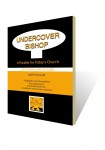
Join Bishop Ruby Kinisa as she visits small churches "under cover" to learn what people would never share if they knew they were talking to their bishop.
Undercover Bishop will always be available in PDF form on 2x2virtualchurch.com for FREE.
Print or Kindle copies are available on Amazon.com.
For bulk copies, please contact 2x2: creation@dca.net.
MISSION INSPIRATION OFFER
A visual and biblical guide to help congregations define their missions.
Contact Info
You can reach
Judy Gotwald,
the moderator of 2x2,
at
creation@dca.net
or 215 605 8774
Redeemer’s Prayer
We were all once strangers, the weakest, the outcasts, until someone came to our defense, included us, empowered us, reconciled us (1 Cor. 2; Eph. 2).
Be calm. Wait. Wait. Commit your cause to God. He will make it succeed. Look for Him a little at a time. Wait. Wait. But since this waiting seems long to the flesh and appears like death, the flesh always wavers. But keep faith. Patience will overcome wickedness.
—Martin Luther