4/7InkzHVUEQeEdU9vpc1tikzEhChrKmPfvXI-FSDBrBQ

Uncategorized

Why don’t churches blog?

The answer to this question is simple: They don’t know how. They keep busy doing what they always do, aware that it’s not working very well, but unable to make changes — even when they have the tools.

The accepted structure of the Church calls for one thoughtful 20-minute message per week. That’s the way church leaders have communicated for decades or centuries.

In addition, they persist in relying for communication on the church bulletin, which only those who attend worship read, and perhaps an online newsletter, which requires the initiative of members to access and read.

Each has its place, but neither is effective at reaching new people.

There is NO interaction possible with any of these methods, no way of engaging seekers, no way to build your following. But this is the accepted way of communicating—as ineffective as it is.

Blogging is a new discipline. Church leaders have to shift gears sharply.

They must learn to plan a daily message. They must learn to divide thoughts up into shorter messages. They must get used to identifying topics and planning ahead. They must establish a voice and learn to build lists of interested people. They must address different audiences — instead of just the one which shows up on Sunday. And they have to get used to the idea that people will respond online. They are no longer alone in the pulpit!

Blogging has tremendous evangelism potential.

The hardest part is getting started.

Here are some quick tips to help you get your feet wet as you work toward a daily presence on line.

  • Look at next month’s church and community calendars and lectionary readings. List 15-25 topics that come to mind. For now just write a headline for each. You can change it later.
  • This is your roadmap. Write a post for five of the headlines, aiming for 300-500 words. Write the others later after you’ve created a rhythm.
  • Now go to your chosen blog platform. (We use WordPress). Register a url (web address).
  • Choose a theme. You can change it later. Post just one post, adding the others every other day or so. Blogging twice a week is a good starting point, but things will start to happen when you start posting daily.
  • Remember to write for other people — people who may not have any church affiliation. Remember to address — Witness, Education, Stewardship, Worship, Social Ministry, Fellowship and other topics pertaining to your congregation and community.

This is how you start. There are more details in our archived posts on Social Media.

HAPPY BLOGGING!
photo credit: Dominic’s pics via photo pin cc

Why should churches blog? 5 unexpected reasons!


The Alban Roundtable discussion this week presents cautionary tales on what can go awry when using email to communicate.

Comments so far have been: We know, we know. But this is the world we live in.

They are right. If people are going to email, there is nothing you can do to stop them. You CAN, however, provide good content to encourage reasonable and helpful online dialog.

Create a church blog.

2×2 advocates the development of church blogs as a less emotionally charged way of promoting online discussion. Blogs invite participation. Thoughtful posts will result in thoughtful comments—moreso than on Facebook and Twitter. Blogs allow you to moderate comments, but generally we recommend that you moderate the first comment only, simply as a way of verifying that the contributor is not a spammer. Access to the online discussion must be fairly free. If you start editing or rejecting comments, your blog will be seen as the voice of the favored in the church.

Establish guidelines for your commenters. People will cooperate. If you feel you must edit a comment, you can tell the contributor (offline) why it violates your community rules.

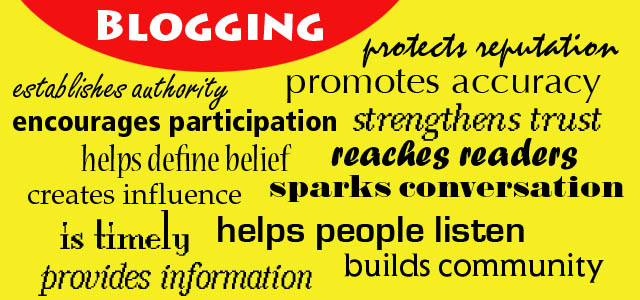
There are many advantages to blogs. Some you can anticipate. We’ve listed some above.

This morning, Blogger Mark Schaefer posted five unexpected benefits of blogging. Although Mark is a businessman, his words are very personal. His insights apply to church. 2×2 has been blogging for more than a year. We have experienced the same benefits.

Here are Mark’s insights as they have applied to our church blog . . . and can apply to your church blog as well.

Blogging heals

Redeemer, the sponsor of the 2×2, is a congregation experiencing ongoing rejection and bullying within the Church. It’s painful, and the Church has been unresponsive—hoping we would just roll over and die—even five years after that tactic has proven ineffective!

Blogging has given us a voice which is healing to our community. It has given us reach and it has validated our ministry (to other Christians if not to our nearest neighbors). We know we can still fulfill our “missional purpose.”

Blogging connects

This has been the most amazing benefit of our blog. We have connected with other Lutherans, other denominations, other religious institutions and ministry efforts all over the world. We have come to know many by name and hear from several daily. Some have been helpful to us. We’ve been helpful others as well. We have invitations to visit in Asia and Africa!

Blogging defines

Where does the church stand on issues? Often we allow church experts to draft statements about what we believe, but let’s face it. They are rarely read or used more than a month after they are published.

Why do we allow others to decide what we think? In the past, there was little choice, but dialog online can help congregations participate in issues and respond at the local level. The official response can be helpful but it shouldn’t replace our own consciences.

When you take an issue you aren’t quite sure about and start to write, you can begin to sort out your thoughts and realize what you believe. Sometimes it surprises you!

2×2 posts some ideas, knowing they are not fully defined. Sometimes the ones we think are most nebulous start to get responses — often by email—thanking us for our position. We often learn that others are struggling with the same issues. They add a penny or two to the dialog—which we incorporate in future posts.

Blogging teaches

Mark Schaefer points out that his blog opens his eyes and teaches him. 2×2 says “ditto!”.

Blogging inspires

2×2 looks for messages that inspire and includes them in our editorial mix. We often get emails thanking us and telling us how they intend to use the information in their ministry.

These are five things every church needs. Why aren’t we doing it more?

We have one answer to this question! Tomorrow’s post.

Adult Object Lesson: September 9, 2012

A Gospel Story for the Dogs

Mark 7:24-37

Today’s object is a dog. Use a stuffed dog, a picture of a dog, or even your own pet. You might consider using two stuffed dogs—one of pedigree to represent the Jews and one of less definite breeding to represent the Gentiles.

Mark tells two stories in this Sunday’s Gospel.

The first story tells Jesus’ hesitance to extend his message  beyond the people of Israel. Jesus uses the metaphor of children and dogs.

Is is right to take the food meant for your children and throw it to the dogs? he asks.

The Gentile women is quick-witted. Her answer impresses the great teacher. Even the dogs eat the children’s crumbs and that’s all I’m asking for — a crumb.

Jesus hears the woman and is moved. Her daughter is healed.

Point out the woman could have stormed off in a huff at being likened to a dog. Even today, as lovable as our pets are, we don’t refer to someone as a dog without expecting a fight! But this woman stood up to the miracle worker — who might have struck her down on the spot for impertinence.

You can talk a bit about the most endearing quality of dogs — their loyalty and trust — qualities that played out in today’s lesson.

The second story is about the man with a speech impediment. It, too, is a strange story. Jesus takes the man aside and heals him in private of his speech impediment. For the first time in his life this man can speak and be understood. Jesus orders the crowd, who reappear at the end of the story, to keep the report of this miracle under wraps.

You can tie the dog analogy to this second lesson. A favorite trick to teach a dog is to speak or bark upon command. It’s a lot harder to teach a dog to be quiet! Yet that is what Jesus asks of the healed man and the crowd of people.  “Do not tell anyone.”

Order your dog or dog object to not bark. If you have a group of children or youth, you might enlist them in your story-telling by asking them ahead of time to bark whenever you give the order “do not bark” or “be quiet.”

These passages remain a bit puzzling. Why was Jesus reluctant to heal a child of a non-Jew? Later, why did he charge people to do something that goes entirely against human nature?

Why do we hesitate to embrace people different from us? Why do we admire dogs of pedigree?

What stands in our way of telling the Good News?

photo credit: 27147 via photo pin cc

Singing Together Is Fun and Creates Community

Today there are just three songs outside of church that people sing together—the National Anthem, Happy Birthday, and whatever the pop star that people paid to hear is belting out at a concert.

Singing is fun. Yet, once we graduate from lower levels of school, many of us never again experience group singing. Recognizing this, some movie theaters sponsor movie singalongs to  favorites like Sound of Music or My Fair Lady.

The power of music is the power to surprise and delight.

We remind you of a favorite video link which illustrates this.

Here’s another from a different part of the world.

Songs create cultural ties. Many of the commenters to the Welsh choir video wrote that they enjoyed the Welsh hymn so much they memorized it. Otherwise, they spoke not a word of Welsh. The second video shows how good music knows no cultural bounds.

Our Ambassadors gathered for Sunday morning brunch recently and someone mentioned a clock, which had been her father’s prize possession. We broke into song, My Grandfather’s Clock, with an African member looking on in amusement. “Tick-tock, tick-tock.” My Grandfather’s Clock was written in 1876, by an American Civil War songwriter Henry Clay Work after a visit to England. 136 years later, we could all sing it together, part of our common culture.

Similarly, the one meeting Redeemer had with Bishop Claire Burkat, we considered such a success that as our members left they broke into song which traveled with them down the elevator from the synod offices and across the parking lot to waiting cars. This time the song was from African culture!

Music was part of the magic of Redeemer’s ministry that was binding our diverse groups. We used  eight or more hymns in our worship. Frequent repetition of select songs allowed for commonality. Soon Africans could sing I Cast All My Cares Upon You and Americans could sing Bwana Awabariki. We often sang popular hymns alternating languages and soon we could sing the chorus to Jesus Loves Me or How Great Thou Art in either language without realizing which language we wee singing!

One Sunday we had a guest preacher. He mentioned in his sermon the hymn Just As I Am. He started to read the words. The congregation began singing the hymn a cappella from memory. The hymn is part of our culture. Oddly the pastor seemed annoyed at the congregation’s initiative.

Church is one of very few places where people gather weekly to enjoy singing. Let’s take advantage of our strong points! Let the music of your church come from the people and shape your ministry.

photo credit: AndrewEick via photo pin cc

Encouraging Hymn Knowledge to Create Community

One of my great grandmothers enjoyed playing piano. She collected sheet music and had her favorites bound into books. I have her volumes dating back into the late 1800s. None of the tunes that she found worth preserving are played on the radio today.

On the other hand, the Church is one place in our society where songs of past centuries are regularly revived. Only the words remain to the music of Bible times. The advent of a universal system of notation in the ninth century gave music—both melody and lyric—longevity. Today’s Christians sing songs that span from the Gregorian chant to the current folk and rock genres.

I attended a concert of a contemporary rock-style band recently where the tune to Of the Father’s Love Begotten from the 13th century was used as a motif.

The treasure and legacy of Christian music is most appreciated during the Christian season when even today’s pop singers make albums of music written hundreds of years ago. People who never attend church sing along with car radio (at least to the first verse).

Church music spans other seasons that are less recognized by secular culture but are a treasure of the church. Much of today’s hymnody comes from the Protestant tradition where pastors often wrote songs as a preaching tool. Martin Luther, Isaac Watts and the Wesleys were preachers and hymn writers whose work is still sung in churches around the world.

The legacy of praising God in song continues with a wealth of new music heard by many for the first time on Christian radio.

Often, hymns are a collaboration between the poet and the tune crafter—not unlike the great teams which brought us operettas and musicals. In fact, Sullivan, of Gilbert and Sullivan, wrote the tune of Onward Christian Soldier.

Knowing something about the hymns we sing adds to their meaning.

In the 1600s, Martin Rinkart was a village pastor in Germany during the years of the Great Plague. He buried as many as 50 of his parishioners a day, 4000 a year, including his wife. One of the most enduring hymns of thanksgiving came from his pen — Now Thank We All Our God.

In the 1700s, John Newton repented his life as a slave trader and wrote a perennial favorite used in both religious and secular settings — Amazing Grace. Another prolific hymn writer, Isaac Watts, broke with the tradition of sticking to the biblical Psalms as text. When I Survey the Wondrous Cross is the best known of his hundreds of hymns—some of them written specifically for children.

Some great hymns have come from the recognized masters such as Handel, Bach, and Beethoven.

Women, following the biblical tradition of Miriam, gained notice as hymn writers in the 1800s and early 1900s. They included the blind Fanny Crosby (Blessed Assurance) and Katherine Lee Bates (America, the Beautiful).

The difficult process of publishing and printing helped preserve hymns. Prior to 1980, it took about 40 years to compile and publish a hymnal within a denomination, which slowed the adoption of current music but added life to the existing hymns. Today’s publishing allows instantaneous publication and it remains to be seen how that will affect the legacy of hymnody.

Despite the wealth of tradition, many congregations stick to the tried and true. One pastor complained that the congregation he served was content to sing the same 12 hymns over and over.

Later posts will address ways to both preserve and build upon hymn legacy and the way hymn knowledge and tradition impacts faith and Christian community.

photo credit: Barkaw via photo pin cc

Niche Churches — Hmmm!

This is from a blog by the Rev. Larry Peters, a Lutheran pastor from Tennessee. He was commenting on the writings of Terry Mattingly.

If churches want to reach millions of independent-minded young Americans they should learn a thing or two from craft brewers. . . . It’s time, he said, for “craft churches” that reach niche audiences.

This is an astute observation. Small churches have been serving niches for some time.

Our Ambassador visits reveal that most churches, large or small, serve a niche, but probably with little intent!

The largest church we visited (non-Lutheran and twice the attendance of the largest Lutheran church we visited) was a congregation of 25-35-year-olds.

Birds of a feather . . .

Small churches know their niche. Any intention of being all things to all people, though tempting, is out of reach. Even if people wanted that kind of ministry, (and most mission statements sound like they do!), finding leadership is daunting.

Church leaders often view small churches as failures—undesirable places for pastors to serve. Part of this is economics. All churches must rise to the same budget expectations, which in the modern era have priced many communities out of the faith business. Pastors assigned to small churches often view their role as care-taking, never bothering with outreach. Some even use the offensive term “hospice ministry.”

Perhaps it’s time to seriously examine the economics of church.

People will make their church home where they can see their offerings and efforts at work. They will neither participate nor attend a church where they do not feel fully welcome.

We at Redeemer know the difference between being welcome to attend church and being welcome to participate. Our bishop made it clear that we are not welcome to participate in SEPA Synod. She seized our property and pledged to close our church and reopen it under new leadership. She wrote to us that current members could attend this new, improved Lutheran church but former members would not be permitted to participate. She unilaterally denied us vote or voice. When we started visiting churches she sent a letter to pastors warning them!

How’s that for a welcome statement!

Redeemer was welcoming East African immigrants who were moving into our community—not just to use our building, which is the more common outreach approach, but to join their traditions with ours. We saw our unique niche ministry as adding to the mosaic of the greater church.

But SEPA was determined that one population had to die before a new population could be fully welcomed. As Bishop Burkat said, “White Redeemer must be allowed to die, black Redeemer . . . we can put them anywhere.” Control of assets was the objective.

Religion is not supposed to be a spectator sport.

Part of the problem with niche ministries is that few pastors are trained to serve niche populations.

Defining a niche (while recognizing the likelihood that niches will change every decade or so) may not be such a bad idea. It will take decades to recognize and train leaders to actively serve niche ministries and not view them as “hospice” assignments.

Another problem with niche ministries is that the “niches” that are most in need (the ones the Bible talks about), often can’t support them.

The true mission of the church is defeated by cost—at least with today’s budget and funding expectations.

Meanwhile, rejected and criticized by our denomination, Redeemer has created a niche ministry. You are visiting it now. Today, two months into our third year, we are reaching more people every week than the largest church in our denomination’s local region. We are just getting started.

photo credit: Grant MacDonald via photo pin cc

Adult Object Lesson: September 2, 2012

Be Doers of the Word

Deuteronomy 4:1-2, 6-9, Psalm 15, James 1:17-27, Mark 7:1-8, 14-15, 21-23

Today’s object is a hand mirror.

Begin the talk with something about you in obvious disarray. Your hair might be disheveled or your shirt buttoned wrong or you might have a mismatched or missing earring or if you are robed, wear your stole backward. Having created a visual flaw, look into your hand mirror and discover the flaw.

Today’s combined lectionary readings examine God’s reaction to human flaws.

Retell briefly the story of Moses and God’s refusal to grant him the reward of entering the Promised Land after Moses had grown old leading the Israelites through the desert. For all the hard work of keeping a disgruntled people together on an arduous, perilous journey, Moses had to face his failings—his tendency to doubt.

The passage from James reminds us that God gives us the power to do more than hear God’s Word. We must act.

James asks us to look in the mirror. If we look in the mirror and do not like what we see we are compelled to do something about it.

The Gospel from Mark focuses on the interpretation of Jewish dietary laws. Jesus listens to the questions and criticism of the scribes and responds by pointing out that defilement comes from within. It isn’t bad or wrong food that gives the Devil its power. It is what is lacking within our hearts and minds.

Coupled with James insistence that Christians act upon what they learn from scripture the concluding message for today’s object lesson is to look into our mirrors every day. If we don’t like what we see, do something about it.

End your object lesson by fixing your obvious flaw.

Keep your lesson upbeat. Self-examination is difficult even when we have balloon-sized egos. Many people feel bad about themselves as it is. Offer encouragement, help, forgiveness and love as tools to overcome human failings.

Thoughts to keep in mind:

  • There is a related message in the signs posted in public concourses, “If you see something, say something.” (If you hear the Word, do something)
  • The lessons for today coincide appropriately with Labor Day, America’s celebration of the worker.
  • The book of James was such a challenge to early Christians (and even the great reformer, Luther) that it almost wasn’t included in the Bible.
photo credit: MistoAcrilico via photo pin cc

Why the Small Church Is the Future of Christianity

Church hierarchies love big churches. They offer a sense of accomplishment and power. Big churches can be featured in the résumé and portfolio of each pastor or bishop that played any hand in their growth—or who rode the coattails of predecessors.

Big churches make church leaders feel rich. There is the illusion that large churches will provide the revenue to keep things going. There is short-term truth in that. In the long-term, even larger congregations are going to have to hoard more of their offerings to keep the lights on.

Little churches seem like work. In reality, they probably demand less from the regional body. They have been forced to me more self-sufficient and the more self-sufficient they are, the less money they share with regional body—the foundation for bad relationships!

If you study church statistics, you will find that big churches are in decline, too. One of the largest congregations in our area lost a third of its members and income in the last ten years. They’ll get along fine for a while, continuing to support a large staff and plant while offerings wane, but they are traveling downhill on a wide highway. They will be sending less and less to the regional body.

Meanwhile, the self-sufficient small churches are gaining strength because the ways of the world are handing them tools that make regional bodies less important to everyone. Small churches are no longer dependent on centralized publishing houses and managers of mission services. The internet has changed that.

Large churches will have a hard time breaking from traditions, established customs and expensive obligations. Small churches have no choice but to use all the new resources to mission advantage.

The future of the church is growing today — in the small congregations.

Somewhere in church hierarchical thinking there is a tipping point where the value of the church property becomes greater than the value of the people who own the property. At that point the people and mission become expendable. And the attitude of regional bodies can change from shepherd to predator. The tipping point is reached more quickly when the regional body is, itself, scrambling to meet expenses. These are dangerous times for any church with average weekly attendance of 50 or less.

Here is what is happening in many small churches across the United States. (Our parable, Undercover Bishop, tells the story.)

  • Small churches, ignored by regional bodies, are free to redefine church.
  • When regional bodies fail to find adequate professional leadership, small congregations develop their own.
  • When the centralized church publishes worship materials and curriculum designed for use with professional leadership in graded settings, small churches develop methods that work with small, mixed groups led by members.
  • Large churches can get by with 20% of members contributing 80% to ministry. Small churches  can’t survive if they allow the bored and uninvolved to define their mission. They will seek the passionate and they will find them.
  • While members of large churches can wait for someone else to carry the ball, members of small churches scramble to recover fumbles and head for the goal.
  • They will develop leaders, recognized on the local scene, if not by the regional bodies, further alienating neighborhood churches.

The pendulum will swing back. Neighborhood ministries will be valued again. There will be a new tipping point. Land will be needed to conduct ministries in neighborhoods where they have squandered congregational assets on their own salaries. With a little luck, some of these churches will still be open.

Does Your Community Have patch.com?

If so, use it!

Patch.com is an innovative news source, operated by AOL (America OnLine), headquartered in New York, but very specifically neighborhood-based.

Here is their corporate site explaining their philosophy and introducing their key officials.

Note their “mission” list (to use church terminology).

Patch.com allows people in their neighborhoods to:

  • Keep up with news and events
  • Check out photos and videos from around town
  • Learn more about local businesses and the people behind them
  • Participate in discussions
  • Share your perspectives via our Local Voices blogging platform
  • Submit your own announcements, photos, and reviews

Go to patch.com. You will see a box asking you to identify your state. Once you submit your state,  a list of neighborhoods with their own Patch comes up. See if your neighborhood has a Patch. Large cities will have neighborhood-specific sites. Smaller towns might have their own Patch or be linked with a nearby town or township.

Patch is the most accessible news source for churches and charities. You can submit your events to a neighborhood calendar. You can post your news stories, photos, and even videos. You can start your own patch blog and comment on things that are going on in your neighborhood from your congregation’s point of view. You can respond to dialog on neighborhood topics. You can publicize your response to local needs. You can find out about your neighborhood schools and businesses. You can reach your neighborhoods EVERY DAY!

If your neighborhood has a patch.com, you are no longer beholding to the daily or weekly print media that must pick and choose news to fit their publishing budget and space. This is GOOD NEWS for every church. You don’t have to be mindful of deadlines a week in advance!

Use it wisely! Remember social media works best when we emphasize others. You can write about yourself, but don’t upload all your photos from the last pot luck dinner. Choose one good photo from an event that impacts the community and write a newsy caption. Take 30-second videos from participants in worthy events (charity runs, neighborhood projects). Your time on Patch will be best spent responding to what others publish. Using patch.com will help churches better understand and serve their communities.

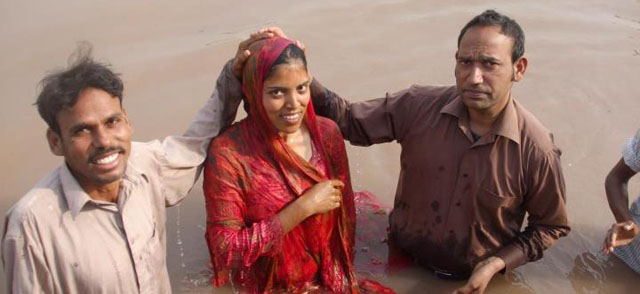
New Life Ministries in Pakistan Sent Some Photos

Visit their page to see more of their ministry.