We discovered this poem on line years ago and have often read it in our worship.
We just discovered it again and point you to its source.
Credit to Kate Compton and www.womenpriests.org.
I dream of a Church
I dream of a church
that joins in with God’s laughing
as she rocks in her rapture,
enjoying her art:
she’s glad of her world,
in its risking and growing:
‘tis the child she has borne
and holds close to her heart.
I dream of a church
that joins in with God’s weeping
as she crouches, weighed down
by the sorrow she sees:
she cries for the hostile,
the cold and no-hoping,
for she bears in herself
our despair and dis-ease
I dream of a church that
joins in with God’s dancing
as she moves like the wind
and the wave and the fire:
as church that can pick up
its skirts, pirouetting,
with the steps that can signal
God’s deepest desire.
I dream of a church that
joins in with God’s loving
as she bends to embrace
the unlovely and the lost.
A church that can free,
by its sharing and daring,
the imprisoned and poor,
and then shoulder the cost.
God, make us a church
that joins in with your living
as you cherish and challenge,
rein in and release,
a church that is winsome,
impassioned, inspiring;
lioness of your justice
and lamb of your peace.
It will soon be three years since member churches of the Southeastern Pennsylvania Synod of the Evangelical Lutheran Church in America failed to support one of its member churches and voted— against its own rules—to allow Bishop Claire Burkat to take the property of Redeemer Lutheran Church in East Falls, Philadelphia.
This, by the way, is the only issue Synod Assembly voted on. It was not the only issue Redeemer had appealed. Bishop Burkat interpreted the vote as blanket endorsement of all her policies.
Redeemer, which she had already improperly stripped of membership rights even before the vote, now had no say in the church. This was not the Lutheran way. It is now!
This exertion of questionable power was intended to strike a final blow to a church that had been a thorn in the Synod’s side for a decade because Redeemer would not accept the imposition of powers it never agreed to upon joining the ELCA.
Instead, the “final blow” sparked legal action. Courts have taken a hands-off stance. In four years of litigation the case was never heard. By citing the First Amendment (forbidding the establishment of law regarding religion), the courts have ironically made law not only for SEPA churches but for every corporation in Pennsylvania. The Articles of Incorporation, once the document to which all bylaws had to conform, are now subservient to any fickle bylaw change.
The SEPA/Redeemer conflict, which raged while member churches watched in silence has changed every congregation’s relationship with SEPA and the ELCA. Lutheran polity, developed over hundreds of years and a source of our denomination’s strength, was changed in the courts, not by consent of the governed.
Lutherans have been asleep. Clergy, who should know better, failed to speak up and defend the congregations they serve. Are they afraid? Are they looking out for themselves?
Lay people, who as individuals may have great knowledge of church rules or almost none, followed the clergy.
Lay people are now vulnerable. Clergy will disappear at the first sign of trouble. Because courts won’t hear cases involving church government, your church leaders will not hesitate to make disputes personal against the lay leaders of your congregation. This has been their strategy.
This is church government at its worse.
The result: no SEPA congregation really owns its property any longer. Your bishop can swoop in and lock doors and sell your land and your constitution no longer protects you. Your bishop does not need any reason under this new interpretation of the law. Your bishop must only convince Synod Council, which has proven to be a pushover, that it is for the best — not necessarily the congregation’s best — the Synod’s best.
This is the result of a Synod Assembly passing huge deficit budgets that could not be met without going after the assets of member churches.
Bishop Burkat is indignant that anyone suggests this was a plan, but she has failed to identify from where the additional annual $300,000 was to come if not from taking property from member churches.
Redeemer stood up to this.
Only the congregations of SEPA can fix this mess. But that means it must adopt some of the qualities of Redeemer.
Congregations and clergy must
question their government. If they do this with fear, that’s a sign something is wrong.
connect with their representatives and become informed of the issues they vote on.
learn to speak up.
become more interconnected. Who are your neighbors? It’s easy to vote against your neighbors when you know nothing about them!
read their founding documents.
It wouldn’t hurt if some of the messages of the original founding document — the Bible — were applied.
It is hard for us at Redeemer to not ponder this as we approach our third Easter locked out of our church by a denomination that has allowed this to happen.
The Alban Institute’s Roundtable is unusually active this week. The weekly topic laid out all the failings of the mainline church. The resulting dialog was a mild outrage.
“Why are we going over what’s wrong? We know what’s wrong? How can we fix it?” Among the most desperate and honest questions is, “Can it be fixed?”
There is still a disconnect between church leadership and church members which may be at the heart of a general disillusionment with the Church.
Why do people become involved in church?
Some are born into church-respecting families.
Some seek answers to life’s problems.
Some are looking for peace and comfort
Some are seeking validation or acceptance.
Some are seeking God.
One way or another, many people find something in the church worth making it part of their lives. Something attracted them. It was probably someone humbly modeling the teachings of Christ.
That opens the door. Then what?
Church always asks more of us. It asks us to learn and to grow. It encourages us to take stands on issues. We are asked to influence others.
And then the rules begin. Rules are prompted by leaders who want order and power. This lessens the potential of the Church.
The laity hit a glass ceiling. Take a stand—but follow us.
Laity have a choice. We choose to become involved when our initial needs are met and we can make a difference. We don’t join churches to take on more financial woes. We don’t join to have more authority figures. We want to feel loved. We want to know God.
Part of the gift of the Reformation — a cause for which many gave their lives — was the empowerment of the laity. Grace is freely given. No middle man is needed. That message is clouded today in a Church where any “stand” is accepted only if it is politically correct.
The Church is at its strongest when it fosters courage by example.
There is an old Sunday School hymn, probably long forgotten by most:
Dare to be brave. Dare to be true. Fight for the right for the Lord is with you. He knows your trials, when your heart quails. Call Him to rescue His grace never fails.
The Church often speaks out of both sides of its mouth. Be brave. Do as we say.
One commenter in the Roundtable discussion wrote an impassioned essay on his frustrations on spreading the Gospel. He concluded with his own battle cry—that he would remain faithful in knowing God.
He is correct. That is the foundation of all that is good and can be better in the Church. It is fundamental. Work at knowing God and the message we send will ring loud and clear. Then we will know when to follow and when to lead. We will be empowered to do both.
“Why don’t ‘you people’ just find another church and stop all the anger?” a pastor asked one of our ambassadors on a recent visit.
That would make life so easy—if only victims would not fight back when they are bullied.
We assure the people of SEPA that Redeemer does not like being angry. Sometimes anger is appropriate.
Jesus became angry at the sight of the moneylenders defiling the Temple. For the last four years, Redeemer has watched those with financial interests in our property behave in similarly greedy and self-serving ways in our sacred space.
Anger is not fun. The alternative — to ignore anger—is to deny our sense of worth, our passion, our community…and not least…our faith. SEPA demands we mothball our memories and our heritage and that we break our friendships and connections with the community where we still live. We are expected to hide our light under a bushel and become passive pew-warming Christians in some other place than our own community.
SEPA discredits the volunteer hours that went into making Redeemer grow in the last ten years. Our documented successes go unrecognized; they collide with SEPA’s prejudice and true goals — acquisition of our assets.
The resulting conflict was needless. Despite reports to the contrary, there was NO forum for mutual discernment, NO long period of working together, NO consideration for the elected leaders of Redeemer.
There WAS ample abuse of the constitutional processes.
Lawsuits could have been avoided. Financial challenges could have been minimized. There were numerous paths to peace. SEPA leadership chose aggression at every turn.
In another synod, a congregation much smaller than Redeemer appealed a similar synodical decision to close. Their story is much like Redeemer’s, complete with a locksmith raid. But comparisons end there. Their Synod Assembly supported the congregation. This congregation is still small but has started community outreach that is funding their church well. They have been helping Redeemer.
Redeemer, easily five times the size of this church, had similar plans which by now would have been quite lucrative and supporting an exciting ministry in East Falls.
Instead Bishop Burkat continues to create a widening wake of hurt, anger and destruction.
Lutheran constitutions and government depend on the understanding that laity and clergy are equals and the organizations within the church are interdependent. Lutherans are supposed to work together.
This cannot happen as long as SEPA Lutherans stand on the sidelines and watch in silence as member churches endure abuse.
Back to the pastor who advised us to just stop being angry.
Why don’t we just find another church?
Our answer. We’ve been vagabond Lutherans for nearly three years. We’ve reached out to 43 of SEPA’s 160 congregations. We’ve visited. We’ve left contact information. We’ve written letters. We’ve made some friends along the way, but the fact is . . . none of the congregations still within the ELCA have reached out to us. No active pastor has visited our members to offer any kind of pastoral care. (Two retired pastors have helped.)
SEPA, the conflict is in your hands. You could turn this around at May’s Synod Assembly by demanding your leadership work to reconcile with the Lutherans of East Falls.
We repeat a wonderful quote all congregations should take to heart.
People should not have to find a church. The church should find them.
Today’s Alban Institute Roundtable weekly post is depressing. It features an excerpt from a book on the condition of the church, written by Kenneth J. McFayden.
It is a “Litany of Loss”—a list of ten losses to the modern church which seems all the longer for its hopelessness.
Very few in the church are unaware of the fragile state of the neighborhood church. Perhaps larger churches, in modern, squeaky clean facilities, in thriving suburbs can escape (for the time being), but small town/country churches and urban churches face challenges.
There is commonality. They are older than suburban churches (in most cases) and have experienced shifts in their communities that the Church never foresaw. Suburban churches have yet to face the same challenges — the same litany of losses.
They will.
Let’s learn from experience.
The challenges facing so many neighborhood churches might never have happened had the need for change been addressed decades ago.
Too much was left unattended. This is a failure of leadership, not of Christian community.
As long as bills were paid, the coming challenges were ignored. As times grew tougher, less was done but more was needed. Part time pastors were called when full-time effort was called for. Paying the existing bills became the mission when money was needed for change. All church activity was scaled around maintaining church as it was known. When things changed, the Church was unable to meet its fundamental mission — to reach first its nearest neighbors.
This didn’t happen overnight. It took years of neglect.
The lessons:
If we focus ministry on existing community, we will face trouble when that community ages or relocates.
If ministry focuses on tradition (including denominational traditions), there is little to attract new members from different traditions.
Little changes are hard. Big changes are closer to impossible. The Church must foster an atmosphere where little changes are not so momentous as to shake traditions or threaten security. Make change a habit.
For denominational leaders and professional leaders to neglect their congregations’ needs for little changes over the years and then descend upon congregations with domineering strength when they face challenges damaging to the foundation of Christian community—fails fundamentally to nurture and empower the faithful.
Small congregations do not need dramatic overhauls. They need love. They need it now.
Love feeds hope. Hope fuels action. Action brings change.
Be joyful in hope, patient in affliction, faithful in prayer.
A business blogger recently posted statistics claiming that women are the most powerful “brand ambassadors” in the world. The business world sometimes uses a church term, evangelist, for this job description. Once again, the church can learn from the world of business.
Women are 80% more likely than men to try new products/services based on advice of a friend.
Women are 74% more likely than men to encourage friends to try new products and services.
Women tend to stay more engaged (74%) with products and services they like.
Women are 42% less likely to share negative experiences with products or services.
Women are only 32% less likely to avoid products or services based on a friend’s negative experience.
These interesting statistics remind us of something we encountered in our own experience and on our Ambassador visits. Redeemer’s greatest period of growth was nurtured less by pastors but by the presence of a deaconess, who ran the educational and social programs in the church. Older Redeemer members could tell us the names of pastors but they talked about the work of the deaconess. In our visits we encountered several churches that referred lovingly to a long-departed deaconess.
And then we remembered the power of the women’s group at Redeemer, which operated independently with their own budget and bank account. Unhampered by church council they chose their own social pursuits — all of which reflected well on Redeemer as a whole. We thought back to the days of the Women’s Auxiliaries and Ladies Aid Societies.
Many of the churches that struggle today to afford pastors have their roots in the less recognized and less compensated devotion of women.
In a television program that follows well-known entertainers as they research geneology, Actress Helen Hunt appeared to be mortified by the revelation that her great grandmother had been a powerful force in the women’s temperance movement of the 19th century and early 20th century. She sat with an historian who pointed out to her that this movement was actually revolutionary, fighting serious societal problems that were affecting their communities in a world that gave women no vote or voice.
Women have always had a voice — just not a publicly recognized one. Their voice was easily overlooked because men controlled publishing as well as the board room. The powerful women’s groups of the era grew from passion, commitment and perseverance to make a difference in a world that refused to recognize their abilities.
No more!
The church would be considerably stronger today if it recognized and unleashed women’s powerful inclination to nurture — which is what the statistics quoted above reveal.
Consider this as you make plans for church growth. The challenge is to find modern, equitable ways to do this.
We have not advocated that churches, as a body, rely on Facebook. Our main reasons are the intimate nature of Facebook and the need to monitor it, both of which we think present challenges for churches and are best managed individual to individual — not institution on behalf of an individual.
But the fact is, most of your church members are probably on Facebook. We can advise and encourage individuals to use Facebook in a loving way — which will strengthen Christian community on or off the Social Media grid.
HeartYourChurch web blogger, Jason Stambaugh, shared his experience on Facebook when he recently reported the death of his mother. We extend our sympathy to Jason and his family and thank him for sharing with us and so many other “strangers.”
Jason’s blog post is an intimate account of his feelings on “pressing the button” to share his personal tragedy. It is worth a read.
He ends his post with four suggestions on the use of Facebook when sharing personal news.
(1) Like the post and leave a comment. By liking and commenting, you are helping to circle that person and their family with love.
(2) Share the post or link with your own personal message. I shared a link containing information about my Mother’s viewing and funeral. A handful of people reshared that link with a personal message about my Mom. Not only did I appreciate that they were helping me spread the word, I really enjoyed seeing what they had to say.
(3) Send the person a message. With so many likes and comments flowing in, it was hard to keep track of what everyone was saying. About a dozen or so people sent me Facebook messages that I received directly, like an email. They were easier to read and keep track of. If you have something you’d really like to share with the bereaved, send them a message.
(4) Do something. Follow up your like, comment or message with an action. Whether it’s attending the viewing or funeral, sending a card or making a casserole, it will mean a lot to the person and/or family. The follow-up action makes your words “mean” something.
The last point is the most important. Facebook in the Church cannot replace the loving touch, the soft shoulder, the warm embrace, a hand held in prayer or the sympathetic tear. It sounds so old-fashioned, but we must remember to send a card, flowers, or deliver a hot-dish to the family—and attend the funeral.
Have you ever noticed how the restaurant server has a knack of asking if everything is to your liking just as you’ve filled your mouth with a forkful of tough meat?
Similarly, the car dealer might call and ask how you are enjoying your new car a week into your purchase, not three months down the road, when you really know something about the car’s performance.
People want to hear kind words and good things about their work. Churches and church leaders are no different. They tend to identify happy souls and and engage them. The unhappy are neglected and eventually will not be in church at all.
There are more people not in church than in church!
Our faith and Christian relationships are precious. Once broken, repairing them is costly and difficult work.
Churches work hard at seeming to care. Leaders seek agreement and talk about their successful relationships, while the discontented are given labels that muffle their voices.
Church leaders talk about processes of “mutual discernment” — the hottest buzz words in the church at the moment.
Often, the process of mutual discernment has the regional body unanimous on one side of the fence and the congregation unanimous on the other side of the fence with neither side reaching to open the gate. Yet reports will tell of the process of mutual discernment that resulted in a one-sided decree.
Lay people may have to put up with this on the job. They will feel differently about it in church where they are the shareholders.
Dealing with discontent is a steady and ongoing process and involves sincere, dedicated communication. Discernment is a process of listening and responding. It is hard work. To claim a process of discernment, while neglecting the necessary work, is dishonest.
If congregants sense that their concerns don’t matter, they have a remedy. It’s a multistep process.
They complain publicly.
They complain bitterly in private.
They keep their billfolds in their pockets.
They stay home.
They continue to complain, but not in church.
The earlier the church intervenes and shows true concern, the easier the process of reconciliation becomes. Left unchecked, discontent will spin out of control and damage the whole people of God.
Discontented Christians have their grievances steadily on their minds. Their faith and way of life are under attack. They may no longer be attending church, but they are probably talking to their neighbors and friends at the bowling alley and grocery store. While pastors are feeling warm and cozy, surrounded by their closest supporters, the foundation of the community they are serving is eroding in forums they cannot control.
What is eluding many in the Church is that there have never been more forums for the discontented.
It was never more important for the Church to learn to deal with people who have a beef with them.
Wise church leaders spend time with the discontented. That’s where church growth will happen. That’s where the strength of the future Church lies.
Look for the rose in your crown of thorns. It’s what reconciliation is all about.
Go to that link and you’ll also see information on the upcoming Social Media Success Summit 2012 which is scheduled for the the month of May. Learn all about latest trends in Social Media without leaving home! The Summit makes more than 17 hours of learning available at your convenience. Hour-long webinars are held live, scheduled usually on Tuesdays and Thursdays throughout the month of May. All sessions are recorded for unlimited review for the next year! Transcripts and slides are also available. It’s a great way to join the Social Media community.
No travel! No hotels! No restaurant bills! Can’t beat it!
Two members of 2×2 recently attended a speech by the Rev. Al Sharpton, community, political and civil rights activist. Sharpton commented that though he is often asked to speak at celebrity funerals he usually refuses. He said he doesn’t want to eulogize another “irrelevant life.”
“If you want me to speak at your funeral give me something to work with,” he implored.
His words were harsh and the crowd was shocked. Sharpton deftly turned shock to inspiration and people were soon on their feet applauding. His intention was to motivate. His message: It isn’t good enough to sit and enjoy the blessings of difficult battles won by our foreparents. We must continue to fight for justice. That fight requires personal sacrifice.
Many Christian congregations today are threatened by similar irrelevance. People come to worship. People come for fellowship. People come to hear the Word. Some token projects might be undertaken—dollars paid for someone else to do the work or take the risks. When it comes to making personal or collective sacrifice for a difficult but meaningful cause, the line that forms is very, very short.
The Church, despite the power of its message, is often an irrelevant presence in our society. We sit back and enjoy the protected status of the Bill of Rights and do nothing with it. In many cases, a committee might be formed to draft a Social Statement that is adopted at a biannual assembly—and then mothballed.
Throughout the year, we honor a host of saints, many of whom are little more than names to us. Lutherans believe that we are all saints and sinners. The value of examining the lives of a few notables is to remind us that faith requires commitment and sacrifice. Yet the lessons are rarely learned.
Daniel Ellsburg, who leaked the revealing and controversial Pentagon Papers, made a profound statement. His actions defied the law. They also exposed wrong and hastened the end of the War in Vietnam.
Ellsburg was on his way to or from a court hearing. A reporter stuck a microphone in his face and asked the question, “Mr. Ellsburg, are you willing to go to prison for this?” Ellsburg’s ready response was, “Wouldn’t you go to prison to help end this war?”
Ellsburg was named by his opponents in power at the time, “The Most Dangerous Man in America.”
Which of our congregations can claim a similar honor?
Is there any injustice so wrong that we are willing to go to prison to make things right?
Are we prepared to take risks to benefit the downtrodden?
Are we prepared to take action when the injustice is within our own Church?
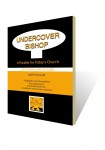
Join Bishop Ruby Kinisa as she visits small churches "under cover" to learn what people would never share if they knew they were talking to their bishop.
Undercover Bishop will always be available in PDF form on 2x2virtualchurch.com for FREE.
Print or Kindle copies are available on Amazon.com.
For bulk copies, please contact 2x2: creation@dca.net.
MISSION INSPIRATION OFFER
A visual and biblical guide to help congregations define their missions.
Contact Info
You can reach
Judy Gotwald,
the moderator of 2x2,
at
creation@dca.net
or 215 605 8774
Redeemer’s Prayer
We were all once strangers, the weakest, the outcasts, until someone came to our defense, included us, empowered us, reconciled us (1 Cor. 2; Eph. 2).
Be calm. Wait. Wait. Commit your cause to God. He will make it succeed. Look for Him a little at a time. Wait. Wait. But since this waiting seems long to the flesh and appears like death, the flesh always wavers. But keep faith. Patience will overcome wickedness.
—Martin Luther