4/7InkzHVUEQeEdU9vpc1tikzEhChrKmPfvXI-FSDBrBQ

Uncategorized

Blogging Ideas for March

Keep blogging!

Here are some ideas to help you keep your church blog active during March. It’s only two weeks away. Starting scheduling posts now!

Spread the work around and assign one of the topics below to other social media team members.

Key Scripture Passages

Meditate on Scripture assigned to the Sundays in March and think of one thought or illustration which would help communicate its meaning. Keep it short. Search for a free online photo to go with your meditation. photopin.com

March 4

Psalm 22:27-28
All the ends of the earth shall remember and turn to the LORD; and all the families of the nations shall worship before him. For dominion belongs to the LORD, and he rules over the nations.

Mark 8:34-35
He called the crowd with his disciples, and said to them, “If any want to become my followers, let them deny themselves and take up their cross and follow me. For those who want to save their life will lose it, and those who lose their life for my sake, and for the sake of the gospel, will save it.

Mark 9:7
Then a cloud overshadowed them, and from the cloud there came a voice, “This is my Son, the Beloved; listen to him!”

March 11

Exodus 20:1-17—The Ten Commandments

1 Corinthians 1:19 & 25
For it is written, “I will destroy the wisdom of the wise, and the discernment of the discerning I will thwart.”  . . .  For God’s foolishness is wiser than human wisdom, and God’s weakness is stronger than human strength.

John 2:19
Jesus answered them, “Destroy this temple, and in three days I will raise it up.”

March 18, 2012

Psalm 107:1
O give thanks to the LORD, for he is good; for his steadfast love endures forever.

Ephesians 2:8
For it is by grace you have been saved, through faith—and this is not from yourselves, it is the gift of God. (This passage helped to launch the Reformation. Write about it!)

John 3:16
“For God so loved the world that he gave his only Son, so that everyone who believes in him may not perish but may have eternal life. (Remember the signs that the faithful would carry to the pro-football games, hoping for media attention.)

John 3:20-21
For all who do evil hate the light and do not come to the light, so that their deeds may not be exposed. But those who do what is true come to the light, so that it may be clearly seen that their deeds have been done in God.”

March 25

Jeremiah 31:34
No longer shall they teach one another, or say to each other, “Know the LORD,” for they shall all know me, from the least of them to the greatest, says the LORD; for I will forgive their iniquity, and remember their sin no more.

Psalm 51:10-12
Create in me a clean heart, O God, and put a new and right spirit within me. Do not cast me away from your presence, and do not take your holy spirit from me. Restore to me the joy of your salvation, and sustain in me a willing spirit.

John 12:24
Very truly, I tell you, unless a grain of wheat falls into the earth and dies, it remains just a single grain; but if it dies, it bears much fruit. Those who love their life lose it, and those who hate their life in this world will keep it for eternal life. Whoever serves me must follow me, and where I am, there will my servant be also. Whoever serves me, the Father will honor.

March 25

is Annunciation Day (a reminder in the midst of Lent that the Christ child is coming)

As March ends, Holy Week begins

  • Write about Holy Week, especially the lesser known or observed celebrations.
  • Saint Patrick’s Day—Saint Patrick’s life is fascinating but flooded with shamrocks and leprechauns on that day, few people know much about the real St. Patrick.
  • St. Patrick’s Day is an opportunity to teach the Trinity. That’s what the shamrock imagery is all about!
  • Remind people of Daylight’s Saving Time. We lose an hour on March 11.
  • March 20 is the first day of Spring.
  • Girl Scout Week is March 10-16: feature your girls. Ask them to contribute to the blog.
  • March is Women’s History Month: highlight your women. Ask for a guest blog from women leaders.
  • March is National Nutrition Month—Promote a food drive for local food bank.
  • Easter is in April this year, but you might run a photo of Easter/Palm Sunday in past years. History helps build community.

Write about Lent and Lenten customs.

  • Shrove Tuesday
  • Ash Wednesday
  • Maundy Thursday (meaning of Maundy)
  • Burying the Alleluias
  • Meaning of the Word Alleluia
  • Difference between Hallelujah and Alleluia
  • Foot washing
  • Green Thursday (“grief” Thursday from German tradition)
  • Pretzels and Lent (post a recipe)
  • Hot Cross Buns (post a recipe)
  • Stripping of the Altar
  • Veiling of the Cross
  • Secular Easter customs (rabbits, eggs, flowers, candy, etc) Newcomers to America have a tough time with these. Help them!
  • Liturgical Colors for Lent and Easter
  • Write about the links between Passover and Easter and overlapping customs of the related faiths
  • Explain a Seder

Just do a search engine search for these topics to find information.

Make friends with your search engine!

Use your search engine to find meaningful art to discuss. Play around with terms. Different things will come up. For example, start with “art Maundy Thursday”. Then try “painting Maundy Thursday”. Then try “art Jesus foot washing”.

Poetry is an oft-overlooked medium. Plug in “poetry Lent” or “poetry Easter” and help your readers find meaningful resources.

A Special Easter, Ascension or Pentecost Service

The 14 Stations of the Risen Lord

The Roman Catholic tradition has long featured the Stations of the Cross. They are part of Catholic architecture.

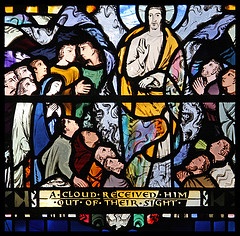
Five or six years ago, we found photos online of a church with windows that depicted the 14 Stations of the Risen Lord, an interesting variation on the Stations tradition. If memory serves, the church is in Washington State, but a search online today did not help us find the photo references.

At that time, we researched some material to create a service of scripture, meditation, prayer and song which follows the 14 Stations of the Risen Lord. We regret that any references we used at the time were not recorded.

But we thought small churches might enjoy this variation for special observances of the Easter, Ascension or Pentecost seasons.

The attached PDF is prepared in printer’s spreads, which means the pages are in position to be printed and folded into a booklet. They are, however, numbered, so you can follow the Stations by number.

All the stations are biblical except one. The windows depict the Risen Christ appearing to his mother, Mary. The Bible does not record this, but scholars have long debated its likelihood.

Please feel free to choose your own hymns and prayers or even to add your own meditations. This is presented as an idea for small churches to adapt for creative worship.

We will be glad to add attributions, if they are found. Just drop us a comment, please.

photo credit: Lawrence OP via photopin cc

An Easy Easter Play for Small Churches

Here is an Easter Play written for the smallest of churches. It is extremely flexible. You can stage it as simply or elaborately as you like. You can pick and choose your own music . . . or use none at all.

It can be used as the format of a worship service for mid-week Lenten or Sunday Service.

The play calls for a minimum of four actors, but you will see that a few more can be added. Each actor delivers a soliloquy so there is no need for hours of rehearsing dialog. Your actors can even read their parts if they don’t want to memorize lines. Couldn’t be easier!

This is 2×2’s Lenten/Easter gift to you. Enjoy! Were You There?

Were You There?

2x2Avatar2Consider Subscribing to 2×2

2×2 is a project of a small church. We know what it’s like to review resources that call for four-part harmony an organist and choir director when all we have is a few people willing to do their best.

We started developing our own resources and sharing them!

2×2 resources can be easily led and can be adapted to use with the skills of the people you have.

2×2 offers occasional dramas and song ideas, but we also have two weekly features.

  • A slideshow (entirely editable) that complements the lectionary and liturgical year. Individual slides can be used in church bulletins and newsletters or on your church web site.
  • An object lesson to use with adults or with a mixed group of adults and children. Object lessons are a great opportunity for small congregations to learn together.

We also encourage small churches to begin using social media and have several series with tips and tricks.

Our little church reaches between 2000 and 3000 readers each week—tripling our reach each year. We are happy to help others do the same.

Please consider subscribing and sharing! It’s free!

Thanks!

Blessings for your ministry!

Subscribe to Blog via Email

Enter your email address to subscribe to this blog and receive notifications of new posts by email.


Adding a Video Interview to Your Blog

Posting an interview is a good first step to exploring video on your blog or web site.

Here are some guidelines for beginners. We’ll build later posts on this foundation.

  • Make your guest comfortable in a well-lit spot. Make sure there is enough light on your guest’s face, but don’t worry too much about lighting for now.
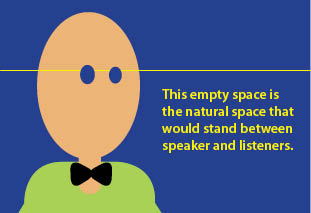
  • Frame your shot. We’ve included a few illustrations to show you how to position your interviewee.
  • A seated interviewee will pose less of a challenge for beginners. If you choose to have your guest standing, be prepared to move!
  • Keep backgrounds simple. You don’t need a set. A corner of a room with drapery, non-intrusive wall art or a bookcase is fine. A side-table with a lamp or potted plant is another possibility. If you are in a person’s office, set up the interview at the person’s desk. The background should not distract from your speaker’s message. 

  • Prepare your guest. Engage in conversation before the interview starts to make him or her more comfortable answering questions. You might review the questions in advance.
  • Test your equipment and sound. If you are using an auxiliary microphone, make sure the sound quality is good. This process can help break the ice with your guest. You can make it a little silly. Have your guest recite The Gettysburg Address or sing Mary Had a Little Lamb. This will do wonders to make your guest speak more informally when the real interview starts.
  • Make sure your guest knows the time constraints. If you plan to run your video without editing, pose just one question and let your guest take it from there. Alert him or her in advance that you will give a nonverbal signal when you need to draw the interview to an end. One technique used by some interviewers is to say, “Tell me in one sentence what you think about . . . . ” Your guest will invariably give you three sentences—enough for a nice, short blog interview!

23 Advantages for Churches Using Social Media

A business web site (businessesgrow.com) recently published a list of 25 non-financial benefits of business blogging.

The list can be adapted to show the benefits of church blogging. Our list is a little shorter. We combined some things. Here goes:

  1. Create a database of answers.
    Seekers and members ask the same questions over and over. The need to have ready answers for most Frequently Asked Questions inspired Luther’s Small Catechism. Archive your answers to the questions you hear most often.
  2. Showcase your workers.
    Shine the spotlight on your volunteers. It is likely to inspire and encourage others.
  3. Integrate your message.
    Your pastor and church leaders create content regularly when they preach and teach. Give their work broader reach.
  4. Help search engines find your church.
    A lively church blog will rank over those annoying listings by the internet version of the phone book yellow pages.
  5. Tell your community why your congregation is different.
    Make your ministry stand out.
  6. Lay the foundation for other forms of communication.
    If you have an active blog, it will be easy to create a newsletter or congregational report. Cut and paste!
  7. Show your face.
    Your blog will reveal your congregation’s personality. Potential visitors will feel like they know you before they cross the threshold. Be assured — visitors today look at web sites first!
  8. Measure your vitality.
    A church with an active blog is proving they are engaged in the community with relevant and purposeful activity.
  9. Good public relations.
    Churches always have trouble attracting the attention of the press. If your blog has good community content, your local papers will find you.
  10. A quick and easy way to communicate with your current membership.
    If your members subscribe to your blog, they will get an immediate notification of breaking news. No need for the phone chain. Just don’t abuse it if you want to keep your followers.
  11. Engage your congregation.
    This may take some patient nurturing, but your congregation’s blog can become a place for congregational interaction and provide valuable feedback to your leaders.
  12. Ask questions.
    How many vestry or council meetings are spent debating what the congregation wants? With a congregational blog, you can ask them. Pose a question two weeks before a meeting and see what people have to say. If you want to keep this a valuable tool, be prepared to listen to the answers and respond wisely.
  13. Crisis management.
    You do not have to rely on anyone else to supply facts about your ministry. You can tell your OWN story! When a controversial decision is reached, use your blog to help the disgruntled understand. If your denomination is in the news, add your slant to the public issue.
  14. Forum for ideas.
    Again, this will take some nurturing, but foster the sharing of mission ideas. If people know they can make a difference, they will speak up. Be prepared to respond to ideas. No one likes to put their thoughts on the line only to be ignored.
  15. Give your leaders a platform.
    If their ideas are good, they will catch the attention both within and outside your community. That’s giving your church new reach and authority!
  16. Segmentation.
    This is something we don’t think about in the church. We like to think of ourselves as being “one.” There are, however, sub-interests within any united congregation. With the internet you can address these without leaving anyone out. In the business world it’s called “market segmentation.” In the church, it might mean directing some blog posts or creating a separate page or category within your blog for singles, youth, church musicians, daycare parents or Sunday School teachers.
  17. Identify advocates.
    An active blog will create “fans.” It’s nice to have supporters and know who they are!
  18. Inexpensive way to keep connected.
    You can gently remind your audience of upcoming events without the time to make phone calls or incur the cost of sending letters or postcards.
  19. Measure controversial issues.
    Should you change the time of worship this summer? You can debate this in a vacuum OR poll your members on your blog.
  20. Create a volume of work.
    Your blog will create your congregation’s history. Take your posts and create a quarterly or annual report. Your loyal members are likely to purchase an “annual” if you make printed copies available and include lots of photos.
  21. Network.
    Your blog can help you find people with special skills for a variety of needs from programming to building maintenance. Vendors may even be willing to contribute or discount services if you give them a plug and a link on your blog.
  22. Connect with people on an emotional level.
    Most congregational publications are fairly dry. Blogs can come to life with good story-telling, photos and video.
  23. Prove to your community that you understand today’s world. 

Sharing the Gospel in Social Media

One reason many churches shirk away from using the power of social media is an old-fashioned sense of ownership. Their slant on the Gospel becomes a bit proprietary. We carefully hold our cards close to our vests, waiting for the right moment to play.

We forget that the Gospel is for everyone. We start to think about how telling the Gospel benefits us.

Ministry plans sometimes try to fill niches not addressed by other congregations. This can be very altruistic and good. But sometimes it is more like carving out territory, hoping to attract Christians our way to help our parish statistics.

That thinking will not work in the social media age. Sharing the Gospel has never been more possible and churches must adapt our thinking to a world of new possibilities.

Sharing is a good thing. Social Media thrives on it. It is becoming the accepted way of doing things. The internet thrives on linking to other sites.

So stop playing your ministry cards close to your vest. Tilt your hand so everyone can see your cards. Take a look at your neighbors’ hands and TELL IT!

Use your web site or blog to link to other ministries and good works in your neighborhood. It’s OK. Really! You may drive traffic away from your site for a moment, but your site traffic will soon benefit. People will remember that you helped them find that support group or social service agency. Your neighboring church will remember that you promoted their Cantata. They, in turn, might support your spaghetti dinner! You will be demonstrating that you care about your neighbors. That’s a good thing!

The message for today: Look for good things in your neighborhood to write about and link to.

photo credit: oknovokght via photopin cc

A New Year, A New Vision and A New Journey

This is the headline of an e-letter recently sent to the professional leaders of the Southeastern Pennsylvania Synod of the Evangelical Lutheran Church in America by Bishop Claire Burkat.

Bishop Burkat announced that she and the church were having an epiphany.

“The age of the mainline Church as many of us have known it has passed, and there is no blueprint for our journey in this next, rapidly accelerating age.”

The epiphany may have struck sooner and taken fewer casualties if Bishop Burkat had taken time to get to know congregations when she took office. Heart to heart dialog at the time might have helped her hear things we congregations were trying to tell her. We could have helped her lead. That’s the Lutheran way. Interdependence.

It has taken almost every day of her six-year term, but Bishop Burkat has discovered some things for herself.

“The most apparent changes in our congregations and denominations so far see us shifting our focus from relying on professional staff, planning programs, keeping-up buildings, and preserving institutions toward engaging people inside and outside our churches in spritual conversation, as well as creating caring communities, collaborative service, and collective discernment.”

Redeemer was trying to tell her that. We had forged our way, with very little reliance on professional leadership. We had fostered good relationships with neighborhood organizations. We had relied on the gifts of the laity. We recognized that God was at work in our community in a new and creative way.

Now SEPA has a new blog to share ministry stories of its member churches. Although the site invites us to Tell Our Story, we doubt that our story would make it past moderation. So we will tell our story here. Feel free to tweet or reblog or post it on God Is Doing Something Good Blog for us.

  • Redeemer had a growing outreach ministry to East African immigrants. They had found a church home in East Falls and were growing in participation and leadership. Redeemer of the 20th century had welcomed the 21st century, adapting our traditions—not forsaking them—to welcome many new people.
    Bishop Burkat and SEPA discouraged our ministry and locked us all out of God’s House.
  • Redeemer was concentrating on developing lay leadership.
    That need is the topic of Alban Institute’s Roundtable this week. Redeemer had been working at this for a decade. 
  • Redeemer had a plan to help immigrant families locate starter homes, obtain mortgages and make necessary renovations.
    Bishop Burkat and SEPA made this impossible.
  • Redeemer had a plan to pioneer congregational use of the web. The fact that we were locked out of our church home made this a priority.
    If you are reading this (along with our more than 100 daily readers) you have discovered our ground-breaking blog.
  • Redeemer recognized that our property, rented to a Lutheran Social Service agency, was contributing to a valued neighborhood ministry. This was a mission alliance that served a church agency, our congregation and neighborhood. If money were our sole objective, we could have rented our property for more.
    Bishop Burkat and SEPA’s interference put the agency in the middle of a property dispute. They chose to shut down their 25-year presence in our community.
  • With this long-standing mission project ruined by SEPA, Redeemer worked for a year to develop a school that would serve the community in a way which would also foster religious values.
    Bishop Burkat and SEPA evicted the school just as it was about to open.
  • Redeemer recognized that a neighborhood ministry to immigrants, while valuable and God’s apparent plan for us, was not likely to be funded from the offering plate. Neither would an outreach mission to college-aged youth and young professionals, also a large part of East Falls neighborhood. Both were obvious missions for any church in East Falls. We worked to develop alternate income streams using our assets.
    Bishop Burkat and SEPA sued us to obtain our property and endowment funds for their own use.

God continues to work through Redeemer.

In our excommunicated state, we began visiting other Lutheran churches. We started to see firsthand many common challenges. We are responding.

  • We are creating a model for a program that would help small congregations create an eductional outreach and reconnect with their neighborhoods. VBS-aid is getting inquiries from all over the coutnry. It’s an idea that could bring many benefits to the emerging 21st century church and to SEPA. It needs start-up funding.
  • Abandoned by our own denomination, Redeemer is forming new relationships with other Lutheran groups and other denominations. We are pioneering an educational model for congregations that would not be expensive and would create ongoing dialog and community—another good idea with growing support.

If SEPA hadn’t taken our money, we could fund our projects with our own money.

Bishp Burkat ends her missive to SEPA professional leaders:

“Let’s perceive this journey into uncharted territory as a great adventure. There will be dangers, and we will surely make mistakes.”

Bishop Burkat is right. Mistakes will—and have been—made.

It is not too late to admit that SEPA’s actions in East Falls were just that—a mistake. The art of leadership, especially Christian leadership, is to recognize mistakes and take actions to reconcile.

This is a leadership quality all churches must foster. Congregations must be free to make mistakes without hungry big brother/sister Church waiting to take advantage.

The road into the the future would be smoother if SEPA could admit their mistakes. Instead of counting coup on the neighborhood congregations, try respecting that God may be at work in ways you have yet to understand. That’s the value of an epiphany.

Redeemer may be SEPA’s most valuable congregation — and we’re not talking about land and endowments. Assigned an excommunicated status, declared to be dying, Redeemer has been trail-blazing.

It’s not too late to make things right in East Falls. We are ready for reconciliation. Are you?

As Bishop Burkat points out, “God is God and we are not.”

Adding the Power of Visuals to Your Blog or Web Site

We live in a visual world. Social Media advocates can take that for granted. They are pleased to get a few hundred thoughtful words together to publish a few times a week. Add a picture? That will take too much time!

A search for "mustard seed" in photopin.com helped find this photo. At the end of the post look for the photo credit, cut and pasted into the html. It took less than two minutes to find the photo and add it to this post.

Fortunately for us, there are media elves who specialize in analyzing our work. Elves like pictures and videos. When they start counting on their little green fingers they report that blogs using images and videos chalk up higher statistics. More people read them. Search engines find them more easily. Listen to the elves!

There are many inexpensive sources of art. istock images can cost as little as $2. But here is a source that is mostly free. All you have to do is add a credit for the image at the end of your post. You don’t even have to type. Just copy and paste the code.

www.photopin.com

Their catalog is vast. The trick for church bloggers is to come up with the right words to find a suitable image. You may have to play around a bit.

For example, a search for “The Good Shepherd” brought up a few religious images but a lot of images that were nowhere near topic. They may have been images of people with the name “Good” or “Shepherd.”

Better results came with different search words. “Stained glass windows” worked well.

Search engines can also help you. Use Google, Yahoo, etc. and click on the IMAGE tab. You’ll have to look at each image that comes up for copyright. It’s a good idea to always credit the source.

You can scan your own images or use your cell phone creatively for images. Objects around the house can add interest. In one of our earlier posts, we used an image of grapes to go with a phrase we had used in the post “sour grapes.” We bought that image from istock for a couple of bucks but we could have taken a cell phone photo of images of grapes from our own refrigerator.

Captions are not always necessary but they do give search engines one more thing to find. If the visual connection to your post is not obvious, write a caption.

Start to think visually. It will help prepare you for the next step . . . video.

photo credit: moominmolly via photopin cc

The Value of Asking “Who Cares?”

One of today’s blogs entitled “Who Cares?” written by Seth Godin, features an analysis of the value of caring in the hotel/restaurant business.

It concludes, “Caring, it turns out, is a competitive advantage, and one that takes effort, not money.”

This is a topic that sorely needs to be discussed within the church. So many of us go to church and look upon stained glass depictions of Christ carrying a lamb and leading the sheep who look up at Him with expectant trust.

Are we seeing this modeled by today’s church leaders?

We suspect the most accurate answer lies in how carefully denominations carry the smallest lambs among them.

Some denominations value their small membership churches and assign special leadership to guide them. They explore solutions and ministry ideas. They provide pastoral care. With care comes hope. With hope comes energy. With energy comes ideas and ministry.

When a denomination cares, they take time to know people and draw from their passion — even if their work is not bringing thousands of dollars to the denomination’s coffers.

Other denominations (including our own) intentionally ignore small congregations for years. In some cases, they provide no help. Worse, they provide a caretaker pastor who drains the congregation’s resources with no intention of growing the church. Every decision they make is predicated on their faith in failure. Soon the small church is seen only as a piece of property with (if they are lucky) an endowment fund to go with it. The people of the church become obstacles that must be removed by any means.

2×2 grew out of the latter leadership style. We have experienced the answer to the question “Who cares?” In our case, the answer has been: very few.

Asking this question can measure a denomination’s strength. Let’s start at the grass roots.

  • Do the people in the congregation care enough to resist being treated badly? Do they insist on being treated like children of God? Will they allow themselves to be ignored? Do they allow the Christian presence in their neighborhoods to evaporate by decree? What will they risk for their church?
  • Do the pastors care enough to find a way to speak up? If pressured, will they abandon the congregations they once felt “called to serve”? Will they vote with the pack and keep their personal feelings to themselves?
  • Do elected representatives of denominations care enough to take a fair look at ministry potential and to explore solutions? Will they demand that leadership demonstrate love and compassion? Will they allow denominational leaders to degrade individual members of a congregation? Will they lamely support the caching of congregational assets and exertion of power?
  • Do members of the denomination ask questions and insist on good behavior from their leaders, or do they accept explanations that don’t make sense, happy to not have the spotlight on their problems?
  • Do the national church leaders care enough to insist upon fair treatment of all congregations? Do they treat regional leaders as more trusted and valuable than the people they are pledged to serve?

Successful ministry relies on denominations who care. “Care” is a verb. It requires action.

Look for leaders who care.

The Four CHs of Christianity

There is a definite theme today in a number of today’s blogs. The same words keep popping up. Then Stumble Upon presented a quote in big bold letters. Here it is — tailored a bit for our purpose.

The four CH’s of Christianity:
Choices, Chances, Changes, Church
You must make a Choice to take a Chance or your Church will never Change.

The obvious biblical reference is to the Choices and Chances taken by the disciples and the Changes that resulted in the Church.

But what about today’s Christians? Our choices and chances are not likely to be recorded for posterity and referenced a thousand years from now by book, chapter and verse.

The choices in our lives are frequently taken from us. Signing on for Christianity can be a prescription for life in a religious rut, go to worship, do some church things — (teach children, sing, brew coffee, mow the yard), put money in the offering, and talk about taking stands and sacrificing. The mechanisms for serving become standardized — sign up for a charity run or volunteer in a soup kitchen. Others will likely join you and there is satisfaction in numbers. You can report numbers. “Ten members of St. John helped build a home for Habitat for Humanity.”

We never report or measure what we fail to do!

When the need for change becomes overwhelming, we often are ill-equipped to do more than talk about it. Leaders can find this comforting; more than talk might create friction. Friction is work.

Change does not happen without making some conscious choices and taking chances — some of which will not look prudent when the costs are projected. The choices that need to be made in the church today will not be popular. They will pull members and leaders out of their comfort zones. They will require new training and ways of thinking.

The chances that need to be taken may look foolish. They will seem daring . . . but that’s entirely biblical. You might have to spend some of that endowment money! You might have to look for new leadership.

Choices, Chances, Changes, and Church

Work at them with prayer. But don’t stop there. Take action.