I write about this topic a lot. I have no idea if it makes a difference, but I don’t see things getting better in the Church until somebody recognizes a few things. So I’ll keep jousting.
Everybody knows churches struggle today.
Most of the dialog about this phenomenon takes place in clergy circles. They look for answers. Some think they have them. There is little proof that the few successful church growers will sustain their success beyond their personal involvement.
You see there are two types of Christians—those who occupy the tiny altar side of the chancel rail and those on the deep and wide pew side.
On the chancel side: Clergy talk to clergy. Clergy write for a clergy audience.
Things are not much different from the other side of the chancel rail. Laity talk to laity. Not many laity write about the issues though! It’s dangerous!
The problems of today’s Church cannot be addressed without this changing and yet despite all the calls for change and transformation this dichotomy remains unchallenged.
There will not be more people in churches until people feel more a part of what’s going on.
This post references data from a study by Josh Packard, Ph.D., Exodus of the Religious Dones.
The topic is the unchurched—more specifically those who were once part of the happy Christian family.
I am one of the unchurched, although 2×2 is an active faith community. We just don’t fit in where we used to fit in for 120 years. We know why we are unchurched. We were locked out in 2006. Our property was deemed more valuable that our people. The synod that locked us out is still trying to shut down our ministry even though they declared us officially closed years ago. That thorn in their side.
Our experience validates all the reasons people feel disenfranchised from Church as listed by Schultz.
In the limited dialog we had with our regional body leaders, we weren’t exactly lectured. We were talked down to. But then most of the dialog went on behind our backs. This leads us to the Schultz’s next point.
“Christians are a bunch of hypocrites.”
The Bible forbids what happened to us on so many levels. But the learned clergy can’t see it for preaching.
And last . . .
“Your God is irrelevant to my life.”
I don’t think any of our 82 locked out members feel that God is irrelevant. We are a pretty faithful bunch. But the actions that were perpetrated upon us in the name of God are unrecognizable to us under any faith system.
Our most problematic finding. No one cared that we were there in the first place—and we are most definitely not welcome to come back.
Laity talk to laity.
But as I wrote, laity talk to laity. I’m hearing that our experiences, although among the most drastic and dramatic among many similar cases, are not alone.
Smart lay people go to church and aren’t part of a dialog about important issues. They are expected to listen to one person— usually the same person week after week—talk about issues that they deal with every day. Have a problem with what they say? You might be invited to express your views in private. Then again, you might not. Those in the pulpit don’t expect to be challenged.
Judgment is everywhere in the church. It’s in doctrine. It’s in how we welcome outsiders. It’s in who we ask to volunteer and serve.
Decades and centuries of preaching a gospel of inclusion and equality and laity are still treated as subjects.
There are biblical verses that cover these things. They are easily overlooked. Addressing them might create dialog!
And so, clergy seek answers among clergy.
Laity seek answers for a while. And then head for the door.
There are better things to do.
Learn from Business: Emphasize Retention
The key takeaway from Schultz’s post is something that businesses know and address daily.
Finding new members is far more difficult and costly than keeping old members.
Yet many a pastor or bishop heaves a sigh of relief when the those who might challenge them, on any level, disappear.
In this regard, the Church shoots itself in both feet. You see new members look to see how old members are treated. They are smart. History repeats.
My advice: Clergy, start talking to us, for the sake of the Church, please. And listen.
You’ve had decades to find answers within the chancel.
Katy Perry gets involved in a church dispute. Wow!
Maybe if we dyed our hair purple and sang better, we’d get national attention! The case is similar to our experience.
Who owns church land?
The concept of ownership in the Church is not often addressed until there is conflict.
Our case has shown the worst of this poorly defined hierarchical mess. The ideals of love, forgiveness and reconciliation flew out the door early on. Greed, pride, and power moved in. Gossip reigned. It was easy for others to look the other way. It was all so nasty.
But now there is a higher profile case involving a popular entertainer.
Lutheran founding articles, constitutions and polity are clear. Congregations own their property. This was the crux of our feud with our equivalent of an archdiocese, the Southeastern Pennsylvania Synod.
Catholic polity is less clear. The bishop controls all the land, maybe. Clearly the nuns thought they owned their land until they wanted to sell it. Oh, and the Vatican can weigh in at any time.
The nuns’ legal representatives accused the archbishop of acting “as if he were above the rules and immune from the obligations of civil law.”
The court decision in our case will not help the nuns. There it was decided: The Church IS immune from the obligations of civil law. Our courts ruled they have no jurisdiction in intrachurch disputes. If the law were applied our congregation’s position had merit, they ruled. But the law does not apply.
Result: The Church can ignore its own rules. They would have a hard time getting away with what they are doing with anyone but their own members. The state of things should have every congregation questioning their relationship with their denominations. The lust for land is insatiable. Sooner or later, these decisions will affect everyone.
Small congregations are the most vulnerable. It isn’t that they can’t make it on their own or that their work has no value. Their failure enriches synod. Success won’t matter. The relationship is broken from the start. The prospect of land becoming available gives synods incentive to provide poor leadership options—caretaker pastors and interminable interims who report to the bishop. They are playing a waiting game. Congregations believe there is no hope. They aren’t imagining trusted leaders are looking for their own enrichment.
Congregations with members who can read their constitutions and determine that the actions of their leaders defy the authority given to them are walking the Jericho Road. They can expect to be robbed and beaten and left for dead. They can expect the priests and Levites to speed up as they pass by.
The behavior cited in the nuns’ case is all too familiar—refusals to meet, publicly bashing the decisions made by the sisters as if they are fools, moving ahead as if they do not exist. In short, arrogance.
At stake in the California feud is the future of the aging nuns. At stake in our case was the future of our entire faith community. Somehow these issues get buried.
If I had not been sued personally in our case (not to give the archbishop any ideas) I never would have started reading church constitutions.
But I was sued, so I started looking to see when and how the polity taught in confirmation class had strayed. The answer—bit by bit. A tweak to a bylaw here, another tweak there.
Here is what I learned.
Predecessor bodies of our denomination forbade synods from owning property.
The reason is now obvious.
Synods exist to serve congregations. Property ownership distracts from mission in their case. Land ownership for congregations means they have a presence and say in their community. Land ownership is best left to congregations.
Ownership changes mindset. That’s why synods should not be in the real estate business. It’s tough, it’s expensive, and it requires skills not taught in seminary. Property management becomes mission. It also is addictive. You have a little; you crave more.
While congregations struggle to support synods, synods look for sizable cash infusions to support their real estate enterprise. They need legal advice, property management advise, caretakers. Synod staff and budget will soon be out of hand. You’ll need a development office for fund-raising—competing with your supporting congregations’ offering plates. Since the constitutions don’t allow synods to take property, they have to start conniving. Congregations are not required to leave property to the synod if they close—unless they are mission churches. So the strategy will be to find a way to get congregations to accept mission status. Bribery is a good short-term investment. The congregation won’t realize that accepting a few thousand dollars, a gift that can be revoked at any time, lost them their property rights forever. If congregations don’t agree, the decision can be forced by using Involuntary Synodical Administration—a questionable contrivance that is a thief’s workaround. They’ll have to justify it somehow. They will recruit former pastors to support their case, violating the congregation’s trust—now and forever. Soon synods take land rights for granted and members will forget it was ever any other way. Fear guarantees it!
What a mess!
Mession not mission!
Maybe we need to return to the wisdom of earlier leaders. Maybe we should heed the advice of the Bible. Maybe synods and archdioceses should get out of the real estate business.
Property ownership by regional bodies is a clear temptation to abandon mission.
Congregations, don’t expect the courts to help you!
I just read a blog post that reviewed the church affiliations of the Republican presidential candidates. It is no surprise that faith is important to all of them.
Let’s see. We have:
A Hindu who converted to Catholicism.
A Baptist PK (watch out for those PKs!).
A confessed Christmas/Easter Presbyterian.
A Presbyterian converted to Catholicism.
A Catholic.
A “quiet” Catholic.
An evangelical.
An evangelical Catholic.
A Southern Baptist.
A Southern Baptist pastor turned politician.
A Seventh Day Adventist.
A Catholic turned Mormon turned evangelical.
A disenfranchised Episcopalian.
An Episcopalian turned Presbyterian.
And another Baptist—at least his father was.
The list reveals the times. People change and the denominations no longer define their memberships. Adjectives are added to explain or excuse deviations from denominational stereotypes or departures from widely known doctrinal positions.
Church membership was once a sign that we were the embodiment of the vine and branches metaphor. The vine is still solid. The branches are getting a bit tangled.
Some denominations are more rigid about members and beliefs. Most are growing more flexible, criss-crossing where once they grew straight.
There were certain rules.
1. One denomination per person.
2. One congregation per person.
There was no real policing of these rules. The keepers of the “letters” were a trusted lot.
But the rules don’t always reflect the strength of a congregation accurately. Small churches often have as many “friends” working with them in mission as they do members. Any size church can have a majority of lapsed members still on the books! Hence a congregation with 1000 members might expect 150 on Sunday morning. Another congregation with 25 members might have 30 attending.
The rules belong to a simpler time—a less mobile time—a less inter-connected time. There was, after all, a time when the village had just one or two churches. The choices weren’t so complicated.
At the congregational level, the qualifications in our denomination require little commitment—one offering of record and one participation in communion per year. If a controversial vote is coming up, a lapsed member need only come to the service before the vote, take communion and deposit a check in the offering plate and their vote counts with all the others. I’ve seen voters rallied this way, so it’s not unheard of.
Keeping the communion record book was once the province of the church secretary. I wonder if anyone does this any more.
Only when church politics become contentious does anyone bother to qualify members. People who tithe, people who attend and put something in the plate regularly, have equal standing with the Easter/Christmas Christians.
Mixed marriages (aren’t they all?) call for compromise—the first test of the marriage commitment. Would one switch for the other? Would the couple find a middle ground denomination or go non-denominational.
What does church membership mean today?
Both giving and attendance are way, way down even among those who claim membership. This is likely to continue. Tithing is measured on first fruits. We all know that the government claims first fruits at three or four times a tithe and with steep penalties for noncompliance. This hurts charitable giving all around.
As for attendance, isn’t it odd that when people worked longer days, they made time for church on their only day off? Shorter weeks, shorter hours result in people whining about the need to sleep in.
The excuses are symptoms of lifestyle and value changes.
Our interconnected world values old-fashioned connectedness less. This applies not only to individuals but to denominations. All the ecumenical talk of the last few decades has resulted in little more than hierarchical maneuverings.
I am in an interesting position to ponder church membership. Our congregation was announced closed. Our members were cut off from the fellowship of believers. The rules don’t really allow for this, but the Church is notoriously poor at policing its own.
Our membership, our voting rights, our lifelong contributions and loyalty mean nothing. Our connectedness with others in the denomination mean the same—nothing.
What happened to 82 members set adrift? None that I know of joined a congregation of our denomination. A few went outside the denomination. Most remained unchurched. Among 160 congregations within our regional denomination, there were none who cared enough to speak up, to raise questions about the sense of mission, the effectiveness of church teaching, and the quality of leadership.
Membership must not be that important.
At sea, in the crossword puzzle sense, we discovered that denominations don’t mean much any more. Denominations limit dialogue, stifle the voice of the individual, and harden conscience.
Membership is cumbersome. The benefits of denominations uniting for more effective service are beginning to disappear.
A new sense of connectedness
All is not lost. We found new connections.
Here is what we learned. Each of these might become its own post!
Community is larger and wider than we thought.
Barriers of geography, language and culture are crumbling.
Church membership need not be exclusive.
There is less need for membership rules when no property is involved.
There is more opportunity to connect outside denominations than inside.
Government, community, and religion can partner.
Good people are willing and often eager to help without membership.
Doctrine is rarely discussed when people are busy working together.
Leaders are just as confused about what is happening in the Church as members are.
That the modern Church is troubled is hardly news. Statistics have been plummeting for years.
Where will the Church find the answers it so desperately seeks?
We are looking for transformation, innovation. Yet the religious and clergy-written blogs I read could have been published 20 years ago. There are few new ideas. They use the same language—a bit harsher, perhaps. They offer the same advice—a bit more desperately, perhaps.
Often, the efforts of laity are dismissed, discouraged, or actively put down in the online clergy dialogs. You’d think we are the enemy.
It’s an oddity. The entire structure of Church relies on the strength of the laity, but successes are usually attributed to clergy. Strong lay leaders with obvious skills are a threat.
I, as the key contributor to 2x2virtualchurch, have felt this prejudice. My writings are sometimes labeled “antiestablishment.”
I am very much for the establishment of religion. However, I recognize that the traditional methods of establishing and maintaining religion simply will not work as our society moves in directions the world has never known—especially if the Church does not move along with it.
With Lutheran roots, I feel within my rights to address Church topics. Luther taught equality in that regard. I believe that small churches are pivotal to the future of Christianity. Some mainline denominations seem to view them as expendable. Their property and endowments makes this an attractive option. One little problem. You have to get rid of the people who own the property. Messy business. The root of all evil. . .
Jesus started small. He could have gone straight to the religious establishment of the day. He chose to concentrate on the laity—from the get go. Plan A!
We know modern challenges are daunting. Church leaders juggle difficult conditions.
Laity can help. But not if they are trampled over and locked out.
More books are bound to be published on the topic of Church Transformation. They are not likely to make much difference unless they begin to respect the skills and experience of the laity as leaders—not dutiful followers.
There is logic in this. Precedent, too!
Clergy are schooled in the traditions of their denominations. Frankly, they are vested in the system—theologically, traditionally, professionally, and economically. Innovation is risky. Safer to keep doing the things that bring in the paychecks and keep people content if no less concerned.
Laity, on the other hand, have an entirely different view—many different views, in fact. Active laity are more interested in problem-solving. Who sits at the right hand of the bishop means little to us. We fund the church. We’re on the giving side of the economic equation.
As for precedent. Look to history. One of the biggest movements that shaped the Church—as our older members remember it—was conceived and executed by laity.
The Sunday School is largely responsible for the strength of the Christian Church in America—even more so than the churches themselves.
The original concept, dating back to the mid to late 1700s in England, is attributed to a journalist, Robert Raikes of the Gloucester Journal. Today, he might have his own religious blog!
Raikes saw a need. Education and literacy belonged to the gentry. Raikes used the concept of Sunday School to teach children in the slums to read. Their lives revolved around their work. Sunday was the only day off. His innovation resulted in revamping the English school system. Raikes found support among the clergy of his day. Was he motivated by the pocketbook? Literacy is good for the newspaper business. But the passion that went into his ideas speaks otherwise. He centered his project around the Bible, not the newspaper.
His ideas were transplanted in American soil where clergy opposed the movement. They considered it a violation of the Sabbath. But perhaps they were feeling a little green. They were being asked to share the Sunday spotlight.
In 1817 in Medway, Massachusetts, when the minister and deacons were opposing the women’s idea of starting a Sunday school, one male leader complained, “These young folk are taking too much upon themselves.” Others said, “These women will be in the pulpit next.”
Sounds familiar!
Nevertheless, the Sunday School movement spread across the United States with the help of housewives, doctors, educators, industrialists, even an architect who designed the typical Sunday School Assembly area with classrooms surrounding a central gathering hall. .
Sunday Schools were lay organizations. Clergy had little or nothing to do with them.
Sunday Schools often operate separately from their sponsoring church. They take up their own offerings and have their own board of directors, usually entirely lay led. Under lay control, they take on social aspects as young people form sports leagues and older members plan picnics and festivals. These early networking techniques benefited the Church. Without the Sunday School movement, churches would likely have struggled going into the 20th century.
2×2 Foundation and our blog are part of this lay tradition. We offer our ideas on the state of the Church and are willing to experiment and innovate.
There is a big difference between the 19th century and the 21st century.
In the 1800s the movers and shakers of society were involved in church from an early age and as they established themselves in their careers. Their families were likely to have come to America for religious reasons. Their colleges and universities were likely to have strong religious roots.
Today’s younger generations are largely finding other places to serve. All indications are that they are no less spiritual. Church just isn’t making sense to them. They are no longer mostly slum children craving education and a way out of misery. They are the best-educated generation in history and many have been blessed with commonplace comfort of the middle class, which would have seemed like luxury to most people in pre-World War II America.
Congregations that want to survive will find ways to connect to today’s younger generations now, before it is too late. And let’s be clear. By younger generations, I mean all of those under 50. That’s a huge population! Most church-goers today are over 50!
Denominations that want to survive will stop viewing lay talent as competition. They will stop seeing disrespect in every new proposal.
Christ empowered the laity. He sent us out two by two (2×2).
I read lots of blogs about church life. Lately, I’ve responded to several written by church leaders who try to label or categorize congregations by assigning not-so-kind labels as if that might be helpful. Other church leaders chat in forums about their feelings of betrayal. There are few details. Other interpretations are never presented.
Although many of the writers are learned church people and no doubt well-intended, there seems to be a common denominator. They don’t understand laity. Sometimes they don’t seem to like us much less love us. There is a sense of entitlement. Laity are to be followers. Any sign that followers will not follow, for whatever reason, is a betrayal.
This is a root of many church problems and conflict. Perhaps we should ask questions. Why do lay people choose the role of follower in the first place? Why do lay members become disgruntled? How do we express discontent when clergy control all forums?
I wrestle with these issues personally, having been effectively excommunicated from our family’s multi-generational affiliation with the Lutheran Church. The first step when our congregation dared to challenge a leadership decision, following the rules of the church, was to make sure we had no voice—anywhere.
Churches don’t quite understand the web yet.
I am surprised and deeply touched by this post in the National Catholic Reporter. It shared the lay point of view!
It reveals with compassion and humility that decisions made by clergy 50 years ago might have been tragically wrong. A loyal lay person, who felt church rules were not in her family’s best interest, was pointing the way. She kept her decisions quiet. She had no desire to cause trouble. She was no revolt leader. Her decision was personal. She sat still in the pew, the Church’s Rosa Parks. Labelled as unworthy, she remained loyal.
She kept her hurt private. Had she been public about her views, she would have drawn attention. She wasn’t intent on reform. She was a mother. She just wanted what was best for her and her family and to do what felt right.
Read it. It might bring tears to your eyes. It might help you see the role of church leadership through the tears.
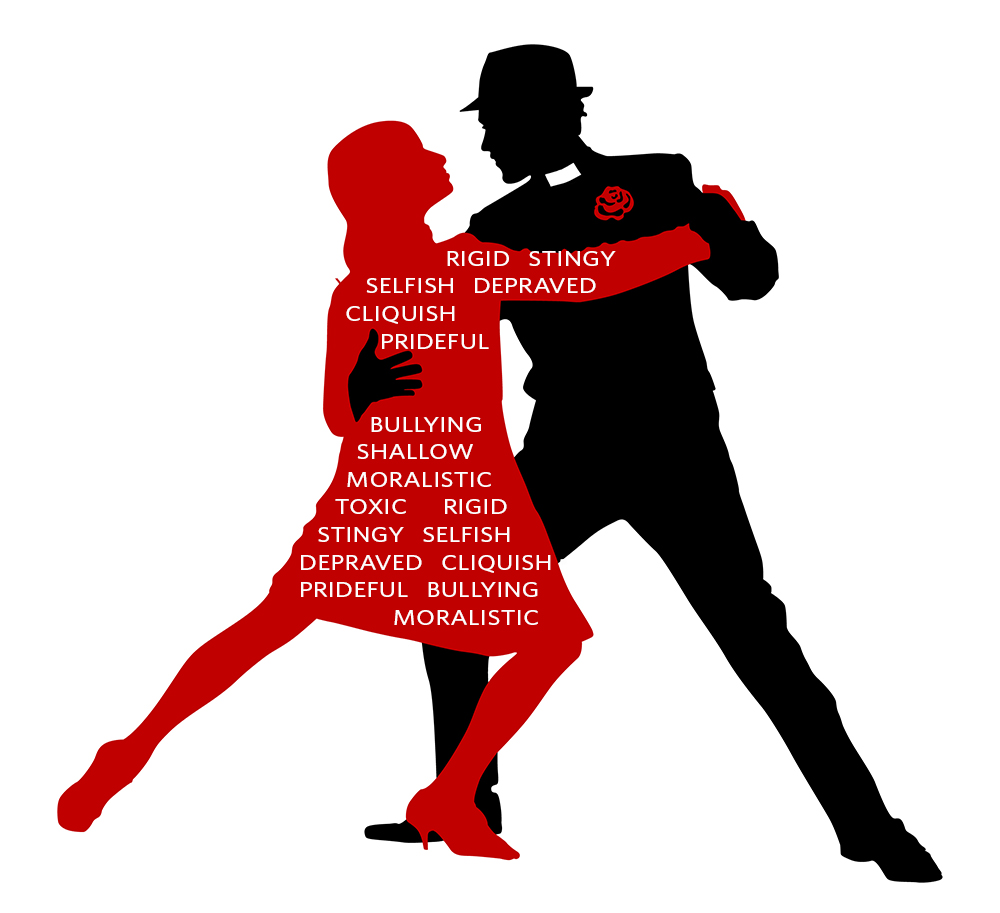
A post I read the other day opens with the image of a labeled chemical drum sitting in the middle of wasteland. The label? TOXIC
It was a post about church culture.
Then this subhead jumped out at me:
Every church has its own culture.
The words rang a gong in my head.
These are the very words—letter for letter—that our bishop, newly elected, spoke to us on December 6, 2006.
She never explained her statement. It seemed to me at the time that the words were a prelude to a speech she intended to make, but the meeting was cut short by an emergency.
It left me hanging. What was our bishop getting at? What did she know about OUR culture? No one at this meeting had met her before and no bishop had been in contact with our congregation for six years. We had undergone significant change during those years, accepting dozens of new members! In fact, we had changed so much that there were only two members in 2006 who had been adult members in 2000.
This writer answers my lingering questions. We had been labeled.
As I recall, our next encounter (November 1, 2007) opened with a speech by the same bishop. Well, it was more like a rant. Perhaps it was the speech she intended to give a year before. She used the word ADVERSARIAL over and over. Most of the people present had never met this bishop. The couple of us who had met with her 11 months before had no contact since. That meeting had ended without conflict. How were we adversarial? What were the issues?
All I know is this: This bishop was soon making claims on our property. She did so by dismissing all lay leaders and locking our doors. No disciplinary issues were cited; no offers of help, guidance, or leadership were forthcoming. Six years of vindictive court battles ensued. Just thinking of us as culturally flawed provided license to bully us.
Mean-spirited labels mask the good in congregations. And yes, “toxic” and “depraved” are on the mean side. Congregations, once labeled have difficulty overcoming the labels. Every future leader will be forewarned. The congregation you are about to serve is “toxic.” If you fail, it won’t be your fault—so it is OK not to try.
Here are the labels this writer uses to describe unhealthy church cultures. Note how the items listed grow in seriousness as the list progresses. Labels are like that.
SELFISH
PRIDEFUL
RIGID
CLIQUISH
BULLYING
STINGY
DEPRAVED
He asks his readers to add their own labels. A few do. None of them are positive. I guess we can add ADVERSARIAL, even though, in our case, we can only guess what that means.
Labels may be accurate. Somehow, I doubt it. Really, do all the members in these churches wake up every Sunday morning and head off to church with evil intent?
Labels amplify problems. If congregations are 90% healthy and 10% depraved, “depraved” will get top billing.
Missing from this post is any sense that leadership played ANY role in creating these cultures. These congregations became TOXIC all on their own.
SELFISH: There is never misuse of funds or denial of support that cause people to become self-centered and protective of their own. There are no land or asset grabs in church news.
PRIDEFUL: No pastor dwells on the congregation’s faults causing them to be prideful of what little self-worth they can muster. All previous pastors, whose portraits line the narthex walls, discouraged pridefulness. None had their names on the church sign board or on the front page of the bulletin. None have reserved parking spaces near the door.
RIGID: No denominational leader came to a congregation, constitution in hand, citing rules, traditions, doctrines, and procedures.
CLIQUISH: Every pastor encouraged networking with other congregations and pastors.
BULLYING: Professional leaders never use their authority to intimidate lay leaders.
STINGY: All pastors model giving when the offering plate is passed. Pastors never expect raises when giving is down.
DEPRAVED: No pastors are tempted by sin.
The point, lest it be missed, is that when clergy create labels for their congregations, they are putting themselves above their members. It is easy to brush people aside when we think of them as Rigid or Stingy, etc. Just hang a large R or S around their necks.
The toxicity spreads.
Jesus avoided labels. The only label given to the woman at the well was Samaritan. Other labels are added by us readers. The only labels assigned to Zacchaeus are tax collector and rich. We imagine him as a despicable worm of a man.
We can’t make progress as Church with all the name-calling. It causes our thinking to quickly become SELFiSH, PRIDEFUL, RIGID, CLIQUISH, BULLYING, STINGY, DEPRAVED and TOXIC. Love, the paramount message of the gospel, becomes that much harder when we don’t really believe in reconciliation and redemption.
Maybe a closer look at “problem” congregations might reveal that in reality they feel:
SCARED
UNNOTICED
ABANDONED
LONELY
FORGOTTEN
WORTHLESS
USED
ABUSED
BULLIED
IGNORED
HOPELESS
UNLOVED
At least these labels give a skilled leader a place to start.
Church leaders are big on talking about transformation. They are right! Things have to change if there are to be traditional jobs for them 20 years from now.
Therein lies a problem. Maintaining those jobs should not be the purpose of change. In fact, the change the entire Church seeks may include drastic changes in the role of leadership.
What’s that? Change the role of pastor? That’s not what we had in mind.
Most church leaders who reach the most influential positions get there by the recognition earned serving larger churches.
The relationship between parish and pastor in the small church is very different from that of a large church. If denominational leaders have never spent time in small churches, they have no way of knowing that. Their assessments of small church ministry are worthless if they don’t understand small church ministry.
Large church pastors might be more used to being in charge—proposing programs, and managing and hiring staff to implement their changes.
Change in small churches—MOST churches—won’t happen that way. This expectation will lead to frustration and the type of burnout that comes from wheels spinning with no traction.
Change in small churches happens incrementally—one idea at a time, one person at a time. It happens as a result of people with closely held beliefs arguing their points, probably for the umpteenth time, maybe with the same people. But then one day, something happens that makes it possible for both sides to lean back, uncross their arms, and say “Well . . . maybe.”
These moments in small parish life are glorious moments. The leader might not remember how the congregation got to that point—and for good reason. It didn’t happen overnight or by edict. It happened with one toe testing dangerous water. Then the knees. Then the shoulders. Suddenly new ideas are floating!
As the Church becomes more desperate, it begins to operate in fear. Power will be sought to control scarce resources. Land and assets will be coveted and seized. The Church will neglect true mission as they grope for successes measured by the past. Larger churches will be valued as desirable employers. They can continue as they have in the past a little longer and gets tons of attention from the “system.”
Ignoring the small neighborhood churches may seem prudent—good management. But it reveals a lack of confidence in our product (to use business terminology). We don’t really believe the mission of the Church is to reach the poor and troubled. Too much cost. Too much risk. God’s calls these days come with more comfort and perks.
This thinking is causing the Church to lose its neighborhood outposts—prime locations for active mission. The best and brightest talent will look for calls to the prestigious churches—where significant change is not likely.
But here is the good news! Lay leaders, and a few pastors, abandoned in those small, forgotten outposts of ministry, will start experimenting, networking—and changing.
Charleston, South Carolina: An angry young man attends a church prayer meeting. He guns down attendees before fleeing. Gunman, early reports suggest, sees black people as a threat.
This young man knew when and where to find his victims.
East Falls, Philadelphia: 2×2 Foundation, a multiracial organization, works to open its first local program since 2009. Like the church in Charleston, our hours of operation are public. It is very likely that the people we serve will represent many racial and ethnic backgrounds. As director, I am hiring young people, a multiracial staff. As part of the hiring process, we have all had criminal history clearance, sexual abuse clearance, and been fingerprinted into “the system” — an unforgiving system with a very long memory. The new normal.
The new normal goes against the grain of “church think.” We are supposed to forgive the past. We believe in second chances, dramatic turnarounds! Such stories define some of the greatest and favorite saints—like St. Francis!
What does this horrific incident in South Carolina mean to our faith community? We have been multi-racial for a long time, and predominantly black for the last decade.
Twenty years ago, our workers would have all been volunteers from our community. We would have relied on our knowledge of our neighbors, family and friends. We would have invited and welcomed strangers who showed the slightest interest. Now we check everyone.
Madness has a way of exploiting every weakness. News stories used to report how lack of security resulted in tragedy. Now, it seems, the stories are how tragedy occurred despite safety measures!
I experienced no problems finding help. All participants in our fledgling program willingly complied with the new rules of church life. It helps that most of them are under 25 and don’t remember how it used to be.
Churches today are challenged to find volunteers who might be willing to donate a few hours for a church cause and will go to the trouble and expense of getting the mandated clearances (about $50 each) and a few hours to travel to a fingerprinting center—none of them convenient and surprisingly busy.
No matter how careful we are, churches cannot control the behavior of all with whom we come in contact. Even carefully screened, authorized family members of those we serve or our own trusted members can come to us on a bad day and do horrific things for reasons that may be nonsense or may be very real.
Churches choosing to exist in welcoming love are sitting ducks for people who are confused or for those with well-crafted ulterior motives.
Our congregation experienced this. People we trusted used their knowledge of our church to harm us. On one occasion, they used our council meeting time (posted online) to have court representatives serve members with notice of litigation. On another occasion, they used a meeting announced for one purpose to bring a group of supporters and a locksmith to seize our property. The weapon of choice, in our case, was court. The tactic was similar.
There is a temptation in times like this, to react with suspicion of any outsider—to isolate and protect—to lock doors and install security systems. Isolation plays right into the hands of those with evil intent. Isolation works against mission.
Last evening, I stepped inside Redeemer Church for the first time since September 20, 2009—the Sunday before a court order allowed the Southeastern Pennsylvania Synod of the Evangelical Lutheran Church in America to claim our congregation’s property—despite constitutional provisions forbidding it.
Courts did not rule the synod was right. They ruled they have no jurisdiction and couldn’t stop them.
No one could.
Locking the doors was not part of the court order. This was the decision of the synod who clearly had no desire to pursue mission in our community. They wanted our land. They got it. They sold it.
My visit was unplanned. I was with old friends. They weren’t church members, although they had visited our church on several occasions—all before going to Africa as missionaries nearly 30 years ago.
We had enjoyed a delightful dinner in an East Falls restaurant. They were giving me a lift home. I was surprised when they pulled the car over in front of the church.
It was dusk. A light was shining from the fellowship hall. “I want to look in the window,” one companion said. “Do you want to come or will you get in trouble?” he asked. He was familiar with my six years of court struggles.
He hopped out of the car. My other friend and I followed. We peeked in the window. My friend started to try the door. I was about to warn him that wiggling the door might activate a security alarm.
The door was unlocked.
He walked inside. My other friend and I followed.
My friend called out. No answer.
It was like entering the remnants of a war-torn city. Six years of neglect have taken a toll on the property our people bought, built, loved and cared for since 1909. Our house of worship. God’s house.
The place smells of abandonment, dust and mildew.
Gone were many of the things we valued. The antique crockery and umbrella stand from the vestibule and most of the furniture from the fellowship hall.
I was relieved that the wooden steps to the stage were there. They were built by a member, long-deceased. His daughter has worried all these years about her father’s offering of love!
My cell phone rang. While I stood in the narthex talking on the phone, my friends ventured upstairs. I wasn’t sure I wanted to follow.
I was aware SEPA stripped the sanctuary of our chancel furnishings—on Holy Thursday, nine months after the closing on an “as is” sale. Members had seen the truck pull up and carry out our baptismal font, the pulpit, the altar, the lectern, the candelabras, the singed altar cross that had survived the 1920s fire, rescued from the flames by my brother-in-law. These will always be the same as stolen to us—taken without the consent of the congregation.
It was getting dark. We weren’t about to turn on lights. My phone call ended. I started up the stairs. The flooring at the foot of the stairs was soft. “Probable water damage,” my friend said.
My hand on the familiar railings was uncomfortable. I could feel the dust and grime of years of neglect. I had occasionally polished these railings. My husband had dusted them every week!
I passed the plaque commemorating Redeemer’s war dead. One of the children of our newer Tanzanian membership had asked me what this was. I told him it was a list of names of members who died in service. When he learned of my mother’s death, months later, he took a piece of chalk and wrote NORMA on the plaque. I looked to see if his touching gesture had survived seven years. I couldn’t tell; it was too dark. Then I realized, this boy, whom I remember as a charming nine-year-old, locked out with the rest of us, is now old enough to drive!
I reached the top of the stairs, I looked across the ransacked sanctuary. I stood in the same spot where for years I greeted the people of Redeemer as they arrived on Sunday morning. I was reminded of the predictable succession. Marilyn was always first. She came early so she could share her considerable weekly worries before others arrived. She was the informal leader of our 80 church visits after we were locked out. If it was Sunday morning, Marilyn was in church. The rest of us went along. She died two years ago and would never see the inside of her church home again. A lifelong, deeply spiritual Lutheran, her funeral was held in a museum where she volunteered. I was impressed that even Redeemer’s young people attended, four years after the lockout, a testimony to the intricacy of our eclectic membership.
I didn’t walk around. I stood in the back and visually assessed the damage caused by eight years of needless fighting, dating back to an awkward meeting with a mean-spirited bishop on November 1, 2007. The paint job, fresh in 2006, was peeling in sheets. No temperature control for seven years will do that.
Redeemer kept both green and red hymnals in our pew racks—(Lutherans know what this means). All the red hymnals (still my favorite for hymn selections) had been pulled out. They are stacked in the back pew. The green hymnals are still in place. Come to think, there were blue hymnals in every pew, too—and a few non-Lutheran hymnals donated by one of our pastors. We used many hymnals—some in English, some in Swahili! Maybe they are among the stacks.
All in all, this sorry sight was not as painful as I feared.
As daylight began to fade, I looked across the sanctuary at the stained-glass Ascension window. I spent a lot of years looking at that window—the backdrop of many family portraits.
I think of it now as the Jumping Jesus window. Our pastor’s three-year-old son had asked, “Why is Jesus jumping?”
Jesus is still looking down from his slightly elevated height at where our altar once stood. He had looked down on me as I stood before that missing furniture with my husband on our wedding day. May 28, 1988. He had looked down on us 17 months later, December 3, 1989, as our son was baptized with water from the missing font, the same font that provided water for my husband’s baptism in 1909. He was the first baby to be baptized in that building.
Today, Jumping Jesus looks a little sad.
The rich colors of the stained glass grew deeper as the sun set. I can’t remember seeing them quite this way before. The lack of sanctuary lights created deeply rich tones new to my old Redeemer eyes.
Clergy and laity operate in very different circles. Communication suffers, creating a wide gulf.
Laity tend to talk with laity. Communication with pastors is always a bit hierarchical.
Pastors tend to be more at ease with peers. In clusters and ministerium meetings, pastors do what all professionals do. Talk shop.
For pastors, “shop” includes their congregations.
They talk about their challenges. They unload frustrations. They share advice—all in a protected, clergy-only forum. Sometimes it’s just gossip! Until now it was all behind closed doors.
The Internet Changes Things
Slow to the internet keyboard, pastors are beginning to create an online authority, dispensing advice on hot clergy topics.
Any pastor can create an online following. They don’t need permission. (Neither do church members!). Of course, one way to create a following is to write what colleagues want to read.
There is a big difference in having clergy conversations over coffee and having them online. In private, clergy can use jargon. Other pastors will know what they mean. It’s all among friends. Probably no harm done. (It is more probable that the harm done is never recognized).
The internet changes this dynamic. We are all learning that we must be more careful in how we communicate.
What clergy write online, thinking they are writing to other clergy, is public. Laity, who may include your members, can google the same churchy keywords and eavesdrop on your conversations.
They might be shocked.
I follow a number of online ministries. Some are helpful. Some reveal troubling attitudes.
Some church leaders don’t seem to like the people they serve. Oh, they are OK with supporters, but lay influence that challenges theirs, well, that’s another story.
The Tone of Online Clergy Forums
Let’s look at the kind of language some pastors use.
One thread I followed talked about “toxic” congregations. “Pastors should be warned about toxic congregations,” one pastor wrote. “Agree 100%,” another pastor responded.
Think about it. What chance does any leader or congregation have if the clergy fraternity/sorority labels the congregation toxic? This attitude guarantees failure. It is an excuse for the new pastor to not try. The pastor is probably already subject to sniggers among peers for accepting the call! The outcome of ministry is predetermined. Gossip dies hard. The warnings will be passed on for decades, causing permanent damage.
Then there is the “documentary” published a few years ago. People— I assume pastors—send me links anonymously. When I reply, the message bounces back.
The title sets the tone: Clergy Killers. The publicity talks about the DNA of laity who undermine the efforts of clergy. The interviewed pastors are weepy about personal “betrayals.” Proponents of the documentary want it to be discussed. The discussion is not likely to be helpful as the name-calling makes it inviting to only those predisposed to agree.
For every clergy account there are multiple lay stories of betrayal — for which no documentary is likely.
Earlier this week I read a blog post written by a clergy guru who seems to be growing in online authority. I enjoy some of her articles. This one has me looking twice at everything she writes.
The post discusses problem lay people as if they exist in a vacuum. There can’t possibly be any reason beyond meanness to cause difficult behavior. She even assures her readers, “It’s not your fault.” Her advice is to enlist the board (others in the church) and set boundaries—put problem people in their place. (Triangulation on steroids!)
This is bad advice. It panders to clergy sensitivities and reveals a troubling lack of empathy toward laity and a naive understanding of congregational dynamics. Follow this advice and pastors risk creating lasting damage.
The end of the article links to blog posts of other clergy gurus who talk about aggressive “sheep” and “antagonists.”
These pastoral advisors are no longer whispering pet peeves over coffee. They are taking name-calling public.
The gulf between clergy and laity just got wider.
Here are some tips from my experience as a member of clergy families and a lay leader.
8 Tips for Pastors Dealing with Problem Church Members
1. Recognize that members are people.
You get frustrated. You feel hurt. So do they. You have a position of authority, denominational connections to support you, a pulpit from which to speak. They do not.
2. Do unto others as you would have them do unto you.
Stop the name-calling. How would you like to be labeled a jerk, a triangulator, a dry drunk or a clergy killer with permanently damaged DNA?
3. Do unto others as you would have them do unto you. Part 2
Find the gumption to work one-on-one with the person you see as a problem. Find the reasons behind the behavior. It may open doors in the congregation you never realized were closed.
If that fails, identify the person in the congregation who has the best overview. Every congregation has a lay leader who is respected within the congregation in a way that helps hold things together as pastors come and go. It may be the patriarch or matriarch. It may be an older member. Don’t see them as a threat! Their leadership role is different than yours but every bit as important. Go to them humbly and discuss the problem. Start by saying, I don’t understand what is going on with _______. Can you help me understand? Leave the defensive attitudes, judgment and name-calling out of it.
Make sure you have exhausted personal efforts before taking things to a board.Taking a problem with interpersonal dynamics to a church board can be catastrophic. Remember, the board has allegiance to the congregation. Remember, they probably know the member better than they know you. Remember, many on the board may be related to the person. Remember, members have a long-term stake in church life. Pastors come and go. Coming to the board with interpersonal challenges may be seen as exploiting your position of authority, in effect, ganging up on someone they know. It could cost you and the congregation dearly. It will make reconciliation all but impossible.
4. Quit reacting with paranoia if people talk about previous pastors.
Create your own relationship with the congregation.
If you think a predecessor is violating professional protocol, take the issue directly to your predecessor. This is a clergy issue. Clergy created rules and protocols to make life easier for them. These rules make sense to clergy. Laity wonder “What’s the big deal?” These dated protocols are impossible to enforce in today’s interconnected world.
Lay people are not subject to clergy rules of engagement. You can advise laity to follow guidelines, but you cannot control this. You don’t have that right. Lay people live a large percentage of their lives in the secular world where such protocols make no sense. For example, if their kids grew up with your pastor’s kids, the connections will continue for a very long time. You cannot forcibly remove them from your parishioners’ lives. That’s a measure of control that no pastor should attempt. Trying to do so will seem desperate.
This issue can and should be handled entirely within clergy circles.
5. Understand the “sheep” analogy.
It might be better to stop thinking of church members as sheep. The analogy is easily misunderstood by people who know nothing about sheep. (Our family home was in the middle of a sheep pasture.)
The biblical analogy is supposed to point leaders to lives of service. Shepherding was a low-ranking, but important job. People understood the analogy because they probably held that job in their youth—like today’s paperboys.
Sheep follow because they trust. Be a shepherd; earn the people’s trust. In today’s world, church members are well-aware of the potential for abuse.
The sheep analogy does not mean that parishioners are uneducated, unskilled, illiterate and in need of thought/behavior control. Today’s pastors lead the best-educated generations in history. The parishioners you hope will support your church, monetarily and otherwise, have college and post grad experience. They are part of challenging professions that require the same skills pastors need. Some have more schooling than pastors. Respect lay skills if you want lay support.
6. Recognize that something you have said, done, or overlooked might be part of the problem.
It might feel good to be reassured by church leaders that you are not the problem. What if they are wrong? What if you did do something hurtful? What if you didn’t but the member thinks you did? Wouldn’t you want to know and set things right?
There is a common scenario on Dr. Phil that I believe is played out in parish life frequently. People write for help with a difficult family member who is ruining the dynamics of the entire family. For 20 minutes their families’ worst moments are presented in shocking videos. Dr. Phil tries to get people to talk to one another. It is often ugly. And then Dr. Phil begins to point out how the complaining family members have actually created the problem. He replays the videos. Look at what you were doing before the bad behavior, he says.
He almost always asks them, Did you call them (and then he reads a list of mean names)?
Imagine Dr. Phil looking you in the eye. Did you call your members jerks, clergy killers, dry drunks, etc.
The “problem person” in the Dr. Phil scenario is often reacting to situations over which he or she has no authority and little voice (like lay people!) He summarizes the situation in a way they NEVER considered: “Given the circumstances, how can your daughter NOT react badly? The only reason your daughter is yelling so loud is because she can’t yell any louder.”
This always comes as a surprise. Everyone in the family was so sure the “bad seed” was the root of all their problems.
Dr. Phil often spends the rest of the program helping them acknowledge their role in the conflict.
The church has no Dr. Phil. Clergy have a stake in all conflict. Consultants are often in the employ of church leaders. That’s the world they come from and know best. That’s where they get their referrals. They have neither the time nor inclination to look at church dynamics deeply. They will run the congregation through their bag of tricks and move on. Fixing problems in church life takes time! And patience! And humility!
7. It’s not all about you.
New members may join a church because they like the pastor. Others attend because they have a faith relationship with God and the congregation. It doesn’t matter who is pastor. They can probably remember many. Think of yourself as building on a rich legacy, not replacing it.
8. Love one another.
My father, a career pastor now in his 89th year, has a favorite traditional story about the evangelist John. It is not in the Bible.
By the way, my father accepted a call in 1965 to a small congregation that was split down the middle in serious conflict. He helped it heal and served it for decades. The little village church grew to be the largest in its synod! Even in times of conflict I never heard him talk about a church member badly—even those who opposed his ideas.
This story was one of his guides. He tells it with tears in his eyes.
John, one of the original disciples, lived a very long life. He held a respected position in the Christian community. In his declining years, he would be carried into the assembly. One day, sensing John would not be with them much longer, leaders sought advice from one of the few people still living who actually knew Christ in the flesh.
“What final words of advice can you give us?”
John answered, “Little children, love one another.”
This was not what they wanted to hear. They wanted strategies. Tactics! They kept asking. “What should we do when you are gone?”
No matter what they asked, John answered, “Little children, love one another.”
Join Bishop Ruby Kinisa as she visits small churches "under cover" to learn what people would never share if they knew they were talking to their bishop.
Undercover Bishop will always be available in PDF form on 2x2virtualchurch.com for FREE.
Print or Kindle copies are available on Amazon.com.
For bulk copies, please contact 2x2: creation@dca.net.
MISSION INSPIRATION OFFER
A visual and biblical guide to help congregations define their missions.
Contact Info
You can reach
Judy Gotwald,
the moderator of 2x2,
at
creation@dca.net
or 215 605 8774
Redeemer’s Prayer
We were all once strangers, the weakest, the outcasts, until someone came to our defense, included us, empowered us, reconciled us (1 Cor. 2; Eph. 2).
Be calm. Wait. Wait. Commit your cause to God. He will make it succeed. Look for Him a little at a time. Wait. Wait. But since this waiting seems long to the flesh and appears like death, the flesh always wavers. But keep faith. Patience will overcome wickedness.
—Martin Luther