4/7InkzHVUEQeEdU9vpc1tikzEhChrKmPfvXI-FSDBrBQ

Uncategorized

How Will We Measure Success in the Church?

United Methodists Ponder
Strategies for Survival
(We Can, Too)

I had an  uncle who was a United Methodist minister. He had a pastoral philosophy that went something like this: “Jesus is the answer. What is the question?”


He often said this in a tongue-in-cheek manner, but I’m pretty sure that it was truly a part of his faith.


I remembered him this week when I read about the United Methodists as they meet in advance of their 2016 General Conference.


At one planning meeting, held this week, Donald House, a lay member with a PhD in economics, warned financial planners that the next 15 years are pivotal to survival.


He predicted that unless things change soon, the denomination in coming decades will not have enough U.S. churches to pay for its connectional structures. Such structures include conferences, bishops, agencies, missions and international disaster response.


Read about it here.


The Methodists are struggling with the same problems facing all mainline churches. Their studied approach to current challenges is worth following.


The temptation as we all face these problems is to measure our success by our ability to fund national oversight. Following this temptation will speed our downfall.


The Church has always grown from little up. This is likely to be even more true today.


Changing World Calls for Changing Structure

Today’s Church structures were all created pre-internet. They helped us connect when connecting was expensive and a logistical challenge.


This is no longer true. Small churches, willing to use the internet to its fullest capabilities, can be big influencers—directly, without the national and international networks of the past.


Survival of out-dated structures should not be our mission. The struggle to support them beyond their usefulness may be a huge part of Church decline.


The road to survival may mean restructuring—even rewriting our governing documents. 


That’s a huge job. That’s what leaders are for.


Some points to notice from the Methodist’s planning: (return to this link for references)

This Methodist economist proposed a Benchmark Project to focus on developing funding for lay leadership. His solution for finding this funding is to turn to congregations—including congregations as small as 125 members. While our denomination focuses on down-sizing, this Methodist plan calls to double the number of “vital congregations.” Interesting! I wonder what their definition of ”vital” is!


Note also the term “culture of call,” which hints that they might see the concept of call reaching beyond the clergy.


This is long overdue. The Church has neglected the concept of call for a very long time—talking about it in broad terms but compartmentalizing it in practice. God calls clergy.


This limitation on God’s people serves two needs—control and measurability.


The controls and measures of the past will no longer work.


For example, the predecessor body of the ELCA forbade congregations from publishing. This concentrated the power of the press in its official publishing house (control). Congregations had to use the resources provided. Titles selected for publication came from vetted sources. Sales were the measure of success.

Today, it is impossible to stop people from publishing. Control is lost, but the potential to witness is enormous! So is the ability to measure. Online metrics are available by the minute!

What Are We Measuring?

Return for a moment to the economist’s warning.

Unless things change soon, the denomination in coming decades will not have enough U.S. churches to pay for its connectional structures.

We measure congregations by how well they support structure. Sounds good. But it can be crippling.


Concentrating on structure means this: The unstated primary mission of every congregation is to support a pastor. The secondary mission is to support the denomination. The biggest piece of the church budget pie goes to these two things. Mission is secondary. Connectedness is primary.


These connectional structures are growing increasingly archaic. Continuing to seek funding, just so hierarchy and agencies can continue what they have done in the past may be a waste of resources. These structures, even when well-run, are expensive! More than this, it may be blinding us from seeing better ways. The Church has a choice—preservation or innovation.


A Changing Reality

Congregations can now connect directly. This calls for changes in how we lead.


For example:

A regional office might have a communications department. In most cases, the communication department will act as a public relations office for the regional body. They will operate the online presence and communicate, mostly with pastors. They will address the needs of the regional body and its role in the national body. Congregations are supposed to be content to pay for services with little benefit.

A better use of communications dollars may be for the regional body to make sure each congregation has a modern communication network that connects with its community. They won’t be able to control this, but it is key to evangelism. As it is, very few congregations, even those with fancy web sites, have a clue how to use these tools. Clergy are woefully behind in these skills. Laity to rescue, if we dare!

Big May Not Be Better

There is efficiency in big. But there is recognition of mission in small.


A denominationally sponsored agency may deserve a great reputation in delivering services. The connection often is lost between congregations that fund services and the recipients. The acceptance of public funding makes the connection even weaker. The people behind the agencies are invisible. Their message is unheard.


The message behind providing service (that God is love) is best communicated the more hands-on the congregations can be in the delivery.


The old view is that these agencies need the congregations. But the opposite is also true. Congregations need these connections. Without these connections,  congregation have a difficult communicating their message—that God is love. Truth be told, they may even have trouble feeling their own message when they are viewed as little more than faithful funders.


Fortunately, connectedness was never easier!


The Methodists are correct that empowering the laity is key to success.


It may be how churches grew to support large national entities in the first place.


Jesus is the answer. Now, what is the question?

Watching Faith Come Alive

Something is happening in Rome. It’s news. True news.


Eyes are on the world of Catholicism, as they always have been, but now in a different way. We are less critical and—what is this unsettling feeling? Could it be envy?


All Protestants have roots in Catholicism, but we have an odd love/hate relationship—a team rivalry that continues with fading memory of how it began.


Excommunication was once a real part of our history. It was dreaded punishment. It meant being ostracized by most of society. Today, we remain separate by choice. We are severely fragmented even as we play with concepts of “full communion.” Nevertheless, differences that were deal-breakers centuries ago are no big deal today. We are less separated by doctrine than we are by the need to hang on to our little pockets of power and wealth.


Our early differences with the Roman church were real. Blood was spilled. Prison doors were locked. Dissenters fled Europe in droves.


Here we are today, living peacefully with people who within our lifetimes were perceived as “the others.” We are occasionally haunted by a nagging distrust. “What does loyalty to the Pope mean?” we once asked of those running for office. And yet, both secular and religious leaders are drawn to Rome, seeking photo opportunities with the pope, an odd source of validation.


We’ve been watching as outsiders for a long time—more curious than envious.


But suddenly things are different. We, born of the Reformation, are watching a reformer.


We see a leader who cares less about power, maybe because he knows he is secure. Nevertheless, we sense his motivations are sincere. He leads by example. Bit by bit, and with amazing rapidity considering the track record of his predecessors, he is filling in the ruts, correcting the course.


We’ve watched him break down the system that collected offerings from the faithful to build palaces for clergy. He demanded transparency and professionalism from those who manage the business side of church. He sent them back to school! He is holding leaders accountable for looking the other way while crimes were committed. Heads are rolling— bloodless but decisive. He makes it look easy.


Last week, came the welcome news that the imposed five-year oversight (Lutherans would call it involuntary synodical administration) of the American nuns was ending two years early. It was an embarrassment that it was ever imposed—just as it is in our denomination. Why do church leaders do this? Because they can.


Rarely is it admitted that power, wrongfully used, is a mistake. Decades or centuries of cover-ups are preferred to simple apologies. But here we have a leader pulling the plug on bullying. He could have let the disgrace continue for two more years. What’s two years? It would save face for those imposing control. They could release the reins with positively spun news releases. But this pope called a halt to it. Enough!


Still, it couldn’t have been easy for the sisters. We know from experience how condescension feels. There is something to admire in this, too. The sisters have humbly turned a humiliating debacle into a teaching moment.


Now we Protestants stand on the sidelines and cheer a pope who shows leadership we wish we could see within our own ranks.


This unsettling feeling? It’s not envy. It is hope.

Why Church Revival Is Better
than Church Replanting

shutterstock_130314704Church replanting is once again on denominational minds. I follow several blogs presenting the concept as if it is the greatest news since the ladies at the tomb shouted “He is risen.”

In fact, some subscribers to this ministry plan liken Church Replanting to the Resurrection—and that’s where the whole concept gets derailed.


Let’s put that analogy to bed once and for all. Church replanting is not akin to the Resurrection.


Christ died, once and for all people. He rose, once and for all people. There is no need for any of us to replicate this act of God—even if we could!


True believers don’t know the word “hopeless.”


Restarting ministry with a human judgement that an existing faith community is detrimental to the Church is not playing Christianity’s strongest suit—that God values each one. Remember the imagery God gave us through Jesus—the pauper woman who puts pennies in the offering and the lost sheep, to name two. Then there’s that little “toxic” guy, who climbed a tree.


The theories and practices of Church Replanters, born of trying economic factors, have been tried and tested for the last 20 years at least. The methodology was a cornerstone of the Ministry Transformation movement. The theories already have a track record—a dismal one in some cases. It is too soon to tell if any successes are sustainable. A lot of the transformational efforts end up in court!


The Problem Is Focus

Church Replanters go wrong from the start because of focus.


They are focused on church, not people. They are replanting structure. The successes they seek are feathers in the denominational cap. Pastors will have jobs. Church Replanters will be in demand. Blogs stats will spike. Books will be written and sold. Speaking engagements will be booked.


Early and measurable success is important to church replanters. They want to sweep in, wave a magic wand, and move on. They are not in it for the long-term. Their expertise is in the replanting—not in the followup or in the long-term maintenance. Failure can be attributed to leaders that follow—maybe the clergy, surely the laity.


Entire communities are asked to buy in—lock, stock and barrel—with no guarantee that the concessions they make will have success. Church Replanters admit that they often fail. The people in the community will be left to pick up the pieces regardless of the success or failure of the Church Replanter.  They will lose their investment in property and their accumulated offerings.


Failure is OK. Necessary even. We learn from mistakes.


When Church Replanters fail it is permanent. There is no Plan B.


Church Replanters have created rules that ensure that they stand to benefit from either success or failure. Most are well aware that Replanting is far from guaranteed. In the Replanting effort, the spoils of failure are pre-allocated to the sponsoring body of the Replanter. Motives are therefore suspect, especially when denominations are struggling.


The Premise of Church Replanters

The basic premise of Church Replanters is that they must start fresh. Old members must leave. Property deeds and financial assets must be relinquished to them. They need a clean slate, they say. What they want is total control—without dealing with the intricacies of ministry. No past. No heritage.


There is no way to do this nicely.


First, the rules of many denominations forbid it. Most Protestant denominations operate with congregational polity. Congregations have rights to property, financial oversight, and even a big say in mission strategy. Pastors are called as servant leaders.


Church Replanters may have to sidestep the rules. Messy! So eager to be rid of the distractions of the past, they’ve created new distractions!


Denominations end up in court with their congregations — an unfair playing field for laity. The denomination will claim separation of church and state. Laity within the same denomination have no such rights and are at a severe disadvantage. The personal cost will be high.


Denominations prime the pump with carefully chosen Bible verses.


The favorite Bible reference is  Mark 2:22

And no one pours new wine into old wineskins. Otherwise, the wine will burst the skins, and both the wine and the wineskins will be ruined. No, they pour new wine into new wineskins.”

This is a misuse of scripture. Among Christians, it is the same wine. Church Replanters have no NEW message.


God loves because he first loved us. Christ died so that we might be closer to God. That’s the message. It applies to old and new members alike.


God does not alienate, exclude, or reject any believer.


Scripture tells us this in the first sixteen verses of Matthew 20. In this parable, the owner of the vineyard pays the new laborers the same wages as the old. The old and new laborers are of equal importance. The temptation when reading this parable is to focus on the benefits to new laborers, but it can also be comforting to the veterans.


Let’s look at another verse from Mark.

“If anyone causes one of these little ones–those who believe in me–to stumble, it would be better for them if a large millstone were hung around their neck and they were thrown into the sea. Mark 9:42

Make no mistake! Church Replanters who insist that existing members leave and stay away cause believers to stumble.


Church Replanters have given themselves permission to not care for the existing sheep. They are focused on implementing their view of success. They aren’t there long enough to see problems develop. They chalk up a success and move on to the next replanting.


What happens to the members who have been excluded? The Church can easily ignore them. Laity never had an effective voice in the Church. Now they have none. There will be no follow up. Leaders have already made it clear they don’t care.


The focus is on the new members, attracted as much to the new pastor as to the message. How long will these relationships last? The example of long-time members who are likely to have experienced many transitions could be valuable! But church replanters have silenced them. Time will tell.


Church Replanters Need to Care

Yes, it is work. Yes, it is time-consuming. Yes, it is vital. And biblical!


Church Replanters imagine the unwanted members will just fade away. Wrong!


The evicted members still live in the community where the Church Replanter hopes to build a new following.  Old church members are sure to encounter new church members. Will they share the fact they were excluded? Will they share their hurt? What do you think?

  • The excluded people include families. The reach of families is difficult to measure.
  • Excluding members causes pain. Pain divides families.
  • Fingers are pointed. The denomination started the finger-pointing. But that’s only the start. Husbands and wives squabble over what they might have done differently. Children are lost. They are locked out too.
  • Hurting people look for answers. They feel bad. Their self-confidence is in the pits. They are sitting ducks for the charlatans of ministry.


The denomination they may have supported all their lives doesn’t care. They are focused on replicating the church of the past for as long as they can.


Writing from Experience with Church Replanting

As I mentioned, Church Replanting depends on laity having little voice.


Our congregation experienced Church Replanting implemented by its boldest proponents.


We have a voice. Here is our experience.


Our congregations was aging in the late 1990s when our denomination put us on death row. “You’ll die a natural death in ten years,” our bishop predicted and made no pastors available. (A decade if neglect is part of the strategy.)

We got by the same way many small churches get by—lay efforts and supply pastors.

We were succeeding — turning things around! It was now 2006. Our aging members from the 1990s were mostly gone, but we now had young members and many children. Six times the number of members when our denomination had given up on us!

We were self-sufficient with dreams, a plan, and a healthy endowment when our regional body suggested Replanting. We questioned the motives. Our endowment and property seemed to be the key attraction. The regional body, stuck in the past, still thought of our congregation as aging.

During the very little discussion that was allowed, our newly elected bishop presented her crowning achievement. In her first months as bishop, she replanted a church in a neighborhood outside of our city. She told us how well it went. The few remaining elderly members turned the property over to the regional body. There was a closing service. Within a couple of months the regional body reopened the church under a new name and under their control. The neighborhood was canvassed and about 170 members signed on.

This success was fresh and exciting for her. She wanted to replicate the process in at least six other congregations.

We were the first on her list.

Our situation was not the same. We were already on a significant growth track. We rejected the regional body’s plan.

“Thank you, but no” was not an acceptable answer. Our land and endowment funds were taken from us anyway. The process was hurtful and ugly and included six years of law suits. Pride and power became dominating factors.  Replanting was quickly forgotten.

We were evicted from our property. That was supposed to be the end of us. But we started visiting other churches. We visited 80 churches over three years before we visited the church that had been held up as the model we were to follow. We did not know what to expect of this now four-year-old congregation.

We entered an empty sanctuary. There were three musicians practicing, but not another soul in sight. We were on time according to the sign on the narthex wall. We waited 20 minutes and left. I checked the parish reports and learned that the 177 charter members had dwindled. The average Sunday morning attendance was now 30.  The original replanter had moved on to work in the regional offices. The grand success did not survive the transition to a new husband and wife team ministry.


Is this typical? I don’t know. The Church Replanters I follow online repeat the same caveat—“our efforts may fail.”


Thinking Long-term Survival

shutterstock_97902329It will take a couple more decades to measure the track record to see if replanting is sustainable through ministry transitions. I suspect that the modeling of the faithful they evicted, the people who have experienced ministry change, good times and bad, is more valuable than Replanters give credit.


A lot depends on the definition of success.


Here is something to remember. Laity can be planters, too!


Teach by example.

Don’t Be Boring, the Pope Says!

I was talking to a friend the other day. He made a similar observation I had been sharing with friends.

He was sure of it. So was I.

Pope Francis must be reading our blogs!

One by one, Pope Francis is tackling subjects we’ve been writing about for the last four years.

  • He asks for accountability among church leaders.
  • He asks for transparency as administrators. Where does the money go?
  • He is looking more kindly toward the American Sisters who had so riled the previous pope. The church has better things to do than dictate mission priorities to women who have pledged their lives to Christian service.
  • He is reining in the clergy who shamelessly amass fortunes at the expense of parishioners.
  • He is demanding priestly behavior.

And now he is addressing those newly ordained to speak from the pulpit.

Speak heart to heart. Don’t be boring.

I’ve been writing for a while that, at least in the way it plays out in thousands of congregations, the time and money spent on supplying a sermon each week is poor use of congregational resources—especially when listeners can’t remember a word by the time they reach the parking lot.

Pope Francis gives good advice.

We listeners know when the message is not heartfelt.

We cringe when the message is written to impress with obscure scholarly references.

We wonder if it is worth coming back when there is no connection between the message and our lives.

Thanks, Pope Francis. I’m sure more people read your blog than mine!

SEPA Synod Assembly Gears Up for Annual Meeting

shutterstock_174573782Time for a Troubled Synod
to Make Hard Decisions

Will They?

It’s almost time for the 2015 Annual Assembly of the Southeastern Pennsylvania Synod of the Evangelical Lutheran Church in America. They’ll meet May 8 and 9 at the outskirts of the synod territory in convenient Franconia. You know where that is, don’t you?


We’ve been excluded from the SEPA’s Annual Assembly by decree since 2007. That’s not supposed to be possible, but who can stop it? Not Synod Assembly!


We still care!


ELCA Synods meet annually for business. Truth be told, not much business is done. The limited amount of time will be spent

  • listening to reports
  • engaging in impressive worship
  • chatting with colleagues
  • rubber stamping a few pre-packaged resolutions
  • showboating, to distract attention from the dire state of SEPA and many of its congregations


SEPA Synod AssemblyDebate will be limited. Those raising questions will get a minute or two at a microphone.


In better times, Synod Assemblies were working meetings. There were actually ways to raise issues and be heard. Today, with ministry failing and SEPA scrounging for money, the Assembly will divert attention from serious problems with featured feel-good moments. Grand organ music will fill voids. A guest speaker will be brought in to inspire.


There will be lots of talk about mission. Talk.


SEPA—The Synod that sues its members

SEPA is in survival mode. Congregations need their dwindling offerings. They don’t have money to send to distant and ineffective hierarchy. Will SEPA consider serious down-sizing as their congregations have? Or will they seek other sources of revenue?


Today, SEPA Synod devotes a lot of resources to the Real Estate business.

Disposing of valuable congregational property keeps the office running and salaries paid. SEPA operated with significant deficit budgets for years, making up as much as 10% of their expenses by selling properties of member churches. In a move toward transparency, they now operate with a balanced budget and report “budget shortfalls.”


Way back in 2005, our pastor who was serving on Synod Council, told us about SEPA’s Church Closure Team. Church Closure Team? Aren’t they there to support their congregations.


We would soon encounter this team as have other congregations. It consists at least of a lawyer, a former SEPA treasurer, and an archivist. Others are enlisted to do the upfront dirty work. Scouting.


SEPA relies a great deal on its relationship with this team. There is a problem here. Bishops are supposed to lead with love and respect, nurturing congregations. Lawyers look at the world in a far more black and white way. We heard synod’s lawyer refer to the Synod as the good guys. Guess who were the bad guys! Lawyers don’t care about nurturing and mission. They are not working for the congregations (even though congregations employ them). They are working for the Synod. Congregations are the enemy.


Can bishops lead effectively with a lawyer seated on their right side?


This same cast of characters, The Church Closure Team, goes about assessing congregations not for mission but for the prospect of closure. This should be repugnant to the rank and file of SEPA, but they are slow to connect the dots about what this means to the overall health of their organization—and to their own future. Judging from the criteria we’ve seen used, as many as a third of the congregations voting at Synod Assembly may be the next targets—any congregation that cannot afford $80,000 a year for a full-time pastor.


This creates another problem. How do congregations influence Synod Assembly to forsake this management strategy if it brings attention to them, making them the next target of the Church Closure Team.


Congregations are targeted.  SEPA officials will object. “There is no list.” But there is.


SEPA Attorney John Gordon said so in court with our congregation. “Redeemer is the first of six.”


Are you on the list?


Don’t expect the list to be published. Look for the signs. Here’s how they work.

The ideal prospect is a small, debt-free church in a neighborhood where land values are high. Endowments are nice, too!


  • A synod representative will appear unannounced at worship. He or she will spend little time talking to anyone. They may or may not introduce themselves. If they do, they will say they are making routine visits. It’s just something they do.
  • They will report what they see. In many churches that will be fewer than 30 in worship. They will not be looking for strengths. They are looking for weakness—any excuse to interfere for their own enrichment.
  • Relax if you have an old graveyard. No one wants a property with an old graveyard.


OK. The ground work is laid.


Now for the strategy. How to get congregations to abandon mission, faith, and love for their community and convince them to hand over their property and bank accounts?


We write from experience. SEPA Synod delegates may think Redeemer was an isolated attack. SEPA is in court today even as I write—suing lay people.


SEPA delegates should address their leaders’ behavior.


SEPA Synod’s attorney once flew to Chicago to share his strategy for church closure with all ELCA lawyers. Save the air fare. Here it is for free!


11 Tactics for Having Your Way
with Church Transformation

TACTIC 1
Pretend to help

Offer the church “mission status.” Sounds good. The overworked church council sighs with relief. Finally, someone in the synod office cares.

Watch out! They are betting that you do not know that churches accepting Mission Status forfeit property rights. Accept Mission Status for one day and your property will be claimed by Synod a hundred years from now if you decide to close. With Mission Status they are likely to send in a pastor that will answer to them, not your council. Their appointed leader might do an evaluation that (no surprise) indicates investment in your congregation is not good use of their resources after all.


TACTIC 2
Offer Synodical Administration

The original constitution allows for congregations to ask for administrative help. It is supposed to be a temporary option to assist congregations experiencing difficulty. It must be approved by the congregation. The constitution does not detail how you get out of it!


TACTIC 3
Ignore Congregational Leaders

Do not return phone calls. Ignore letters. Make public claims that the congregation is not cooperating.


TACTIC 4
Remove the pastor

Your pastor will suddenly disappear. He or she may get a plum assignment a good distance away. They may flee the synod entirely. We’ve seen both happen. This hurts morale, wears members down, and makes everyone feel vulnerable. There is more work for the laity, who are probably already doing most of the work.


TACTIC 5
Bypass Congregational Leaders

A favorite tactic. Both Bishop Almquist and Bishop Burkat employed this tactic at Redeemer. If the Congregational Council objects to what Synod wants, demand a congregational vote. They’ll  make it sound democratic.

Democracies do not put every issue to popular vote. They rely on selected people to take special interest in issues and act for the whole—like Synod Assembly! In most congregations there are a healthy number of people with equal vote but who are less involved, want to avoid unpleasantness, and can be more easily swayed.

This bullying tactic makes it very difficult for local leaders. That’s the idea!


TACTIC 6
Impose Involuntary Synodical Administration

Pastors, who know something about church procedure, are now out of the way. Congregational leaders, already bypassed, are now replaced by synod-appointed trustees, pledged to serve the interests of the synod—not the congregation. Those words have actually been added to the constitution even though they violate the founding charters. Involuntary Synodical Administration is a thief’s workaround! The word Involuntary is not in the constitution. All such actions are supposed to be with the consent of the congregation.

There are certain criteria that must be met to employ this strategy. There is no reliable way to assess or verify. Our congregation experienced this tactic twice. We had grown six-fold between the first instance and the second. It didn’t matter. It was deemed that we were scattered and diminished when almost all our 82 members lived within four miles—most within two. Ask the bishop how far she lives from her congregation.


TACTIC 7
Declare the church closed.

Synod is now in charge. They will lose no time declaring your congregation closed. The congregation wasn’t voting the way they wanted, so they took the vote out of their hands. This is constitutionally murky, but no one outside the targeted congregation will question it. The courts don’t want to be bothered. Members are now denied voice, vote and access to the church lawyers their offerings paid for. All fellowship with other congregations is denied. Lutheran shunning.


TACTIC 8
Change the locks

Shut out the legal owners of the property. Be as sneaky as possible, then act outraged when members seek legal help. Get the deed transferred to the Synod before the congregation can organize to stop you. This isn’t as easy as it sounds!


TACTIC 9
Sue the congregation

Pastors are out of the way. Sue the lay people. Shooting fish in a barrel. Name those with the most congregational influence personally. This scare tactic, actually escalates conflict. Dialog is shut down. The lay people are forced to defend themselves.


TACTIC 10
Rely on Separation of Church and State

Cry First Amendment! There may have been no doctrinal or discipline issues, but it will help in court if the synod makes lay people appear to be “bad guys.” Quick, create some issues. Personal attacks are fine. Filing criminal charges is not going too far. Anything to win! Synod is exempt from the law. Lay people aren’t.


TACTIC 11
Allow the constitutional appeal process

Up until now, the synod has probably been stonewalling lay leaders’ attempts to work within the rules. But they don’t want to appear in court without having followed their constitution. Only now, when the prejudice, defamatory rhetoric and self-interests have peaked, permit the congregation to approach the Synod Assembly. Make the congregation appeal to the body that is suing them. Make sure things go Synod’s way. Change the question at the last minute if you have to. Substitute an unrelated issue. In the hyped-up atmosphere of a SEPA Synod Assembly, no one will notice.

_____________________________

Some variation of this is in the experience of most of the churches who have encountered the imposed closure process and land/asset grab. Some give in earlier than others. After all, nobody goes to church to be treated like this! Most lay people can find better things to do with their time.


SEPA Synod Assembly has the ability to address the on-going foul practices perpetrated in their names, but they will be kept busy. No time for business—or justice.


Please rise as you are able for the benediction.


Go in peace. Serve the Lord.

“Clergy for Hire” = Cult-leadership?

You’ve heard of Wedding Singers
Now it’s Wedding Pastors

Here’s a very disturbing post: Clergy for Hire


The Rev. Jay McNeal was having a hard time getting his way.  He wanted a position that just wasn’t working out. He took matters into his own hands. Nothing wrong with that. But he is trying to bring the rest of the Church with him. Not just his own denomination—anyone looking to make a buck as a pastor and who is willing to bypass denominational structures.


With a little internet knowledge, McNeal set up an online employment agency to link pastors (people with ordination papers) to people who want the trappings of church without any commitment. His website has a list of services available. Weddings. Baptism. Funerals. Communion, etc. Some of this is just to sound good. Truth be told, Clergy for Hire are looking for weddings—ceremonies that people, who wouldn’t put a dime in an offering plate, are willing to pay big bucks for. Wedding Pastors.


Who benefits? The pastors. They can cherry-pick assignments. They can take the lucrative weddings and turn their backs on the messy stuff of life. The clientele for Clergy for Hire will not be the homeless, the weak, the ill, the marginalized, the children with only allowance money in hand, the elderly who have lost control of their bank accounts, the unemployed, imprisoned, abused and confused.


Oh, and there is another beneficiary. The Rev. Jay McNeal, the website guy. He’ll be churning a monthly income. $5 per month per participating pastor, for now. Watch that grow to $19.99 per month and then to $49.97 per month before you can recite the benediction. Wedding Pastors, do you want the better assignments? Go PRO for $997 per year. It’s the internet formula for success!


Who is overseeing all this? A pope?  A bishop? An elder? Elected clergy of some sort? A presbytery? A council? Someone responsible to anyone else? Nope. The Rev. Jay McNeal, the website guy, is in charge. He fast-tracked himself to cardinal of all denominations.


Why Clergy for Hire means trouble

This can get out of hand very quickly. There are serious problems that seminaries and denominations would be wise to address with their pastors and member churches.

  1. The focus of Clergy for Hire is on clergy need, not community or even individual needs. A “spiritual but not religious couple” don’t need a pastor to tie the knot. They can walk to city hall or take a cruise and ask the captain. Or they can hire a college friend who signed up for ordination papers online! It is not a need for them. It’s a want. They want a pastor for a day. Life is rosy at the moment. They can’t see around the corners of life.
  2. The clergy will set their own fees. None of it will go to Christian community—the people who look around life’s corners and give so that there is support for those in trouble when that day comes. How do “Clergy for Hire” propose to care for the troubled? Pay to pray. Indulgences! Here we go again!
  3. Clergy for Hire is for the affluent. Weddings, funerals, baptisms, for $500 or so a pop. Fostering relationship with God and participation in a faith community, the true work of pastors, is not required.
  4. Neighborhood pastors with set salaries will be competing with pastors who will never feel any obligation to invite people to join, give, or commit to anything.
  5. Clergy will be hiding from the organizations that ordained them, exploiting their certification for their sole enrichment. They receive authority as pastors from their denominations. That isn’t just a bishop. It’s the people. Clergy for Hire need not be bothered. They are in the employ of the website guy.
  6. There will be a temptation to water down doctrine. Denominational affiliation could cut back on sales! No unpleasant teachings for my $500, please! Just help us feel good.
  7. Fundamentals of Christianity are compromised. Baptism welcomes people into the family of God. There should be no such thing as “private” baptisms. Communion, too, is about community. But there are even greater problems.
  8. You might assume that this will attract retired pastors or pastors without a call. But what is to stop a pastor who is collecting a salary and benefits from a congregation from signing up? How does moonlighting affect the commitments ordained pastors make with their congregations?
  9. There is a strong temptation for clergy to develop their own followings—cult leadership. More about that later.
  10. Who is overseeing the accounting? Probably the website guy!


This may be what the Church needs to start using the web!

Clergy are notoriously slow for understanding the power of the web. Prediction: it won’t take them long when they see checks coming to them with 20% taken out by the website guy.


All today’s pastors who cannot see the benefit of church web outreach will soon understand! They will create their own web sites—personal sites, not church web sites. They will carry business cards and brochures. No more skipping the invitation to the wedding reception! Wedding pastors will learn to work the room. The celebrants are paying for them to attend. Might as well make the most of it! They’ll be lots of young people to impress. Turn on the charm. More weddings. Most will soon have babies to christen. Quick. Start a blog. Include some photos from your best events. Don’t forget a  testimonial page about how great a pastor you are. Collect those email addresses. Send out a newsletter once a month. Keep your name in front of the crowd. Impress them with your skills and charisma. Make sure they come directly to you next time.


Good-bye, website guy—unless website guy figures out a way to keep these pastors in his stable. How? If the denominations give him trouble, he can ordain his followers! They’ll be an additional fee, of course.


Good-bye, denominations!

This concept has cult leadership written all over it.

Seminaries, denominational leaders, beware. Website guy in Richmond is early to the gate. There are bound to be others. They will probably be better at this than he is.


When an Offer of Prayer Just Isn’t Enough

10406436_961084637269591_572108342105567820_nSometimes I wonder about Christianity.


It seems that in our culture we are all about building tidy communities—the bigger, the better. The measure of ministry seems to be how many pastors a congregation can support and how happy the congregation is—oh, and how big a parking lot! Understandable. People like to be in happy places and parking is helpful!


This is the state of Christianity in 21st century America. Oh, for the good old days of 17th and 18th century Christian America. Remember way back when?


Many of our ancestors arrived on our Atlantic shore hoping to escape religious persecution.


Some never made it past the chopping block and bonfires. Bombs were not yet the weapons of choice!


The Industrial Revolution taught us to organize for efficiency and to save money. We’ve done a whole lot of organizing since then.


We lived through the 19th century when Christianity organized into denominations that haven’t changed much since.


Today, we’ve forgotten our roots—the struggle, the sacrifices. Even when we reach out to the troubled we manage in organized, sanitized, safe ways.


Martyrdom is something we teach in order to avoid it, not to emulate its devotion. It will be harder and harder to find future saints.


There is nothing wrong with this except that it becomes so easy to overlook challenges facing Christianity squarely in the face—where witnessing involves risk and organization must rise through the murkiest of waters for a gasp of air.


We don’t have to go far to see this. Suburban churches talk about caring for the needy in the cities, but they visit our neighborhoods at their convenience—usually at holiday time. Christians rely on their many service agencies to do the hard work and many of them have become arms of the government, afraid to witness to Christ if it means losing a subsidy.


Our presence in the world is organized, too. Our denomination has divided the world into companion synods. Each of the 65 synods partners with the one small area of the world to which it is assigned. Neat and tidy. Efficient! We can travel back and forth and see where our support dollars are spent. That makes for plenty of feel-good photo opportunities.


But if you look at the companion synod system, you’ll see some huge gaps. Those are the areas where the photo ops aren’t important because we don’t want to risk any lives to get them!


The Middle Eastern countries are largely unserved.


And yet, the Middle Eastern countries dominate America’s news. This is likely to continue.


There ARE Christians in the Middle East, where gathering for worship is life-threatening. There is no place where a Christian presence could do more long-term good for the world’s sake.


Christianity has always spread by witnessing in difficult places at difficult times. The message of God’s love shines through when we are present among the suffering.


In September 2013 there were horrific bombings in a Christian church in Pakistan. And now, we have a second series of church bombings in Pakistan. Add the events together and count the casualties in the hundreds. The photos coming through are too gruesome to publish. We are publishing the photos of the mourners and the not those of scattered body parts.


The injuries are severe. The wounded fear going to Muslim hospitals. Children are orphaned. Families are decimated. They are truly desperate.


And where is the western Church?


Before I wrote this article, I googled “Pakistani Church Bombings Christian Response.” The only thing that came up were the resulting riots in Pakistan. More were killed. I changed the word “Response” to “Relief.” Still nothing.


I checked Lutheran World Relief’s Current Crises page. No Pakistan!


2×2 is generally not in the business of raising money. We don’t even have a donate button on our website!


If no one else can help, we will try.


If there is compassion in your heart for the Christian martyrs of Pakistan and you want to give, we will make sure that every penny is passed on to aid the survivors of the recent church attacks.


Again, 2×2 is not set up to raise money. We are more about raising awareness. We can’t look the other way. The need is dire.


Checks written to 2×2 Foundation and marked PAKISTAN will be directed to Pakistan in their entirety. We’ve been friends in ministry with Christians there for nearly three years. They sent these pictures.


Please use this address.

591 Hermit Street, Philadelphia, PA 1912810436673_1415532222092856_4189468322867621211_n 10433113_1627086694193084_163024593664094313_n

Church Bombings Again in Pakistan

11067771_725366507561166_9199742306905117228_nAnother Bloody Sunday.

It was another bloody Sunday in Pakistan this weekend. Suicide bombers focused on a Catholic house of worship on Sunday morning in the city of Lahore. 18 killed. Dozens injured.


Christians are easy targets. Sunday morning. Same time. Same place. Ready, aim, detonate.


The bombings aren’t about religion. They are about politics and power.


Politics and power go hand in hand. Both are often about having your way with other people’s lives.


The desperate—those who feel influence slipping away, guarantee support by fostering fear.


Boom.


Christians in Pakistan dare to be brave. They take risk enough when they gather even in secret. Brave indeed when they hang a sign on the door. The Christians of Pakistan deserve the support of Christians in the West.


It has been about 18 months since the bombings of Christian gatherings in September 2013. Other Christians around the world barely noticed. A few seconds on the nightly news. A mention in the press. No public outcry. No waves of support. Assisting Pakistani Christians doesn’t fit into our organized view of the world.


In 2×2’s Ambassador visits following last year’s bombings we heard no mention of Pakistani Christians in the prayers of the church. In many churches these prayers had been written and published months before. Straying from the text is hard!


Perhaps we should remember the church bombings in our own history and how they changed our world.

images


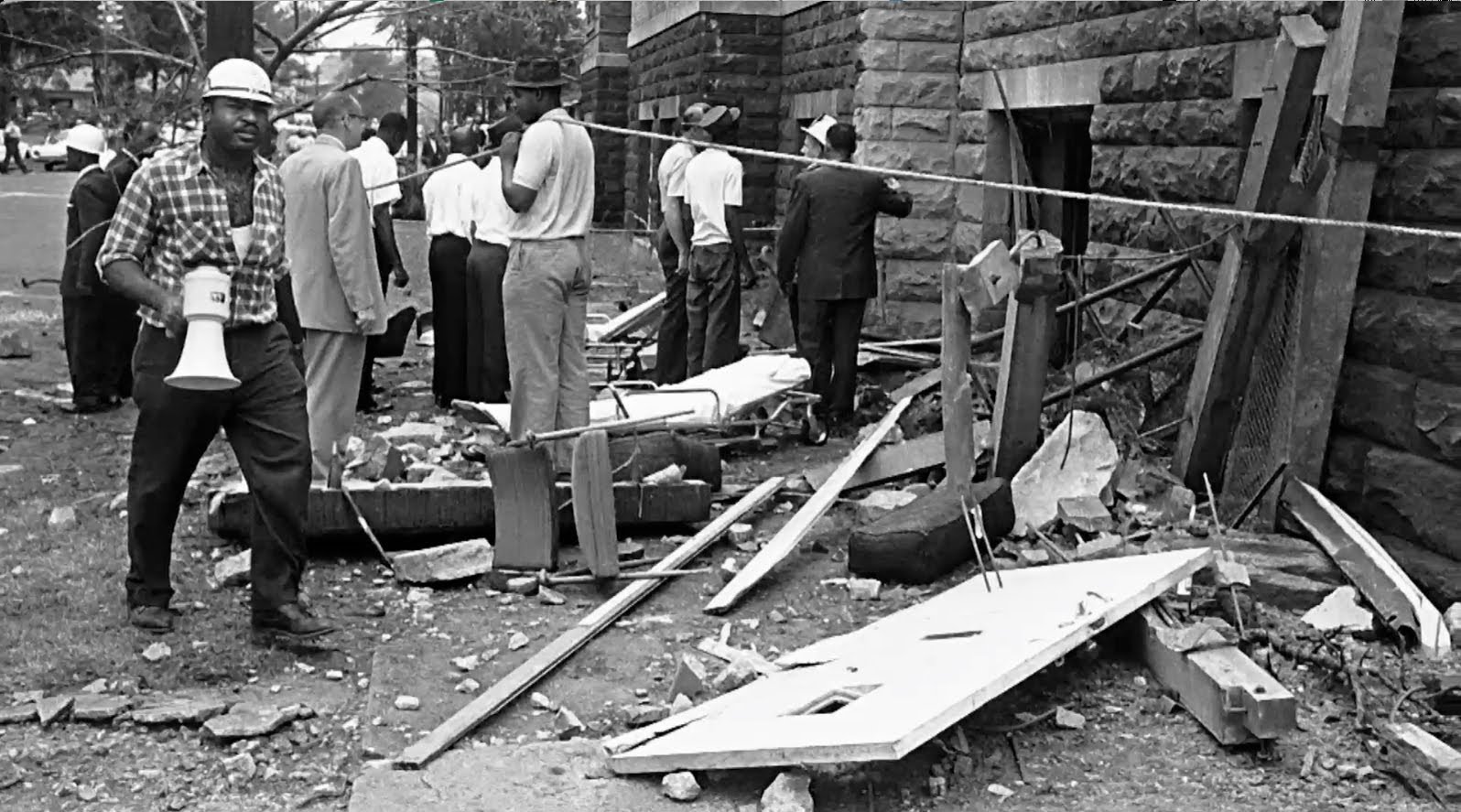
Our Own Bloody Sunday


It has been some 50 years since four black children were killed in a church bombing in Birmingham. Their lives were remembered recently as we revisited the protest march that resulted in Selma’s Bloody Sunday.


Hate has a similar look.


maxresdefault

2×2, small as we are, did what we could and will continue to do so.


We can spread the word.


For two years in a row, 2×2 readers have sent clothing and toys to Christian orphans. Church bombings have a way of making orphans.


We write to Christians leaders and share fellowship and encouragement as best we can from thousands of miles away. We’ve been doing this for two years now. We know some of the Christians of Pakistan by name. We’ve prayed together. We are praying for them now.


Little Change in the Sea of Changes

fishingAlban Institute dissolved last year. Its impressive stable of experts on church survival could not save it.


Today, the Alban Institute is a purveyor of books. Their web site is no longer a forum. It is a marketplace for authors.


Today’s offering is a new book on a tired subject: Transitional Ministry Today, by Norman Bendroth.


Anything new here? I don’t know. This post is announcing its upcoming release, so there is nothing to review just yet.


The promotional post leads me to believe it may be more of same.


I can’t get past the opening of the blog post promoting the book release.

In preparation for my book Transitional Ministry Today: Successful Strategies for Churches and Pastors, I spoke to dozens of practicing interim ministers, judicatory officials and observers of American church life. Those conversations and my research became a collection of essays reflecting upon new models and practices in face of the sea changes churches are facing.

Missing from his list of church experts is any hint that he spent time with the laity. Perhaps he did, but they did not earn mention.


The list of observations supports that the book is another review of what church leaders are to do with the helpless fish in the raging sea.

Any book that does not seriously consider the lay point of view is not likely to break new ground in transitional ministry.


Lay people are not helpless minnows, waiting to be used as bait for more attractive fish.


We’ve been dealing with transition just as long as pastors. We know that it is rough going in today’s world. We talk to people in the community, including people from other congregations. We can feel the offering plate getting lighter even when there are people in the pew. We do not need to have this explained to us—often as if it is somehow our fault.


We laity are on the front lines, holding many a congregation together in the absence of much professional help. The laity have tackled new technologies and new management styles in the secular world, while ministry experts have been slow to adopt even the basics of modern communication. Visiting the Middle Ages on Sundays is getting harder for laity.


Interim pastors, which are often forced on congregations, are often not dealing with the entire congregation but only with those willing to sit through endless discernment exercises.


One problem in the Church is that laity have little or no voice. Our views are often filtered through clergy—whether it be the local pastor or an editor moderating an online forum.


While this writer claims to have discussed strategies with dozens of experts, I wonder how many congregations he visited. How many heart to hearts did he have with lay leaders?


I and other members of our church experienced firsthand how the interim process is sometimes conducted with the interests of the judicatory in mind.


We visited 80 of our neighboring congregations. EIGHTY! Random visits—no plan. Close to a third of them had interim, bridge or mission pastors! There is a lot of discernment going on!


During our visits, we talked with members, sometimes leaders. We observed practices. We recorded our impressions—not as criticism but to help improve our own approach to ministry. We saw skilled and dedicated lay leaders working with little credit and no earthly reward. They are often leaders in their secular lives. Their insights are rarely considered in the tomes of material published on transitional ministry.


I don’t discourage anyone from reading more books about transition, including this one.


I do encourage others, including authors on church transition, to consider the lay point of view.

How do lay leaders get the ear of those in authority?

UndercoverBishopLead3I wrote a book about our experiences: Undercover Bishop: A Parable for Today’s Church.


PLOT SUMMARY: A newly elected bishop decides to visit congregations undercover to learn what the pastors in her charge don’t tell her. She chooses an urban neighborhood church, a small town church and a rural church.

The churches are composites of the churches we visited. Much of the dialogue comes directly from our conversations with members we encountered. A discussion guide is included.


Undercover Bishop is free in PDF form online and available in booklet form on Amazon.com.

You really nailed the lay experience!
—Reader from the Northwest

Coming Soon!
Welcome Is A Verb

2×2 is about to release a training that also grew from our church visits.


Every church has a welcome sign somewhere: in the church yard, on the church door, in the church bulletin. We all believe we are friendly and open to visitors.

Slide01

Welccome Is A Verb—coming in late March


Our visits taught us that every church can improve welcoming.


As outsiders for 80 weeks, we saw hospitality in new ways. We often encountered congregations that were timid, tired and lacked the confidence to approach visitors—members and pastors alike! We understand. We are a small church, too. Our visits helped us see our own failings! We’ve included them!


Welcome Is A Verb: Fostering a Welcoming Church Environment for Congregational Growth leads congregations through a comprehensive view of their welcoming strategies and how they might be perceived by visitors.


Watch for Welcome Is A Verb. 2×2 expects to release it at the end of March.

Transparency in Church Finances Remains A Problem

shutterstock_166188227

“The absence of transparency is not due to a premeditated scam. We ecclesiastics (priests) fall into traps because of our ingenuity, lack of preparation and ignorance.”—Rector Monsignor Enrico dal Covolo

Pope Francis is trying to right a Church long at sea. His latest move is to send church administrators back to school. The above quote is from one of the attendees of the first class.


Only in the world of church can such a nonsensical quote be accepted. Sounds like the definition of bumbling schemers.


The problems Pope Francis contends with plague us Protestants as well.


I don’t know the specifics of the mismanagement the pope is addressing, but I have encountered questionable financial practices in the denomination with which I am most familiar.


It stems from “lack of transparency.”


No one really knows what is done with offerings. We Christians are taught to trust!


Carefully calculated terms fend off questions. Who would question a “Mission Fund”?


$90,000 of our congregation’s money disappeared from our bank account one day in 1998. It had been conveyed without the congregation’s knowledge to our synod’s Mission Fund. The Mission Fund, we were told, is the repository for the assets of closed churches—accept that we weren’t closed then—and aren’t closed now. Two years later, after steadily pressuring Synod to return our money, a plea was issued to all congregations to make up a deficit in the Mission Fund, which totaled almost exactly the amount of money returned to us. The Mission Fund was tapped to make up operating shortfalls. But advertising the need for Mission Funds is likely to inspire contributing congregations more than a plea for help with the rent.


There is some robbing of Peter to pay Paul, as if Peter won’t mind! (Peter minds!)


The bishop at the time shrugged as he reluctantly returned our money. “In ten years, you will die a natural death.”


The next bishop must have been listening! Ten years later, there was another knock on our bank’s door! This time they wanted everything! What was to follow was not “a natural death”!


We visited a congregation the Sunday before it closed a couple of years ago. It was reported during the service that their financial assets were going to the Bishop’s Discretionary Fund. More honest, perhaps—but no more transparent.


Transparency in the Church is a huge problem.


It is a relief to know one Vatican administrator has an answer.

“The absence of transparency is not due to a premeditated scam. We ecclesiastics (priests) fall into traps because of our ingenuity, lack of preparation and ignorance.”


I’ll let someone else figure out what he hopes that means.