4/7InkzHVUEQeEdU9vpc1tikzEhChrKmPfvXI-FSDBrBQ

Social Media and the Church

The Role of Facebook in Christian Community

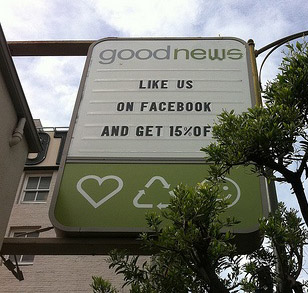
We have not advocated that churches, as a body, rely on Facebook. Our main reasons are the intimate nature of Facebook and the need to monitor it, both of which we think present challenges for churches and are best managed individual to individual — not institution on behalf of an individual.

But the fact is, most of your church members are probably on Facebook. We can advise and encourage individuals to use Facebook in a loving way — which will strengthen Christian community on or off the Social Media grid.

HeartYourChurch web blogger, Jason Stambaugh, shared his experience on Facebook when he recently reported the death of his mother. We extend our sympathy to Jason and his family and thank him for sharing with us and so many other “strangers.”

Jason’s blog post is an intimate account of his feelings on “pressing the button” to share his personal tragedy. It is worth a read.

He ends his post with four suggestions on the use of Facebook when sharing personal news.

(1) Like the post and leave a comment. By liking and commenting, you are helping to circle that person and their family with love.

(2) Share the post or link with your own personal message. I shared a link containing information about my Mother’s viewing and funeral. A handful of people reshared that link with a personal message about my Mom. Not only did I appreciate that they were helping me spread the word, I really enjoyed seeing what they had to say.

(3) Send the person a message. With so many likes and comments flowing in, it was hard to keep track of what everyone was saying. About a dozen or so people sent me Facebook messages that I received directly, like an email. They were easier to read and keep track of. If you have something you’d really like to share with the bereaved, send them a message.

(4) Do something.  Follow up your like, comment or message with an action. Whether it’s attending the viewing or funeral, sending a card or making a casserole, it will mean a lot to the person and/or family. The follow-up action makes your words “mean” something.

The last point is the most important. Facebook in the Church cannot replace the loving touch, the soft shoulder, the warm embrace, a hand held in prayer or the sympathetic tear. It sounds so old-fashioned, but we must remember to send a card, flowers, or deliver a hot-dish to the family—and attend the funeral.

Share this with your Facebook-loving congregants.

photo credit: John-Morgan via photopin cc

Using the Internet to Reach the Person Next Door

Anyone with adolescents in the house has witnessed the scene where two or three young people are huddled in the rec room, each with his or her own cellphone or laptop, intently texting or instant messaging each other. Their eyes never meet unless something strikes them as funny and then heads fly back with youthful, exuberant laughter. Hearing that volcanic laughter rise out of silence will take adults by surprise. It is representative of just how engrained social media has become in the lives of more and more people.

Now Social Media is being used in this way by the church.

Pastors can use social media to reach their members and some may enjoy it. Be careful though. Social media such as Facebook are very public and people are still very private on matters of personal faith. A scan of some congregational Facebook pages can reveal all kinds of unsettling personal information.

Nevertheless, Social Media is a tool and according to this article, some pastors are starting to use it. As interesting as this article is, the comments that follow add more dimension, noting that it is not unusual for congregational social media to attract worldwide attention. That realization must be kept in mind at all times!

2×2 uses blogging as the hub of its social media outreach. We “meet” on the blog and correspond by email. We have befriended congregations in Pakistan and Kenya with weekly exchanges of news and mission. We ask permission before publishing anything about our friendship on our web site. We also have regular exchanges with churches across the United States and Australia. Few of them are of our own denomination, but that hasn’t mattered.

We don’t do this on Facebook. It’s too public and freedom of religion hasn’t reached every corner of the world.

It’s still a bit odd. There is a feeling of privacy when there really is none. An innocent exchange could cause trouble.

Worldwide dynamics are going to change the church. Congregations no longer need to wait a year or two to hear a Temple Talk from a sponsored missionary home on furlough. They can follow the work and ministry daily online. This will be a strength of the emerging church. Ironically, it will weaken the structure of the church while it makes the church stronger.

photo credit: Mike Licht, NotionsCapital.com via photopin cc

Ideas for Churches to Blog About in April

Here are some ideas to help keep your blog active next month. Start writing now!

April begins with Easter but most of your writing about Easter should have happened in March.

Recap your congregation’s Easter. Include photos or video.

Explore weekly scriptures and themes:

April 15, 2012
Acts 4:32-35  •  Psalm 133  •  1 John 1:1–2:2  •  John 20:19-31

The theme of the second Sunday of Easter is fellowship. The first lesson deals with the distribution of wealth among the early Christians. The Psalm continues the theme: “How very good and pleasant it is when kindred live together in unity!” The apostle John also talks about the importance of fellowship in Jesus. His discourse shifts to a discussion on sin and includes the familiar words of confession used in many liturgies. The Gospel story is the Thomas, the Doubter, story which concludes with one of the first Christian creeds, “My Lord and my God!”

Write about your congregation’s fellowship outreach and how your congregation works together.

April 22, 201
Acts 3:12-19  •  Psalm 4  •  1 John 3:1-7  •  Luke 24:36b-48

The impact of Jesus and the Resurrection is a theme of third Sunday of Easter. Sin is overcome by forgiveness and Jesus’ sacrifice. The Gospel is another story about a visit from the resurrected Christ, one where he proves his return to human form by eating fish with his disciples.

April 27, 2012
Acts 4:5-12  •  Psalm 23  •  1 John 3:16-24  •  John 10:11-18

The theme for the fourth Sunday of Easter is Good Shepherd Sunday. Explore some art and poetry based on the 23rd Psalm. Several well-known hymns parallel the verses of the psalm. Write about the hymn history of these or other Easter season hymns. The sacrifice of the shepherd, founded in love and caring, can be explored. What examples of this type of love can you find in your ministry?

April 4 is the anniversary of the assassination of Martin Luther King, Jr.
April 14 is the anniversary of Lincoln’s death. Tie the two together.

April 15 is the tax filing deadline in the United States. Tie the need to fund our government with the need to fund our church.

April is Autism Awareness Month. Explore ministry to families with autism.

April is Poetry Month. Feature some religious poetry. Hymn lyrics count.

April 22 is Earth Day. Write about stewardship of the earth. Tie it to service projects.

Look ahead to Pentecost. Will you have a confirmation or first communion class? Feature the class members.

School activities and celebrations peak toward the end of the month. Are there concerts, plays or picnics your members might like to support?

Does your congregation have graduates to honor?

Many churches/denominations have spring convocations. Include news or explore issues that will be discussed.

Start promoting your Vacation Bible School. Write about the theme or any events. Interview teachers about why they are willing to teach.

Start promoting your Church Camp.

Review the activities of various church committees and groups. Ask them to guest post!

5 Ways Social Media Will Change Your Church’s Life

If your congregation wisely chooses to invest time and passion in social media, be prepared for many things to change. We’re not talking about self-centered Facebook prattle; we’re talking about online interaction that looks outside your parish to the community and, by the nature of the internet, the world.

This may be the hardest thing for the Church to grasp. The internet connects individuals with the world. There is no intermediary. No church council, no pastor, no synod or its equivalent, no bishop, no national church can control congregational interconnectedness.

This means that congregation’s must be more mindful of  things which may have been neglected. While it is easy to reach the world, one mission of the individual Christian community will become more intense—the care and nurturing of individual Christians.

  1. Congregational Education is vital. A congregation must be confident in knowing who they are and what thy believe if they are to engage neighbors or the world in their mission. This has always been a focus of parish life, but educational components of many churches have been dropped in the last few decades. As long as the focus of congregational life was local, it didn’t seem to matter. This needs a remedy. Education must be intertwined with every activity.
  2. Social Awareness must be nurtured. You will begin to hear from Christians from places you never considered as being Christian. Congregations must understand, for instance, the challenges Christians face in Islamic nations, where Christians can be ostracized from their families or jailed. While freedom of religion is taken for granted by many Americans, some religions maintain cultural holds on their people even IN America.
  3. The Church needs to become attuned to the minute causes of community as well as the big picture. We live in an age where anyone can bring a cause to the public’s attention. Yellow ribbons, pink ribbons, donation cans, something-a-thons become very focused. Keeping up with them will be an ongoing mission challenge.
  4. Personal faith must be deepened. Savvy companies teach every employee that they are a representative of their company culture. The Church needs to foster the same sense of ownership among members. Every member reflects on the congregation. Congregations will want their members to be knowledgeable and engaged as representatives of their church.
  5. The biggest change is that many congregations will be able to rebound from survival mode and see themselves as important. Their interconnectedness will give them energy, resources and renewed purpose.

LinkedIn Can Help Church Pros Connect . . . If They Use It

LinkedIn is a powerful networking tool similar to Facebook but with a professional focus.

It packs a powerful punch for anyone wanting to connect with people in a specific sphere of interest. You can use LinkedIn to find professionals who might be willing to help you. Say, for instance, you are looking for someone who has worked in ministry with disabled people or who can preach in Arabic. You can look for people with those specific skills.

Conversely, you might have a skill you feel is underused. You can feature your special interest in your profile.

LinkdIn is an “opt-in” medium. The user chooses to particpate in the online community. Users can look for connections, accept referrals, and ask for introductions.

LinkedIn users can join groups . . . also entirely opt-in. Professionals can only connect by getting someone they already know to introduce them. Even then, the person of interest must accept and initiate any resulting communication.

It’s a fairly safe way to form relationships with peers that can be helpful in your work.

One would think that anyone going to the trouble to complete a LinkedIn profile would be serious about using this amazing networking tool. Most groups are filled with names willing to be found or to help others in their searches.

2×2 found a very odd exception. We looked at a group formed around a Protestant denomination. The group had hundreds of members with very detailed profiles. Most of them had their identities shielded!

What a waste of communication potential!

Again, the Church fails to understand how the tools of today’s world can be used in mission. What are church LinkedIn members afraid of? Why bother joining a professional network and then back away from any ability to take advantage of its potential?

It’s crazy! Back to the cloister!

photo credit: JeremyMP [Catching Up] via photopin cc

2×2 Has 4000 First Time Visits and Counting

Today 2×2 registered its 4000 first-time visitor just as we began our second year of posting.

We created our virtual church after our denomination locked us out of our property nearly three years ago. It’s been a grand experiment and we’ve learned a lot, all of which we are glad to share.

We’ve been watching the statistics and they reveal a great deal about the reality and challenges of ministry today.

Here’s a short rundown:

  • In the first two months of 2012 we matched the traffic for all of 2011 with more than 2000 visitors. If traffic continues to grow we may have 20,000 visitors by this time in 2013.
  • Someone from every state has visited 2×2 with the most visitors from Pennsylvania, California, Georgia, Iowa, Texas, Ohio, New Jersey, Minnesota and Illinois.
  • 68 countries have visited 2×2 with regular readership in France, Great Britain, Canada, Australia, Pakistan and the Netherlands. Traffic in Africa and South America is beginning to pick up.
  • Traffic comes in peaks and valleys but the peaks are growing taller and the valleys less deep.
  • We have about 80 readers subscribing to our daily blog feed and an average of 37 miscellaneous visitors every day. Together that’s more than 100 readers every day.
  • We’ve had more than 200 new weekly visitors for the last four weeks (not counting subscribers).
  • Most readers come looking for advice on using social media or for the worship resources we’ve made available.
  • Our multicultural series was reposted in Texas.
  • Two seminaries have shown an interest in 2×2’s thought leadership. Our posts have been circulated for discussion among students.
  • We are starting to form friendships with churches all over the world as we make it a point to write to anyone who comments. Some are becoming pen pals, praying and fasting for our church. We pray for them regularly as well.
  • We’ve created links for special projects of others and are helping their ministries grow.
  • Our most popular post continues to be a review of our visit to Trinity, Fort Washington, and their pastor’s object lessons for adults.
  • Just in the last month, dialog started to pick up on the topics we’ve introduced, drawing comments from leaders of some sizable churches.

2×2 is a small church fulfilling a big mission. We’ve just begun!

Should Churches and Pastors Be on Facebook?

Facebook vs Blogging

A year or so ago announcing your presence on Facebook was the latest craze. Many Church leaders tried this route as congregations and regional bodies added Facebook pages.

We visited the Facebook page of one prominent church leader. It started with a hesitant attempt to engage the flock. Within one year, the Facebook page had deteriorated to nothing but announcements of press releases. One young person had posted a deep concern on the “wall.” The answer received to that post was obviously written by a staff person, someone monitoring this prominent leader’s Facebook page — a digital age blow off.

That points to a real danger of church engagement on Facebook. People reaching out expect a caring person online waiting to hear them and willing to answer. They expect the Facebook owner to be reading what they write and they expect that person to respond when they’ve invited the inquiry. A digital blow-off from a third party, offered days later, has the power to devastate.

People will sense phoniness and turn to active forums that really ARE listening and engaging.

As proof . . . after one year this church leader had NO friends and few followers. So what was the point of the big Facebook announcement?

Facebook requires more daily attention and commitment — more time than most church leaders are able or willing to give.

We visited dozens of congregational Facebook pages . . . again . . . mostly press release type announcements with no real engagement. Most had very little activity.

This is why we recommend that congregations enter Social Media through blogging. You can develop your pace and control the content much more easily. People can engage just as they do on Facebook, but are likely to be more thoughtful about it and more willing to wait a day or so for a response.

There is some value to being on Facebook. You can feed your posts through the various Social Media outlets and get some traffic benefits. But it is hardly worth the fanfare of announcing it.

If you make a big announcement about your Facebook page and then doing nothing with it, it is like crying Wolf. Don’t say it if you don’t intend to play it!

photo credit: {Guerrilla Futures | Jason Tester} via photopin cc

The Church and Monday Morning Amnesia

It’s Monday morning, just 24 hours since you may have walked out of church.

Quick, try to remember . . . what was the sermon about?

Which hymns did you sing yesterday?

If you are like many, you won’t remember!  You were there, but it’s all a bit foggy. You may remember who sat in front of you or a conversation with a friend after church. But the service itself is likely to have slipped into mental oblivion.

The members that left 2×2 worship yesterday are more likely to have an answer to that question. We passed around a copy of a painting that helped us discuss the Shadow of the Cross.

Without that visual aid and the impromptu comments as each reviewed the artwork, our members, like others, would be groping to remember the message by Sunday dinner.

It’s the start of a new week and your pastor is probably already reviewing next week’s scripture. He or she is likely to ponder the message all week until a carefully crafted treatise is polished and delivery is practiced. Soon it will be Sunday morning. D-Day (Delivery Day). And then the process will start over.

And very few will remember.

So much effort, time and money spent on ephemeral benefits.

Why do we revolve our worship lives and ministry around communication that isn’t working?

How Do Church Leaders Find Time for Social Media?

As we noted in our latest Social Media post, finding the time for social media is the biggest hurdle for churches in acclimating to the digital world.

“Church” has been done the same way for centuries. People entering ministry have expectations for how they will spend their time when they are called to a parish. Something like this: Monday will be spent on office housekeeping and reflection in preparation for next week’s sermon. Parish calls are made on Tuesdays and Thursdays. Wednesday is bulletin day and Bible study, choir practice or some other group activity. A few hours of Thursday might be spent with colleagues over lunch. Meetings will be scattered throughout the week. Friday is for polishing the sermon. There are always emergencies. And one of these days is a day off.

Time must be found. Social Media is simply too powerful to ignore. If you are serving an aging congregation it is all the more vital. Your older members may be willing to forego it, but the current coming-of-age generation — Generation Y — lives with their cell phones epoxied to their palms. If you want your church to have a future, you MUST speak the language and use the tools of the future.

How do you make the time?

There is no doubt it will be hard to adjust the routine. It is an adjustment for everyone! We suggest a two-pronged approach:

  1. Set aside 30 minutes a day for social media. Start your day with it. End your day with it or follow your lunch break with it. Make it a routine.
  2. Let others help.

Carving out a half-hour may be the easiest of the two steps to take, especially after you begin to see results. In our experience that took six months of daily posting to grow readership to our current average of 50 readers a day and a thousand each month. Warning: A half hour is a start. You will find Social Media so compelling that it will become more vital to your church community.

The second part — letting others help — is a major shift in church structure but it is going to happen. Top-down church leadership is quickly becoming a thing of the past. If people do not have a voice in their churches they will fill their lives with things that engage them.

This adds a new church emphasis for which your social media can be a tool. Education. You want members engaging in online religious issues to be knowledgeable. Many churches have neglected education. Use Social Media to break that cycle. We’ll address this in our next Social Media post.

photo credit: ebby via photopin cc

Christians and Jews Face Similar Challenges

Monday’s Alban Institute Roundtable featured the thoughts of Rabbi Hayim Herring presented in his book, Tomorrow’s Synagogue Today: Creating Vibrant Centers of Jewish Life.

The conditions he cites are faced by all religious groups today.

  1. organizations cannot exclusively control their messages
  2. information is more accessible and less private than in the past
  3. people energized by a vision will collaborate freely
  4. mistakes made by any one member of a group can be corrected by others
  5. success is tied to the ability to distribute knowledge and leadership
  6. synagogues can become a “platform for organizing people with similar interests” rather than remain a “top-down” operation
  7. synagogues are challenged to see “communities that do not yet exist”
  8. synagogues “should recognize the importance of niche communities and foster linkages among them”
  9. ongoing feedback mechanisms are vital
  10. organizations need to focus on what they do best

2×2 has already discussed many of these points. We think every one creates a positive, new strength with truly exciting potential.

We also predict that the upper echelons of church leadership are going to resist embracing new societal realities. They will continue to think like hierarchical leaders. Some may stubbornly oppose the inevitable, using their last vestiges of power to create real harm and chaos.

Ironically, the American Church may have the most difficulty adjusting to new ways. Separation of Church and State, a precious American right, gives the Church powers other organizations cannot claim. Parishioners, equally protected by the Bill of Rights, will find their denominations lording their protected status over them. Courts will not be able to sort out the resulting feuds.

Parishioners providing ideas and leadership that are welcomed in the secular arena, will be challenged by church leaders who are desperately hanging on to control mechanisms they enjoyed since the Reformation.

The emerging Digital Church Age with all its promise will spark a great power struggle. Much of what the Church teaches will be forgotten along the way, beginning with the Ten Commandments. Servant leaders were never more needed. If they prove to be in short supply, as we suspect they will, innocent lay people will be hurt, rank and file pastors will be silenced, and church leaders will meet in increasing seclusion as they come to distrust the people they lead. It could return us to the Middle Ages and the Inquisition.

We hope the coming revolution in the Church will be a short transition as young leaders, coming of age sometime since 1985 reach leadership positions. But meanwhile, it could be very ugly.

The sooner Rabbi Herring’s observations are embraced, the sooner the Church will enter the wonderful new world of the 21st century. It could take a decade or two . . . or three! Plenty of time to build a bunker!

photo credit: marsmet543 via photopin cc