
4/7InkzHVUEQeEdU9vpc1tikzEhChrKmPfvXI-FSDBrBQ

Social Media and the Church

The Unmeasured Strength of the Weakest Link

That weak link — the one you wish you didn’t have to worry about — well, it turns out it could be your most valuable asset. Sociologists are learning that it is the weakest links which drive innovation.

Scientists have done studies to identify how new ideas take root and where the sources of great success stories lie. People think it is in fostering alliances and friendships with the like-minded or the movers and shakers — the powerful, the well-connected, the jet set.

The big churches — not the small churches.

Turns out they are wrong. In story after story the sparks of great ideas prove to come from the serendipitous—the people you barely know, from small groups of people struggling with ideas in a very hands-on way.

Read this for an interesting take on how this affects social media.

This is an interesting analysis of the value of networks. Let’s focus on one quote:

“The way networks have their effect is not by getting information from people, but rather by finding people who are interesting and who think differently from you,” —Ronald S. Burt, Neighbor Networks

What does this mean to the Church?

Most congregations are fairly homogenous in membership. Redeemer’s Ambassadors visited 40 in the last 18 months. Only about four had significant diversity — at least visually. We tend to gravitate toward people who are like us, dress like us, and act like us. The minute things start to change, we become defensive. Liturgical dance . . . no way! Tambourines . . . never! The barriers we put up are designed to protect our sense of identity and comfort.

We want to recognize ourselves in the person sitting beside us in church. It is proof to us that we are accepted.

The whole structure of Church is designed for sameness. We rally around one leader and conform our ministries to that leader’s interests and skills. When encouraged to invite others, we invite people like us.

When congregations attempt innovation it is likely to be the same sort of dabbling taking place 10 miles from us. Properly sanctioned innovation.

Redeemer struggled to grow until we began reaching out to people who were different from us.

Then new ideas began to spread. Of course, we were wary of change, but we quickly learned that we didn’t have to change all that much. Change did not have to mean abandoning who we are. We added to our heritage.

With this web site, we continue to find new spins on evangelism. Churches across the country and around the world are sharing with us and we respond. We have learned that Jesus’ commission for us to go out into the world is not so much to make the rest of the world transform to our ways but for US to learn NEW ways from them.

If the Church as a whole wants to change, it must foster relationships with our weakest acquaintances.

Redeemer, through our 2×2 site, has become pen pals with a church in Pakistan and another in Kenya. We’ve helped individuals with projects across our own continent. We’ve learned more in the last four years than in our congregation’s previous 120 years.

This sense of mission may not be for every church, but we encourage you to look at your own “weak links.” Who in your congregation is borderline involved, a bit uncomfortable? Engage them. You may find they have insights and skills to offer that you didn’t know you needed.

Use the power of the web to reach the neglected. One church close to us has studied the needs of families with autistic family members. Because we knew of their interest we were able to introduce them to another ministry designing worship opportunities for the autistic.

This is a golden age for the church. It was never more possible to fulfill the Great Commission. Will we meet the challenge? Or will we continue to reward and encourage the efforts of homogenous ministry?

UPDATE: June 2013. 2×2 now has a network of six churches internationally. They’ve gone out of their way to get to know each other. Our members are in contact with them regularly—often weekly. Locally we’ve visited 62 of our sister churches. They tend to avoid communicating with us but then they all found our property to be of more value to their leaders than our ministry was in our community or the world.

photo credit: HikingArtist.com via photopin cc

Encouraging Social Media Engagement in Congregations

Among the most frequently asked questions among new bloggers/social media practitioners is “How do we get people to “like” us or “comment.”

This is particularly difficult in the church setting because Social Media breaks a 2000-year-old tradition. Preachers preach. Congregants listen. Traditional communication is one way.

If pastors are encouraging parishioners to voice theological thoughts in public, they are asking people to make a major change in their spiritual relationships with God, the Church, and with other people. They may feel awkward, vulnerable or unqualified. This will take time.

Encouraging religious dialog among the laity is a worthwhile goal and long, long overdue. Trust must be established. Confidence must be built. Faith must be prepared for inevitable challenges. It’s a tall order and not to be rushed.

Here are some ideas.

  • Start with younger members. They are closer to their confirmation years and much more comfortable with social media, although many do not see it as a place for serious thought. Still, they are a most likely to consider it. The challenge will be to build their confidence to speak outside their circle of peers.
  • Prime the pump. Ask three people to write a blog or start a conversation on Facebook. Help them. Teach them. Guide them.
  • Engage the congregation or forum group in conversation about the online dialog and specifically ask some of them to share their insights on line. You can lead the way with your own “like” or comment.
  • Create an online poll asking questions that the posts raised. This is an easy first online engagement for people. It’s anonymous but people can see how it works.
  • Repeat this cycle monthly or quarterly or as topics arise in your community or congregation.

One more idea:

Blogging Roundtable

Have a blog roundtable. Sometimes these are called blog carnivals. It’s a new idea so you can choose any name you like. Make it fun. Blogging rodeo? Blogging round-up? Blogfest?

Ask several or many people to write on a given topic and submit a 500-word or less post in email, text or document format. Post an introductory blog to present the topic and explain the roundtable concept. Set a deadline about 10 days away. Do some behind the scenes nudging to make sure you have at least a few responses. Run a few tickler posts on the topic to get mental juices flowing. On the appointed day, publish ALL the posts at once and encourage participants and readers to mix, match and compare. You might even run a “like” contest or poll to see which ideas resonate best.

This could help rally people and engage them in a fun way.

photo credit: lovestruck. via photopin cc

Does Social Media Threaten the Future of the Organized Church?

A veteran parish pastor, now retired, loves to tell the story of a conversation he had many years ago with a young adult congregant who was drifting away from church after years of faithful attendance as a child.

“I don’t believe in organized religion,” the young woman said. The pastor quipped, “Do you prefer disorganized religion?”

Today, that pastor could safely quip, “Not to worry! There is no such thing as organized religion.”

The organized Church is unraveling.

The Roman Catholic Church, the paradigm of structure, is scrambling to bolster its traditional teachings against changing popular sentiment and practices. Its hierarchical structure is threatened by disinterest. There are fewer candidates for priesthood and religious orders. That means the power of the hierarchy is made available to fewer candidates, leaving weaker talent to rise to the top. It should be no surprise that scandal has followed. Without the traditional pool of workers to staff parishes, the foundations of parish traditions — the schools — are closing or merging. They may be more economic but will struggle to provide the parish identity which parishioners value as highly as the quality of education.

Protestants are not immune. They tend to get less media attention, but they, too, face challenges attracting professional leadership, dwindling support, and their share of scandal.

What does this mean to the average believer?

It means the laity will carry a greater burden in maintaining and administering parishes. They will do so with negligible support from any hierarchy. They will be asked to commit  time and resources that begin to outweigh the investment of professional leadership. They will have no support system when there is trouble—and there WILL BE trouble.

As a result, lay Christians will think twice before committing to supporting any congregation. The remaining hierarchy will reward the laity who are strong followers and penalize the laity who step into the leadership void. The faithful will have a tougher time meeting the expectations set for them in healthier days. Since lay involvement is, for the most part, volunteer, they, too, will become fewer in number.

As things deteriorate the blame game will begin. As the stakes get higher, the game will become nastier. The basic tenants of Christianity will be tested.

Much of this prediction is already happening.

If you don’t believe in organized religion, there was never a better time to sign up!

But 2×2 does not like to leave any reader feeling hopeless. While troubling, we view this as growing pains. 

The old structure is crumbling but a new Church is emerging. New life will take root in the ruins of the past.

The internet is rebuilding the foundation of the Church. The laity now have a voice. The hierarchy won’t like it and will try to control it. They will fail.

There are controls, however. The “joy stick” is not in any one person’s hand. We are entering a time when we will be held accountable by one another, not by a hierarchy.

Hang in there, Christians. This is going to get exciting!

photo credit: Denise ~*~ via photopin cc

Blogging Ideas for March

Keep blogging!

Here are some ideas to help you keep your church blog active during March. It’s only two weeks away. Starting scheduling posts now!

Spread the work around and assign one of the topics below to other social media team members.

Key Scripture Passages

Meditate on Scripture assigned to the Sundays in March and think of one thought or illustration which would help communicate its meaning. Keep it short. Search for a free online photo to go with your meditation. photopin.com

March 4

Psalm 22:27-28
All the ends of the earth shall remember and turn to the LORD; and all the families of the nations shall worship before him. For dominion belongs to the LORD, and he rules over the nations.

Mark 8:34-35
He called the crowd with his disciples, and said to them, “If any want to become my followers, let them deny themselves and take up their cross and follow me. For those who want to save their life will lose it, and those who lose their life for my sake, and for the sake of the gospel, will save it.

Mark 9:7
Then a cloud overshadowed them, and from the cloud there came a voice, “This is my Son, the Beloved; listen to him!”

March 11

Exodus 20:1-17—The Ten Commandments

1 Corinthians 1:19 & 25
For it is written, “I will destroy the wisdom of the wise, and the discernment of the discerning I will thwart.”  . . .  For God’s foolishness is wiser than human wisdom, and God’s weakness is stronger than human strength.

John 2:19
Jesus answered them, “Destroy this temple, and in three days I will raise it up.”

March 18, 2012

Psalm 107:1
O give thanks to the LORD, for he is good; for his steadfast love endures forever.

Ephesians 2:8
For it is by grace you have been saved, through faith—and this is not from yourselves, it is the gift of God. (This passage helped to launch the Reformation. Write about it!)

John 3:16
“For God so loved the world that he gave his only Son, so that everyone who believes in him may not perish but may have eternal life. (Remember the signs that the faithful would carry to the pro-football games, hoping for media attention.)

John 3:20-21
For all who do evil hate the light and do not come to the light, so that their deeds may not be exposed. But those who do what is true come to the light, so that it may be clearly seen that their deeds have been done in God.”

March 25

Jeremiah 31:34
No longer shall they teach one another, or say to each other, “Know the LORD,” for they shall all know me, from the least of them to the greatest, says the LORD; for I will forgive their iniquity, and remember their sin no more.

Psalm 51:10-12
Create in me a clean heart, O God, and put a new and right spirit within me. Do not cast me away from your presence, and do not take your holy spirit from me. Restore to me the joy of your salvation, and sustain in me a willing spirit.

John 12:24
Very truly, I tell you, unless a grain of wheat falls into the earth and dies, it remains just a single grain; but if it dies, it bears much fruit. Those who love their life lose it, and those who hate their life in this world will keep it for eternal life. Whoever serves me must follow me, and where I am, there will my servant be also. Whoever serves me, the Father will honor.

March 25

is Annunciation Day (a reminder in the midst of Lent that the Christ child is coming)

As March ends, Holy Week begins

  • Write about Holy Week, especially the lesser known or observed celebrations.
  • Saint Patrick’s Day—Saint Patrick’s life is fascinating but flooded with shamrocks and leprechauns on that day, few people know much about the real St. Patrick.
  • St. Patrick’s Day is an opportunity to teach the Trinity. That’s what the shamrock imagery is all about!
  • Remind people of Daylight’s Saving Time. We lose an hour on March 11.
  • March 20 is the first day of Spring.
  • Girl Scout Week is March 10-16: feature your girls. Ask them to contribute to the blog.
  • March is Women’s History Month: highlight your women. Ask for a guest blog from women leaders.
  • March is National Nutrition Month—Promote a food drive for local food bank.
  • Easter is in April this year, but you might run a photo of Easter/Palm Sunday in past years. History helps build community.

Write about Lent and Lenten customs.

  • Shrove Tuesday
  • Ash Wednesday
  • Maundy Thursday (meaning of Maundy)
  • Burying the Alleluias
  • Meaning of the Word Alleluia
  • Difference between Hallelujah and Alleluia
  • Foot washing
  • Green Thursday (“grief” Thursday from German tradition)
  • Pretzels and Lent (post a recipe)
  • Hot Cross Buns (post a recipe)
  • Stripping of the Altar
  • Veiling of the Cross
  • Secular Easter customs (rabbits, eggs, flowers, candy, etc) Newcomers to America have a tough time with these. Help them!
  • Liturgical Colors for Lent and Easter
  • Write about the links between Passover and Easter and overlapping customs of the related faiths
  • Explain a Seder

Just do a search engine search for these topics to find information.

Make friends with your search engine!

Use your search engine to find meaningful art to discuss. Play around with terms. Different things will come up. For example, start with “art Maundy Thursday”. Then try “painting Maundy Thursday”. Then try “art Jesus foot washing”.

Poetry is an oft-overlooked medium. Plug in “poetry Lent” or “poetry Easter” and help your readers find meaningful resources.

Learning from Our Unique Experience as A Virtual Church

2×2 is the voice of Redeemer, small congregation in the East Falls neighborhood of Philadelphia, Pa. Our denomination decided for us that we could no longer fulfill our mission and seized control of all our property and financial assets for their own use. They locked the Christians of East Falls out of the church, we can only assume, so that they could more easily have their way. Our church building, under SEPA management, has been an empty witness to Christianity for going on three years — a definite failure to fulfill mission!

Redeemer, however, continues as 2×2.

We were not about to abandon our mission under such selfish circumstances. We had spent several years fostering a world view as we had visitors and members from all over the globe. This made it easier for us to take our ministry online, but we had no idea what to expect. Thinking globally and acting locally, we are discovering that our mission can impact the world.

We no longer worry so much about Philadelphia, although we are ready at any moment to reopen our physical church. We think our neighborhood still counts in God’s Kingdom.

Meanwhile, we are beginning to hear from congregations far away. A mission worker in Eastern Europe thanks us for our social media ministry. A pastor in Pakistan sends us regular updates on his congregation’s efforts to reach the poor in remote villages. A church in Africa thanks us for our ministry and describes their need to care for orphans.

Having been ousted from our denomination, we are no longer cloistered within Lutheranism. We are in regular contact with churches and church leaders across the United States. A few have provided both financial and spiritual support. Some have interesting projects and experiences which we incorporate into our ministry. We are more “in full communion” than when we were part of a “full communion” denomination — and this was achieved without decades of dialog!

At home in Philadelphia, we have become friendly with several parishes we knew little about when we were cozy in our own property.

Most congregations, near or far, are looking for little more than attention and prayer, which we are able and happy to provide.

We did not know what we were getting into when we started our virtual ministry, but it has opened the door for new mission and new possibilities. We are no longer just talking about mission but have  never been more actively engaged.

Meanwhile, our own denomination behaves as if we never existed.

Google Insights Can Reveal Ministry Opportunity

As we explore and learn social media, we turned this weekend to a fairly new social media tool, Google Insights. This tool measures internet activity revolving around key words.

We plugged in key words of topics that interest us to see if they interest anyone else.

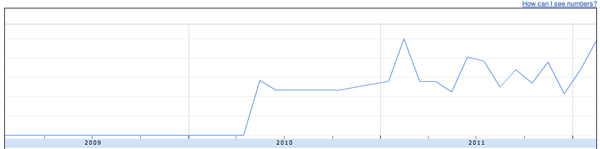
We searched for interest in “social media ministry.” The graph that pops up with amazing speed reflects our experience. We have long known that our readers are interested in this topic.

Goggle Insights Results for "Social Media Ministry"

We plugged in “children’s ministry” and “family ministry.” The results showed a decline in interest — not dramatic but decidedly so-so. We experienced the same results with our posts on ministry for children. We have also noted that ministry to children is neglected in many of the churches we visit.

Then we plugged in “multicultural ministry.” This is a topic that the our denomination has announced is a priority. The Google Insights graph revealed a flat line with sharp and short-lived spikes occurring about annually. There is only sporadic interest in this topic!

Google Insights Results for "Multicultural Ministry"

What does this tell us? There are a few possibilities.

  1. If multicultural ministry is a goal, groundwork must be laid. The Church is starting from scratch with this concept. Awareness of multicultural ministry challenges and opportunities must be promoted.
  2. Multicultural Ministry will be an uphill effort. Measurable success may be a long way off. Success might be fleeting.
  3. Other things concern congregations more. Any effort at Multicultural Ministry is likely to take a back seat.
  4. Leadership must be developed for this type of ministry.

The data fails to inform in some areas. It measures only interest — not need.

Why are there occasional, sharp spikes? Was there some event at that time that raised momentary interest?

The value of these “insights” is in what the Church does with the data.

  • Opportunities must be identified.
  • Churches and leaders must have some training and leadership.
  • Instant results should not be expected.
  • Since, there is so little interest, there is likely little experience. All ideas and efforts need to be given a chance.

The Art of the Video Interview

Why? and How?: An Interviewer’s Best Friends

Who? What? When? Where? Why? and How?

Six questions every video interviewer needs to know.

There are six well-known questions all journalists employ. They are called the five Ws and an H. Who?, What?, When?, Where?, Why? and How?.

The first four are of less value to video interviewers because the answers to the questions do not encourage complete sentences.

  • Who is leading this ministry? Answer: John and Mary Doe.
  • What are the plans? Answer: To help the homeless.
  • When will your event take place? Answer: Friday morning.
  • Where will this happen? Answer: Central Park

That makes for a boring and ineffective video interview. Would you stay tuned?

The last two staple questions can help you turn the first four Ws into dialog. Why and How questions are open-ended. You can get the information you are seeking in the first four Ws by asking good  Why and How questions.

  • How did your group decide on this ministry? Answer: Every Sunday, John and Mary Doe passed a man pushing a shopping cart with all his possessions down the street. At first they didn’t know how to help but  . . .
  • Why did this man’s plight move John and Mary? Answer: They remembered the stories their parents had told them of hard times in the Depression. They were always taught to appreciate God’s blessings and . . . . .
  • How can the neighborhood support you? Answer: You can come to the rally in Central Park next Friday morning at  9 am and be prepared to . . .

You can see how careful wording of questions will elicit colorful, meaningful answers. It just takes a bit of practice. Ask a friend to rehearse with you or stand in front of a mirror and ask yourself your intended questions. Role play the answers. You will quickly learn how to phrase questions to draw good, colorful, story-telling answers.

Make best friends with Why and How and the other four Ws will tag along.

Adding a Video Interview to Your Blog

Posting an interview is a good first step to exploring video on your blog or web site.

Here are some guidelines for beginners. We’ll build later posts on this foundation.

  • Make your guest comfortable in a well-lit spot. Make sure there is enough light on your guest’s face, but don’t worry too much about lighting for now.
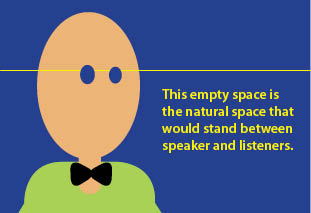
  • Frame your shot. We’ve included a few illustrations to show you how to position your interviewee.
  • A seated interviewee will pose less of a challenge for beginners. If you choose to have your guest standing, be prepared to move!
  • Keep backgrounds simple. You don’t need a set. A corner of a room with drapery, non-intrusive wall art or a bookcase is fine. A side-table with a lamp or potted plant is another possibility. If you are in a person’s office, set up the interview at the person’s desk. The background should not distract from your speaker’s message. 

  • Prepare your guest. Engage in conversation before the interview starts to make him or her more comfortable answering questions. You might review the questions in advance.
  • Test your equipment and sound. If you are using an auxiliary microphone, make sure the sound quality is good. This process can help break the ice with your guest. You can make it a little silly. Have your guest recite The Gettysburg Address or sing Mary Had a Little Lamb. This will do wonders to make your guest speak more informally when the real interview starts.
  • Make sure your guest knows the time constraints. If you plan to run your video without editing, pose just one question and let your guest take it from there. Alert him or her in advance that you will give a nonverbal signal when you need to draw the interview to an end. One technique used by some interviewers is to say, “Tell me in one sentence what you think about . . . . ” Your guest will invariably give you three sentences—enough for a nice, short blog interview!

Why Use Video on Your Church Blog?

There is a great answer to this question: video improves the effectiveness of your blog or web site by nearly 700%! Astounding.

If you have an iphone and a computer you have most of what it takes to create videos for your web site. Of course, if you have a video camera, that is also good.

While there are things you can learn to make your videos better and more effective, there is not a great learning curve. We’re going to start exploring this with 2×2.

The advice for getting started:

  • Before you start, plan topics for 10 videos. This will assure that your efforts have direction and you won’t use initial difficulty as an excuse to stay out of the water.
  • Think short topics. Two minutes is a good goal.
  • Create a youtube account and upload your videos. Then link your web site to your youtube site.

That’s it in a nutshell. We’ll explore it more deeply in later posts.

photo credit: Tonymadrid Photography via photopin cc

23 Advantages for Churches Using Social Media

A business web site (businessesgrow.com) recently published a list of 25 non-financial benefits of business blogging.

The list can be adapted to show the benefits of church blogging. Our list is a little shorter. We combined some things. Here goes:

  1. Create a database of answers.
    Seekers and members ask the same questions over and over. The need to have ready answers for most Frequently Asked Questions inspired Luther’s Small Catechism. Archive your answers to the questions you hear most often.
  2. Showcase your workers.
    Shine the spotlight on your volunteers. It is likely to inspire and encourage others.
  3. Integrate your message.
    Your pastor and church leaders create content regularly when they preach and teach. Give their work broader reach.
  4. Help search engines find your church.
    A lively church blog will rank over those annoying listings by the internet version of the phone book yellow pages.
  5. Tell your community why your congregation is different.
    Make your ministry stand out.
  6. Lay the foundation for other forms of communication.
    If you have an active blog, it will be easy to create a newsletter or congregational report. Cut and paste!
  7. Show your face.
    Your blog will reveal your congregation’s personality. Potential visitors will feel like they know you before they cross the threshold. Be assured — visitors today look at web sites first!
  8. Measure your vitality.
    A church with an active blog is proving they are engaged in the community with relevant and purposeful activity.
  9. Good public relations.
    Churches always have trouble attracting the attention of the press. If your blog has good community content, your local papers will find you.
  10. A quick and easy way to communicate with your current membership.
    If your members subscribe to your blog, they will get an immediate notification of breaking news. No need for the phone chain. Just don’t abuse it if you want to keep your followers.
  11. Engage your congregation.
    This may take some patient nurturing, but your congregation’s blog can become a place for congregational interaction and provide valuable feedback to your leaders.
  12. Ask questions.
    How many vestry or council meetings are spent debating what the congregation wants? With a congregational blog, you can ask them. Pose a question two weeks before a meeting and see what people have to say. If you want to keep this a valuable tool, be prepared to listen to the answers and respond wisely.
  13. Crisis management.
    You do not have to rely on anyone else to supply facts about your ministry. You can tell your OWN story! When a controversial decision is reached, use your blog to help the disgruntled understand. If your denomination is in the news, add your slant to the public issue.
  14. Forum for ideas.
    Again, this will take some nurturing, but foster the sharing of mission ideas. If people know they can make a difference, they will speak up. Be prepared to respond to ideas. No one likes to put their thoughts on the line only to be ignored.
  15. Give your leaders a platform.
    If their ideas are good, they will catch the attention both within and outside your community. That’s giving your church new reach and authority!
  16. Segmentation.
    This is something we don’t think about in the church. We like to think of ourselves as being “one.” There are, however, sub-interests within any united congregation. With the internet you can address these without leaving anyone out. In the business world it’s called “market segmentation.” In the church, it might mean directing some blog posts or creating a separate page or category within your blog for singles, youth, church musicians, daycare parents or Sunday School teachers.
  17. Identify advocates.
    An active blog will create “fans.” It’s nice to have supporters and know who they are!
  18. Inexpensive way to keep connected.
    You can gently remind your audience of upcoming events without the time to make phone calls or incur the cost of sending letters or postcards.
  19. Measure controversial issues.
    Should you change the time of worship this summer? You can debate this in a vacuum OR poll your members on your blog.
  20. Create a volume of work.
    Your blog will create your congregation’s history. Take your posts and create a quarterly or annual report. Your loyal members are likely to purchase an “annual” if you make printed copies available and include lots of photos.
  21. Network.
    Your blog can help you find people with special skills for a variety of needs from programming to building maintenance. Vendors may even be willing to contribute or discount services if you give them a plug and a link on your blog.
  22. Connect with people on an emotional level.
    Most congregational publications are fairly dry. Blogs can come to life with good story-telling, photos and video.
  23. Prove to your community that you understand today’s world.